
Black tea culture guide
Black Tea Traditions, Serving Styles, and Culture
Black tea traditions are the ways people prepare, serve, share, sweeten, dilute, pair, and talk about black tea in real drinking settings. For a reader choosing tea, this matters because culture changes the cup: a strong brew may be softened with milk, a lighter cup may be served plain, a sweet spiced preparation may feel closer to food, and a formal service may shape teaware, pacing, and manners.
This page is a practical map, not a complete cultural history. The current source set does not include verified regional references, so specific customs are handled as entry points for deeper guides rather than settled historical claims. The useful starting point is simple: look at the tea, the brew strength, the additions, the food, and the serving setting.
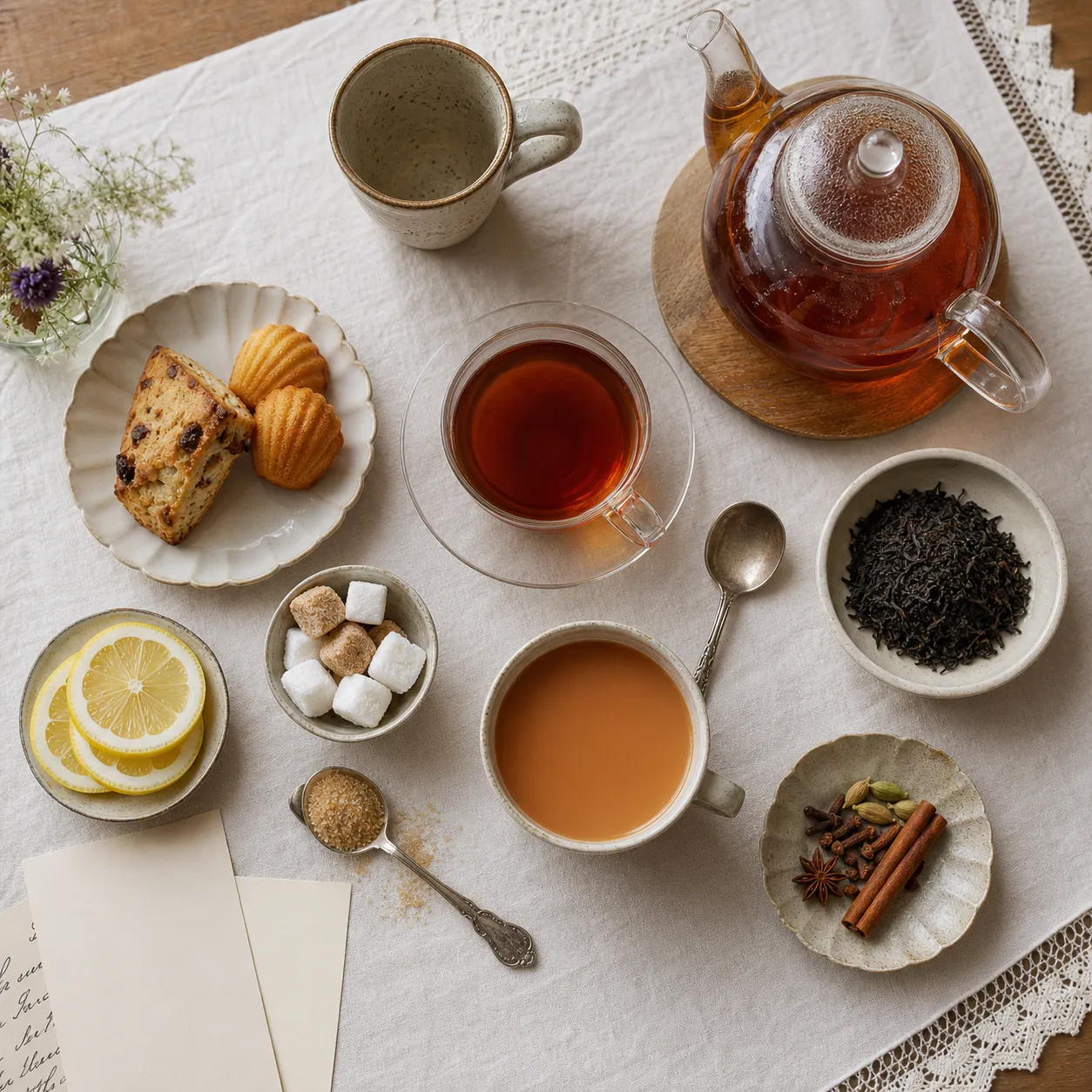
A Practical Map of Black Tea Culture
Black tea culture is not one thing. It sits where leaf style, brewing method, household habit, hospitality, menu language, and personal preference meet. A cup of black tea can be plain and brisk, sweet and milky, spiced and simmered, poured beside pastries, served with a meal, or offered as a small gesture of welcome.
The goal is not to rank customs or flatten them into one “proper” way. It is to notice the parts of service that change the drinking experience.
Leaf Form
Whole leaf, broken leaf, fannings, and tea bags can brew with different speed and intensity.
Ask whether the tea tastes delicate, brisk, heavy, malty, drying, or flat.
Brewing Strength
Strength changes body, bitterness, aroma, and how well the tea carries milk or sugar.
Ask whether the tea is meant to be drunk plain or with additions.
Additions
Milk, sugar, spices, lemon, or no additions shape texture and balance.
Ask whether additions are expected, optional, or avoided in the setting.
Serving Vessel
A cup, mug, pot, glass, bowl, or shared vessel changes pacing and temperature.
Ask whether the tea is poured individually or served from a shared pot.
Food Context
Tea can refresh the palate, soften sweetness, or stand beside rich foods.
Ask whether the tea is part of a snack, breakfast, dessert, or meal.
Social Setting
Home service, café service, restaurant service, and formal service carry different expectations.
Ask whether the focus is conversation, hospitality, menu structure, or ritual.
This framework keeps the subject practical. Instead of memorizing every named custom first, begin with what you can observe: liquor color, aroma, cup size, steeping strength, added ingredients, and the way people pass, pour, refill, or decline tea.
What Counts as a Black Tea Tradition?
A black tea tradition can be a formal service, a household habit, a café convention, a hospitality gesture, or a recurring way of pairing tea with food. Some traditions are associated with regions, languages, religious calendars, trade histories, or class customs. Others are everyday practices passed through families, workplaces, restaurants, and tea shops.
Because this page does not have verified cultural-history sources to support detailed origin claims, it avoids saying where a custom began, who “owns” it, or which version is standard. Those questions need stronger sourcing. Here, the focus is narrower and more useful: how a tradition affects the cup in front of you.
A layered way to read tradition
Ingredient
Plain black tea, milk tea, spiced tea, sweet tea, citrus tea, and blends change flavor, texture, sweetness, and aroma.
Method
Tea steeped in a pot, brewed in a cup, simmered with milk, poured, or refreshed over rounds changes strength, extraction, temperature, and pacing.
Social Setting
A family table, guest service, café menu, hotel service, work break, or festival setting changes manners, timing, portion size, and expectations.
Taste
Brisk, malty, smoky, floral, sweet, creamy, drying, light, or full-bodied tea changes whether the cup feels balanced in that service.
Etiquette
Who pours, when refills happen, and whether milk and sugar are offered shape comfort, hospitality, and guest choice.
This protects the reader from a common mistake: treating one visible version of a tea custom as the only authentic version. In real service, leaf quality, price, water, equipment, household routine, and local taste all affect the result.
A serving custom often makes sense only when the brew is considered. A strong black tea can support milk and sugar better than a thin infusion. A delicate black tea may lose aroma under heavy additions. A spiced preparation may need enough body to remain recognizable beneath milk, sweetness, and spice.
That does not mean there is one correct formula. It means the brewing style and the serving style should be read together. If a tea tastes too sharp, it may be over-steeped for the way it is served. If it disappears under milk, the leaf or ratio may be too light for that style. If it tastes hollow with dessert, it may need more body, more aroma, or a different food pairing.
The Main Black Tea Serving Styles
Black tea serving styles can be grouped by what changes the cup most: plain service, milk service, sweetened service, spiced service, food service, and formal or semi-formal service. These categories overlap. A spiced tea may also include milk and sugar. A formal tea service may offer plain tea, milk, sugar, lemon, and food together.
The point is not to force every custom into a box. It is to give readers a scanning tool.
Plain Black Tea
Aroma, body, bitterness, astringency, and finish change most. Check whether the tea has enough body and aroma without additions.
Black Tea With Milk
Texture, color, perceived sharpness, and roundness change most. Check whether the base tea stays present.
Sweetened Black Tea
Bitterness, warmth, and dessert-like character change most. Check whether sweetness balances the tea or hides it.
Spiced Black Tea
Aromatics, heat, sweetness, and method change most. Check whether tea, spice, milk, and sugar work together.
Black Tea With Food
Palate refreshment, contrast, and richness change most. Check whether the tea matches the weight of the food.
Formal or Shared Service
Pacing, teaware, refills, and guest choice change most. Check what the setting asks the drinker to notice or do.
Plain service shows the tea with the fewest additions. It is useful for tasting because it reveals liquor color, aroma, body, aftertaste, bitterness, and the way the cup changes as it cools. It can also reveal brewing problems quickly: too much leaf, too much time, or unsuitable water may produce a harsh cup, while too little leaf or too short a steep may taste thin.
Black tea with milk is one of the most visible serving styles, but it should not be reduced to one universal practice. Milk can soften astringency, add texture, change color, and make a strong tea feel rounder. It can also flatten aroma if the tea is delicate or if too much milk is used. Milk and sugar practices are best approached as setting-specific choices rather than global rules.
Sweetness can appear as sugar, syrups, condensed milk, honey, or other local ingredients, depending on context. Sweetness may reduce the perception of bitterness, round out spices, help a strong tea feel fuller, or make a chilled or concentrated tea more approachable. The practical limit is balance: too much sweetness can hide leaf character, while too little sweetness in a style built around sugar can make the cup feel unfinished.
Spiced black tea is not simply “plain tea plus flavor.” The base tea, spice mix, milk, sweetness, heat, and timing all interact. A weak base may disappear. Too much spice can obscure tea character. Too much sweetness can make the drink heavy. A short infusion may taste fragrant but thin; a longer preparation may taste deeper but more tannic. Masala chai belongs in this area, but a root page should leave the detailed regional and preparation work to a narrower guide.
Black tea with food works because structure matters. A brisk black tea may stand up to butter, cream, fried foods, or breakfast dishes. A rounder, maltier cup may sit comfortably with baked goods. A lighter, aromatic black tea may be better with simpler foods that do not overwhelm it. These are pairing principles, not fixed rules.
Brewing Norms Behind Serving Customs
Many tea customs look like etiquette from the outside, but they often begin with brewing. A strong pot invites milk. A small concentrated pour may invite dilution or repeated rounds. A weak tea bag in a large mug behaves differently from a measured loose-leaf infusion. A spiced milk tea may depend on heat and timing rather than simple steeping.
Without verified sources for detailed brewing norms by tradition, the most useful approach is to explain the variables readers can actually adjust.
Leaf Amount
Changes strength, body, bitterness, and aroma. Use more if the cup is thin; use less if it overwhelms the service.
Steeping Time
Changes extraction, astringency, and depth. Shorten if harsh; lengthen if weak and not bitter.
Leaf Size
Changes speed and intensity of infusion. Smaller particles usually brew faster than larger leaves.
Water and Vessel
Change heat retention, clarity, and extraction. Change them if the same tea repeatedly tastes flat or rough.
Milk and Sweetness
Change texture, color, balance, and warmth. Reduce milk if tea disappears, and add sweetness gradually.
Food Pairing
Changes perceived bitterness, sweetness, and richness. Match tea strength to the weight of the food.
Serving style changes what “strong enough” means. A tea for plain tasting may need clarity and aroma. A tea for milk may need more intensity. A tea for sweet spicing may need enough structure to remain present.
When a serving style disappoints, adjust one variable at a time:
- Use a little more leaf if the cup is thin.
- Shorten the steep if the cup is harsh.
- Lengthen the steep if the aroma is weak but bitterness is low.
- Reduce milk if the tea disappears.
- Change the tea base if the style consistently feels unbalanced.
Temperature also shapes the experience. Hot black tea carries aroma quickly and can make astringency feel sharper. Warm milk changes texture differently from cold milk. A cooled cup may reveal sweetness and bitterness in new proportions. Chilled black tea, where used, needs enough strength to avoid tasting watery after dilution.
Teaware affects pacing as much as appearance. A pot encourages shared service and refills. A mug makes tea individual and informal. A small cup changes the rhythm of drinking. A glass reveals color. A lidded vessel retains heat and aroma. A strainer or infuser changes how easily the leaf can be removed.
Instead of assigning specific vessels to specific traditions without sources, observe what the vessel does:
- Is the tea brewed before it reaches the table?
- Can the drinker control steeping time?
- Is the leaf left in the vessel?
- Are refills expected?
- Are milk, sugar, or lemon placed on the table?
- Does the cup size encourage quick drinking or slow sipping?
These questions turn black tea service etiquette into something visible rather than mysterious.
Milk, Sugar, Lemon, and Spice
Additions are sometimes discussed as if they prove expertise or inexperience. That is not a useful frame. A better question is whether the addition fits the tea, brew strength, food, and setting.
Black tea is flexible, which is one reason it appears in so many serving styles. Flexibility does not mean every addition works with every tea.
Milk
Softens sharpness, adds texture, and changes color, but too much can mute aroma or make a light tea taste weak.
Sugar
Rounds bitterness, emphasizes body, and supports spice, but it can cover stale, flat, or poorly brewed tea.
Lemon
Lifts aroma, sharpens the cup, and changes color and edge, but it may clash with milk or delicate aromatics.
Spice
Adds warmth, fragrance, and structure, but it can dominate if the tea base is too light.
Food
Changes how bitterness, sweetness, and body are perceived, but heavy food can overwhelm a delicate cup.
A practical milk check is simple: brew the tea, taste it plain, add a small amount of milk, and taste again before adding more. Notice whether the tea becomes rounder or simply weaker.
For sugar, the same idea applies. If the goal is to understand the tea itself, taste before sweetening. If the goal is to enjoy a familiar serving style, sweeten to the style and setting. Both approaches can be reasonable; they answer different questions.
For lemon, spice, and other additions, change one thing at a time. Notice whether the tea becomes clearer, harsher, brighter, thinner, warmer, or heavier.
When buying spiced black tea, look for practical clues:
- Is it a flavored black tea blend or a tea intended for simmering?
- Are the spices named clearly?
- Is milk suggested?
- Is sugar assumed in the preparation instructions?
- Does the package describe the tea base or only the flavoring?
Those details help you choose a product that matches the serving style you want.
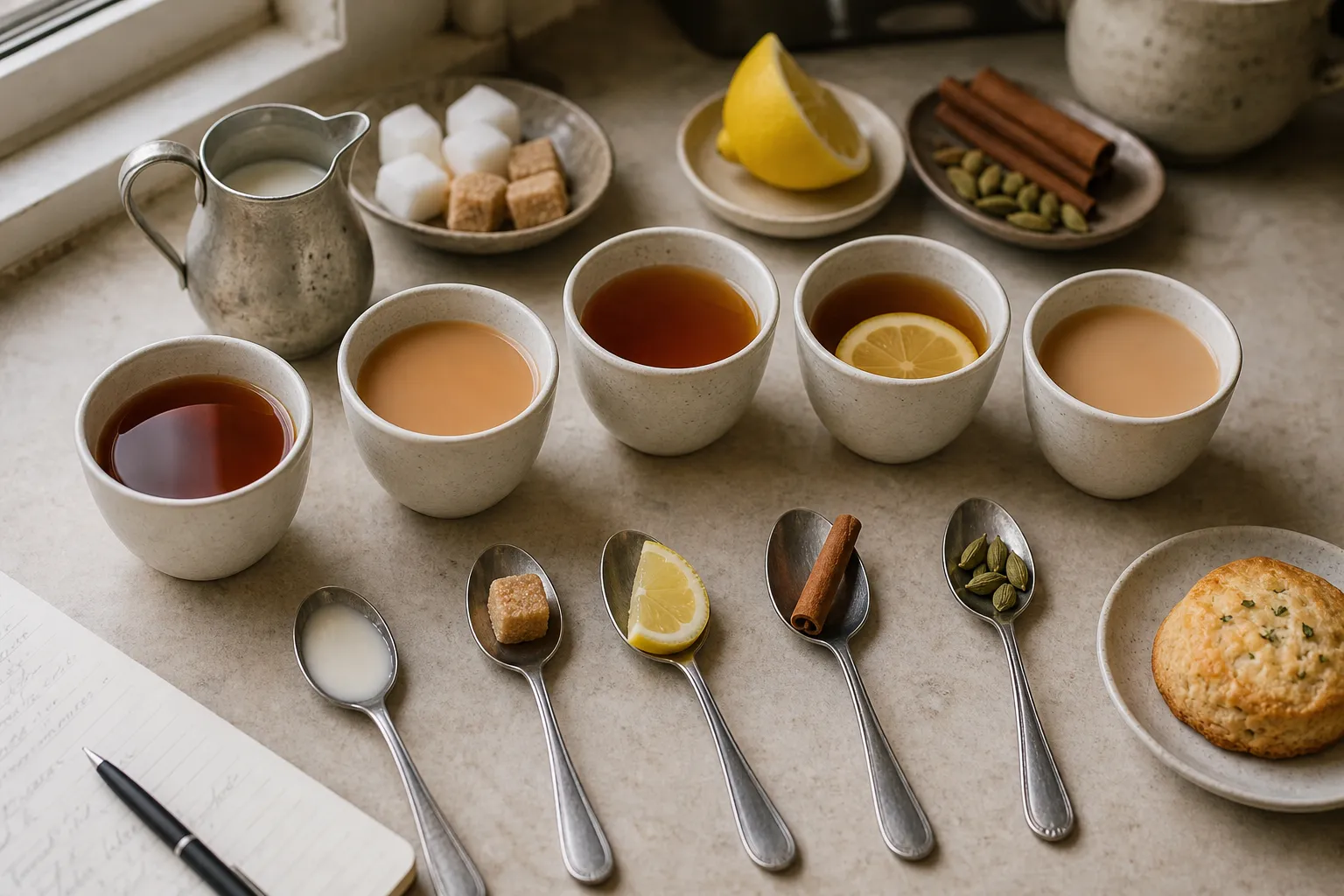
Food Pairing as a Cultural and Practical Skill
Food pairing is one of the easiest ways to make black tea culture practical. You do not need a formal service to learn from it. You can compare a plain cup with toast, a milky cup with biscuits, a brisk cup with rich food, or a sweet spiced cup with a savory snack.
The pairing goal is not perfection. It is balance.
Start with weight before flavor. A light tea with heavy food may disappear. A strong tea with delicate food may dominate. Match the weight of the cup to the weight of the plate before worrying about fine flavor notes.
Rich or Buttery
Consider brisk, full-bodied black tea. Watch that too much astringency does not feel rough.
Sweet Baked Goods
Consider malty or rounded black tea. Watch that very sweet food can make tea seem sharper.
Spicy Food
Consider tea with body, possibly milk or sweetness. Watch that delicate aroma may be overwhelmed.
Breakfast Foods
Consider strong, straightforward black tea. Brew strength matters more than complexity.
Light Snacks
Consider clear, aromatic black tea. Heavy milk may flatten the pairing.
Black tea often has a drying structure that many drinkers describe as briskness or astringency. With food, that structure can refresh the palate, especially beside fat or sweetness. Milk softens that edge. Sugar shifts it again.
If a pairing feels too sharp, add food with fat, reduce steeping time, or add a small amount of milk. If it feels dull, choose a stronger tea, reduce additions, or pair with a less heavy food. If it feels too sweet, try the tea plain or choose a more brisk cup.
This is where culture and tasting meet. A custom may continue because it works socially, but it often also works sensorially.
Etiquette Without Anxiety
Black tea etiquette can sound intimidating when reduced to rules. In practice, most tea service becomes easier if you pay attention to setting, host cues, and the objects on the table.
A formal hotel service, a family kitchen, a café, a tasting session, and a workplace mug do not ask for the same behavior. The same person may follow different habits in each setting.
For most everyday black tea service, the courtesy pattern is enough:
- Notice what is offered.
- Let the host or server explain the service if needed.
- State milk, sugar, or plain preference clearly.
- Avoid correcting someone else’s preferred cup.
- Handle shared pots, strainers, and serving pieces carefully.
- Leave room for local or household variation.
Questions about whether milk goes first or last are common, but this page does not have verified historical or etiquette sources to settle that debate. A practical answer is better: follow the setting. If tea is poured for you, state your preference. If you pour for yourself, add milk in the order that gives you the best control over strength and color.
Refills also vary. Some hosts refill automatically. Some wait to be asked. Some services provide a pot for the table. Some serve by the cup. A polite decline can be simple: “No more, thank you.” If you want another cup, ask without assuming. If you are serving, offer refills without pressure and keep additions available for guests who prefer them.
Good tea manners are less about performance and more about making the cup easy for everyone at the table.
How to Read Menus, Packages, and Service Language
Black tea culture often reaches readers through labels: breakfast tea, afternoon tea, milk tea, chai, spiced black tea, strong tea, loose leaf, orthodox, CTC, estate, blend, single origin, and flavored tea. This page does not have source support to define every market term in detail, but readers can still use a practical filter.
Ask what the wording tells you about the cup.
Some labels point to use. “Breakfast” may imply a tea intended to be strong enough for morning drinking or milk, but the actual cup depends on the blend and leaf form. “Afternoon” may suggest a lighter service context, but it is not a guarantee. “Milk tea” may describe a finished drink, a style of preparation, or a tea base suitable for milk.
Some labels point to ingredient structure. “Spiced black tea” tells you additions are part of the blend or preparation. “Flavored black tea” may mean added aroma or flavoring rather than whole spices. “Masala chai” points toward a more specific topic, but the tea base, spice mix, milk, sweetness, and method still need to be checked.
For any package, look for:
- Tea base named or unnamed.
- Loose leaf, broken leaf, fannings, or bagged format.
- Brewing instructions.
- Milk or sugar suggestions.
- Added flavoring or spices.
- Date, storage guidance, and package condition.
Quality terms need care. A buyer should not rely on elegant wording alone. The more practical question is whether the package explains what affects the cup: origin if relevant, leaf form, blend type, harvest or packing information when available, brewing guidance, and ingredient list.
For culture-focused teas, clear preparation guidance can be as important as romantic description. If a tea is meant for milk, spice, or food service, the package should help you brew it that way.
Reader Paths Into Deeper Guides
This root page gives the map. The narrower guides should carry the detailed work. Each path below is an entry point, not a full treatment.
Why do some people add milk to black tea?
The deeper topic should clarify tea strength, milk texture, sweetness, serving temperature, and local habit.
What is the difference between afternoon tea and high tea?
The deeper topic should clarify menu wording, service structure, food context, and common confusion.
What makes masala chai different from flavored black tea?
The deeper topic should clarify tea base, spices, milk, sweetness, simmering, and preparation choices.
What should I serve with black tea?
The deeper topic should clarify body, tannin, sweetness, fat, spice, and aroma with food.
How should I behave when black tea is served?
The deeper topic should clarify host-and-guest expectations, refills, additions, teaware, and setting cues.
Root takeaways
- Milk works best when the tea has enough body to remain present.
- Service names tell you about context as much as tea.
- Spiced black tea depends on structure, not just spice.
- Food pairing starts with matching tea strength to food weight.
- Etiquette changes by setting, and courtesy matters more than memorized performance.
Common Misreadings of Black Tea Traditions
“Traditional” does not always mean fixed.
A tradition can have recognizable patterns and still allow variation. Household preference, tea cost, available ingredients, water, climate, occasion, and personal taste all influence the cup. A single cup should not be used to judge an entire custom.
“Strong” does not always mean better.
Strong black tea may be useful for milk, sugar, spice, or food, but strength alone is not quality. A strong cup can be balanced, or harsh. A lighter cup can be elegant, or weak. Taste for body, aroma, and finish rather than strength alone.
“Plain” does not always mean more serious.
Plain tasting is useful because it reveals the tea clearly, but many black tea traditions are built around additions. Milk, sugar, spice, and food are not automatically distractions; they may be part of the intended cup.
“Etiquette” does not always mean formality.
Black tea service etiquette can be as simple as offering milk, asking before refilling, passing sugar, or not criticizing a guest’s preference. The practical question is what makes the guest and host comfortable in that setting.
A Simple Way to Explore Black Tea Culture at Home
You can learn a lot without staging a formal service. Choose one black tea and prepare it in several ways, changing only one variable at a time.
Try this path:
- Brew it plain at a moderate strength.
- Brew it slightly stronger and add a small amount of milk.
- Add sugar to a small portion and compare.
- Pair the plain cup with a light snack.
- Pair the stronger cup with a richer food.
- Notice which version tastes balanced and which feels forced.
Write down simple observations: color, aroma, body, dryness, sweetness, aftertaste, and whether the tea still tastes like itself after additions. This is not a formal tasting protocol. It is a practical way to understand why serving styles exist.
Repeat the same exercise with a different black tea. A tea that works beautifully plain may not be the best milk tea. A tea that seems plain on its own may become useful with food. A strong tea may need a shorter steep if you drink it without additions.
Culture becomes clearer when you connect custom to cup.
Source Limits for This Page
A strong culture page should not pretend to know more than its source base supports. The current research package contains no usable public reference candidates for regional history, etiquette, teaware, brewing norms, food customs, or market terminology. That does not make the topic unimportant. It means specific cultural claims need better support before they are stated as fact.
So this root page uses a restrained approach: it explains black tea culture through observable parts of service, avoids ranking customs, treats named subtopics as reader paths, keeps health-adjacent claims out of the discussion, and uses tasting and serving logic where detailed cultural sourcing is missing.
That boundary matters most for regional tea customs. Many familiar statements about tea service circulate widely, but without sourced support they should not become article structure. Future deeper guides should rely on museums, universities, tea boards, culinary history publishers, or carefully bounded tea education sources before making detailed historical or cultural claims.
The Root Takeaway
Black tea traditions are not just stories around tea. They are practical systems for making a cup fit a setting: plain or milky, sweet or unsweetened, spiced or simple, solitary or shared, paired with food or served on its own. The most useful way to understand black tea culture is to start with what you can observe and taste.
Look at the leaf form, brew strength, additions, vessel, food, and social cues. Ask whether the tea is meant to stand alone, carry milk, support sweetness, hold spice, refresh the palate, or structure a service. Keep regional and historical claims modest until strong sources support them.
From there, the narrower guides can do their work: milk tea, afternoon and high tea service, masala chai, food pairing, and etiquette. This root page gives the frame; the deeper pages can fill in the verified detail.