Black Tea Buying Guide
Buying Black Tea, Reading Labels, and Storing Freshness
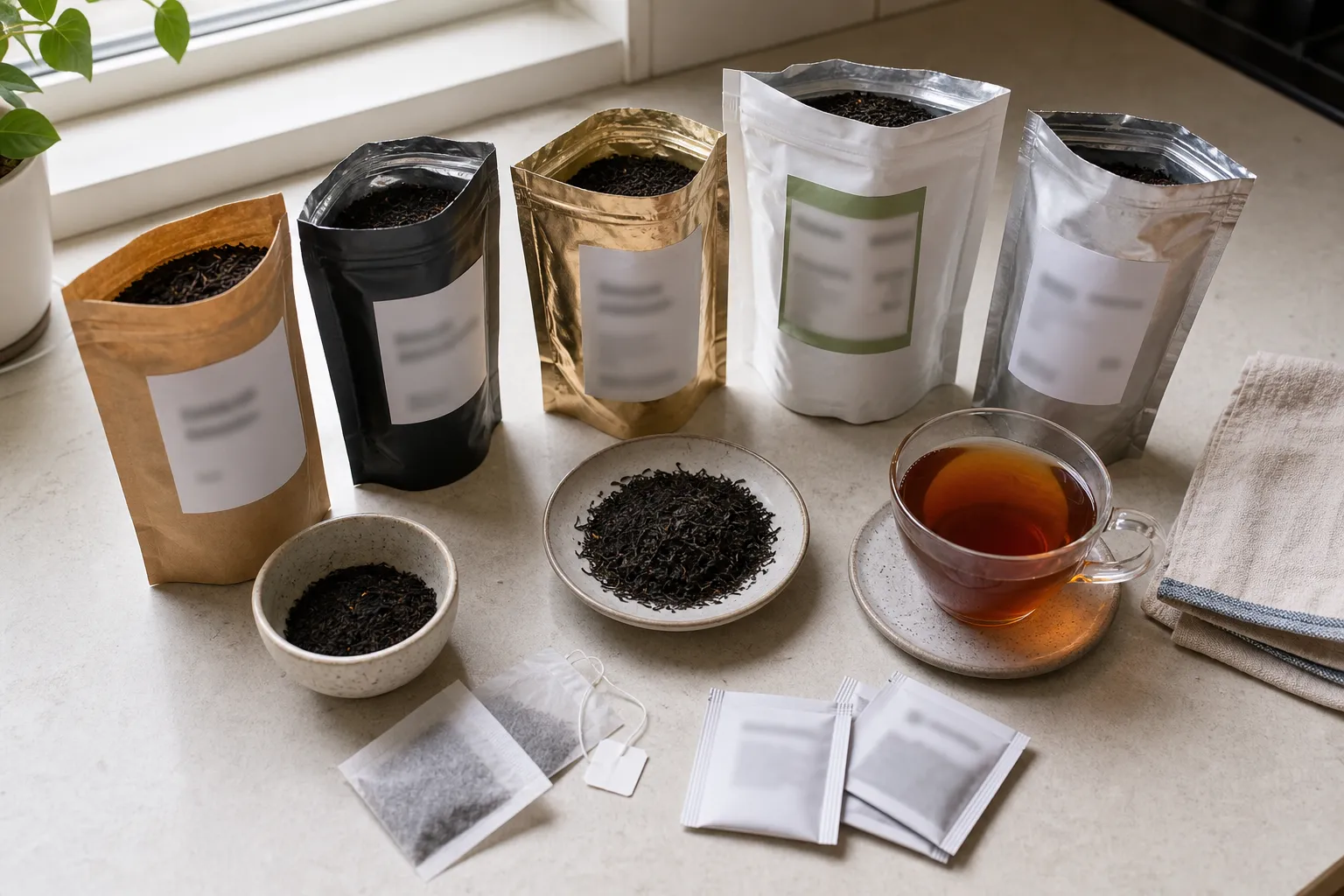
Buying black tea is easier when you treat the package as a set of clues, not a final judgment. Start with the cup you want, then read for format, origin or blend wording, leaf style, date language, flavor description, brewing guidance, and package condition. Loose leaf tea, tea bags, and sachets can all make satisfying cups, but they suit different routines.
A good purchase is not the tea with the most impressive label. It is the tea that fits how you drink: plain or with milk, brisk or soft, daily or occasional, quick or careful. Once it is home, the same practical thinking continues. Keep black tea sealed, dry, cool, dark, and away from strong kitchen odors so its aroma has a fair chance to last.
A Practical Framework for Buying Black Tea
Black tea labels often combine several kinds of language at once: place names, grade terms, blend names, flavor notes, leaf descriptions, date wording, and brewing instructions. Some of that information is useful. Some is broad. Some is mostly selling language.
The goal is not to decode every term perfectly before buying black tea. The goal is to gather enough observable information to choose a tea that can brew the kind of cup you want.
| Buying step | What to look for | Why it matters |
|---|---|---|
| Choose the drinking use | Morning mug, milk tea, plain sipping, iced tea, office cup, shared pot | The right tea depends on the cup, not only the label |
| Check the format | Loose leaf tea, tea bags, sachets, wrapped bags, bulk tea | Format affects control, convenience, visibility, and cleanup |
| Read the label in layers | Origin, blend, grade, dates, ingredients, flavor notes, brewing guidance | Each layer gives a clue, but none settles the whole choice |
| Inspect what you can | Leaf appearance, aroma, package condition, seal quality | These are practical freshness and handling cues |
| Brew and adjust | Leaf amount, steeping time, water temperature, additions | The cup confirms whether the tea suits your routine |
This approach keeps the decision close to what you can see, smell, brew, and compare. It also leaves room for variation. Black tea changes with origin, cultivar, processing, grade, blending, storage, water, brewing ratio, and personal preference. One label term cannot carry all of that.
How to Read Black Tea Labels
A helpful black tea label usually answers a few basic questions: what the tea is, how it is presented, whether it is blended or flavored, how fresh or traceable it appears, and how the seller suggests brewing it. The strongest labels are not always the longest. A clear, practical label is often more useful than a dramatic description with little detail.
| Label clue | What it can help you ask | What it cannot settle alone |
|---|---|---|
| Origin wording | Is the tea tied to a country, region, estate, garden, or broad source area? | Whether it is automatically better or fresher |
| Blend wording | Is it single-origin, a breakfast blend, a flavored blend, or a house style? | The exact taste before brewing |
| Leaf form | Is it whole leaf, broken leaf, fannings, dust, bagged, sacheted, or loose? | Whether the cup will suit every preference |
| Grade language | Does it use terms such as orange pekoe or other sorting language? | A universal quality ranking |
| Date information | Is there a harvest date, packing date, best-by date, or no date? | A complete freshness answer |
| Flavor notes | Does it mention malt, fruit, honey, cocoa, smoke, flowers, spice, or briskness? | A fixed result in every kitchen |
| Brewing guidance | What ratio, temperature, and steeping time are suggested? | The only correct method |
| Package condition | Is it sealed, clean, intact, and protected from light and moisture? | Everything about previous handling |
Origin wording is best read as a starting point. A label may name a country, region, estate, garden, or style associated with a place. It may also use place-related language for a blend. Ask whether the origin is precise or broad, whether the tea is described as single-origin or blended, and whether the flavor notes match what you want in the cup.
Blend wording is about purpose. A breakfast blend may be built for strength and milk. A flavored black tea may include added ingredients or aroma. A house blend may aim for consistency from batch to batch. A blend is not automatically lesser than a single-origin tea; it is simply a different kind of product.
Flavor notes are most useful when they stay close to the cup. Words like malty, brisk, floral, cocoa-like, fruity, woody, smoky, honeyed, or tannic can help you imagine aroma, mouthfeel, and finish. More elaborate language can be enjoyable, but if it does not connect to the brewed tea, treat it lightly.
Loose Leaf Tea, Tea Bags, and Sachets
Format is one of the clearest choices a buyer can make. It affects convenience, control, price, storage, and how much you can inspect before brewing.
Loose leaf tea
More visible leaf detail, adjustable strength, wider style range, and more control. It needs a strainer, infuser, pot, or filter, and cleanup takes longer. It often fits careful tasting, shared pots, and exploring regional styles.
Tea bags
Fast, portable, easy to portion, and low cleanup. Leaf detail is less visible and the portion is already chosen. They often fit work, travel, quick morning cups, and milk tea routines.
Sachets or pyramid bags
Convenient and often roomier than flat paper bags. Shape alone does not tell you leaf quality or flavor. They often fit drinkers who want convenience with a little more leaf visibility.
Loose leaf tea gives you the most direct view of the dry leaf. You can see whether the pieces are long, wiry, twisted, rolled, broken, flaky, or very fine. You can smell the tea before brewing and adjust the amount used per cup. It suits drinkers who want more control and do not mind a little preparation.
Tea bags are built around convenience. They are easy to carry, quick to brew, and familiar in offices, hotels, travel kits, and busy kitchens. Some bagged black teas use small particles that infuse quickly and strongly. That can be useful for a brisk cup with milk, though it may be too sharp for someone who prefers a gentler plain tea.
Sachets and pyramid-style bags sit between these two in many markets. They may allow more room than flat bags and may contain larger leaf pieces, but the real question is still what is inside, how it smells, how clearly the label describes it, and how it brews.
The useful comparison is not “loose leaf tea vs tea bags” as a status contest. It is format matched to use. A quiet weekend pot, a commuter mug, a tea latte, and an afternoon plain cup do not need the same presentation.
Black Tea Grades and Orange Pekoe
Grade terms can be useful, but they are easy to over-read. Orange pekoe is the classic example. Many buyers expect it to mean orange flavor or a single level of excellence. In ordinary black tea label use, it is better understood as grading language connected to leaf sorting and appearance, not a promise about citrus flavor or personal preference.
Keep grade language practical
- It may describe leaf presentation, such as whole leaf, broken leaf, fannings, or smaller particles.
- It may appear as part of a longer set of initials.
- It may give a brewing clue because smaller particles often infuse faster than larger leaves.
- It does not replace aroma, freshness cues, storage condition, brewing fit, or your own taste.
When you see black tea grades on a package, ask what the term is doing. Does the label explain it? Does the visible leaf match the presentation suggested by the wording? Does the brewing guidance make sense for the leaf size? A quick, strong breakfast cup and a slow plain tasting cup may call for different leaf forms.
The common mistake is treating grade language as a ladder where a higher-sounding term must mean a better drink. That shortcut is too narrow. A tea can be carefully made and still not match your preferred style. Another tea can be simple and still be exactly right for a daily milk tea.
Use grades as one clue in a cluster: grade term, leaf appearance, aroma, intended use, date wording, package condition, and price.
Freshness Cues: Dates, Aroma, Leaf, and Package Condition
Freshness in black tea is not only a printed date. It is also aroma, storage history, seal condition, leaf appearance, and how the tea behaves in water. Because date wording varies by seller and market, avoid treating any single date as a complete freshness answer.
| Freshness cue | Useful question | Practical reading |
|---|---|---|
| Harvest date | When was the leaf picked? | Helpful for context, especially when clearly labeled |
| Packing date | When was the tea packaged? | Useful for judging time in the current package |
| Best-by date | When does the packer suggest using it for quality? | A guide, not a full storage history |
| Dry aroma | Does it smell clean and fitting for the style? | Flat, damp, musty, or unrelated odors are warning signs |
| Leaf appearance | Does the leaf look consistent, dry, and appropriate to the stated form? | Excess dust, clumping, or visible foreign material deserves caution |
| Package condition | Is the seal intact and the package protected? | Damage raises questions about handling and exposure |
Dry leaf aroma is one of the simplest cues when you can smell the tea. A black tea might smell malty, floral, fruity, woody, cocoa-like, spicy, smoky, or brisk depending on style. It should not smell damp, stale, musty, or strongly of unrelated foods or household odors. Aroma cannot verify everything, but it can tell you when something feels off.
Leaf appearance is especially useful with loose leaf tea. Long twisted leaves, broken grades, small particles, and rolled shapes can all be legitimate. The key is consistency with the stated form. A package should not look like an accidental mixture unless it is clearly sold as a blend or cut style.
Package condition matters because tea is vulnerable to air, moisture, light, heat, and odors. Check for torn seals, loose lids, punctured pouches, crushed tins, damp labels, or tea displayed in bright light. If buying from a bulk jar, notice whether the lid fits well, how often it is opened, and whether strong-smelling products sit nearby.
Comparing Origin, Blend, Leaf, and Price
Price is easiest to judge when you compare it against use. A tea that looks expensive per package may be reasonable if you drink it slowly and brew it carefully. A lower-priced tea may be better for daily milk tea, iced tea, or a household that goes through a large amount.
The mistake is comparing price without comparing format, amount, leaf style, and purpose.
| Comparison point | Tea A | Tea B | Why it matters |
|---|---|---|---|
| Format | Loose, bagged, sachet | Loose, bagged, sachet | Affects control and convenience |
| Origin wording | Specific or broad | Specific or broad | Frames style expectations |
| Blend wording | Single, blended, flavored | Single, blended, flavored | Clarifies purpose and ingredients |
| Leaf appearance | Whole, broken, small, mixed | Whole, broken, small, mixed | Suggests brewing speed and texture |
| Aroma | Bright, malty, floral, smoky, flat | Bright, malty, floral, smoky, flat | Gives a cup-level clue |
| Date wording | Harvest, packed, best-by, none | Harvest, packed, best-by, none | Helps interpret freshness cues |
| Brewing guidance | Clear or vague | Clear or vague | Gives you a starting method |
| Intended use | Plain, milk, iced, daily | Plain, milk, iced, daily | Prevents mismatched expectations |
| Price per amount | Lower or higher | Lower or higher | Only meaningful with use and format |
Origin is a direction, not a decision. Place names can be broad, precise, traditional, stylistic, or part of a blend. If you are learning, buy smaller amounts when possible and compare teas with clear differences: one brisk and strong, one aromatic and lighter; one blended for milk, one intended for plain drinking.
Blends deserve the same practical reading. Look for an ingredient list if flavoring or additions are present, a clear description of the base tea when available, strength and body cues, brewing guidance, and whether the blend is meant for plain drinking or additions.
For price, compare what you can actually evaluate: package weight or serving count, loose leaf versus bags, clarity of label information, aroma and leaf appearance, daily or occasional use, and whether the tea remains satisfying when brewed your usual way.
A practical purchase is not always the cheapest or most expensive. It is the one whose cost matches its role in your tea routine.
Tea Storage That Protects the Cup
Tea storage is part of buying black tea because the purchase is not finished when the package reaches your kitchen. Black tea is an aromatic dry leaf. It can lose character or pick up unwanted smells when exposed to air, moisture, light, heat, or strong odors.
| Storage factor | What to do | Why it matters |
|---|---|---|
| Air | Keep the container closed tightly | Helps preserve aroma |
| Moisture | Keep tea dry and away from steam | Reduces damp or stale character |
| Light | Use an opaque container or dark cupboard | Protects aroma and appearance |
| Heat | Avoid stove tops, sunny shelves, and warm appliances | Slows everyday aroma loss |
| Odors | Keep away from spices, coffee, cleaning products, and scented foods | Tea can absorb unwanted smells |
| Handling | Use clean, dry scoops or hands | Keeps moisture and food residue out |
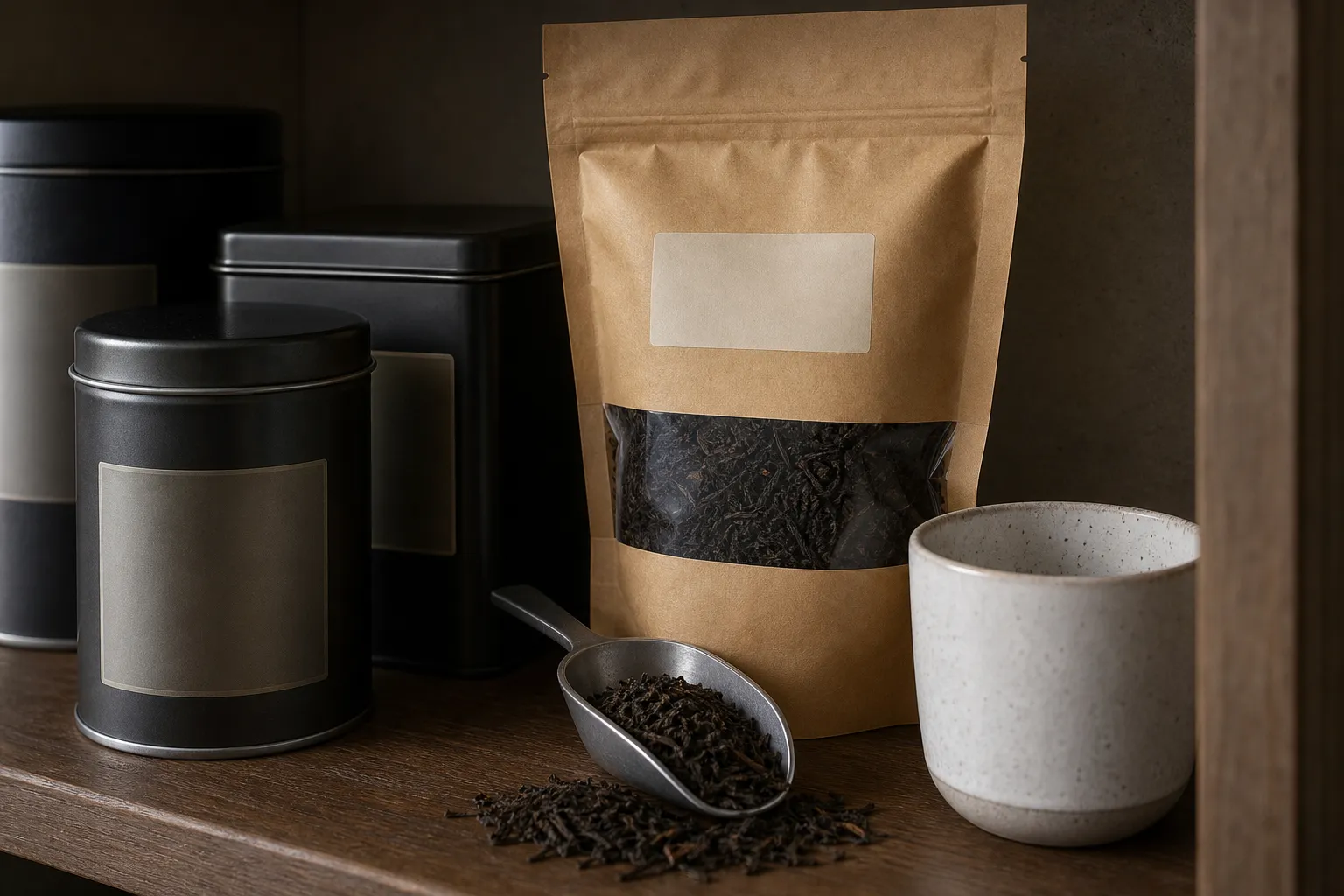
Airtight containers are useful because they limit repeated exposure to air and kitchen smells. Metal tins, well-sealed caddies, opaque jars with tight lids, and resealable pouches can all work if they close reliably and stay dry. Clear glass should be kept in a dark cupboard.
A good tea container should be clean, fully dry, tight-lidded, opaque or stored away from light, and free of lingering odors from previous contents. Avoid containers that held strong spices, coffee, scented sweets, or anything with a persistent smell.
The worst kitchen locations are often the most convenient: near the kettle, stove, sink, window, or spice rack. Better choices include a closed cupboard away from heat, a pantry shelf away from spices and cleaning products, a dry drawer used for tea, or a dedicated tea caddy kept out of sunlight.
Tea bags need storage care too. Individually wrapped bags have more protection than loose bags in an open carton, but both should stay dry and away from strong smells. If bags come in a paper box with no inner seal, transfer them to a clean tin or airtight container if they will sit for a while.
For flavored black tea, separation matters. A smoky tea, a bergamot-scented tea, and a delicate unflavored tea should not share the same loose container unless you want their aromas to mingle.
Brewing Expectations Make You a Better Buyer
Buying and brewing are linked. A tea that disappoints at first may be mismatched to your method rather than poorly chosen. Before deciding that a tea is not for you, adjust the basic variables: leaf amount, water temperature, steeping time, vessel size, and whether you add milk.
Small particles often infuse quickly. Larger leaves may open more slowly. Broken-leaf breakfast teas may give strength fast, while larger loose leaves may need more time or more leaf to show body. If a cup is harsh, shorten the steep or use slightly less leaf. If it is thin, use more leaf or steep a little longer.
Some black teas are best appreciated plain because they emphasize aroma, clarity, sweetness, or layered finish. Others are satisfying with milk because they have enough body and briskness to remain present. A tea that feels too sharp plain may become balanced with milk. A tea that feels elegant plain may seem muted if milk is added.
Use the first cup as a reading
- Did the aroma become stronger, softer, or duller after brewing?
- Was the liquor light, deep, cloudy, or clear?
- Did the body feel thin, medium, or heavy?
- Was the finish sweet, drying, bitter, smoky, floral, or flat?
- Did the cup improve with milk, lemon, sugar, or no additions?
- Would a shorter or longer steep help?
Over several purchases, this turns label reading into personal knowledge. You begin to know which words on packages actually match your preferences.
Common Buying Mistakes to Avoid
The best buying habits are often simple corrections. They keep you from trusting one label clue too much or ignoring practical details that affect the cup.
| Mistake | Better habit |
|---|---|
| Treating one word as the whole tea | Do not let premium, strong, smooth, rare, traditional, breakfast, estate, golden, or orange pekoe carry the whole decision |
| Buying more than you can store well | Start smaller when exploring; buy larger amounts once the tea fits your routine |
| Ignoring how you actually drink tea | Choose for the real cup: rushed morning mug, office drawer, milk tea, iced tea, or quiet plain cup |
| Assuming every origin name works the same way | Read the surrounding details and treat broad origin wording as a general cue |
| Letting storage undo a good purchase | Plan the container before opening the package if the original packaging is weak |
A refined-sounding tea may not suit a busy morning. A convenient bag may be perfect at work but not satisfying for weekend tasting. A strong blend may be excellent with milk and too assertive plain. The right tea is the one that meets the actual use.
Reader Paths Into Deeper Buying Topics
This root guide is the map. Each buying question can go deeper without crowding the first decision.
| If your main question is… | Follow this path |
|---|---|
| Choosing a format | Compare loose leaf tea, tea bags, and sachets by convenience, control, cleanup, and cost per cup |
| Understanding grade language | Look more closely at orange pekoe and black tea grades as leaf sorting terms, not flavor guarantees |
| Reading dates | Separate harvest dates, packing dates, best-by dates, aroma, and package condition |
| Fixing storage | Focus on airtight containers, dry storage, odor separation, and better kitchen placement |
| Comparing several teas | Use origin wording, blend wording, leaf appearance, date language, intended use, and price together |
The quick rule is simple: choose bags for speed and portability, loose leaf tea for control and visible leaf detail, and sachets when you want convenience with a little more room for the leaf. Use grade terms as clues, not verdicts. Pair date wording with aroma and package condition. Store tea as carefully as you chose it.
A Black Tea Buying Checklist
Use this checklist in a shop, online listing, or pantry review. It is intentionally practical and observable.
Before buying
- What cup do I want: brisk, malty, aromatic, smoky, floral, strong with milk, or gentle plain?
- Is the tea loose leaf, bagged, sacheted, or another format?
- Does the label make origin or blend wording clear?
- Is the tea flavored or unflavored?
- Does the package explain leaf form or grade language?
- Are harvest, packing, or best-by dates present and clearly labeled?
- Does the package look sealed, clean, and undamaged?
- If I can smell the tea, is the aroma clean and fitting for the style?
- Is the amount realistic for how quickly I will drink it?
- Do I have a proper container at home if the package is not resealable?
After buying
- Store it away from air, moisture, heat, light, and odors.
- Note the first brewing method before changing variables.
- Adjust steeping time or leaf amount before judging too quickly.
- Write a short note if you might buy it again.
- Keep the label or take a photo if the tea is one you want to compare later.
This habit turns buying into learning. Each package becomes a reference point: what the label said, what the leaf looked like, how the dry aroma behaved, how the cup tasted, and whether storage preserved it.
The Sensible Way to Buy Black Tea
Buying black tea well does not require memorizing every grade, region, or tasting term. It requires a steady reading habit. Start with your intended cup. Check the format. Read the label in layers. Treat origin, blend, grade, and date language as clues. Inspect what you can: package condition, leaf appearance, aroma, and brewing guidance. Then store the tea with the same care you used to choose it.
The most useful black tea buyer is not the one with the most vocabulary. It is the one who can connect a package to a cup: this form suits my routine, this wording tells me enough, this aroma seems clean, this price fits the use, this container will protect the leaf, and this brewing method gives the tea a fair chance.
Labels help. Grades help. Dates help. Format helps. Storage helps. But the final measure is still the cup in front of you: its aroma, color, body, briskness, astringency, finish, and whether it fits the way you actually drink black tea.