Ceylon Tea Guide
Ceylon Black Tea Styles by Elevation and Flavor
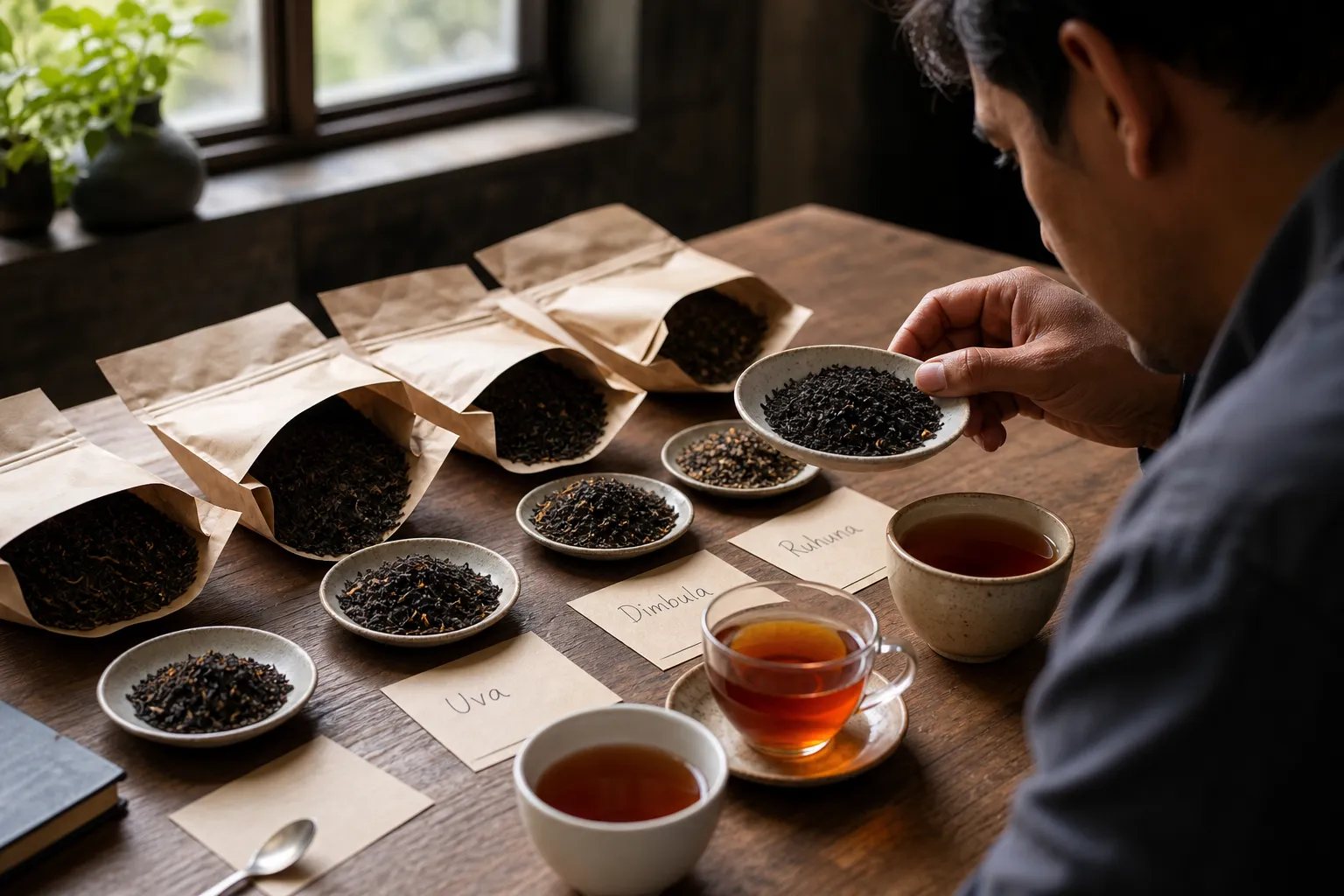
A Ceylon tea label can look plain until it says “high grown,” “Uva,” “Dimbula,” “Ruhuna,” or simply “Sri Lankan black tea.” The useful way to read it is as a set of clues, not a fixed flavor promise. Ceylon black tea styles are often grouped by elevation and region because growing conditions can influence body, aroma, briskness, and astringency; the cup still depends on harvest, processing, grade, blending, freshness, storage, water, leaf amount, and steeping time. Start with the label, then let the brewed tea confirm or correct it.
upward
Start with the broader guide
Use the broader guide first if you need the full scope before this page.
What Ceylon Black Tea Tastes Like by Elevation
Ceylon black tea taste is commonly discussed through elevation because Sri Lankan tea is grown across varied agro-climatic areas. Technical and official Sri Lankan tea sources help explain the cultivation context and the region names buyers see on packages. They support the vocabulary; they do not make every tea from one elevation taste the same.
As a buying shortcut, elevation usually points toward structure:
This is a map, not a verdict. A broken-leaf high grown tea may taste sharper than a whole-leaf version. A low grown tea that is stale or under-leafed may taste flat rather than full. A mid grown blend may be built for consistency more than regional expression. Elevation helps you ask better questions before buying; the cup gives the answer.
High Grown Ceylon Tea: Brightness, Briskness, and a Lighter Frame
High grown Ceylon tea is usually the style to consider when you want a lively cup rather than a heavy one. In market language, high grown teas are often associated with regions such as Nuwara Eliya, Dimbula, and parts of Uva. A label may emphasize elevation, region, estate name, or grade, and each cue tells you something different.
The usual expectation is brightness first. A high grown tea may show a clear amber to copper liquor, a brisk finish, and a lighter body than many low grown teas. Some descriptions lean toward citrus, floral lift, or fresh aromatic sharpness. Treat those notes as style language, not a guaranteed tasting script.
High grown tea can turn too sharp if brewed aggressively. If the cup tastes thin but biting, adjust the method before deciding you dislike the style. Use your normal black tea water temperature, but shorten the infusion slightly, reduce the leaf amount, or avoid squeezing a tea bag against the cup. A shorter steep often keeps the lift while reducing rough astringency.
Choose high grown Ceylon tea when you want clarity and snap. It can take milk in stronger grades or blends, but delicate high grown styles may lose their aromatic edge under too much milk.
Low Grown Ceylon Tea: Fuller Body and Stronger Milk Potential
Low grown Ceylon tea is often described as darker, fuller, and more forceful than high grown tea. Ruhuna is the regional name many readers meet in this low grown context, though labels may also use broader Sri Lankan black tea wording or blend names instead of region-first language.
The practical difference is body. Low grown teas commonly give a deeper liquor and a weightier mouthfeel. Descriptions often move toward malt, warmth, dark sweetness, and a stronger black tea base. That fuller profile is one reason low grown Ceylon tea can work well with milk.
Milk changes the judgment. A tea that feels a little firm when plain may become rounded with a splash of milk. A tea that tastes elegant without milk may disappear once milk is added. For Ceylon tea with milk, look for cues such as low grown, Ruhuna, broken leaf grades, breakfast blend language, or a package that presents the tea as robust rather than delicate.
Strength is not only origin. A small-leaf or broken-leaf tea extracts quickly. A long steep can increase bitterness and astringency. Storage also matters; an old or poorly sealed tea may darken in the cup without tasting lively. Low grown Ceylon tea is a good direction for a fuller brew, but leaf form and preparation decide whether that fullness feels smooth or coarse.
Mid Grown Ceylon Tea: When the Middle Lane Makes Sense
Mid grown Ceylon tea sits between the bright lift of high grown styles and the heavier build often associated with low grown teas. Kandy is a common regional name in this middle-elevation conversation, and it can be useful when you want a cup that feels recognizably Ceylon without leaning too far toward delicate brightness or strong weight.
The appeal is balance. A mid grown tea may offer enough body for milk, enough briskness to drink plain, and enough black tea depth for daily brewing. For many buyers, that makes it less dramatic but more forgiving.
Choose mid grown Ceylon tea when you are not sure which direction you prefer. Brew it next to a high grown tea and notice brightness; brew it next to a low grown tea and notice body. If the middle cup tastes right, your preference may be for structure rather than extremes.
Mid grown labels still vary widely. Estate, grade, blend design, and freshness may matter as much as the elevation cue. Treat “mid grown” as a middle lane for tasting, not as a guarantee of mildness.
Ceylon Tea Regions Explained: Uva, Dimbula, Nuwara Eliya, Kandy, and Ruhuna
Ceylon tea regions connect label language to Sri Lankan geography and cup expectations. They are also easy to overread. A region name is not a grade, and it is not proof that a tea will taste one exact way.
Uva Ceylon Tea
Uva Ceylon tea is often discussed as distinctive among Sri Lankan black teas, especially when buyers want aromatic briskness and a clear regional identity. Depending on producer, season, and processing, descriptions may lean bright, fragrant, brisk, or lightly citrusy. Use Uva as a cue for character, then check the leaf and brew.
If the tea tastes too sharp, reduce steep time before adding more sugar or milk. Uva can reward a lighter hand.
Dimbula Ceylon Tea
Dimbula Ceylon tea is often presented as a classic bright cup. To recognize the style, look for clarity, briskness, and a clean black tea profile rather than heavy malt. It may suit plain drinking, lemon, or a modest amount of milk, depending on grade and strength.
Dimbula is a helpful label when you want a familiar Ceylon profile with lift. If a package also gives grade and estate information, those details may tell you more about extraction and body.
Nuwara Eliya Ceylon Tea
Nuwara Eliya Ceylon tea is commonly associated with high grown delicacy. The cup may be lighter, aromatic, and less full-bodied than low grown styles. That makes it appealing for plain drinking, especially when you want fragrance and brightness rather than density.
This is also a style where brewing can easily dominate the tea. Too much leaf or too long an infusion may make a delicate tea seem merely astringent. Taste it plain first before deciding whether milk belongs.
Kandy Ceylon Tea
Kandy often appears in the mid grown conversation. A Kandy tea may suit readers who want a steady Sri Lankan black tea with moderate body and briskness. It can be a useful everyday style because it does not always demand the same precision as more delicate high grown cups.
For buying, Kandy is a good label to compare against blends. If you like the balance but want more strength, look for smaller leaf grades or a blend built for milk. If you want more aroma, compare it with high grown regional teas.
Ruhuna Ceylon Tea
Ruhuna Ceylon tea is commonly linked with low grown strength and fuller body. Expect darker liquor and a more forceful cup than many high grown examples, although freshness and grade still matter. It is one of the clearer directions to consider if you want Ceylon tea with milk.
Ruhuna is not only for milk. A whole-leaf low grown tea may offer depth without needing dairy. Brew one cup plain, then a second cup with milk, and let the tea’s weight decide.
How to Read Ceylon Tea Labels for Region, Elevation, and Grade
Ceylon tea labels often mix several kinds of information. Separating them prevents common buying mistakes.
“Ceylon” and “Sri Lankan black tea” point to origin identity. They tell you the tea is presented through Sri Lankan tea language, but they do not by themselves explain elevation, region, grade, or flavor.
“High grown,” “mid grown,” and “low grown” point to elevation category. These terms help predict general cup structure: brighter and brisker, balanced and rounded, or fuller and stronger. They should not be read as a quality ladder.
Region names such as Uva, Dimbula, Nuwara Eliya, Kandy, and Ruhuna point to place-based style expectations. They are useful when comparing teas, but the same region can produce different leaf forms and cup results.
Grade terms point to leaf size and sorting. A broken-leaf tea often infuses faster and can taste stronger sooner. A larger leaf may open more slowly and show aroma differently. Grade is not the same as flavor, and it is not the same as elevation.
Blend language tells you the tea may be designed for a target cup rather than a single-region expression. A breakfast-style Ceylon blend may prioritize strength and consistency; a region-labeled tea may invite closer comparison of aroma and body.
A practical label-reading order is: origin, region or elevation, leaf grade, blend status, then freshness and packaging. That sequence keeps prestige language from doing all the work.
Brewing High Grown, Mid Grown, and Low Grown Ceylon Tea
General tea preparation guidance supports a simple point: infusion time, ratio, water temperature, and leaf form change perceived strength. That matters with Ceylon tea because briskness can taste lively at one concentration and harsh at another.
High grown
Start with a moderate leaf amount and a shorter black-tea steep if you are sensitive to astringency. Taste before extending the infusion. If the aroma is attractive but the finish bites, time is the first variable to adjust.
Mid grown
Use it as your calibration cup. Brew at your normal black tea strength, then decide which direction you want: more leaf for body, less time for smoothness, or a longer steep if you plan to add milk.
Low grown
Watch extraction speed. Smaller particles and broken grades can become strong quickly. If you want milk, a firmer brew may be useful. If drinking plain, stop before the cup becomes dull or drying.
Water and storage are easy to ignore. Hard or strongly flavored water can flatten aroma. Tea stored near moisture, heat, or strong smells can lose freshness before you brew it. Before blaming region or elevation, make sure the leaf has been stored well and brewed with a consistent ratio.
Why Ceylon Black Tea Can Taste Brisk, Citrusy, or Malty
Briskness is one of the words most often attached to Ceylon black tea, but it can mean different things in the cup. Sometimes it describes a clean, lively finish. Sometimes a drinker uses it for sharpness or astringency. Brewing method decides where that line falls.
Citrusy notes are more likely to be associated with brighter, higher-grown styles in common tasting language, especially when the cup is clear and aromatic. Malty or deeper notes are more often associated with fuller low grown styles. The available source set supports those as cautious style expectations, not fixed sensory results.
Several variables can push the same tea in different directions:
- Longer steeping can make briskness feel more drying.
- More leaf can increase body but also astringency.
- Broken leaf can extract faster than larger leaf.
- Milk can soften firmness but may cover delicate aroma.
- Freshness can decide whether flavor feels lively or flat.
- Blending can smooth regional edges into a more consistent cup.
Compare two teas with the same brewing method before drawing conclusions about elevation. If both are brewed differently, you may be comparing your technique more than the tea.
Common Mix-Ups When Comparing Ceylon Black Tea Styles
The first mix-up is treating elevation as quality. High grown is not automatically better than low grown; it is often different in body, aroma, and use. A delicate high grown tea may be excellent plain and disappointing with milk. A low grown tea may be exactly right for a stronger breakfast cup.
The second mix-up is treating region as a single flavor. Uva, Dimbula, Nuwara Eliya, Kandy, and Ruhuna are useful names, but tea is agricultural and processed. Harvest, estate, manufacture, and storage can all change the final cup.
The third mix-up is confusing grade with status. Smaller or broken leaf can brew faster and stronger, which may be useful for milk. Larger leaf can be slower and more aromatic. The right grade depends on how you brew and drink.
The fourth mix-up is letting origin-promotion language stand in for tasting. Sri Lankan tea identity and region names are important for understanding labels, but words of prestige or specialness should be translated into practical questions: What region? What elevation? What grade? Plain or with milk? Fresh enough to judge?
FAQ
Which Ceylon black tea works well with milk?
Low grown Ceylon tea, Ruhuna-labeled teas, broken-leaf grades, and stronger Ceylon blends are often good starting points for milk. Some high grown teas can take milk, but lighter aromatic styles may lose their character.
Is high grown Ceylon tea always lighter?
It is often expected to be brighter and lighter-bodied than low grown tea, but not always. Leaf grade, processing, blend design, and steeping time can make a high grown tea taste sharper or stronger than expected.
What should I buy first to compare Ceylon tea by elevation?
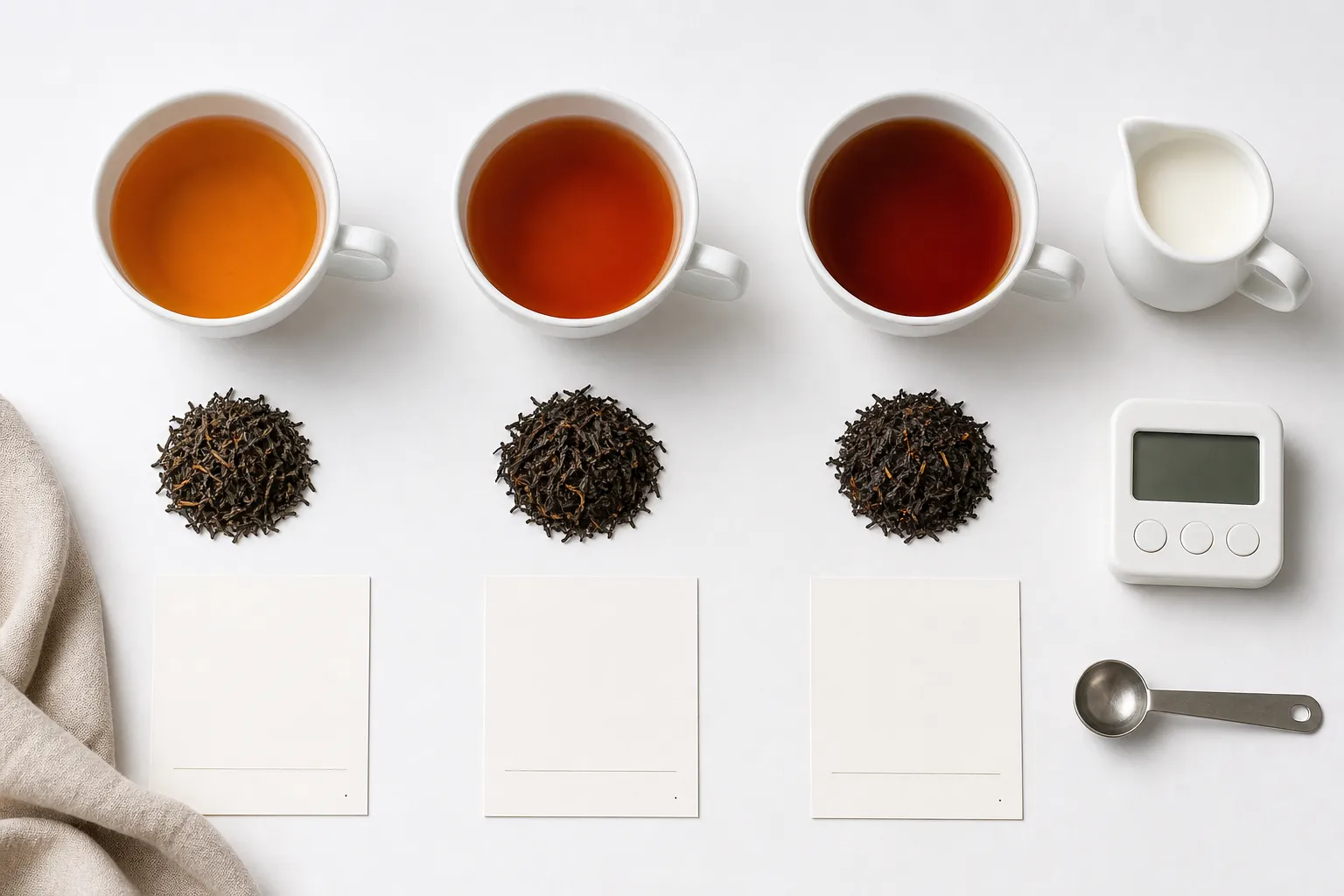
Choose one high grown tea, one mid grown or Kandy-style tea, and one low grown or Ruhuna-style tea. Brew them with the same leaf amount, water, and time. Compare body, aroma, briskness, astringency, and how each handles milk.
Are Ceylon tea regions enough to predict flavor?
They are helpful, but not enough on their own. Region and elevation guide expectations; the final cup depends on the leaf, manufacture, freshness, storage, water, ratio, and steeping time.
A good Ceylon comparison starts at the package, but it should end in the cup. Read elevation and region as clues, brew consistently, then decide whether your next Sri Lankan black tea should be brighter, fuller, more milk-friendly, or more aromatic.
Sources
Sources and further reading
Reference links are limited to sources considered suitable for public citation in this page.