Buying Comparison
How to Compare Black Tea Before You Buy: Origin, Blend, Leaf, and Price
A black tea label can look confident before the kettle is warm: a country name, an estate name, a blend title, a photo of long leaves, and a price that seems to imply care. The better move is slower. If you want to know how to compare black tea before buying, read those details as purchase signals, not final proof.
Origin can suggest a place or style. A blend can suggest consistency or a designed cup. Leaf appearance can show form, handling, and condition. Price can show transparency, scarcity, packaging cost, or seller positioning. None of those signals works alone.
The comparison here stays with what a buyer can inspect on a shelf, product page, or tea counter. It does not treat region, grade, whole leaf, single-origin wording, or a higher price as a complete measure of quality.
upward
Read the full overview first
Use the broader guide first if you need the full scope before this page.
Start With the Cup You Want
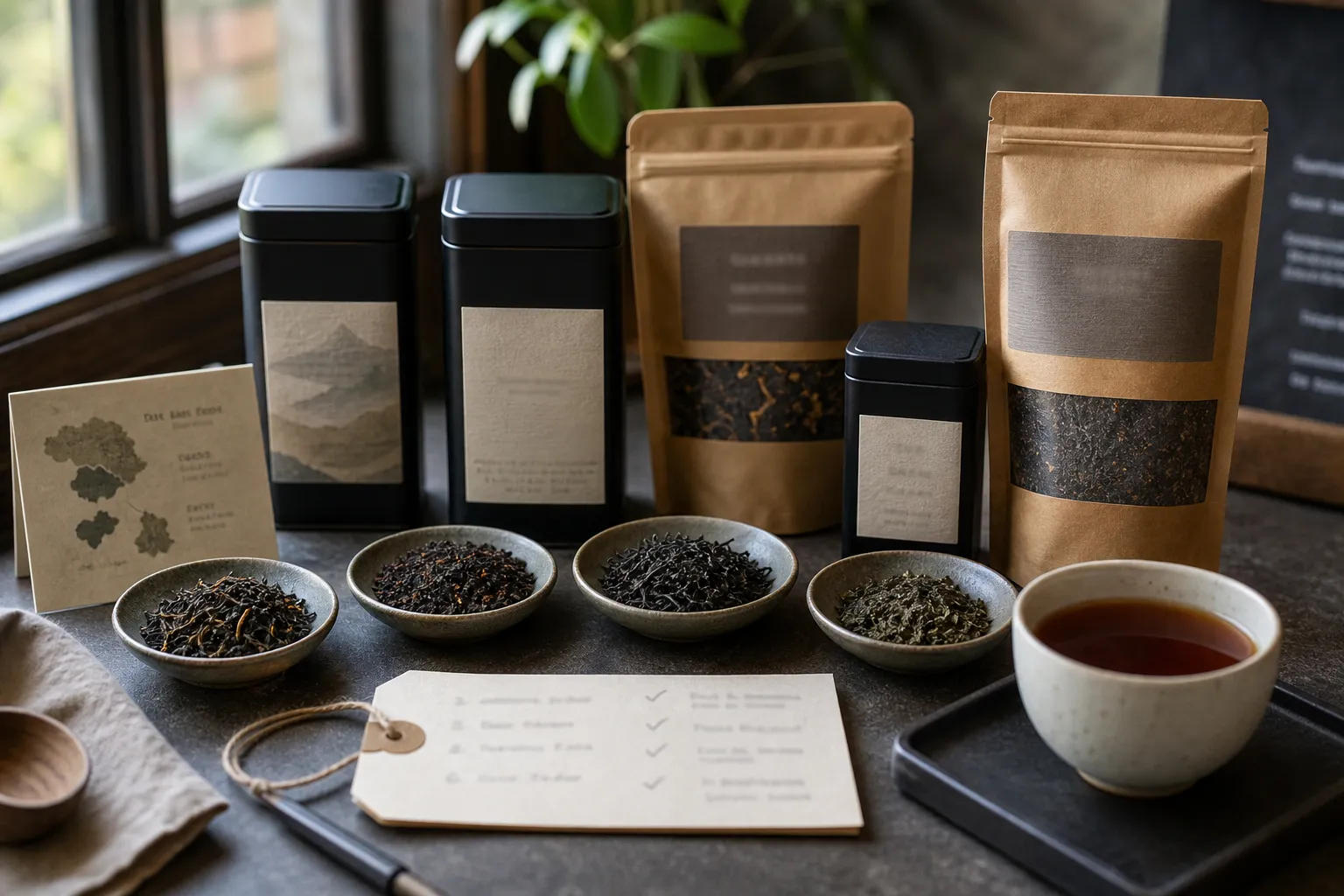
Before comparing two tins or listings, name the cup you are trying to make. A breakfast-style tea for milk, a plain afternoon cup, a brisk tea for lemon, and a lighter black tea for careful tasting do not need the same buying signals.
A steady everyday cup
Check blend name, consistent package details, and clear brewing notes. A blend may be designed for repeatable flavor, though the label still needs clarity.
A place or producer to explore
Check country, region, estate name, and harvest or lot detail if shown. More origin specificity can help comparison, but it does not make the tea better by itself.
Body with milk
Check broken leaf appearance, strong steeping guidance, and breakfast-style wording. Smaller leaf pieces may brew assertively, but taste still depends on the actual tea.
Dry leaf inspection
Check whole leaf appearance, color range, visible dust, stem pieces, and freshness cues. Dry leaf appearance can reveal form and handling, not the full cup.
A fair price comparison
Check price by gram, cup, and likely serving. Tin size and serving assumptions can hide the real comparison.
Buying loose black tea can feel more complex than buying a simple box of tea bags because loose tea gives you more visible information: dry leaf appearance, aroma if the seller allows smelling, package wording, and often more origin or blend detail. It also gives you more ways to overread the package. A beautiful leaf can still brew flat if it is stale, poorly stored, or simply not suited to your taste.
Takeaway: decide the cup first, then use the label to test whether the tea fits that cup.
What Origin Can Tell You When Buying Black Tea
Origin is useful, but easy to overwork. A country, region, estate, or garden name can help you separate one tea from another. It may point toward a broad regional black tea, a more specific estate name black tea, or a lot-style listing for buyers who want detail.
The key question is not only “Where is it from?” but “What does that place detail help me compare?” Look for cup-level language alongside origin wording: malt, fruit, spice, smoke, briskness, body, astringency, or aroma. If the label names a place but says little about the cup, leaf form, pack size, or brewing behavior, the origin detail has limited buying value.
Estate Name vs Regional Black Tea
An estate name can narrow the comparison. It may help when you are comparing two teas from the same broad area, or when a seller offers several teas that differ by estate, season, or leaf form. The buyer benefit is not prestige by default; it is a more precise listing to remember, reorder, or compare.
A regional black tea works differently. It may be easier to understand when you want a general style rather than a narrow lot. A regional name can also be practical when the tea is sold as a stable house tea, a breakfast blend component, or a broad flavor profile rather than a small-batch origin.
The common mistake is treating “estate” as automatically superior and “regional” as automatically vague. Some estate listings give little practical detail beyond the name. Some regional listings give clear tasting notes, dry leaf description, steeping guidance, and transparent pack size.
Takeaway: use origin to organize choices, not to rank teas on its own.
Single-Origin vs Blended Black Tea: Which Should You Buy?
Single-origin black tea and blended black tea answer different buyer needs. A single-origin label usually points toward a tea presented around a more specific place, producer, or lot. A blend is presented as a composed tea, often built for a target cup: steady strength, balance with milk, recognizable breakfast character, or a particular flavor direction.
Choose single-origin black tea when you want to notice differences between places, seasons, leaf styles, or seller descriptions. It can help you build tasting vocabulary: maltier or brighter, softer or more brisk, fruity or more tannic, aromatic or more straightforward. The risk is expecting origin to do all the work. A single-origin tea still needs freshness, sound storage, clear packaging, and a brewing method that suits it.
Choose blended black tea when you want a reliable role in the cupboard. A blend can be useful for milk, morning brewing, iced tea, or a familiar daily cup. The risk is assuming “blend” means less care or less interest. Some blends are simple and commodity-like; others are carefully described and clearly positioned.
A useful comparison question is: “Am I buying variation or consistency?” If you want to learn, compare two single-origin teas side by side. If you want a dependable breakfast cup, compare blend descriptions, leaf form, and price per serving.
Takeaway: single-origin is useful for exploration; blended tea is useful for purpose. Quality still has to be judged beyond the category name.
How to Judge Loose Black Tea Quality From Dry Leaf Appearance
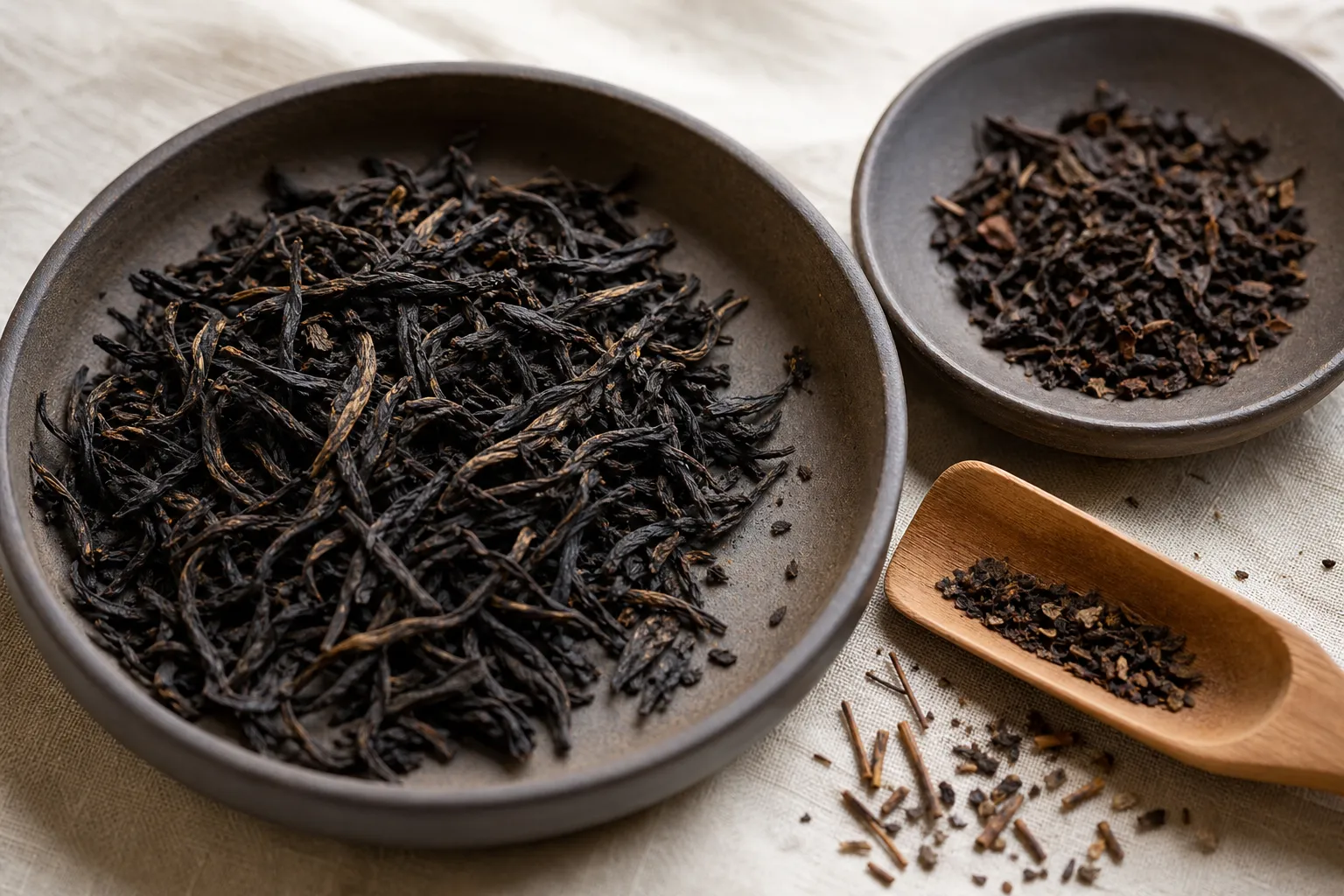
Dry leaf appearance is one of the few black tea quality cues you can inspect before brewing, especially when buying loose black tea in person or from a product page with clear photos. It can suggest leaf form, sorting, breakage, and storage condition. It cannot tell you everything about flavor.
Whole leaf appearance often attracts attention because long, twisted, or wiry leaves look careful and intact. That can be a good sign for some styles, but it is not a universal ranking system. Whole leaves may brew more slowly, show more aroma, or suit a lighter tasting approach, depending on the tea. They can also cost more without being the cup you want.
Broken leaf appearance tells a different story. Smaller pieces may infuse quickly and produce a stronger, more brisk cup, which can be useful for milk or a short morning steep. Too much powdery dust, however, may suggest rough handling or a cup that becomes harsh quickly. Judge that cue with the rest of the listing, not by appearance alone.
Visible Cues to Check
- Leaf size: mostly whole, broken, fine, or mixed
- Consistency: fairly even pieces, or excessive dust and fragments
- Color: vivid for its style, or dull and tired-looking
- Stems and fragments: occasional, or dominant
- Aroma access: clear and tea-like, or flat and storage-tainted
- Packaging condition: protected from light, air, and strong odors
Whole Leaf Black Tea Photos: What They Can and Cannot Tell You
Photos can help you compare whole leaf appearance, but they are easy to misread. Lighting, background, zoom level, and styling can make tea look more dramatic than it appears in hand. A close-up of long leaves does not show aroma, freshness, storage history, or how the tea behaves in water.
Use photos to ask practical questions. Are multiple images shown? Is there a dry leaf photo and a brewed liquor photo? Does the seller describe the cup in plain sensory terms, or does the listing lean mostly on appearance? If two teas have similar photos but one gives clearer pack size, brewing guidance, and price per gram, the clearer listing is easier to compare.
Takeaway: dry leaf can help you screen options, but the cup still decides.
How to Compare Black Tea Price by Gram, Cup, and Serving
Price becomes useful only when it is made comparable. A small pouch, a decorative tin, a sampler, and a bulk bag can make the same tea look cheap or expensive depending on how the price is displayed.
Start with price by gram. Divide the total price by the net weight, excluding shipping if you are comparing base tea cost and including shipping if you are comparing the real cost to your door. This is the cleanest way to compare two packages of different sizes.
Then estimate price by cup. Use your own brewing ratio, not only the seller’s serving estimate. If you use more leaf for a stronger mug, your real cost per cup will be higher. If you resteep certain teas, your cost per cup may feel lower, but do not count that value before you know how the tea performs.
Finally, compare price by serving role. A tea you drink plain in a small cup may justify a different price than a tea you use daily with milk in a large mug. A high price is not a tasting note. A low price is not proof of poor tea. Price transparency matters more than price drama.
Is Expensive Black Tea Always Better?
No. Expensive black tea may reflect many things: smaller supply, detailed sorting, packaging, import costs, seller positioning, or origin specificity. Some of those may matter to your buying decision. None of them automatically makes the tea better for your cup.
Ask what the higher price explains. If the listing gives clear origin detail, leaf photos, pack weight, aroma and flavor notes, brewing guidance, and storage-friendly packaging, you have more to evaluate. If the higher price rests mostly on vague premium language, compare more carefully.
Takeaway: black tea price transparency is more helpful than a luxury signal.
How to Compare Two Black Teas Online Before Buying
Online buying removes some senses. You cannot smell the dry leaf, inspect the pack in hand, or ask a tea counter question in the same way. That makes black tea label detail more important.
Product Page Comparison Order
- Name and type: single-origin, blended, flavored, breakfast-style, or another clearly named form
- Origin wording: broad, specific, or not stated
- Leaf form: whole leaf, broken leaf, fine-cut tea, tea bags, or unclear
- Cup description: flavor, aroma, body, briskness, astringency, and finish
- Brewing guidance: leaf amount, water temperature, and steep time
- Pack size and storage: clear net weight and protective packaging
- Price comparison: price by gram, then likely cup or serving
This order keeps one attractive detail from carrying the whole decision. A tea with a famous origin but unclear weight is hard to compare. A tea with beautiful photos but no brewing guidance leaves more guesswork. A tea with simple packaging but clear sensory notes and transparent price may be the more practical purchase.
What “Premium” Means on a Black Tea Label
“Premium” is a label word, not a complete explanation. It may point to seller positioning, leaf selection, packaging, or a higher-priced line. Without supporting detail, it does not tell you how the tea will taste or whether it suits milk, lemon, plain drinking, or a short steep.
Look for the missing nouns. Premium what? More specific origin? Larger leaf? More careful packaging? More detailed cup description? A clearer harvest or batch? If the label does not answer, treat the word as marketing language and move back to observable cues.
Takeaway: online comparison works best when you score clarity, not just appeal.
Should You Buy Black Tea Samples Before a Full Tin?
Samples are useful when the decision depends on taste rather than label confidence. If you are comparing unfamiliar origins, trying a new seller, testing a tea for milk, or deciding between whole leaf and broken leaf styles, a smaller amount can reduce the chance of owning a full tin that does not match your cup.
Samples are not always the best value by gram. They may cost more per serving, and small packs can be less convenient for storage. Their purpose is not bargain buying; it is taste information. A sample lets you check aroma, liquor color, body, astringency, and steeping behavior with your own water and teaware.
Taste samples simply. Use the same cup size, leaf amount, water, and steep time for both teas if you want a fair comparison. Then adjust one variable at a time. A tea that seems thin may need more leaf. A tea that seems sharp may need a shorter steep. A tea that disappears under milk may not be the right choice for that role, even if the dry leaf looked impressive.
How to Compare Black Tea for Milk Before You Buy
For milk, the question is not only “Is this good tea?” It is “Will this tea still show body and flavor after milk is added?” Before buying, look for blend wording, breakfast-style positioning, broken leaf appearance, or tasting notes that suggest body, briskness, malt, or strength. Those cues can be useful, but they are not promises.
If the seller offers samples, compare the tea both plain and with your usual amount of milk. Some black teas taste graceful plain but become quiet with milk. Others feel too assertive plain but settle well in a milky cup. Your buying choice should follow the way you actually drink it.
Takeaway: samples buy you information; use them when the label cannot answer the cup question.
A Practical Comparison Path Before Checkout
A good black tea comparison does not need to be elaborate. It needs to be consistent. Before adding a full tin or pouch to your cart, run the tea through a short decision path:
- Match the role: plain cup, milk tea, breakfast mug, afternoon cup, iced tea, or tasting session
- Read the origin: broad region, estate name, or no clear place; note what that detail helps you compare
- Identify the form: whole leaf, broken leaf, fine-cut, tea bag, or unclear
- Check the sensory language: aroma, flavor, body, briskness, astringency, and finish
- Inspect visible condition: dry leaf appearance, dust level, packaging, and storage protection
- Calculate price: gram first, then your likely cup or serving
- Decide the commitment: sample first if the tea is unfamiliar, expensive, or meant for a specific use
This path also shows where people mix concepts up. Origin is not the same as quality. A blend is not automatically less interesting. Whole leaf is not always better for every cup. Broken leaf is not automatically poor. Price is not a tasting note. “Premium” is not enough without black tea label detail.
The strongest buying choice comes from several signals pointing in the same direction. A tea described for milk, shown with a suitable leaf form, priced transparently, packed clearly, and offered in a sample size is easier to judge than a vague tea with a dramatic name. A tea with specific origin detail, careful leaf photos, and concrete cup notes is easier to compare than one that relies on prestige language alone.
Small FAQ Before You Buy
Can I compare black teas if I cannot see the dry leaf?
Yes, but the comparison is weaker. Lean more heavily on origin wording, blend description, brewing guidance, pack size, price by gram, and clear sensory notes. If the seller provides no leaf photo and little cup description, consider a smaller pack first.
Is a single-origin tea better for learning?
It can be useful for learning because it narrows the comparison, especially when the label gives clear origin and cup detail. It is not automatically better. A clearly described blend can teach you about body, briskness, balance, and milk-friendly structure.
How much should I trust black tea grades?
Treat grade terms as one label cue unless the seller explains what the term means for that tea. Grade wording can relate to leaf form or sorting, but without stronger context it should not be used as a stand-alone quality judgment.
What is the lower-commitment first purchase from a new seller?
A sample or small pouch is usually the lower-commitment choice, especially for unfamiliar origins, higher-priced teas, or teas meant for a specific role such as milk. Brew it plainly first, then adjust leaf amount and steep time before deciding on a full tin.
The next step is not to find the most impressive label. Pick two teas that could serve the same cup, compare their origin, blend wording, leaf form, visible condition, and price by gram, then buy the one that gives you the clearest reasons to expect the cup you actually want.