Pairing Guide
How to Pair Black Tea with Food
Choosing black tea food pairings is less about memorizing a fixed list and more about reading the cup in front of you. A brisk breakfast blend with milk behaves differently beside food than a smoky black tea, a soft malty black tea, or a citrusy cup served plain.
The better question is: what does this tea emphasize? Strength, aroma, body, astringency, sweetness, milk, and finish all affect the match. Once you can name the cup’s main traits, food becomes easier to judge by intensity, fat, salt, spice, sweetness, and texture.
This guide uses practical tasting logic rather than fixed pairing rules. Results vary with origin, blend, leaf grade, freshness, steeping time, brewing ratio, water, milk, sweetener, and personal preference.
upward
Start with the broader guide
Use the broader guide first if you need the full scope before this page.
Start with the Cup in Front of You
Before choosing food, taste the tea without rushing to classify it. Black tea can feel bold, light, brisk, rounded, dry, sweet-edged, smoky, fruity, citrusy, spicy, or tannic depending on the leaf and brew.
A useful first pass is to ask:
- How strong is the cup: full and assertive, or lighter and more aromatic?
- How much briskness or astringency do you feel: clean, dry, sharp, or puckering?
- What is the body like: thin, medium, rounded, creamy, or dense?
- Which aromas stand out: malt, smoke, citrus, dried fruit, spice, flowers, wood, or toast?
- Is the tea plain, sweetened, or served with milk?
Black tea strength matters because food has its own weight. A delicate pastry can disappear beside a strong, bitter-edged brew. A rich, salty, or buttery plate can make a thin tea taste flat. The goal is not perfect balance every time; it is to avoid a clash where either the tea or the food erases the other.
Match Intensity Before Flavor
The simplest tea and food pairing principle is also the most flexible: match intensity first. Flavor details matter, but a strength mismatch is often what makes a pairing feel awkward.
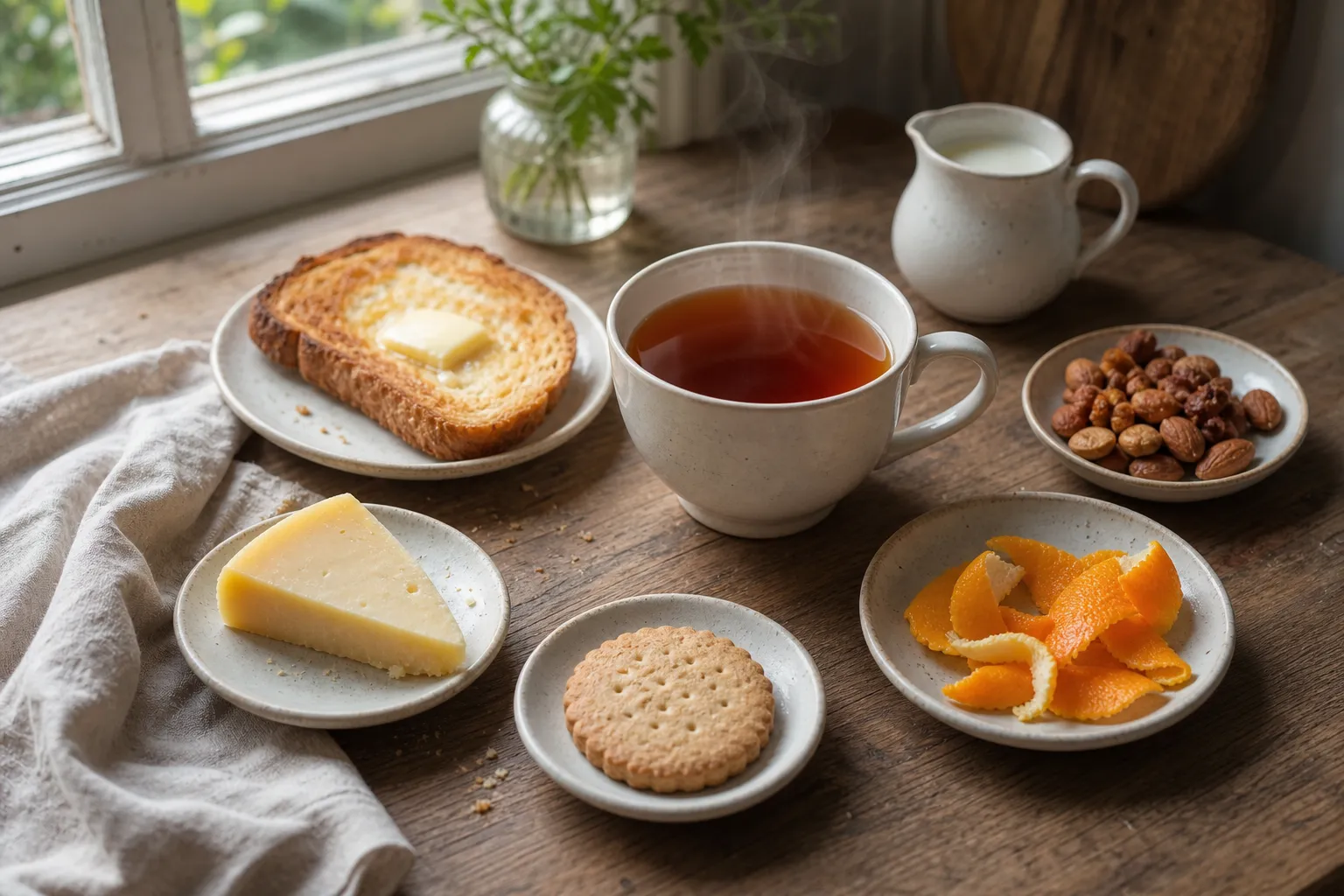
A strong, brisk black tea can stand up to food with fat, salt, toastiness, and firm texture. Buttered bread, savory pastries, eggs, sharp cheese, roasted vegetables, and grilled foods are possible directions because they have enough weight to meet a fuller cup.
A lighter black tea usually works better with foods that leave room for aroma. Plain biscuits, simple cakes, lightly sweet fruit desserts, toast, or mild sandwiches may allow floral, citrus, honeyed, or dried-fruit notes to stay visible.
Fat
Coats the mouth and softens sharp edges. Consider brisk or structured black tea.
Salt
Can make malt and sweetness seem more noticeable. Consider medium to strong black tea.
Spice
Can amplify dryness or heat. Consider rounded, malty, milk-friendly, or spiced black tea.
Sugar
Can make unsweetened tea seem sharper. Consider smooth, aromatic, or milk-softened tea.
Crunch
Highlights finish and mouthfeel. Consider clean, brisk, or citrusy black tea.
Creaminess
Can mute delicate aroma. Consider stronger, malty, or tannic tea.
Use these traits to diagnose why something works or feels off. If tea tastes harsh with a spicy snack, the problem may be astringency plus heat. If it tastes dull with cake, the food may be too sweet or rich for that brew.
Use Briskness and Astringency Carefully
Black tea briskness can be useful with food. It gives the cup lift, keeps rich bites from feeling heavy, and makes the finish feel cleaner. But briskness is not the same as bitterness, and black tea astringency can become too prominent when the food is dry, spicy, or very sweet.
A brisk cup often pairs more comfortably with foods that have fat or moisture. Butter, cream, oil, cheese, egg, or a juicy filling can soften the dry edge of the tea. Dry crackers, lean toast, or crumbly sweets may make a tannic cup feel even drier.
If the tea is good but the pairing feels severe, adjust the cup before changing the food:
- Use a slightly shorter steep if the tea tastes too sharp.
- Add milk if the tea is already a milk-friendly style.
- Try a little sweetener when bitterness is dominating a dessert.
- Brew a touch stronger when the food is salty, buttery, or heavily textured.
- Let the tea cool slightly if heat is making astringency feel more aggressive.
Astringency can be pleasant when it gives structure. It becomes distracting when it is the only thing you notice. After a bite and a sip, do you still taste aroma, malt, fruit, smoke, or sweetness? If only dryness remains, the pairing probably needs a softer brew, a richer food, or a different tea.
Pair by Tea Style, Not Just Food Category
“Black tea with desserts” is too broad on its own. Lemon cake, chocolate tart, butter cookies, fruit crumble, and spiced loaf do not ask the same thing from tea. Start with the tea’s style, then choose the food direction.
Malty Black Tea
A malty black tea often suggests warmth, grain, toast, brown sugar, or soft sweetness. It can work well with breakfast foods, buttered toast, oat biscuits, nutty cakes, mild cheeses, roasted squash, or foods with caramelized edges.
The malt note gives the pairing a bridge: it can meet bread, browned butter, and gentle sweetness without needing the food to be very sugary. If the tea is also strong and brisk, it can handle richer food. If it is smooth and rounded, keep the food less aggressive so the malt does not get buried.
Smoky Black Tea
Smoky black tea is more polarizing. Smoke can feel elegant, savory, campfire-like, woody, or medicinal depending on the tea and the drinker’s expectation. With food, it usually asks for either echo or contrast.
For echo, look toward grilled bread, roasted vegetables, smoked cheese, toasted nuts, or savory foods with charred edges. For contrast, try something mildly sweet or creamy that softens the smoke without fighting it. Very delicate desserts may feel overwhelmed, while very spicy foods can make smoke and heat compete.
Because smoke is assertive, start with a small pour beside the food rather than committing a whole pot.
Citrusy or Bright Black Tea
Citrus notes in black tea can make the cup feel lifted, clean, or lively. These teas often suit foods that benefit from brightness: simple cakes, fruit pastries, mild sandwiches, lemon-leaning desserts, or fresh cheeses.
The risk is thinness. If the tea is light and bright, a heavy chocolate dessert or very buttery dish may flatten it. A citrusy black tea can also contrast with salt, but keep an eye on bitterness; a long steep can still make the finish rough.
Spiced Black Tea
Spiced black tea already has a strong direction. It may lean warming, sweet, peppery, clove-like, cinnamon-like, or ginger-like depending on the blend. Pair it with food that leaves space for spice rather than adding too many competing aromas.
Simple milk sweets, plain cakes, butter biscuits, nuts, and some savory snacks can work as gentle companions. Very complex desserts may become crowded. If the spiced tea is served with milk, the cup usually becomes rounder and more forgiving with sweet or fatty foods. If served plain, watch for spice plus tannin becoming too sharp.
Black Tea with Milk
Black tea with milk changes the whole pairing. Milk softens astringency, adds body, and makes the cup feel closer to a breakfast or dessert drink. That is why it often makes practical sense with buttered toast, biscuits, scones, pancakes, mild cakes, creamy desserts, or salty breakfast foods.
The main tradeoff is aroma. Milk can mute delicate floral, citrus, or highly aromatic notes. If the point of the tea is fragrance, try it plain first. If the point is comfort, body, and a rounded cup, milk can make the tea easier to pair with rich or sweet food.
Think About Texture as Much as Taste
Food texture changes how the sip lands after the bite.
Crunchy foods make the tea’s finish more obvious. A clean, brisk tea can feel refreshing after crisp toast, fried snacks, or firm biscuits. If the food is very dry, though, a tannic tea may feel too drying; a smoother cup or milk can help.
Creamy foods coat the mouth. They often need a tea with enough structure to cut through the coating, or enough aroma to remain noticeable. A very light tea may disappear beside custard, cream, soft cheese, or butter-heavy pastry.
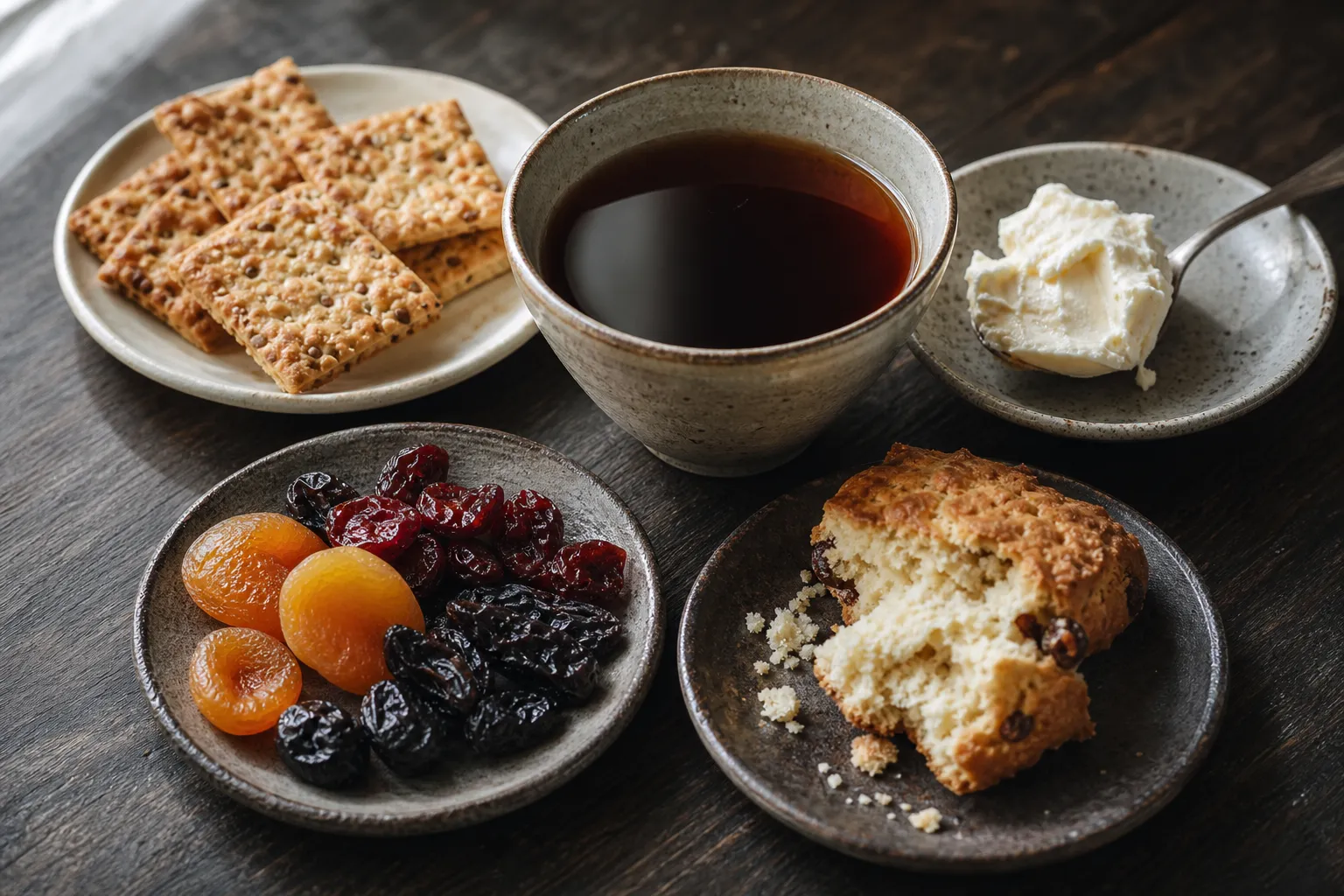
Chewy foods slow the pairing down. Dried fruit, dense cake, caramel-like textures, or hearty bread may need a tea with body. A thin brew can feel like an afterthought, while an overly sharp brew can make the chew feel heavy and dry.
Crumbly foods can make the mouth feel dry before the tea arrives. If the tea also has high astringency, the pairing may feel dusty. That is a useful moment to shorten the steep, add milk, or choose a rounder black tea.
Temperature matters too. Hot tea can sharpen spice and tannin. Warm tea may show malt and sweetness more gently. Cooler tea can make bitterness more noticeable in some cups while making aroma easier to separate in others. If a combination feels almost right, wait a minute and taste again.
Dessert Pairings Need Sweetness Control
Black tea with desserts can be excellent, but sweetness is where many pairings become uneven. A very sweet dessert can make unsweetened tea taste more bitter. A very tannic tea can make a delicate cake seem less soft. Milk and a little sugar can suit some desserts, but they may flatten a tea chosen for aroma.
Start by matching the dessert’s main feature:
- Fruit desserts often suit brighter or gently brisk black teas, especially if the tea has citrus, floral, or dried-fruit impressions.
- Chocolate desserts usually need a tea with body, malt, smoke, or milk; a light tea may vanish.
- Butter cookies, shortbread, and plain cakes often welcome malty, milky, or medium-strength black tea.
- Spiced desserts can pair with spiced black tea, but too much spice on both sides can become crowded.
- Creamy desserts may need briskness for contrast or milk tea for softness, depending on the effect you want.
Unsweetened black tea can be a useful counterpoint to sweet food, but only if the cup still tastes pleasant after the dessert. If the dessert makes the tea taste severe, the match is not working. A small amount of sweetener can sometimes bring the cup closer to the plate, especially when the food is already clearly sweet.
The practical test is the second sip. The first sip tells you whether the flavors make sense. The second sip, after another bite, tells you whether the pairing becomes tiring.
Savory Food Needs Salt, Fat, and Spice Awareness
Savory pairings become easier when you separate salt, fat, and spice.
Salt can make tea seem more vivid. A medium or strong black tea may feel lively beside salted butter, cheese, savory pastries, or roasted snacks. But salt alone does not rescue a weak brew; intense food still needs a cup with enough body.
Fat asks for structure. Fried foods, buttery pastries, rich eggs, creamy sauces, and oily snacks can make a soft tea feel vague. Briskness, black tea strength, or a clean finish can help the sip stand up to that coating. Milk tea may work if the desired effect is roundness rather than contrast.
Spice is trickier. Heat and tannin can amplify each other. If a plain black tea tastes sharp with spicy food, try a malty or milk-friendly cup, or reduce steeping strength. A spiced black tea can pair with spiced food when the flavors point in the same direction, but it can also become too much. Keep one side simpler if the other side is intense.
Savory foods with smoke, char, or roast can be good candidates for stronger or smoky teas, but the pairing should still be judged by the cup. A lightly smoky tea may add depth. A heavily smoky tea may dominate the plate.
Common Mix-Ups in Tea and Food Pairing
One common mix-up is treating tea names as automatic pairing instructions. A label may give a region, blend name, flavoring, grade, or marketing description, but the brewed cup is what matters. Two teas with similar names can taste different because of leaf style, age, storage, blend, and brewing.
Another mix-up is assuming stronger is always better with food. Strong tea can be useful, but an oversteeped cup may become blunt or harsh. Strength should mean enough body and flavor to meet the food, not simply more bitterness.
Milk is often misread too. It is neither a flaw nor a fix-all. Milk can be exactly right for some black tea food pairings because it changes texture and softens astringency. It can also cover the qualities that made a delicate tea interesting. Use it as a pairing choice, not a rule.
Dessert pairings are not only about sugar. Sweetness matters, but aroma and texture matter just as much. A dry cookie, creamy tart, fruit cake, and dark chocolate slice all change the tea differently.
Preference is part of the decision. Some readers enjoy smoky tea with sweet food; others find it distracting. Some prefer brisk plain tea with rich food; others want milk. The better pairing is the one that keeps both the tea and the food clear, pleasant, and worth returning to.
A Simple Decision Frame for Pairing Black Tea with Food
Use this sequence when choosing quickly:
- Taste the tea first. Name its strength, body, briskness, aroma, sweetness, and finish.
- Name the food’s strongest trait. Is it fatty, salty, spicy, sweet, creamy, crunchy, dry, or delicate?
- Match weight before detail. Strong food usually needs stronger tea; delicate food usually needs a lighter touch.
- Decide whether you want contrast or echo. Brisk tea can contrast fat; malty tea can echo toast and brown sugar; smoky tea can echo char; citrusy tea can brighten.
- Adjust the brew if needed. A shorter steep, more leaf, milk, sweetener, or a different serving temperature may change the pairing enough.
- Judge the aftertaste. A good pairing should leave more than dryness, bitterness, sugar, or smoke.
For a breakfast plate, this might mean a strong black tea with milk if the food is buttery, salty, and filling. For a simple cake, it might mean a medium malty tea or a lighter citrusy black tea depending on the cake’s flavor. For a smoky tea, it might mean choosing a savory roasted food or a mild creamy contrast instead of a delicate pastry.
These are routes into a better cup-and-plate decision, not fixed pairings.
Where the Guidance Has Limits
Pairing advice here is practical editorial reasoning based on observable taste and texture. It should not be read as a ranking of what must go together, or as a universal statement about regional custom, nutrition, digestion, energy, or wellness effects.
That limit keeps the focus on what readers can check themselves: liquor color, steeping strength, aroma, mouthfeel, dryness, sweetness, milk compatibility, and how the tea tastes after a bite of food. It also leaves room for variation. A fresher tea may taste brighter. A longer steep may become more astringent. A blend designed for milk may feel thin when served plain, while a fragrant whole-leaf tea may lose detail when paired with heavy food.
If a pairing feels wrong, change one variable at a time. Brew lighter, brew stronger, add milk, reduce sweetness, choose a food with more moisture, or move from a delicate tea to a fuller one. The best way to pair black tea with food is not to chase a perfect chart. It is to notice what the cup is doing, notice what the food is doing, and bring them close enough that both still have something to say.