Style comparison
Chinese Black Tea Styles: Keemun, Yunnan, and Lapsang Souchong
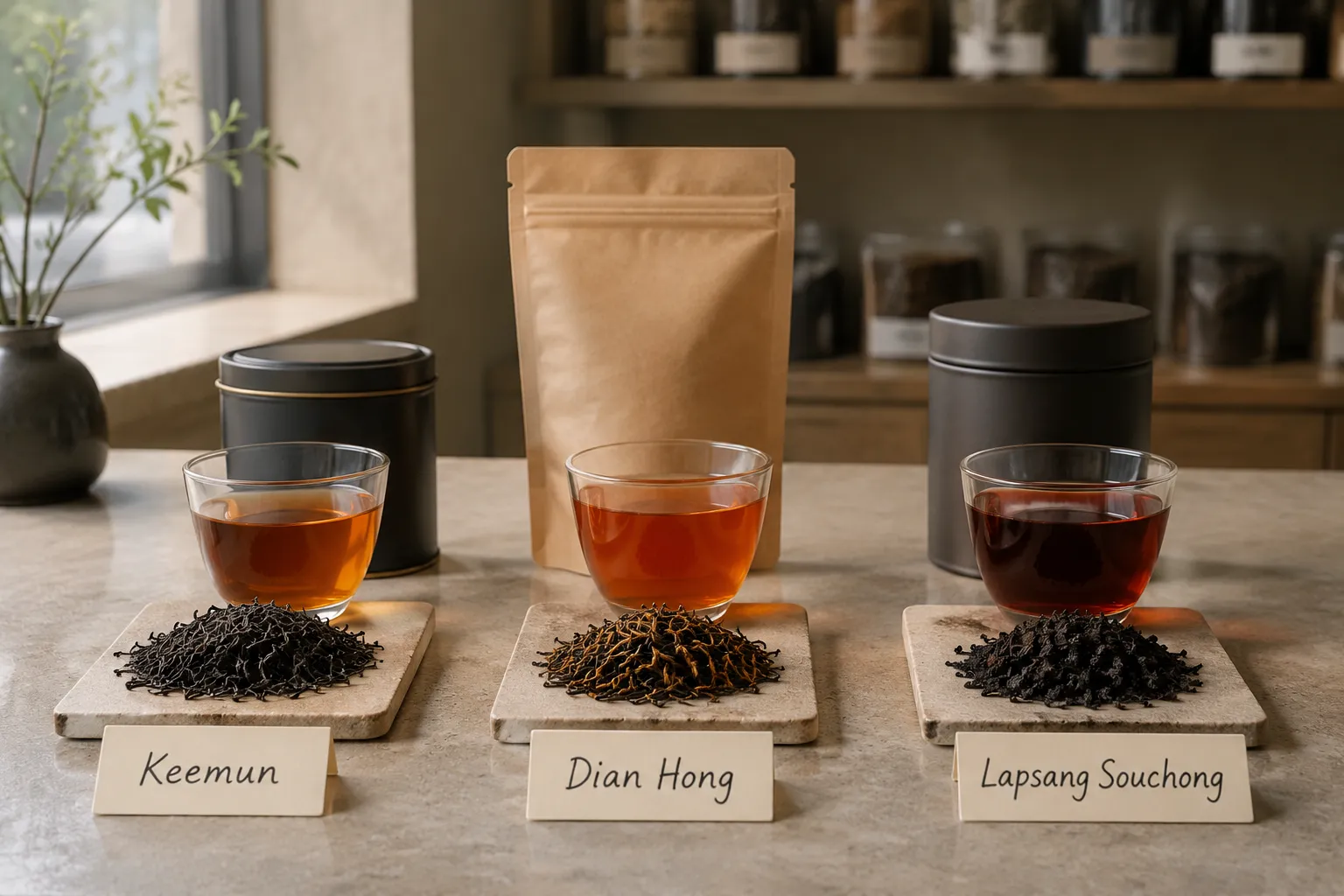
A tin labeled Keemun, a pouch marked Dian Hong, and a smoky Lapsang Souchong can all sit under the same shelf label: Chinese black tea styles. They do not lead to the same cup.
The useful difference is a mix of place name, Chinese naming habit, leaf appearance, processing style, and the seller's tasting language. Keemun often points toward an aromatic black tea associated with Qimen in Anhui. Yunnan black tea, often sold as Dian Hong, usually leans into malt, honey, cocoa, body, and golden tips. Lapsang Souchong points toward Zheng Shan Xiao Zhong and a smoke question that can change the whole brew.
Read those signals as starting clues, not fixed promises. Origin, grade, harvest, storage, leaf size, water, dose, and steep time can all move the cup.
upward
Read the full overview first
Use the broader guide first if you need the full scope before this page.
The Names on the Label Matter Before the Tasting Notes
Chinese black tea is often called hong cha, or red tea, in Chinese contexts. The name points to the reddish brewed liquor, not the dry leaf color that English speakers usually call black. That translation gap is why buyers may see Yunnan Red, Dian Hong, and Chinese black tea around the same product family.
These terms are useful, but they are not a complete quality system. A package may combine place, style, and leaf-shape language, as in Keemun Mao Feng. Some sellers also use grade-like terms such as Hao Ya A or Hao Ya B for Keemun. Those words can help you ask better questions, but they should not be treated as a universal ladder unless the seller explains what that grading means for the batch.
A better first move is to read the label in layers: style name, origin cue, leaf appearance, aroma and body claims, then brewing instructions. The more specific the package is about leaf form, harvest, origin, and steeping ratio, the easier it is to compare the tea without leaning on one romantic tasting word.
Keemun Black Tea: Fragrance, Shape, and a Lighter Kind of Depth
Keemun black tea is associated with Qimen, also rendered Keemun, in Anhui Province. English-language buyers may see Keemun, Qimen, or Qimen Hong Cha. Those terms usually place the tea in the same family, though individual batches vary by leaf grade, processing, age, storage, and brewing method.
Market language often describes Keemun black tea taste as sweet, fragrant, aromatic, smooth, or gently winey. Treat those as possible impressions. In the cup, many buyers look for a clear reddish-brown liquor, a lifted aroma, moderate body, and a finish that does not need brute strength to feel complete. A Keemun that has been stored poorly, brewed too hard, or made from rougher material may taste flatter or more astringent than the usual description suggests.
Keemun is easy to overbrew if the goal is aroma. Use water just off the boil, or slightly cooler water if the leaf is fine and delicate, then start around 2 to 3 minutes for Western-style brewing. If the cup smells good but tastes thin, add leaf before adding time. If it turns sharp, shorten the steep rather than assuming the tea itself is harsh.
Milk is a matter of body. Some stronger Keemun styles can take a small amount, especially if brewed with a higher leaf ratio. A more fragrant, lighter Keemun may lose its best feature under milk. If the dry leaf smells delicate and the liquor is clear rather than heavy, taste it plain first.
Yunnan Black Tea and Dian Hong: Malt, Golden Tips, and Body
Yunnan black tea is commonly called Dian Hong. “Dian” is used as a name for Yunnan, and “Hong” points to red tea in the Chinese classification. On English-language packaging, the same family may appear as Yunnan black tea, Yunnan Red tea, or Dian Hong tea.
The usual buyer expectation is more body than Keemun, often with malt, honey, cocoa, sweet potato, dried fruit, or floral language attached. Those are market and tasting cues, not guaranteed outcomes. Yunnan is a large tea-growing region, and the cup can shift from soft and golden to deeper and more robust depending on leaf material, processing, tips, storage, and steeping strength.
Golden tips in Yunnan black tea are one of the clearest visual buying signals. They are the golden or coppery young buds visible in many Dian Hong teas. A tea with many golden tips is often marketed as smoother, sweeter, or more refined; a darker, leafier version may brew with more structure and weight. The visible tips do not automatically make a tea better. They tell you what kind of material you may be dealing with, and they remind you to brew carefully enough that sweetness and body do not collapse into bitterness.
For a smooth malty cup, start with a moderate leaf amount and a 3-minute steep in near-boiling water. If the cup is rounded but too light, add a little leaf. If it is drying on the tongue, shorten the time. Yunnan black tea can often handle a stronger brew better than delicate Keemun examples, but not every Dian Hong should be pushed hard.
The practical Keemun vs Yunnan black tea difference is usually this: Keemun when aroma and lift matter most, Yunnan when body, malt, and a softer cocoa-like depth are the goal.
Lapsang Souchong: Smoke, Unsmoked Styles, and Zheng Shan Xiao Zhong
Lapsang Souchong creates the most confusion because the name can point to both identity and smoke expectation. It is linked with Zheng Shan Xiao Zhong and the Tong Mu, Wuyi, and Fujian context in many tea references and commercial descriptions. English buyers, however, often meet it first as “the smoky black tea.”
Why Lapsang Souchong tastes smoky depends on the product. Some versions are made with smoke as a prominent part of the aroma, often described as pine-like, campfire-like, tarry, or resinous. Other teas sold around the Zheng Shan Xiao Zhong name may be unsmoked or much less smoky, with more emphasis on fruit, sweetness, wood, or mineral impressions. Smoked Lapsang Souchong and unsmoked Zheng Shan Xiao Zhong should not be assumed to behave the same in the cup.
What smoke changes first
- Aroma: smoke can dominate the dry leaf before the water touches it.
- Body: some smoked versions feel strong because aroma intensity is high, even if the liquor itself is not especially thick.
- Pairing: smoky tea can be polarizing, and some drinkers prefer it with food or sweets rather than alone.
That is not a rule; it explains why reactions can be sharper than with Keemun or Dian Hong.
To brew Lapsang Souchong without making the smoke overpowering, do not start with an aggressive steep. Use a normal black-tea temperature, but begin around 2 minutes if the dry leaf is intensely smoky. Increase time only after tasting. If the smoke sits on top of the cup and the tea underneath feels thin, try a little more leaf and a shorter steep. If the smoke tastes ashy or tiring, reduce time, use a wider cup to let aroma disperse, or drink it with savory food.
There is a narrow food-safety boundary around smoked teas. Some research records have measured polycyclic aromatic hydrocarbons, or PAHs, in smoked teas and have reported higher levels of certain PAHs in smoked tea than in non-smoked tea. That supports one modest point: smoke is not only a flavor word; it is also a processing factor that has been studied. It does not, by itself, support broad consumer conclusions about ordinary drinking, product availability, or legal status without stronger product-specific and regulatory context.
Keemun vs Yunnan vs Lapsang: What Actually Changes in the Cup
The three styles are easiest to compare by the variable that changes your decision.
These are not strict ladders. A brisk Keemun can taste stronger than a gentle Dian Hong. A golden Yunnan can be softer than a dark, tippy package suggests. A lightly smoked Lapsang Souchong can be easier to drink plain than a heavily smoked version brewed too long. Origin words, leaf appearance, and seller language only get you to a starting expectation; the cup still answers through water, time, dose, and freshness.
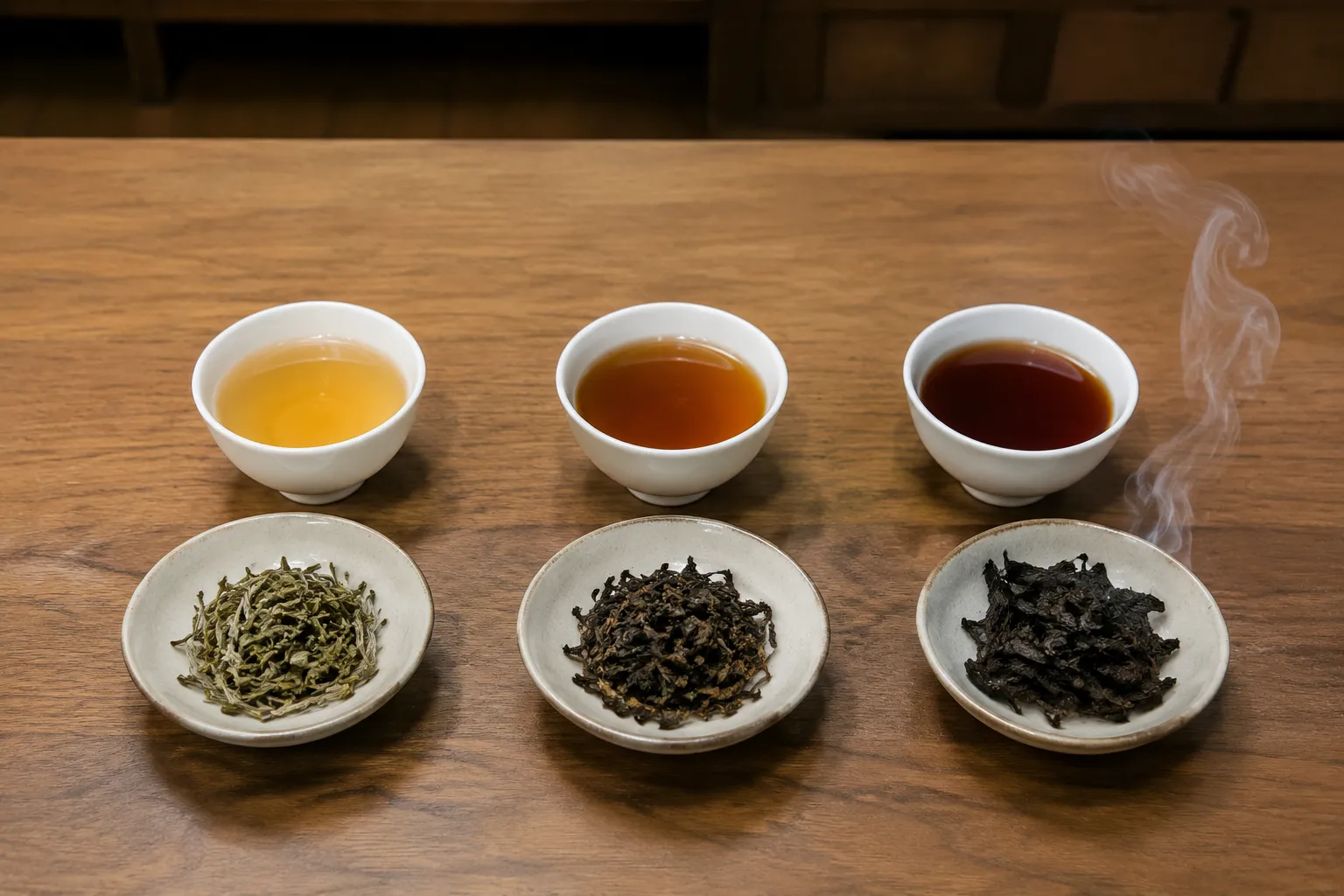
One useful tasting path is to brew the three styles at similar strength and taste them in this order: Keemun, Yunnan, then Lapsang Souchong. Keemun first keeps the aroma from being buried. Yunnan second shows body and malt without smoke interference. Smoked Lapsang last prevents the smoke from coloring the more delicate cups.
If you are choosing one style rather than comparing all three, start from the feature you want most. Choose Keemun when you want fragrance and a cleaner aromatic line. Choose Yunnan or Dian Hong when you want roundness, malt, and visible leaf variation such as golden tips. Choose Lapsang Souchong when smoke itself is part of the decision, and check whether the product is smoked or unsmoked before judging the style.
How to Read Chinese Black Tea Labels Without Overreading Them
A good Chinese black tea label gives you several clues, but not all clues carry the same weight. The name tells you the style family. The origin tells you whether the seller is being specific. The leaf appearance tells you something about material and handling. The tasting words tell you how the tea is being positioned.
Start with the name. Qimen Hong Cha points to the Qimen or Keemun black tea context; it is a place-linked red tea name. Dian Hong points toward Yunnan Red, with Dian as a Yunnan name and Hong as red tea. Zheng Shan Xiao Zhong is the Chinese name often connected with Lapsang Souchong, though English packaging may not always separate smoked and unsmoked styles clearly.
Then look at the leaf. Fine, wiry, dark leaves may suggest a different brew from broad, golden-tipped Yunnan material. Visible golden buds can signal a softer, sweeter style, but they are not a stand-alone quality guarantee. Broken leaf will usually infuse faster than whole leaf, so the same 4-minute steep can be reasonable for one tea and too much for another.
Next, translate promotional words into brewing expectations. “Fragrant” means protect aroma with a moderate steep. “Robust” means the tea may tolerate more leaf or milk, but taste it plain before deciding. “Smoky” means start short. “Coffee replacement” is a market shortcut; read it as body, strength, malt, or routine language, not as a functional promise.
Finally, check storage. Black tea is more forgiving than many green teas, but stale, damp, or poorly sealed leaf can flatten aroma and roughen the finish. If a tea tastes dull, dusty, or strangely sharp, do not judge the whole style until you have considered age, packaging, and storage conditions.
Which Chinese Black Tea Works With Milk, Food, or Plain Drinking?
Milk favors body
Yunnan black tea is often the most natural starting point among these three when a buyer wants a smooth, malty cup that can hold a little milk. A darker, stronger Keemun can also work, but a lighter aromatic Keemun may become muted. Smoked Lapsang Souchong with milk is a personal call; smoke and dairy can either soften each other or feel heavy, depending on the product.
Plain drinking favors clarity
Keemun is a strong candidate when you want aroma without a large meal. Yunnan works plain when you enjoy malt and sweetness without needing added richness. Unsmoked or lightly smoked Zheng Shan Xiao Zhong can also fit plain drinking, especially if the tea leans toward fruit, wood, or soft sweetness rather than heavy smoke.
Food pairing depends on what dominates
Food pairing is most relevant for Lapsang Souchong because smoke changes the way the cup sits with the palate. Savory foods, roasted flavors, and lightly sweet foods can make a smoky tea feel less isolated. Keemun is easier with simple baked goods or lighter snacks. Yunnan can handle breakfast foods, chocolate, or milk better when brewed with enough leaf.
The practical rule is not “which style is best,” but “which feature do you want to preserve?” Preserve Keemun’s aroma, Yunnan’s body, and Lapsang’s smoke level. Once that is clear, the brewing choice becomes easier.
A Simple Buying and Brewing Framework
- 1. Identify the style name: Keemun/Qimen, Yunnan/Dian Hong, or Lapsang Souchong/Zheng Shan Xiao Zhong.
- 2. Look for regional language: use it to support the name without treating it as complete proof of origin or quality.
- 3. Inspect the leaf: whole, broken, golden-tipped, wiry, dark, or smoky.
- 4. Translate the tasting language: soften seller claims into observable expectations such as aroma, body, sweetness, astringency, smoke, and finish.
After brewing, adjust only one variable at a time. If Keemun loses aroma, shorten the steep. If Yunnan lacks body, add leaf. If Lapsang smoke overwhelms the cup, reduce time before changing everything else. A careful first brew teaches more than a label full of grand claims.
The next good purchase is the one whose name, leaf, and brewing behavior match the cup you actually want: fragrant and composed, malty and rounded, or smoky by design.
Sources
Sources and further reading
Reference links are limited to sources considered suitable for public citation in this page.