
Spiced Black Tea Guide
Masala Chai and Spiced Black Tea Traditions
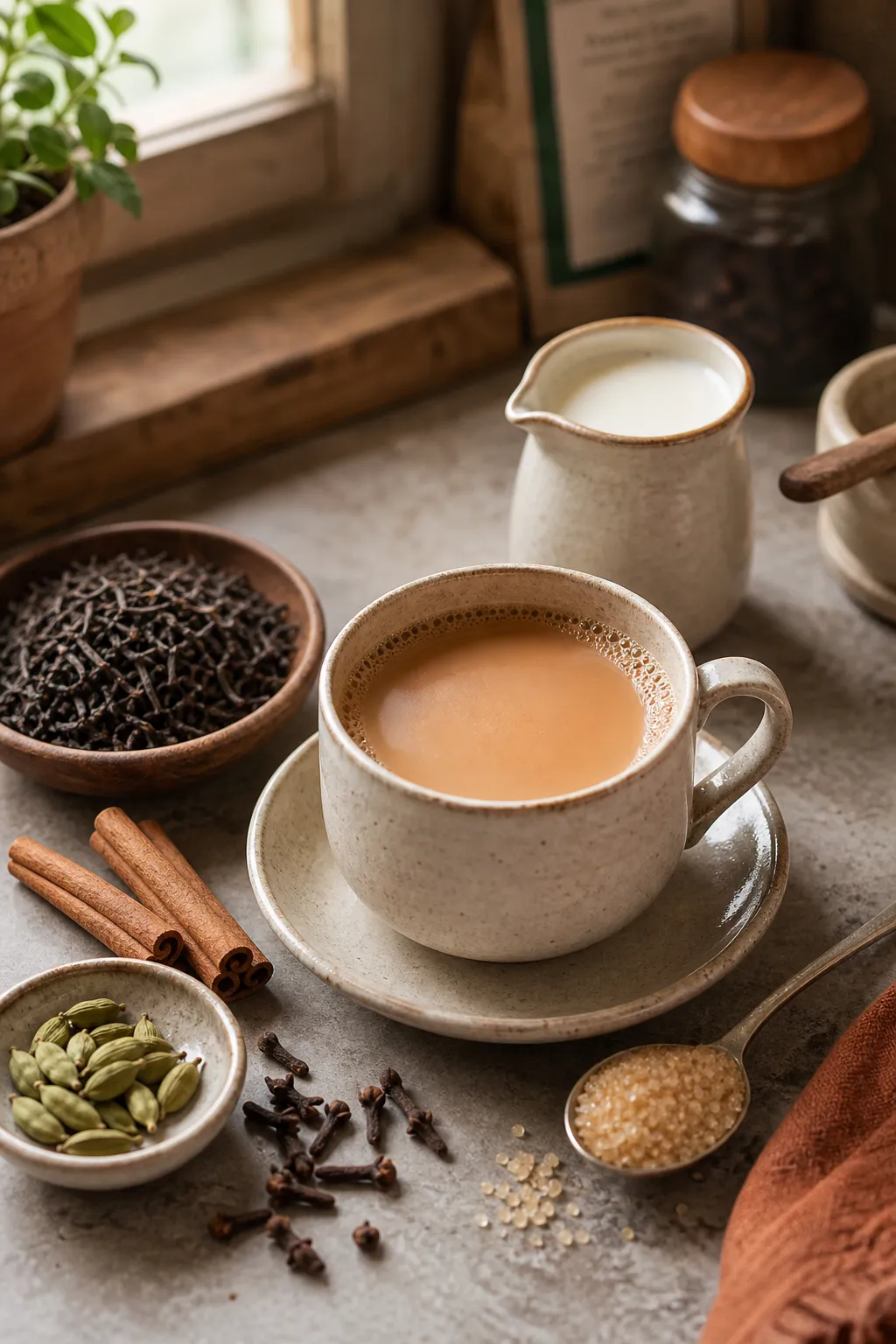
Masala chai gets confusing because a menu, tea tin, café bottle, and home recipe can all use similar words for very different cups. For a black tea drinker, the practical question is not only “What is chai?” but “What kind of masala chai black tea am I actually getting?”
The answer sits in a few cup-level variables: the black tea base, spice balance, milk, sweetness, and preparation method. Some cups are brisk and tannic under the milk. Some are creamy and sweet. Some smell vivid but taste more like spice flavor than tea. This page treats masala chai as a spiced black tea tradition with many versions, not as one fixed formula.
upward
Read the full overview first
Use the broader guide first if you need the full scope before this page.
Masala Chai Starts With the Tea, Not Only the Spice
The common mistake is to let the spice blend define the whole drink. Spice matters, but the black tea base gives the cup its frame. A strong base can hold through milk and sweetener. A softer base may become gentle and rounded, but it can also vanish under loud spice.
At cup level, the black tea contributes:
- Body: how full or thin the drink feels once milk is added.
- Briskness: the lively, drying edge that keeps a sweet, milky cup from feeling flat.
- Color: the depth of the liquor before and after milk.
- Aroma: malt, toast, fruit, wood, or leaf notes, depending on the blend.
- Structure: the backbone that helps tea, spice, milk, and sugar feel connected.
A spiced black tea made with a weak base can smell inviting but taste mostly of warm milk and aromatics. A very assertive base can produce grip and intensity, especially when simmered or brewed strong. Neither is automatically better. The useful distinction is whether you want a tea-forward cup, a spice-forward cup, or a softer milk-led drink.
Because this draft has no public source set strong enough for precise regional or historical claims, it should not present one black tea style as the required base. In buying and brewing terms, the better question is whether the tea is strong enough for the method. A blend designed for milk tea may be built for bold extraction. A delicate loose black tea with subtle aromatics may lose the qualities that made it interesting if it is boiled long with heavy spice and milk.
Chai Terminology: What Labels May Mean
Chai terminology can blur the cup before you even brew it. In many English-language retail settings, “chai” is used as shorthand for a spiced tea drink. “Masala chai” more clearly points toward tea prepared with a spice mixture. “Chai tea,” “spiced black tea,” “chai latte,” and “chai concentrate” can overlap in the market, but they do not always describe the same product.
A practical way to read the wording is to ask what is inside and what the maker expects you to do with it.
Masala chai
Check: tea base, spice list, preparation directions. Cup effect: may be intended for milk, sweetener, or stronger brewing.
Spiced black tea
Check: whether the tea is lightly flavored or built for milk. Cup effect: can range from tea-forward to spice-forward.
Chai concentrate
Check: sweetness, dilution instructions, tea presence. Cup effect: depends heavily on the ratio of concentrate to milk or water.
Chai latte mix
Check: dairy or non-dairy components, sweetener, tea content. Cup effect: may behave more like an instant drink than brewed tea.
Caffeine-free chai-style blend
Check: whether black tea is absent. Cup effect: may use chai-style spice language without being black tea.
The front label is only a starting point. Some blends are dry tea plus visible spices. Some are powders. Some are syrups or concentrates. Some are black tea flavored with spice extracts or other flavorings rather than whole spice pieces. The clearest buyer-facing cues are the ingredient list, brewing directions, suggested milk ratio, sweetness level, and visible leaf or particle size when the package shows it.
For a black tea enthusiast, “spiced black tea” is a useful phrase because it keeps the tea base in view. It asks whether the drink is still structured around black tea or mainly around sweetened spice flavor.
The Variables That Change the Cup
Masala chai behaves less like a single recipe and more like a set of adjustable controls. Small changes in tea quantity, spice, milk, sweetness, and freshness can make the same blend seem sharper, softer, heavier, or more aromatic.
Tea Strength
Tea strength changes quickly with leaf quantity, particle size, water temperature, and time. A stronger brew can stand up to milk and sugar, but it may also bring more astringency. A gentler brew can be smooth, yet it may lose definition if the milk is too heavy.
The useful test is not whether the tea tastes pleasant on its own. It is whether it still tastes like tea after milk, spice, and sweetness are present. If the finished cup tastes hollow, the base may be too light, the ratio too weak, or the milk too dominant.
Spice Balance
The spice blend shapes the first aroma and the finish. Some cups feel rounded and warming. Others are sharper, more fragrant, or more peppery. Without stronger source material, this page should not claim a required spice canon. For the drinker, the key distinction is whether the spice supports the tea or takes over.
A spice-heavy blend can be appealing when the goal is a bold, aromatic cup. It can also make weak tea seem more interesting than it is. A tea-forward blend lets the black tea’s body and briskness remain central. If the cup smells vivid but tastes thin, the aroma may be coming from spice while the tea base is underpowered.
Milk
Milk changes texture, color, temperature perception, and bitterness. It softens edges and gives the drink weight. It can also mute tea aroma and blur finer spice differences.
More milk usually means a rounder cup. Less milk keeps the black tea and spices more exposed. The right amount depends on brew strength: a strong extraction can carry more milk, while a lighter infusion may need restraint. Non-dairy milks can shift the cup too, especially when they bring sweetness, grain flavor, or added thickness.
Sweetness
Sweetness does more than make the drink sugary. It can smooth spice, reduce perceived bitterness, and give the cup a fuller finish. Too much sweetness can flatten the tea and turn the spices into dessert flavoring rather than part of a brewed drink.
A useful habit is to taste the tea-and-milk base before deciding how much sweetener it needs. If the base is brisk and spicy, sweetness may help integrate it. If the base is already soft and milky, heavy sweetening can make the black tea disappear.
Freshness and Storage
Spiced tea has two freshness questions: the tea and the aromatics. Black tea can lose liveliness over time, especially near air, light, heat, or strong odors. Spices and flavorings can also fade or shift. A stale blend may still look usable but brew into a dull cup where milk and sweetener do most of the work.
Store spiced black tea in a closed container away from moisture, heat, light, and competing smells. Aromatic ingredients can lose scent and pick up unwanted odors, so storage matters more than the package front usually suggests.
Brewing Methods: Steeping, Simmering, and Mixing
Preparation matters because masala chai is often built to handle more extraction than a plain cup of black tea. Still, the method should fit the form of tea you have.
A steeped approach treats the blend like other black tea: hot water, measured tea, controlled time, then milk and sweetener to taste. This can work well for loose blends where the tea is pleasant and the spices are not too coarse. It gives more control and lowers the chance of pushing the cup harsh.
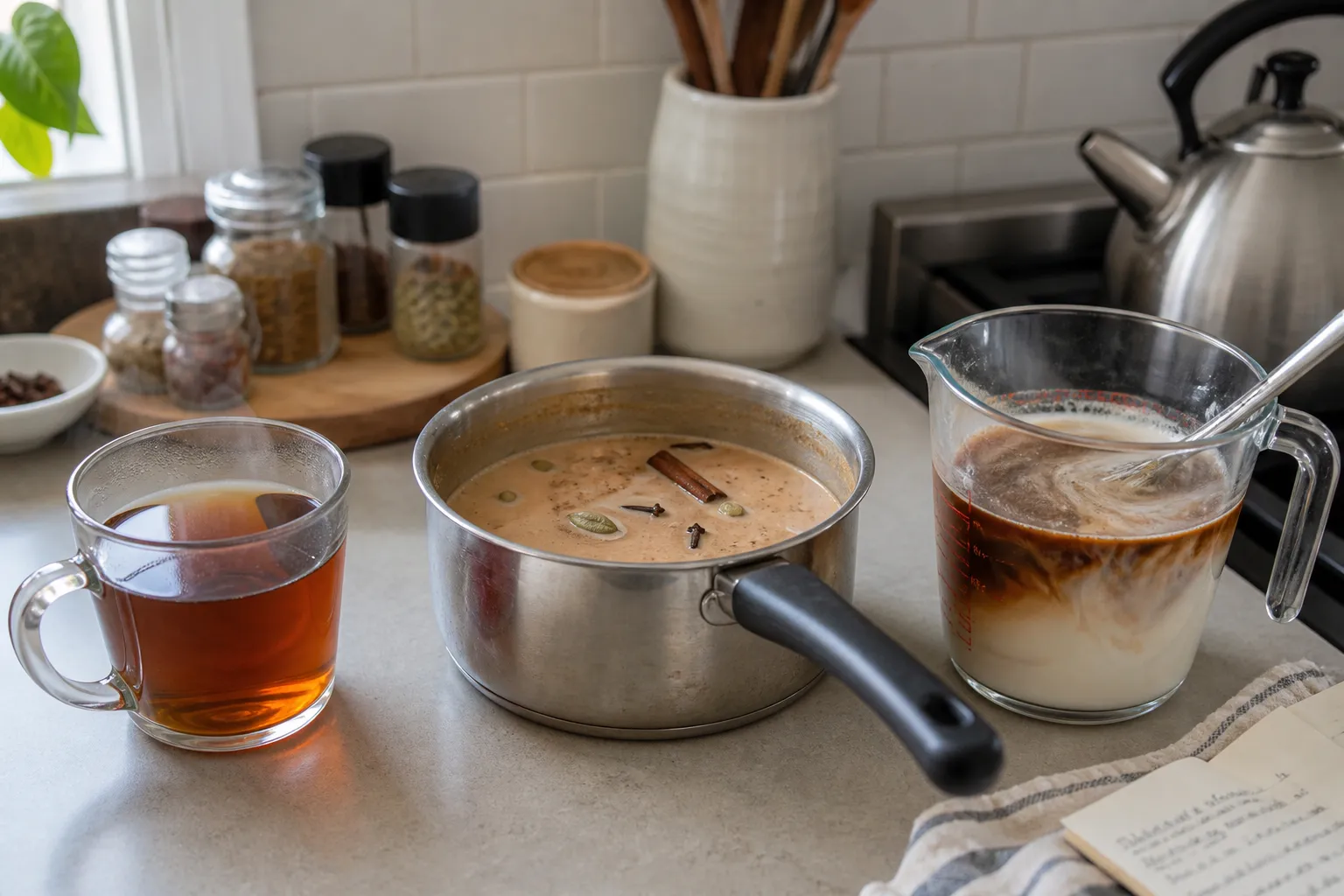
A simmered approach gives a stronger, more integrated drink. Tea, spices, water, milk, and sweetener may be combined in different sequences depending on the recipe or household habit. Simmering can pull more strength from tea and more aroma from spices, but it can also make the cup more drying if pushed too far.
A concentrate or mix follows a different logic. The main variable is dilution. If the product is already sweetened and spiced, you have less control over the final cup. These products can be convenient, but the black tea base is harder to judge unless the package gives clear information.
Use the cup to decide what to adjust:
- If the tea tastes weak after milk, increase tea quantity before stretching steeping time too far.
- If the cup is bitter or overly drying, reduce extraction time or add milk rather than relying on sweetness alone.
- If the spice feels loud but the drink lacks body, the blend may need a stronger black tea base.
- If the cup tastes flat, check freshness, storage, and whether the product is mostly flavoring or sweetener.
- If a delicate black tea loses its character, drink it more simply and choose a bolder base for masala chai.
The method does not need to become a test of authenticity. For the reader, the useful difference is sensory: steeping gives more control, simmering gives more intensity, and concentrates shift control toward the maker’s formula.
Cup-Level Flavor: How to Judge the Finished Drink
Start with the finished cup, not the label. Masala chai can be judged through the same practical senses used for other black tea, with extra attention to spice, milk, and sweetness.
First, smell the cup. Does it smell like black tea plus spice, or mostly like spice flavor? A strong aroma does not always mean a strong tea base. Then look at color and opacity. A pale, milky cup may still be pleasant, but it often signals a softer tea presence. A deeper cup may point to stronger extraction, more tea, or less milk.
On the palate, notice the sequence:
- First impression: sweet, spicy, brisk, creamy, or tea-forward.
- Middle: whether the black tea gives body or disappears.
- Edges: astringency, spice heat, milk softness, or syrupy sweetness.
- Finish: whether the flavor lingers as tea, spice, sugar, or milk.
A balanced cup does not have to be mild. It can be strong, sweet, and spicy if the elements feel connected. The problem is not intensity; it is imbalance. A cup may be too thin, too sharp, too sweet, too milky, or too dominated by one spice note. Preference matters, but tasting language helps identify what to adjust.
For black tea buyers, the key sensory question is whether the tea base survives the preparation. If the drink could be made with almost any dark liquid and taste the same, the blend is not giving much black tea character. If the cup has structure, depth, and a clean finish beneath the spice, the base is doing real work.
Cultural Context Without Flattening the Cup
Masala chai belongs to living food-and-drink practice, not only to packaged tea categories. It can be shaped by household habits, local preferences, vendors, ingredients on hand, and changing market language. It is reasonable to discuss it as part of chai tea tradition, but not to reduce it to one universal recipe or a tidy origin story without stronger sources.
For this page, the careful frame is simple: masala chai is a spiced black tea preparation with many variations. Regional practice may affect tea strength, spice selection, sweetness, milk level, and brewing method, but the available material here does not support precise claims about which region uses which formula or when a particular style began.
That limit matters because tea writing often turns flexible food traditions into rigid rules. A packaged blend may present one version as classic. A café may use “chai” for a sweet milk drink with a mild tea presence. A home preparation may be stronger, less sweet, or more spice-forward. These can all belong to the broader spiced black tea conversation, but they are not interchangeable experiences.
The better question is: what is this cup asking me to notice? If it draws attention to tea strength, milk texture, and spice integration, it is working as a black-tea-based preparation. If it mainly asks you to notice sugar and fragrance, it may function more like a flavored milk drink in practical tasting terms, even when the label uses chai language.
Buying Cues for Spiced Black Tea
Buying masala chai is easier when the package is read as a set of clues rather than a promise. The front label may be broad. The back label usually tells you more.
Check for:
- Tea presence: Is black tea clearly listed, or is the product a tea-free chai-style blend?
- Ingredient form: Are there visible tea leaves and spices, fine particles, flavorings, powders, or liquid concentrate?
- Milk expectation: Do the directions assume milk, water, or both?
- Sweetener: Is the product unsweetened, lightly sweetened, or already built around sugar?
- Brewing strength: Do the instructions call for a normal infusion, a stronger brew, or simmering?
- Freshness cues: Is the packaging protective, resealable, and clear about storage?
For loose spiced black tea, visible leaf and spice pieces can help you understand the blend, but appearance does not ensure cup quality. Large spice pieces may look appealing yet infuse slowly. Fine tea particles may look less elegant but produce a stronger milk tea. A powder or concentrate may be convenient but gives less control over tea strength and sweetness.
If you want a tea-forward cup, look for signs that the black tea base is not an afterthought: clear tea identification, brewing directions that respect extraction, and a formula that lets you choose milk and sweetener. If you want convenience, check whether sweetness and spice are already fixed. The more complete the product is, the less room you have to shape the final cup.
Where People Mix Up Masala Chai and Spiced Black Tea
The confusion usually comes from treating several different products as if they were the same thing.
A dry masala chai blend, a café chai latte, a bottled concentrate, and a lightly flavored spiced black tea may all use overlapping language. They behave differently. One may need simmering. One may need only milk. One may brew like ordinary black tea. One may leave little room for adjustment because sweetness and spice are already built in.
Another common mix-up is assuming stronger spice means stronger tea. It does not. A cup can be intensely aromatic and still have a weak black tea base. The reverse is also possible: a firm black tea base can carry restrained spice and still feel complete.
Sweetness creates another misunderstanding. It is neither automatically a flaw nor a requirement. It can integrate spice and soften a brisk brew, but it can also cover poor balance. The useful question is whether sweetness supports the cup or becomes the main flavor.
Cultural language can also be mistaken for product proof. Words associated with tradition, region, or household preparation may signal a style intention, but without clear sourcing and transparent product information, they should not be read as a fixed standard. For the buyer, the more reliable clues are in the cup and on the ingredient panel.
A Practical Way to Choose Your Version
If you want masala chai as a black tea experience, start with the base. Choose a blend that can brew strong enough for milk. Keep sweetness adjustable. Use spice to frame the tea, not erase it. Taste once before adding more sugar or milk.
If you want a creamy café-style cup, a concentrate or mix may suit the goal, but read the package for sweetness and dilution. The tradeoff is control: you may get consistency, but less ability to shape tea strength.
If you want to explore spiced black tea traditions more broadly, compare by preparation variable rather than label alone. Try one cup steeped and one cup simmered. Try less milk before changing the tea. Sweeten gradually. Keep notes on body, aroma, astringency, spice lift, and finish.
The best version is not a universal formula. It is the version where black tea, spice, milk, and sweetness make sense together. For a black tea drinker, the tea should still be visible in the finished cup: not necessarily dominant, but present enough to give shape, depth, and a reason to call it spiced black tea rather than only a sweet spiced drink.