Brewing variables
Black Tea Steeping Time, Temperature, and Ratio
A dark cup that smells flat, bites too sharply, or disappears under milk usually comes back to three linked choices: how much tea you used, how hot the water was, and how long the leaves stayed in it. The useful way to think about black tea steeping time temperature ratio is not as one fixed recipe, but as a small set of controls. Time changes extraction. Temperature changes how quickly the cup opens. Ratio changes concentration before the clock even starts.
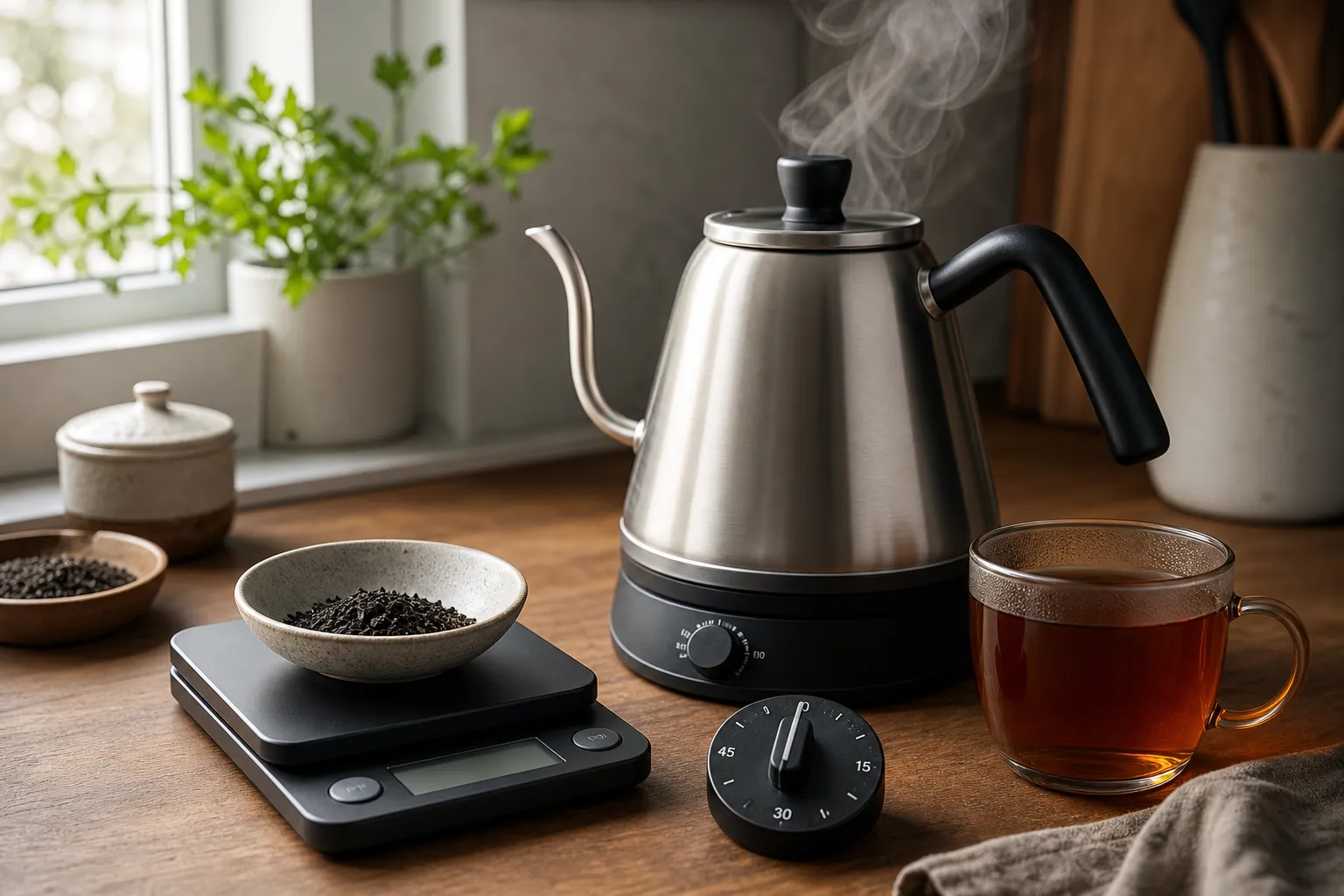
For many everyday black teas, a balanced starting point is water near boiling, a measured amount of leaf for the actual cup size, and a steep long enough to bring out aroma and body without pushing the cup into harshness. From there, change one variable at a time.
upward
Read the full overview first
Use the broader guide first if you need the full scope before this page.
A Practical Starting Point for Black Tea
Most black tea is brewed hotter and longer than green tea, but the category is too broad for one rigid formula. Whole-leaf Darjeeling, broken-leaf breakfast blends, tea bags, smoked black tea, and strong milk-friendly blends respond differently because leaf size, processing, blend style, freshness, and intended cup are not the same.
Balanced plain cup
Water near boiling, or slightly below; about 3–5 minutes; about 1 teaspoon or 2–3 g per 8 oz / 240 ml.
Lighter aromatic cup
Slightly cooler or shorter; about 2–3 minutes; the same ratio, or slightly less leaf.
Stronger plain cup
Hot and controlled; about 3–4 minutes; more leaf, not just more time.
Milk-friendly cup
Hot water; about 4–5 minutes; slightly more leaf or a strong-cut tea.
These are working ranges, not a universal rule. Consumer brewing guidance usually gives broad ranges for black tea because the category covers many leaf styles and drinking habits. Standards for preparing tea liquor also exist for controlled sensory evaluation, but that kind of repeatable preparation is not the same thing as a preferred home cup. A comparison table wants consistency; your cup wants the strength, aroma, briskness, and body you enjoy.
Start with a ratio that matches your cup size, brew within a normal black tea time range, then taste before changing anything.
How Long to Steep Black Tea for a Balanced Cup
For a balanced black tea cup, start around three to five minutes, then narrow the range by what you taste. A shorter steep tends to emphasize aroma, brightness, and lighter body. A longer steep usually gives more color, structure, briskness, and astringency. Past a certain point, longer steeping may add roughness faster than it adds pleasant flavor.
Black tea steeping time changes what enters the cup over the minutes. Early extraction brings color and some aroma. As the steep continues, the cup often gains body and firmness. If the leaves are small or broken, that process can happen quickly because more surface area is exposed to the water. If the leaf is large and twisted, the flavor may unfold more gradually.
A three-minute steep can be enough for a smaller-leaf tea, a delicate plain cup, or a tea you want to drink without milk. A five-minute steep may suit a breakfast blend, a tea bag, or a cup intended to carry milk. The better question is not only “how long to steep black tea,” but “what did the last minute add?”
Use the cup as the test
- If the tea smells good but tastes thin, keep the same temperature and steep slightly longer next time.
- If the color is deep but the finish feels dry and scraping, shorten the steep or use a little more leaf for less time.
- If the tea tastes dull, stale, or papery, steeping longer may not solve it; freshness, storage, or water may be involved.
- If milk makes the cup vanish, increase the ratio before pushing steep time far beyond the usual range.
Can you steep black tea for less than three minutes? Yes, especially when the leaf is fine, the tea is aromatic, or you prefer a lighter cup. Can you steep black tea longer than five minutes? You can, but the tradeoff is often more astringency and bitterness, not simply more flavor. Treat longer steeping as a deliberate choice, not the default path to strength.
What Water Temperature Is for Black Tea
Black tea water temperature is usually high because fully oxidized tea leaves often need enough heat to release color, aroma, and body. Many everyday black teas tolerate water near boiling. Still, “boiling water for black tea” should not mean a hard boil, a careless pour, and no attention to the leaf.
For robust breakfast blends, Assam-style teas, Ceylon teas, and many tea bags, very hot water can help produce the expected brisk, full cup. For more aromatic or delicate black teas, slightly cooler water may keep the cup clearer and less sharp, especially if you drink it plain. The point is not that black tea is fragile; it is that heat should match the leaf and the cup you want.
Temperature changes the speed of extraction. Hotter water pulls flavor and structure more quickly. Cooler water slows the brew and may soften the edge. If a tea tastes harsh at four minutes with near-boiling water, try a slightly cooler pour, a shorter steep, or a higher leaf ratio with less time.
Should black tea be brewed with boiling water? Often, yes, for sturdy blends and milk-friendly cups. Not always, for every black tea or every preference. If the package gives a range, start there. If it gives only one number, treat that number as a first attempt, then adjust by taste.
Use hotter water when you want body, briskness, and milk strength; step down slightly when you want aroma, sweetness, and a cleaner finish.
Black Tea Leaf-to-Water Ratio: Teaspoons, Grams, and Cup Size
The black tea leaf to water ratio sets the concentration of the brew before time and temperature begin doing their work. A common starting point is about one teaspoon of loose leaf black tea per cup, often understood as an 8-ounce / 240 ml cup. If you use a large mug, travel cup, or teapot, that “one teaspoon per cup” habit can quietly under-leaf the brew.
Cup size matters. A 12-ounce mug needs more tea than an 8-ounce cup if you want the same strength. A 16-ounce mug needs roughly twice the tea of a small cup, not just a longer steep. This is one of the most common reasons black tea tastes weak even when the steeping time seems correct.
Black tea teaspoons vs grams is another source of confusion. Teaspoons are convenient, but they measure volume, not weight. A teaspoon of small broken leaf may hold more tea by weight than a teaspoon of large wiry leaf. A fluffy orthodox leaf can look generous in the spoon while weighing less than expected. Grams are more reliable when you want repeatability across different leaf styles.
Use teaspoons for an easy daily habit. Use grams when you are comparing teas, adjusting a stubborn brew, or trying to understand why the same spoonful behaves differently across packages.
8 oz / 240 ml cup
1 tsp or about 2–3 g. Standard plain cup.
12 oz / 350 ml mug
1½ tsp or about 3–4.5 g. Prevents a large mug from tasting thin.
16 oz / 475 ml mug
2 tsp or about 4–6 g. Better than stretching one teaspoon longer.
Small teapot, 2 cups
2 tsp or about 4–6 g. Adjust for leaf size and milk use.
These amounts are approximate because leaf shape changes volume. The useful habit is proportional thinking: bigger cup, more water, more leaf.
More Tea Leaves or Longer Steep: How Each Changes Black Tea
More tea leaves and a longer steep both make a cup stronger, but they do not create the same kind of strength.
More leaf increases concentration while keeping the extraction window controlled. The cup can feel fuller, more aromatic, and more milk-friendly without necessarily becoming as dry or bitter as an overextended steep. This is often the better adjustment when the tea is pleasant but too light.
A longer steep extracts more from the same leaf. That can bring useful body and briskness, but it can also increase black tea astringency. Astringency is the drying, puckering sensation that gives some black teas their firm finish. In moderation, it can make a cup lively. When pushed too far, it can make the tea feel rough.
Too weak but pleasant
Add more leaf. This builds concentration without over-pulling the finish.
Too pale and thin
Add leaf or steep slightly longer, depending on whether aroma is already present.
Good strength, too harsh
Shorten time or cool water slightly to reduce sharp extraction.
Disappears with milk
Add more leaf or choose a stronger-cut tea because milk needs body and concentration.
Aromatic but watery
Increase ratio to keep fragrance while adding body.
Strong color, flat taste
Check freshness, water, or leaf condition because time alone may not restore aroma.
Many brewing mistakes begin here. A reader wants a stronger black tea ratio, but reaches first for a longer steep. If the tea was already well extracted at four minutes, the fifth or sixth minute may not bring the rounder cup they imagined. It may bring a darker, drier one.
For milk, sugar, lemon, or spices, ratio matters more than many people expect. A tea meant to stay present with milk usually needs enough leaf and structure at the start. A delicate aromatic black tea may be better kept plain, with a shorter steep and careful heat.
Why Leaf Size Changes Black Tea Steeping Time
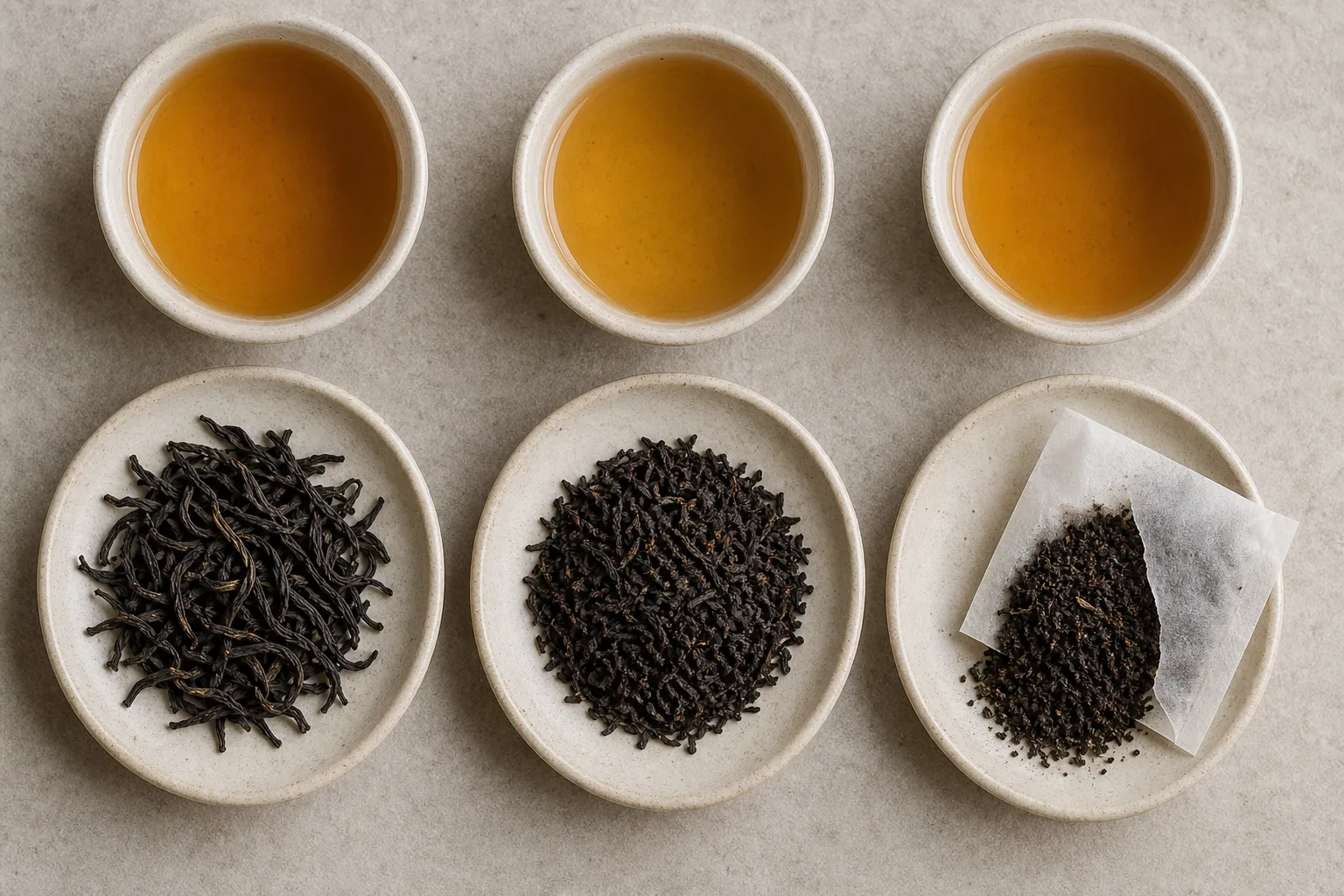
Black tea leaf size affects steeping because water reaches small, broken, or cut leaves differently than large whole leaves. A tea bag often contains smaller particles than loose whole leaf. Many breakfast blends also use smaller or broken grades because they are designed to brew quickly and strongly. Large twisted leaves may need more room and time to open.
This does not make one form automatically better. It changes the brewing expectation.
Small leaf, broken leaf, and many tea bags tend to release color and briskness quickly. They can suit busy morning cups and milk-friendly brewing, but they may become sharp if left too long. Larger loose leaf may give a slower, more layered cup, but it can taste weak if you under-measure it or crowd it in a small infuser.
Leaf size also explains why two black teas can taste different at the same steeping time. Three minutes with a fine tea bag is not the same as three minutes with long, wiry leaves. Four minutes with a fresh broken-leaf Assam-style tea is not the same as four minutes with an older tin of large-leaf tea that has lost aroma.
Other variables can shift the cup before the timer looks wrong
- Origin and style can shape malt, fruit, spice, smoke, floral notes, and briskness.
- Blend design can favor quick strength, aroma, milk use, or plain drinking.
- Freshness and storage affect aroma before brewing begins.
- Water can change clarity, perceived body, and brightness.
- Infuser size affects how freely the leaf expands.
If the same black tea tastes different from one day to the next, check measurement, water volume, water temperature, steeping time, and leaf space first. Then look at freshness and storage.
Common Mix-Ups Around Black Tea Brewing
The most persistent mix-up is the idea that there is one correct black tea recipe. Standardized tea preparation can be useful when tasters need a controlled liquor for comparison, but it is not a universal home-brewing answer. A controlled method reduces variables. A home method uses variables to reach the cup you want.
Another mix-up is treating hotter water as automatically better. High heat is useful for many black teas, especially strong blends, but temperature still interacts with leaf size and steeping time. If a cup turns sharp, heat may be part of the reason.
A third confusion is treating longer steeping as the cleanest way to make stronger tea. Longer time can increase strength, but it changes texture and finish. More leaf often gives a fuller cup with better control.
A fourth mistake is linking strength too closely with caffeine expectations. Black tea contains caffeine, and preparation can influence what ends up in the cup, but intake also depends on serving size, number of cups, leaf amount, and personal tolerance. General caffeine guidance is useful as a guardrail, not as a brewing-quality rule. A stronger-tasting cup should not be presented as a predictable result for alertness, wellness, or personal safety.
Separate the questions
- Strength: Do you need more concentration?
- Balance: Is the cup flavorful without a rough finish?
- Aroma: Did heat or time flatten the top notes?
- Body: Does the tea feel full enough for plain drinking or milk?
- Briskness: Is the lively edge pleasant or too sharp?
- Ratio: Did the amount of leaf match the real water volume?
Once those questions are separate, adjustments become easier.
A Simple Adjustment Method for Your Next Cup
Start with one tea, one cup size, and one written baseline. Use the same mug or teapot for a few brews so you are not changing water volume without noticing.
- First, measure the leaf. If you use teaspoons, level them rather than heaping casually. If you use grams, note the weight and water volume. For most daily cups, the exact number matters less than repeating it consistently enough to learn from the result.
- Second, choose water temperature by style. Use near-boiling water for robust black teas, breakfast blends, and milk cups. Try slightly cooler water for delicate, aromatic, or easily harsh teas.
- Third, set the clock. Begin around three minutes for lighter or smaller cups, and move toward four or five minutes for fuller cups, strong blends, and milk use. Taste before deciding that the tea needs a permanent change.
- Fourth, change only one variable next time. This keeps black tea steeping time, temperature, and ratio from blurring into one vague instruction.
Weak but clean
Add leaf.
Thin and pale
Add leaf or steep 30–60 seconds longer.
Bitter or drying
Shorten time, or cool the water slightly.
Flat aroma
Check freshness; try shorter time or slightly cooler water.
Too light for milk
Add leaf, use a stronger blend, or steep within the upper normal range.
Heavy but not flavorful
Reduce time and review storage or leaf freshness.
Public brewing guidance is useful for setting a starting range, but the final adjustment still belongs to the actual leaf, water, vessel, and cup in front of you.
Quick Answers for Specific Brewing Questions
How much loose leaf black tea should I use per cup?
Start with about one teaspoon, or roughly 2–3 grams, for an 8-ounce / 240 ml cup. Increase proportionally for larger mugs. If the leaf is large and airy, a gram scale is more reliable than a teaspoon.
Can black tea be steeped for less than three minutes?
Yes. Less than three minutes can work for small-leaf teas, lighter plain cups, or aromatic black teas that become sharp with a longer steep. If the cup tastes thin, add more leaf before assuming it needs much more time.
Can black tea be steeped longer than five minutes?
It can, but longer than five minutes often moves the cup toward more astringency and bitterness. For a stronger cup, try increasing the leaf-to-water ratio first, especially if you want body without a rough finish.
Why does black tea taste different at the same steeping time?
The clock is only one variable. Leaf size, tea bag versus loose leaf, blend, freshness, water temperature, cup size, infuser space, and storage can all change the result. A four-minute steep is not the same brew if the leaf amount or water volume changes.
A good black tea method is not a rule to defend; it is a baseline you can repeat and adjust. Measure the leaf for the cup you actually use, choose heat that fits the tea’s style, set a time you can compare, and let the next sip tell you which variable deserves attention.
Sources
Sources and further reading
Reference links are limited to sources considered suitable for public citation in this page.