
Global milk tea guide
Black Tea with Milk Around the World
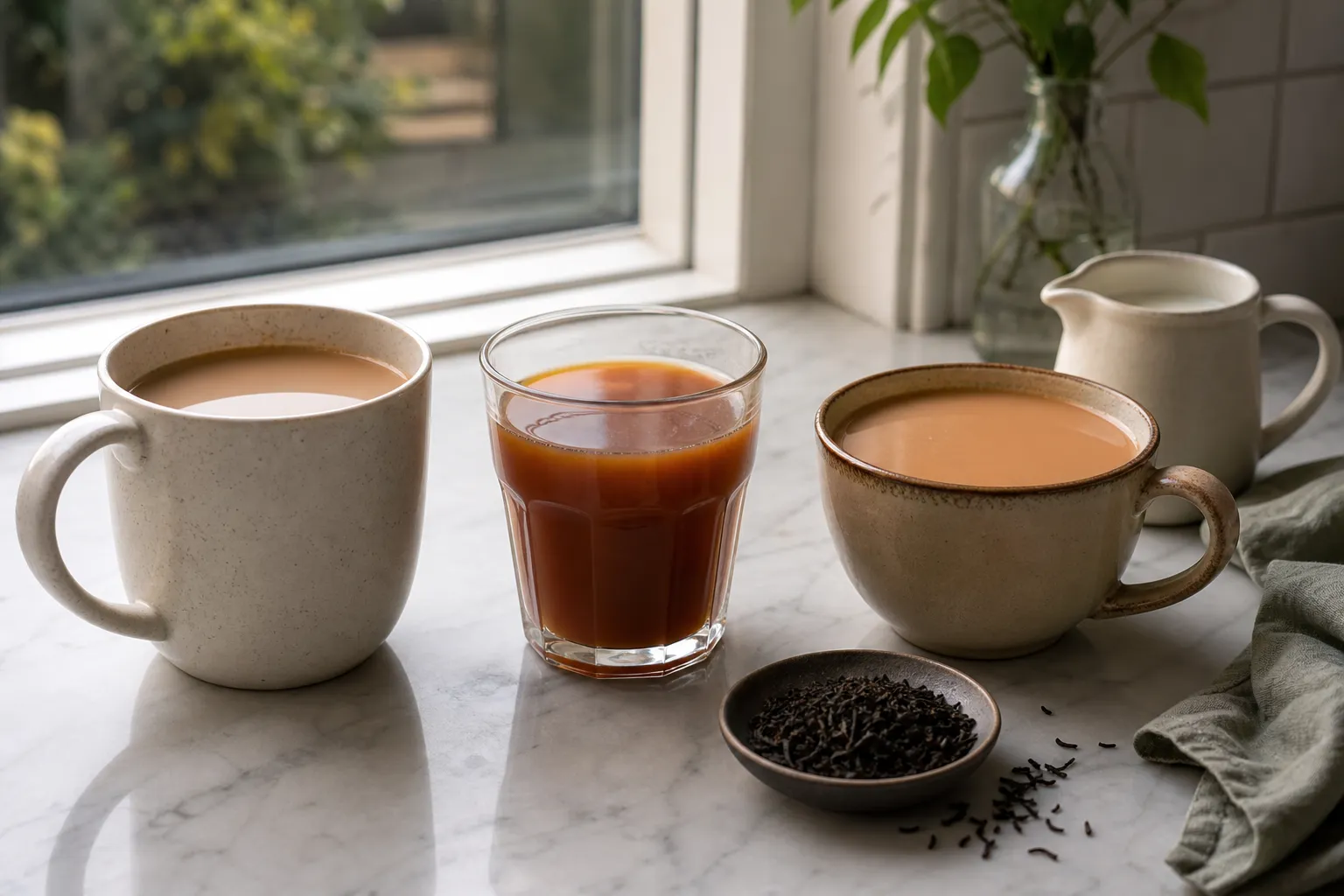
Black tea with milk looks simple until two cups sit side by side. A breakfast mug softened with a splash of milk, a strong café glass, and a prepared regional milk tea may all begin with black tea and milk, but they ask different things from the tea.
The difference is rarely milk alone. It comes from the strength of the infusion, how much milk is used, when milk is added, whether sweetness is expected, and how much briskness or astringency the style wants to keep. A useful global view does not turn every cup into one recipe. It helps you read what the cup is trying to do.
Core reading question
A milk cup is easier to understand when you read the tea strength, milk amount, timing, sweetness, body, and expected texture together.
upward
Read the full overview first
Use the broader guide first if you need the full scope before this page.
The Tea Has to Carry the Milk
Milk can soften black tea, but it cannot create the base character by itself. The brewed tea needs enough body, aroma, color, or briskness to remain present after milk is added.
A light infusion may taste pleasant plain, then become thin once milk enters. A stronger infusion may seem sharp on its own, yet feel rounded and satisfying with milk. That is why many milk-friendly cups start with black tea that has visible strength before the milk goes in.
Tea quantity
More leaf, or a fuller tea bag presence, usually gives more body, color, and grip.
Infusion time
A longer steep can draw out more strength and astringency, though too much extraction can make the cup rough.
Leaf form
Fine-cut black tea often infuses quickly and firmly; larger leaves may need more time and may show aroma differently.
Water temperature
Black tea is commonly brewed with very hot water, but strength still depends on the tea, amount, and steeping time.
Serving size
A small concentrated cup and a large mug can both take milk, but they set different expectations.
Astringency is not automatically a flaw in this setting. Some grip gives milk something to round off. The practical question is not whether milk “belongs” in black tea, but whether this black tea is brewed in a way that still tastes like tea after milk is added.
Milk Timing Is a Control Point, Not a Universal Rule
Milk first, tea first, milk after judging the color: the order can matter, but it does not mean the same thing in every cup. Brewing guidance can help explain steeping, strength, and milk order, but it should not be treated as a rule for every household, café, or regional style.
If milk goes into the cup first, the drinker may be softening the incoming tea and controlling color as the tea is poured. If milk is added after steeping, the drinker can judge the liquor first, then adjust the cup by sight and taste. In prepared milk tea service, the timing may be part of the method rather than a personal choice.
Use timing to learn the cup
- Add milk after steeping if you want to judge black tea strength first.
- Add a small amount first if you want a gentler cup from the start.
- Increase tea strength before adding more milk if the drink tastes pale or hollow.
- Shorten the steep or use less leaf if the drink stays rough after milk.
- Change only the milk amount when you are learning your preferred balance.
Many arguments about the “right” order are really arguments about different drinks: a strong prepared cup, a breakfast mug, a sweet café serving, or a regional preparation with its own habits.
Regional Styles Are More Than Ingredient Lists
Around the world, black tea with milk can become a named preparation, a menu category, a household habit, or a café standard. Reducing every version to “black tea plus milk” misses the role of place, service, sweetness, texture, and expectation.
Some regional milk tea preparations are built around strong black tea. Some use evaporated milk, condensed milk, fresh milk, or a combination of milk and sweetness. Some are served hot; others are often found cold. Some are made cup by cup; others depend on batch preparation or pouring techniques that affect texture.
Hong Kong-style milk tea is a useful example because it is a recognizable regional preparation within the wider family of black tea with milk. Cultural heritage documentation supports treating it as a named style with its own service context, not just as another phrase for any milk tea.
One example should not take over the whole map. The current public source set is not strong enough to support exact worldwide ratios, timelines, or fixed regional recipes. A more useful comparison is based on what you can observe in the cup.
This keeps regional tea preparation from being flattened into one formula. It also helps with menus and packaging. “Milk tea” may mean a strong prepared beverage in one setting and ordinary black tea served with milk in another.
Strength, Body, Briskness, and Astringency Decide Whether Milk Works
The most useful tasting words here are plain ones: strength, body, briskness, aroma, color, and astringency.
Strength
How clearly the tea shows up. A strong infusion has enough flavor and color to remain noticeable after milk.
Body
The weight of the cup. Milk adds body, but the tea contributes too. If the finished drink feels thin, the base infusion may be the issue.
Briskness
The lively, firm quality that keeps black tea from tasting dull. In a milk cup, it can help the drink stay defined.
Astringency
The drying or gripping sensation. Too much can be unpleasant, but a moderate edge can make milk feel useful because the cup softens without collapsing.
Aroma
Aroma often becomes quieter after milk. Delicate floral, fruity, or high notes may fade, while malt, toast, and deeper black tea notes may hold up better.
These traits explain why not every black tea is equally suited to milk. A tea prized for delicate aroma may be better plain. A tea blended or brewed for breakfast service may make more sense with milk. That is not a quality ranking; it is a question of fit.
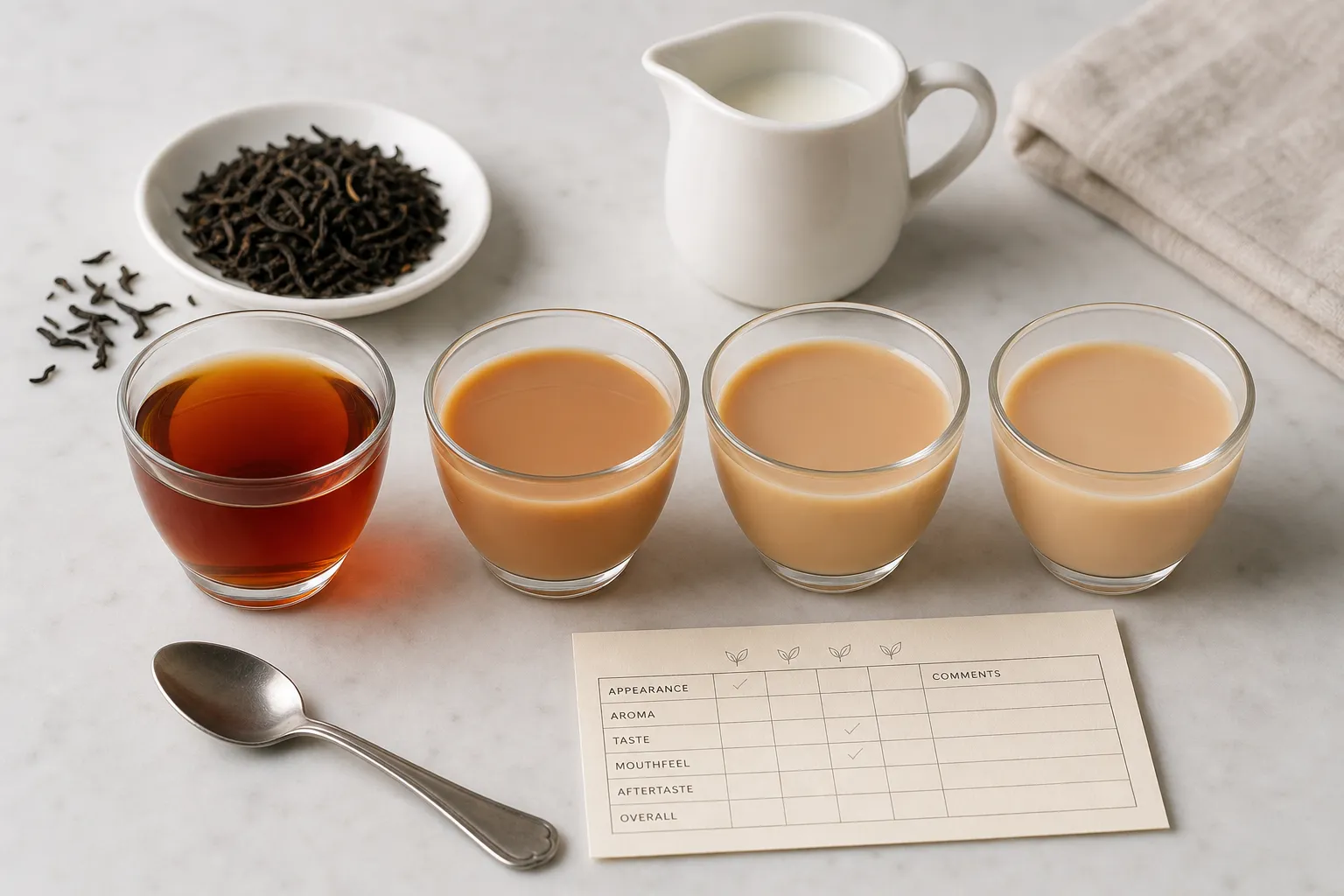
A simple test helps. Smell the brewed tea before milk. Taste a small sip plain if the strength is comfortable. Add milk gradually and watch when color, aroma, and mouthfeel shift. If the tea disappears, brew stronger next time. If it remains harsh, shorten the infusion or use less leaf. If the cup only becomes pleasant after a large amount of milk, it may be moving toward a milk-led drink rather than a tea-led one.
Common Mix-Ups When People Compare Milk Tea Styles
Many disagreements come from comparing different categories as if they were the same.
One mix-up is using “milk tea” as though it names a single global style. The phrase may describe a regional preparation, a café drink, a sweetened cold beverage, or simply black tea served with milk. Without context, it is too broad to promise an exact cup.
Another is assuming milk always makes black tea mild. Milk changes texture and softens some edges, but a concentrated black tea can still taste bold after milk is added.
Color can mislead too. A deep tan cup may look rich, but color alone does not reveal strength. The drink may have body and briskness, or it may be mostly milk and sweetness with a quiet tea base. Aroma and finish matter.
Sweetness is another dividing line. Some milk tea styles are closely associated with sweetened milk or added sugar, while a home cup of black tea with milk may be unsweetened. Two cups with the same tea and milk can feel completely different once sweetness changes.
A final confusion is assuming every named regional style has one fixed recipe everywhere. Even when a preparation is culturally recognizable, actual cups can vary by vendor, household, tea blend, temperature, and local expectation.
The better question is not “Which version is correct everywhere?” but “What is this cup trying to be?” A strong smooth prepared milk tea should not be judged by the same standard as a lightly milked breakfast mug or a sweet cold café drink.
Caffeine Belongs in the Background
When black tea with milk is made from black tea, it contains caffeine. Milk does not remove it. Caffeine content can vary with tea amount, steeping time, serving size, and preparation, and individual tolerance varies too.
That point should stay in proportion. This is mainly a question of flavor, method, and serving style, not a health article. Readers who are sensitive to caffeine, watching sleep timing, pregnant, or managing medical questions may want to consider personal tolerance or seek professional guidance.
It is also worth separating caffeine from visible strength. A darker, milkier, or more astringent cup does not give a precise caffeine number by appearance alone. Without a specific tea, measured amount, steeping method, and serving size, exact caffeine claims would be too confident.
How to Choose or Brew a Milk-Friendly Black Tea
Start with the cup you want, not with a global ranking of styles.
For a classic everyday mug, look for black tea presented for breakfast service, strong brewing, or milk use. Brew it with enough leaf and time to show color and briskness, then add milk gradually. The tea should remain the lead flavor.
For a richer prepared drink, use a stronger base. The tea needs to withstand more milk, and possibly sweetness, without disappearing. Many regional milk tea preparations move in this direction, though the details vary too much to reduce to one formula.
For a softer cup, choose a black tea with less sharpness or brew a little lighter. Add milk in small amounts and stop before the tea loses aroma. This works when you want comfort more than intensity.
For named styles, read menus and packaging carefully. The wording may tell you whether the drink is hot or cold, sweetened or plain, made with fresh milk or another milk form, prepared as a café beverage, or served as brewed tea. If the name is regional, do not assume it is interchangeable with every other milk tea.
Change one variable at a time
- Brew the same tea slightly stronger, then add the same milk amount.
- Keep the brew the same, then adjust milk quantity.
- Try milk after steeping, then compare with milk first if that suits your serving style.
- Notice whether the cup becomes smoother, thinner, sweeter, sharper, or more aromatic.
- Stop when the tea and milk feel balanced for the style you are making.
The method is modest, but it works because black tea with milk is not one fixed answer. It is a set of choices.
A Practical Way to Read the Global Family
The most useful way to understand black tea with milk around the world is to look for the structure of the cup. Is the tea brewed strong or light? Is milk a small softening addition or a major part of the drink? Is sweetness expected? Is the preparation named as a regional style, or is it simply a serving preference? Is the cup judged by briskness, smoothness, richness, refreshment, or comfort?
Those questions keep the topic grounded. Hong Kong-style milk tea can stand as one recognized regional example. Brewing guidance can frame steeping, strength, and milk timing. Caffeine guidance can keep caffeine language cautious and brief. Detailed claims about worldwide recipes, exact ratios, and regional histories need stronger style-specific support.
For the drinker, that limit is also a better tasting path. Once you know what to watch for—tea strength, milk amount, timing, body, aroma, and astringency—you can compare milk tea styles without forcing them into one rule. The cup in front of you becomes easier to understand: not just black tea made pale, but black tea shaped by milk, method, place, and expectation.
Sources
Sources and further reading
Reference links are limited to sources considered suitable for public citation in this page.