Black tea brewing
Should Black Tea Be Covered While It Steeps
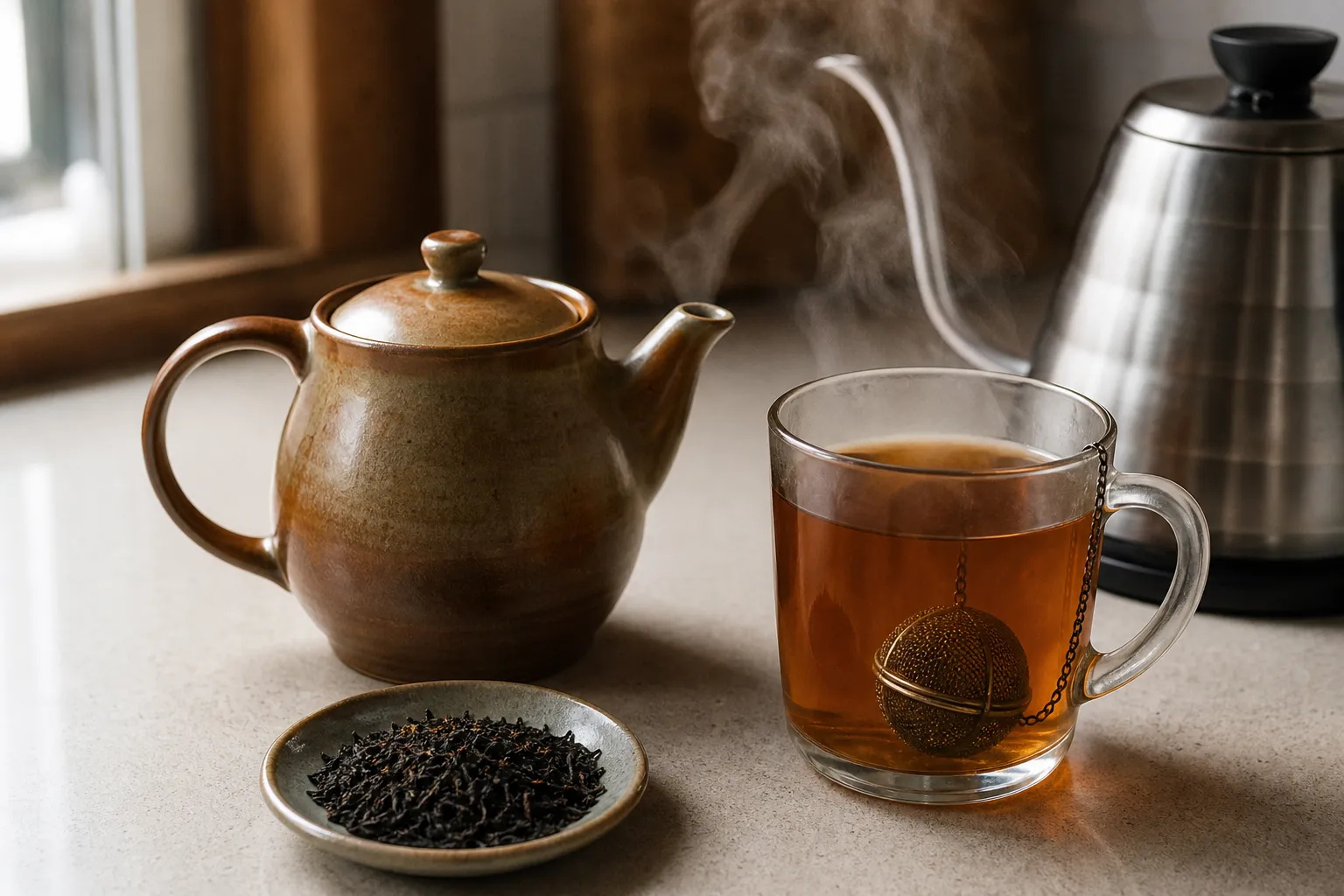
Usually, yes. It is sensible to cover black tea while steeping, especially in a teapot, a cool room, a larger batch, or any setup where you want the liquor to stay hot and steady. A lid slows heat loss and can make the steam aroma feel more concentrated when you lift it.
But uncovered black tea steeping is not automatically wrong. A quick cup in a mug, a tea bag, CTC leaf, or a fine broken-leaf blend may become strong quickly even without a lid. If covered steeping makes the tea harsh, overly thick, or flat, the better adjustment is often a shorter steep, less leaf, or slightly less aggressive heat—not simply removing the lid.
upward
Start with the broader guide
Use the broader guide first if you need the full scope before this page.
Quick answer
Use the lid as the default for a teapot, a cool room, or a pot you want to keep steady. Leave it off when the tea is already extracting fast or when a covered steep makes the cup too forceful.
What a Lid Actually Changes
A lid is not a magic brewing tool. It mostly changes the environment around the leaf.
Black tea flavor depends on several brewing variables at once: water temperature, steeping time, leaf size, tea-to-water ratio, vessel shape, water composition, and how quickly the container loses heat. Covering the vessel is one way to keep that environment a little steadier.
In the cup, a lid may affect:
Heat retention
A covered teapot or mug usually cools more slowly than an open one. This matters more with a wide mug, an unheated ceramic pot, or a chilly kitchen.
Aroma
Steam gathers under the lid, so the first lift can make malt, fruit, floral, spice, smoke, or caramel-like notes easier to notice.
Extraction steadiness
Hotter water held for longer may draw out flavor more consistently. Depending on the leaf, the liquor can seem fuller, darker, or brisker.
Surface cooling
An open cup loses heat fastest at the exposed surface. A lid reduces that exposed area.
Those are practical reasons to use a lid, not a promise that covered tea will always taste better. The available brewing and sensory material supports the broader point that time, temperature, vessel, water, and leaf form all matter. It does not give a simple household rule that a lid improves every black tea.
When to Put the Lid on a Teapot
If you are brewing black tea in a teapot, using the lid is usually the default choice. The larger the vessel and the longer the steep, the more useful heat stability becomes.
Put the lid on when:
- You are brewing a full pot. A covered teapot helps keep the whole infusion closer to the intended temperature.
- The pot was not preheated. A cold ceramic or clay pot pulls heat from the water. A lid will not undo that, but it can reduce further heat loss.
- The room is cool or drafty. Open vessels cool quickly near a window, under moving air, or in a cold kitchen.
- You want a fuller breakfast-style cup. Many breakfast blends and milk-friendly black teas are expected to brew hot, brisk, and strong.
- You are paying attention to aroma. Covering the pot, then lifting the lid, gives you a more concentrated first impression of the steam.
This is also why lidded vessels appear in controlled tea preparation. ISO 3103, a standard method for preparing tea liquor for sensory testing, uses a lidded white porcelain or glazed earthenware pot and controls tea amount, water amount, temperature, steeping time, and vessel.
That does not make ISO 3103 a home rule for the “correct” cup. Its purpose is comparison under controlled conditions, not personal preference. It simply shows that a lid is a normal way to reduce variation when the goal is a steady infusion.
When Leaving Black Tea Uncovered Is Fine
Leaving black tea uncovered can be reasonable when the tea is already extracting quickly or when you want more visual control.
You may leave it uncovered when:
- You are making one quick mug. A small volume in a warm room may not lose enough heat to matter during a short steep.
- You are using a tea bag or fine broken leaf. Smaller particles expose more surface area to water and can brew quickly.
- You are using CTC-style black tea. CTC teas are often designed for fast, strong extraction. A lid can help, but it is not always needed for strength.
- You want to watch the leaf. With whole-leaf black tea, seeing the leaves unfurl can help you judge how quickly the infusion is moving.
- You prefer a softer cup. Some black teas taste less sharp when the water cools slightly during the steep.
- Covered steeping makes the cup too heavy. If the liquor becomes darker but also rough, shorten the time before changing everything else.
The important question is not whether the cup had a lid. It is whether the final liquor is hot enough, aromatic enough, strong enough, and not too bitter or drying for your taste.
Read the Cup: Signs the Lid Helped or Hurt
The easiest way to decide is to look, smell, and taste rather than follow a fixed rule.
A lid probably helped if your tea was previously:
- pale after a normal steeping time;
- thin in body;
- cooling before the flavor developed;
- weak in aroma from an open mug;
- inconsistent from one pot to the next.
A lid may be making the cup too forceful if the tea becomes:
- very dark quickly;
- rough on the tongue;
- drying at the sides of the mouth;
- bitter before the expected end of the steep;
- heavy, dull, or “stewed” in the finish.
Try a covered teapot or covered mug before adding much more leaf. Preheat the vessel if you can, add the tea, pour the hot water, cover it, and keep the steeping time steady.
If that happens, do not assume the lid is the whole problem. A strong black tea may simply need less time, less leaf, or a different water temperature. Broken-leaf teas and tea bags often have less room for error than large, wiry whole leaves.
A useful small adjustment: keep the lid, but reduce the steep by 30 seconds. If the cup becomes clearer and less harsh, the issue was probably over-extraction under hotter conditions, not the basic idea of using a lid.
A Simple Covered Versus Uncovered Test
Because everyday lid effects vary by vessel, tea, and room temperature, the best answer for your own kitchen is a small comparison.
Use the same:
- black tea;
- amount of leaf;
- amount of water;
- starting water temperature;
- mug, pot, or infuser type;
- steeping time;
- straining method.
Change only one thing
Cover one infusion and leave the other uncovered.
Then compare
- Temperature: Is the covered cup noticeably hotter when strained?
- Aroma: Does the covered cup give a stronger steam aroma when opened?
- Color: Is the liquor darker or more saturated?
- Body: Does it feel fuller or thicker?
- Astringency: Is it pleasantly brisk, or drying and rough?
- Aftertaste: Does it finish cleanly, or does it feel flat and stewed?
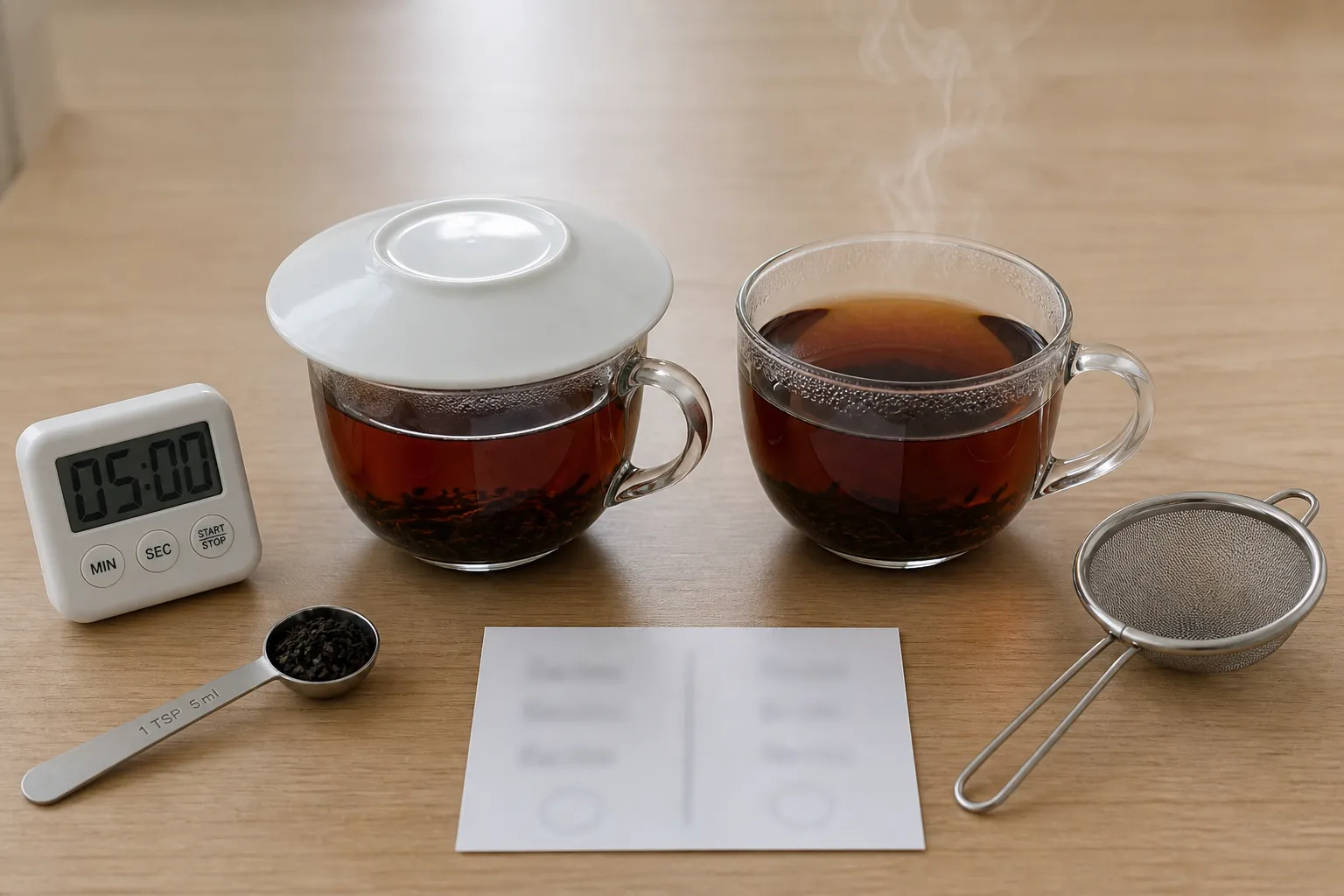
This test is especially useful for black tea in a teapot, where heat loss and vessel material matter more than they do in a very small tasting cup. If you change the tea amount, water temperature, and steeping time all at once, you will not know whether the lid made the difference.
Do Not Let the Lid Distract From the Bigger Variables
A lid is one variable in black tea preparation, not the master switch.
Black tea steeping temperature and black tea steeping time usually matter more. A covered cup brewed too long can become harsh. An uncovered cup with too much leaf can still become too strong. A lidded pot with hard or mineral-heavy water may taste different from the same tea brewed with another water source. Whole leaves, broken leaves, and bags also behave differently.
If your black tea tastes off, troubleshoot this way:
- Too weak: use a lid, preheat the vessel, check the water temperature, increase time slightly, or use a little more leaf.
- Too bitter or drying: shorten the steep, reduce leaf, strain promptly, or avoid letting fine leaves sit in the cup.
- Aroma seems muted: cover during steeping, smell the lid and steam when opened, and make sure the tea is fresh and stored well.
- Cup cools too fast: use a covered teapot, preheat the vessel, or brew a slightly smaller amount more often.
The Practical Answer
For most black tea drinkers, covering the vessel while it steeps is a good default. It helps with keeping tea temperature stable, especially in a teapot, and it can make the aroma more noticeable when you lift the lid.
Still, it is not a rule every cup must follow. Leave black tea uncovered if the tea is already extracting quickly, if you want to watch the leaves, or if covered steeping makes the liquor too strong for your taste. The right choice is the one that gives you a hot, balanced cup with the aroma, body, briskness, and finish you enjoy.
One practical note: if you are using near-boiling water, lift the lid away from your face and watch for hot steam. A porcelain or ceramic lid can also become hotter than it looks.
Sources
Sources and further reading
Reference links are limited to sources considered suitable for public citation in this page.