Buying clue
What Origin Can Tell You When Buying Black Tea
A black tea origin is a useful clue, not a verdict. When a label names a country, region, estate, garden, or lot, it can help you compare teas, ask better questions, and form a broad expectation before you buy. It cannot, by itself, prove flavor, quality, freshness, authenticity, or how the tea will behave in your cup.
Use origin beside what you can actually inspect: leaf shape, aroma, harvest or packing notes, blend language, brewing guidance, and storage condition. The stronger buying question is not “Is this origin good?” It is “What does this origin claim help me check?”
upward
Start with the broader guide
Use the broader guide first if you need the full scope before this page.
Origin Is a Map Clue, Not a Cup Guarantee
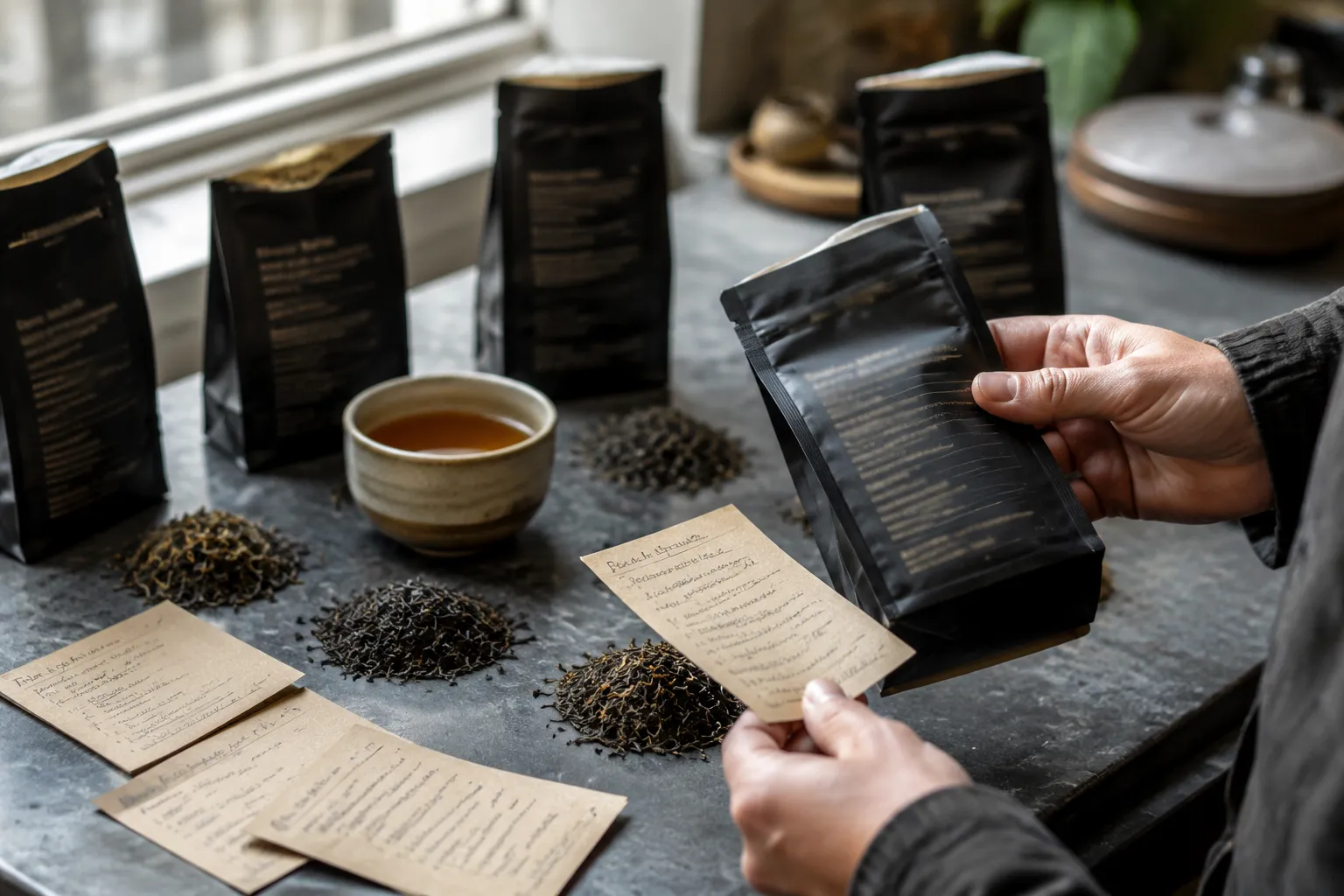
The origin on a tea label tells you where the tea is said to come from. That may be broad, such as a country name; more specific, such as a province or district; or narrow, such as an estate, garden, cooperative, or named lot. For a buyer, that wording gives the tea a place in the market instead of leaving it as anonymous black tea.
Still, a place name does not brew the tea. Two black teas from the same growing region can taste different because of cultivar, harvest timing, processing, grade, storage, or blend design. One may be cut for a brisk breakfast blend; another may be sold as a more aromatic loose leaf tea. Origin is part of the cup story, not the whole cup.
That makes origin most useful as a comparison handle. A label that says only “black tea” gives little to work with. A label that adds a region, harvest note, leaf grade, or brewing suggestion gives you more to inspect. More detail does not automatically mean better tea, but it gives you more ways to judge the purchase before and after brewing.
Practical takeaway: let origin narrow your options, then let the dry leaf, aroma, brewing notes, and first cup do the next round of work.
What Origin Can Help You Anticipate
Origin can help you form a broad expectation about style, especially when the label is specific and the seller gives supporting details. The available source material for this page does not support firm country-by-country flavor rules, so it is better to think in patterns, not promises.
A named origin may help you ask:
- Is this tea presented as single-origin, or is it part of a blend?
- Does the label name a country, black tea growing region, estate, garden, or lot?
- Is the origin paired with harvest timing, cultivar, grade, processing, or leaf style?
- Are the tasting notes concrete, such as malt, fruit, smoke, spice, briskness, body, sweetness, or astringency?
- Is the tea described for plain drinking, milk, lemon, iced tea, or a stronger breakfast-style cup?
These questions keep black tea flavor by origin in proportion. Origin may point toward regional flavor patterns that buyers commonly compare, but the cup still depends on what was made from the leaf and how it reached you. Oxidation, rolling, drying, sorting, blending, packing, and storage can all change the final character.
Origin also helps when two teas are otherwise similar. If you compare growing regions while grade, freshness, blend design, and brewing method are changing at the same time, you cannot fairly credit the taste difference to origin alone.
How to Read Origin on a Black Tea Label
Start with the most concrete wording. “Black tea” is the broadest description. “Product of” wording may refer to production, packing, export, or market presentation depending on the package and setting; without stronger documentation for that tea, do not treat it as a complete provenance record. A named region or garden gives more context, but it still needs supporting detail.
1. Look for the origin level.
Country, region, estate, garden, and lot names are different levels of detail. A country name may help with broad comparison. A region or estate name may suggest a more specific buying path. If the wording is vague, ask what the seller means.
2. Check whether it is single-origin or blended.
Single-origin language usually means the tea is presented as coming from one stated place. Blend language means the tea may be designed for a consistent cup by combining teas from more than one source. Black tea blend design is not a flaw; it simply means origin may be one part of the flavor structure rather than the central claim.
3. Treat tasting notes as a hypothesis.
Words such as malty, floral, fruity, smoky, bright, brisk, full-bodied, or smooth are useful cues, not guarantees. They become more helpful when the label also gives brewing guidance and leaf information. If a tea is described as brisk, try a careful first steep before deciding it is too sharp.
4. Match origin with leaf appearance.
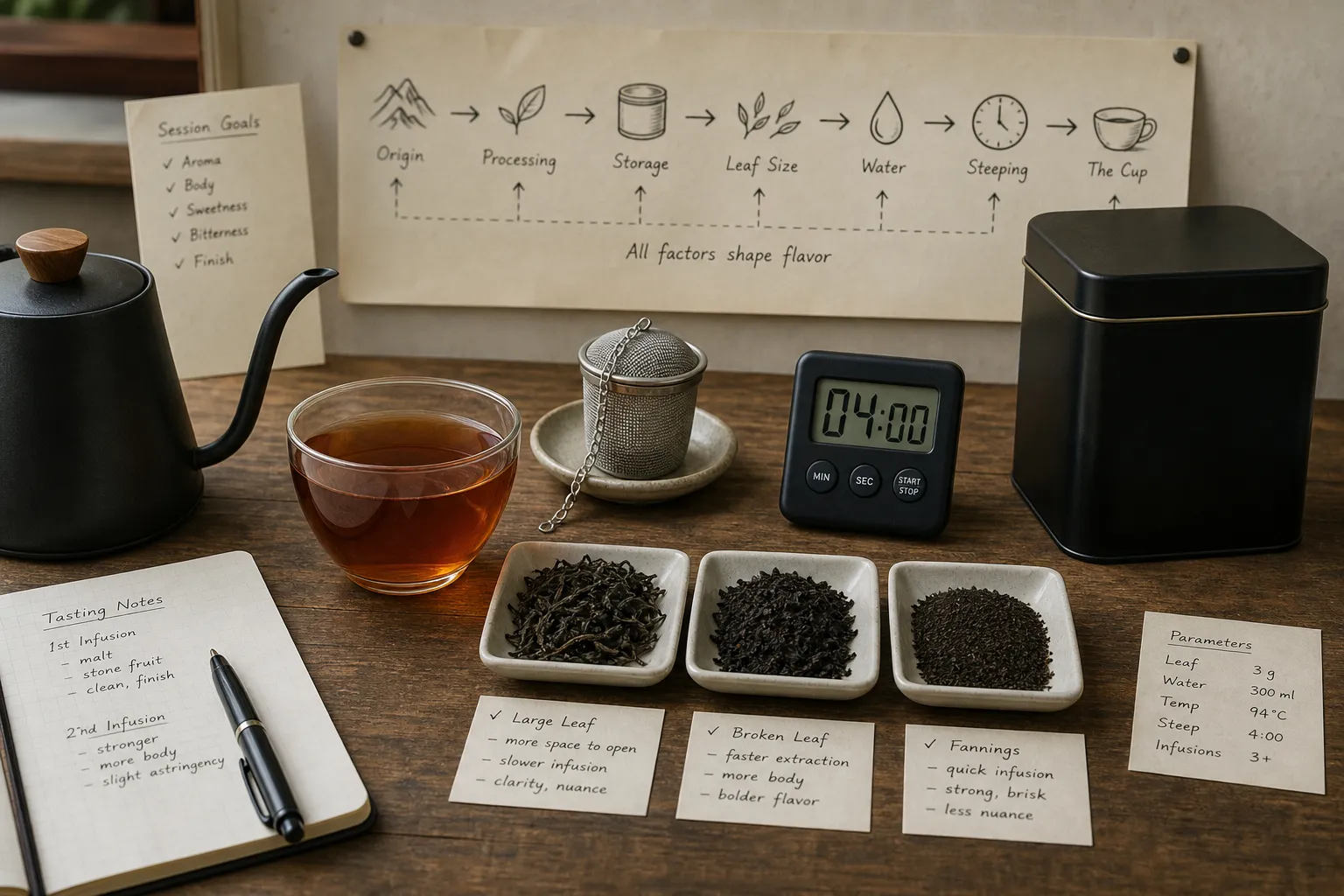
Whole leaf, broken leaf, fannings, and tea bags behave differently in water. Smaller particles often infuse quickly and can become strong or astringent faster; larger leaves may need more room and time. That is a brewing difference, not proof that one origin is superior.
5. Look for freshness and storage clues.
Black tea freshness and origin are separate questions. A respected place name does not protect tea from stale aroma, poor sealing, heat, light, moisture, or nearby odors. Packing dates, harvest notes, opaque containers, and resealable barrier packaging may tell you more about freshness than origin alone.
When the label gives little detail, keep the purchase modest. Buy a smaller amount if possible, brew it consistently, and judge the cup before committing to more.
What Can Change the Cup After Origin
Black tea is agricultural, processed, sorted, transported, stored, and brewed. Each step can change what lands in the cup.
Cultivar is one variable. Black tea cultivar and origin may be connected in some producing contexts, but origin does not name the plant material by itself. A label that gives both place and cultivar tells you more than a place name alone, provided the wording is clear and relevant.
Processing matters just as much. Two teas from the same area may be shaped into different styles. Leaf size, rolling intensity, drying method, and sorting can affect strength, aroma release, body, and astringency. You do not need every factory detail, but it helps to notice whether the tea is whole leaf, broken, tightly rolled, wiry, tippy, smoky, or made for quick infusion.
Harvest timing can help when the label gives meaningful context. A harvest note may be useful for comparing teas from the same seller or style, but it should not become a quality claim on its own. Treat harvest timing and origin as paired clues.
Storage is quieter but often decisive. A tea with a well-known origin can taste flat if it has absorbed moisture, light, heat, or strong odors. Before blaming the region, smell the dry leaf. If the aroma is muted, dusty, stale, or oddly perfumed, storage may matter more than the map.
Brewing completes the chain. Water temperature, steeping time, leaf amount, vessel size, and milk or plain drinking can make the same tea seem rounded, thin, sharp, or heavy. Origin may help you choose a starting point; your brew decides the cup in front of you.
Common Confusion Around Origin Claims
The most common mistake is treating origin as a quality ranking. A famous place name may raise interest, but it does not prove that a particular package is well made, fresh, fairly priced, or suited to your taste. A less famous origin may still make a cup you enjoy. Preference is not a league table.
Another confusion is assuming that regional flavor patterns are fixed. Buyers often use origin language to talk about broad cup expectations, but those patterns blur when processing, blending, grade, freshness, and storage change. If a tea does not taste like the style you expected, that does not automatically make the label false. It may be processed differently, brewed too strong, stored poorly, or described too broadly.
Origin is also easy to confuse with authenticity. This page cannot verify origin claims, and the available research pack does not provide public references for labeling rules, geographic protections, or market enforcement. A buyer can ask for clearer documentation, but a polished label should not be treated as independent proof.
Finally, origin is not a reliable shortcut for personal effects. Black tea contains caffeine, and people vary in tolerance, but origin alone does not tell you how a tea will fit your sleep, comfort, alertness, or daily routine. If that matters to you, pay attention to serving size, steep strength, timing, and your own response.
The cleaner habit is to separate the claim types: origin describes a stated place; tasting notes describe an expected cup; freshness comes from condition and time; personal fit comes from brewing and preference.
A Buyer’s Checklist for Using Origin Well
Before buying black tea because of origin, pause over the label and ask:
- Does the package name a country only, or a more specific region, estate, garden, or lot?
- Does it say single-origin, blend, breakfast blend, or another style term?
- Are there observable details such as leaf grade, dry leaf shape, aroma notes, harvest or packing date, brewing guidance, or storage packaging?
- Are the tasting words specific enough to help, or are they only broad praise?
- Does the seller explain what the origin means for this tea, rather than using place names as decoration?
- Can you buy a small amount before making it your regular tea?
After brewing, compare the label’s suggestion with the cup. Notice liquor color, aroma, body, briskness, sweetness, dryness, bitterness, and finish. If the tea is too sharp, shorten the steep or use slightly less leaf before deciding the origin is not for you. If it is thin, increase the leaf amount or steep a little longer. Brewing adjustments are often more useful than changing regions immediately.
Origin is most helpful when it helps you ask better questions. It is least helpful when it becomes a shortcut for certainty.
Where the Evidence Is Thin
The available research pack for this article did not include usable public sources for specific regional flavor profiles, labeling systems, grade rules, harvest calendars, authenticity checks, or origin-based quality claims. This page should not pretend to verify which origins taste a certain way, which regions are better, or which labels prove provenance.
The guidance here stays narrower: read the origin on a tea label as one clue among several, then compare it with leaf form, processing language, freshness signs, storage condition, and brewing behavior. Stronger tea-board, agricultural, standards, academic, producer, or careful specialty-tea education sources could support more precise discussion of specific regions later.
For now, use black tea origin to organize your choices, not to outsource your judgment. Pick one tea with clear label detail, brew it consistently, write down what you taste, and compare the next origin only after the cup gives you something real to measure.