Black tea brewing method
Should You Preheat the Teapot for Black Tea
Yes, it is usually worth preheating the teapot for black tea when the pot is cold, large, thick-walled, or sitting in a cool room. It is not a requirement for a “correct” cup, and it is not a guaranteed flavor upgrade. The practical reason is simple: if the teapot starts cold, some of the heat from your brewing water goes into warming the vessel instead of steeping the leaves.
For many everyday cups, especially in a small or already-warm pot, you can skip it without spoiling the brew. But if you want steadier heat in a Western-style teapot, warming the pot first is a small step that may make the cup more predictable.
upward
Read the full overview first
Use the broader guide first if you need the full scope before this page.
Quick Decision
Preheat when the vessel is likely to steal noticeable heat from the first pour. Skip it when the pot is already warm, the brew is small, or your cup already tastes right.
The Practical Answer at the Kettle
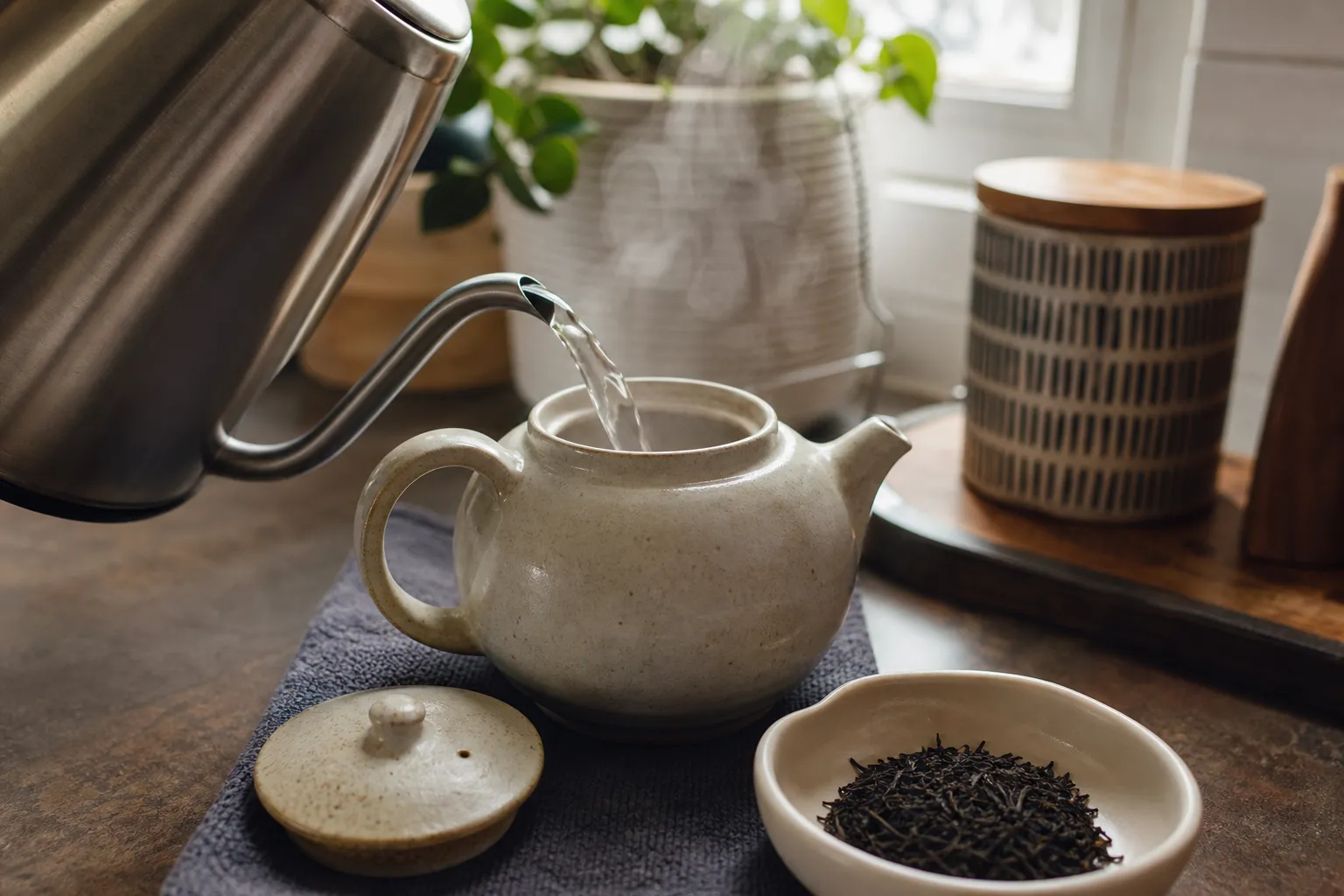
Preheating matters most when the teapot is likely to pull noticeable heat from the brew. Black tea is commonly made with very hot water, and the early part of the infusion is when the dry leaves open, release aroma, and begin giving the liquor its color, body, briskness, and astringency. If a cold pot cools that first pour quickly, the cup may taste a little flatter, lighter, or less aromatic than expected.
That does not mean every black tea needs the same treatment. A strong breakfast blend made with a generous amount of leaf may still taste full in an unwarmed pot. A small teapot, a cup-by-cup setup, or a vessel that was just rinsed may lose less heat because there is less cold material involved. A longer steep or stronger ratio can also hide the difference.
This is not ceremony for its own sake. It is a way to begin the infusion with fewer temperature surprises.
When Preheating Is Most Likely to Matter
The clearest case is a cold Western teapot: loose black tea measured into a vessel, hot water poured over the leaves, and several minutes of steeping before the liquor is poured. In that setup, the pot is part of the brewing environment, not just a serving container.
A large pot makes the question more noticeable because there is more vessel surface and mass involved. If you brew two cups in a pot built for four or six, the tea may be more exposed to heat loss than it would be in a smaller pot. Thick walls can add to the effect. A heavy ceramic teapot may hold heat well once warm, but if it begins cold, it can take a noticeable share of heat from the water before the leaves have fully opened.
Room temperature also matters. In a warm kitchen, a room-temperature pot may not change much. In winter, or in a cool room, the same pot can start cold enough that the first pour spends part of its heat warming the vessel. If your black tea often tastes thinner than expected despite enough leaf and a reasonable steeping time, the cold pot is one variable worth checking.
Material can shape the result, but it should not take over the decision. Thin glass, porcelain, ceramic, metal, and stoneware do not warm or hold heat in exactly the same way. Still, the question is not which teapot is best. It is whether a brief warming step helps this particular brew. Touch, timing, pot size, and cup result are more useful than turning the answer into equipment shopping.
A Simple Way to Warm the Pot
- 1. Pour hot water into the empty teapot.
- 2. Let it sit briefly while you measure the tea.
- 3. Swirl if needed so the walls warm evenly.
- 4. Discard the warming water.
- 5. Add the leaves and brew with fresh hot water.
Use fresh hot water for the actual infusion. The warming water has already given up heat to the vessel, so it is not the best starting water for the leaves.
There is no need to make the step elaborate. The goal is not to heat the pot until it is scorching or turn tea preparation into a performance. If the pot feels comfortably warm after the rinse, the step has done its job.
Handle delicate vessels with ordinary care, especially if a pot is very cold. A gentler rinse is more sensible than shocking a chilled pot with a full boil.
How to Tell Whether It Changed the Cup
The source material available for this page does not include verified side-by-side testing, so the most honest check is your own cup. Do not look for a dramatic transformation. Look for small signs of steadier brewing.
A warmed pot may be worth keeping in your routine if your black tea shows more of the qualities you wanted:
Serving Heat
The liquor is still properly hot when poured.
Aroma
The aroma rises more clearly from the pot and cup.
Color
The color develops at the expected pace for that tea.
Body
The body feels rounder rather than thin or watery.
Briskness
The briskness is present without tasting sharp from pushing the steep.
Astringency
The astringency feels balanced for the style and infusion time.
These are practical observations, not proof that preheating alone caused every change. Black tea flavor also depends on leaf amount, water temperature, steeping time, leaf grade, freshness, storage, water quality, pot size, and how quickly the tea is served.
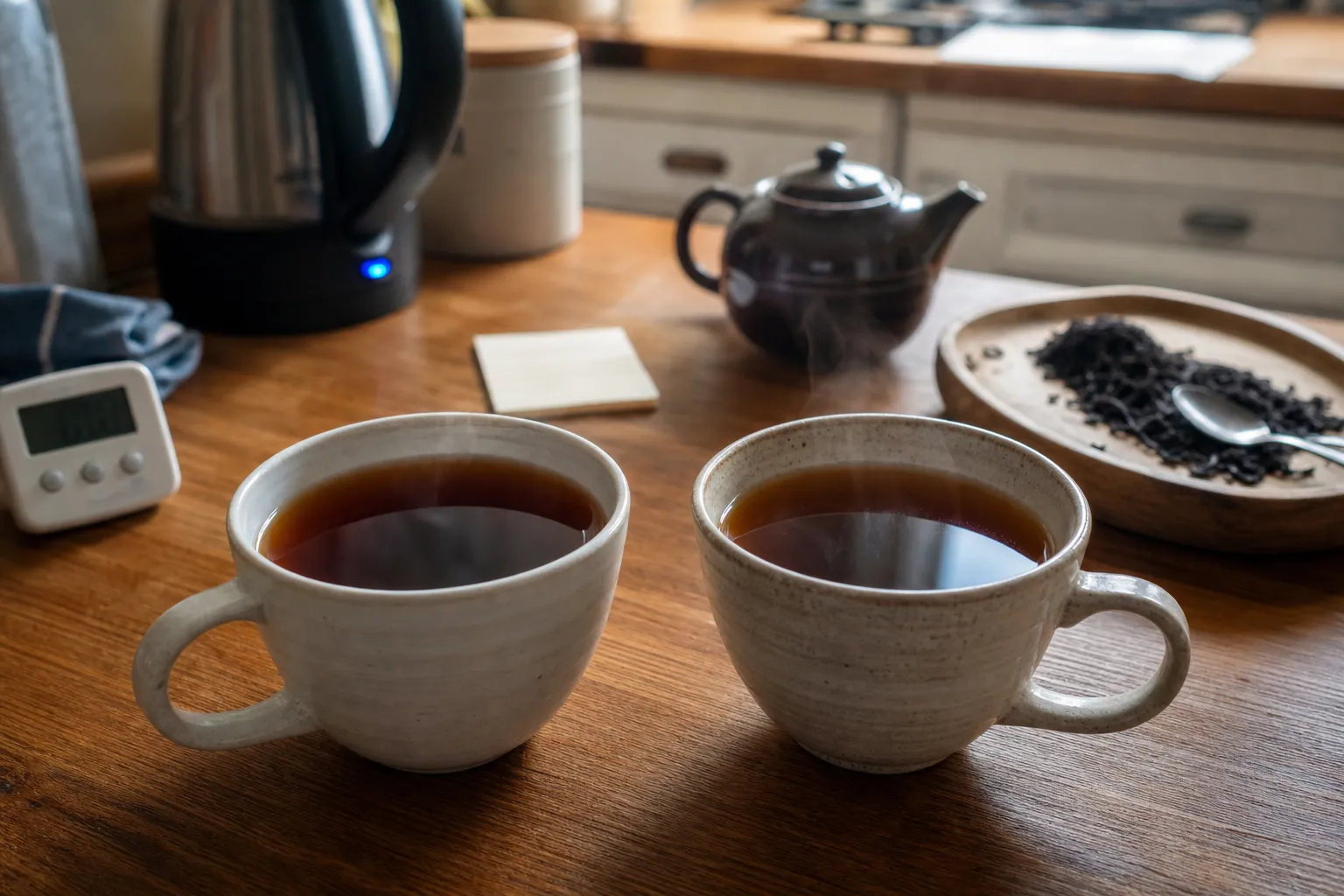
To test the habit simply, brew the same tea twice on different days with the same leaf amount, water, pot, and steeping time. Warm the pot once and leave it unwarmed once. If you notice no meaningful difference, keep your routine simple. If the warmed-pot version tastes more complete to you, the step has earned its place.
When You Can Skip Preheating
Skip preheating when it does not solve a real problem in your brew. This is especially true if you are making a small amount of tea, drinking it quickly, or using a pot that is already warm from recent use. A teapot that has just been rinsed or used for a previous round is not starting from the same condition as one pulled from a cold shelf.
You can also skip it when other variables matter more. If the tea tastes weak because you used too little leaf, warming the pot will not fix the ratio. If the tea tastes harsh because it steeped too long, a warm pot will not undo that. If the leaf is stale or poorly stored, better vessel preparation can only help so much. Preheating is a supporting step, not the main control.
For very strong black teas, especially blends meant to take milk or breakfast-style cups brewed with a generous dose, the difference may be less obvious. A bold cup can still come from an unwarmed pot. That does not make warming useless; it only means the payoff may not be worth the extra motion every time.
The best reason to skip preheating is clarity. If your tea already tastes the way you want it to taste, and the serving temperature is fine, there is no need to add a step just because it sounds traditional.
Common Confusion About Warming a Teapot
It does not improve tea by itself
It is better understood as reducing one possible source of heat loss at the start of brewing. The flavor still depends on the tea and the method.
It does not replace water temperature
If the brewing water is too cool for the black tea you are making, a warmed pot cannot fully compensate. Water temperature, leaf quantity, and infusion time remain the larger levers.
A heavier pot is not always better
A heavy teapot may hold heat well once warm, but it may also take more heat to warm from cold. The same pot can be helpful in one setup and inconvenient in another.
It is not a universal etiquette rule
Western teapot preparation often includes preheating, but the available material here does not support treating it as a fixed cultural obligation.
If the steeping time is poorly matched to the leaf, warming the vessel will not rescue the cup. Bigger is not automatically better, and the answer should stay tied to the brew in front of you.
The Sensible Rule to Keep
Preheat the teapot for black tea when the vessel is likely to cool the brew enough for you to notice. That usually means a cold, large, thick, or heat-retentive pot in a cool room, especially when you want clear aroma, steady liquor color, and full body without stretching the steep too long.
Skip preheating when the pot is already warm, the brew is small and quick, or the tea tastes right without it. If you are troubleshooting a disappointing cup, check the larger variables first: leaf amount, water temperature, steeping time, freshness, and storage. Then use teapot warming as a small adjustment for consistency.
The useful habit is not obeying a fixed rule. It is noticing the setup in front of you: cold pot or warm pot, large batch or small batch, cool room or warm kitchen, delicate cup or strong breakfast brew. If warming the pot helps the tea arrive hotter, fuller, and more aromatic to your taste, keep doing it. If it makes no clear difference, black tea can handle the simpler routine.