Buying Cue
Whole Leaf Black Tea Photos: What They Can and Cannot Tell You
A clear product photo can slow down a too-quick black tea purchase, but it cannot finish the judgment. Whole leaf black tea photos may show visible leaf shape, relative size, broken pieces, dust, stems, golden tips, color variation, and whether the seller is showing actual dry tea rather than only a brewed cup or styled package.
They do not prove freshness, aroma, flavor, exact origin, harvest date, storage history, seller reliability, or final cup quality. Use the image as an early buying cue, then check the wording, brewing notes, packaging details, and, finally, the cup.
upward
Read the full overview first
Use the broader guide first if you need the full scope before this page.
What a Whole Leaf Photo Can Show
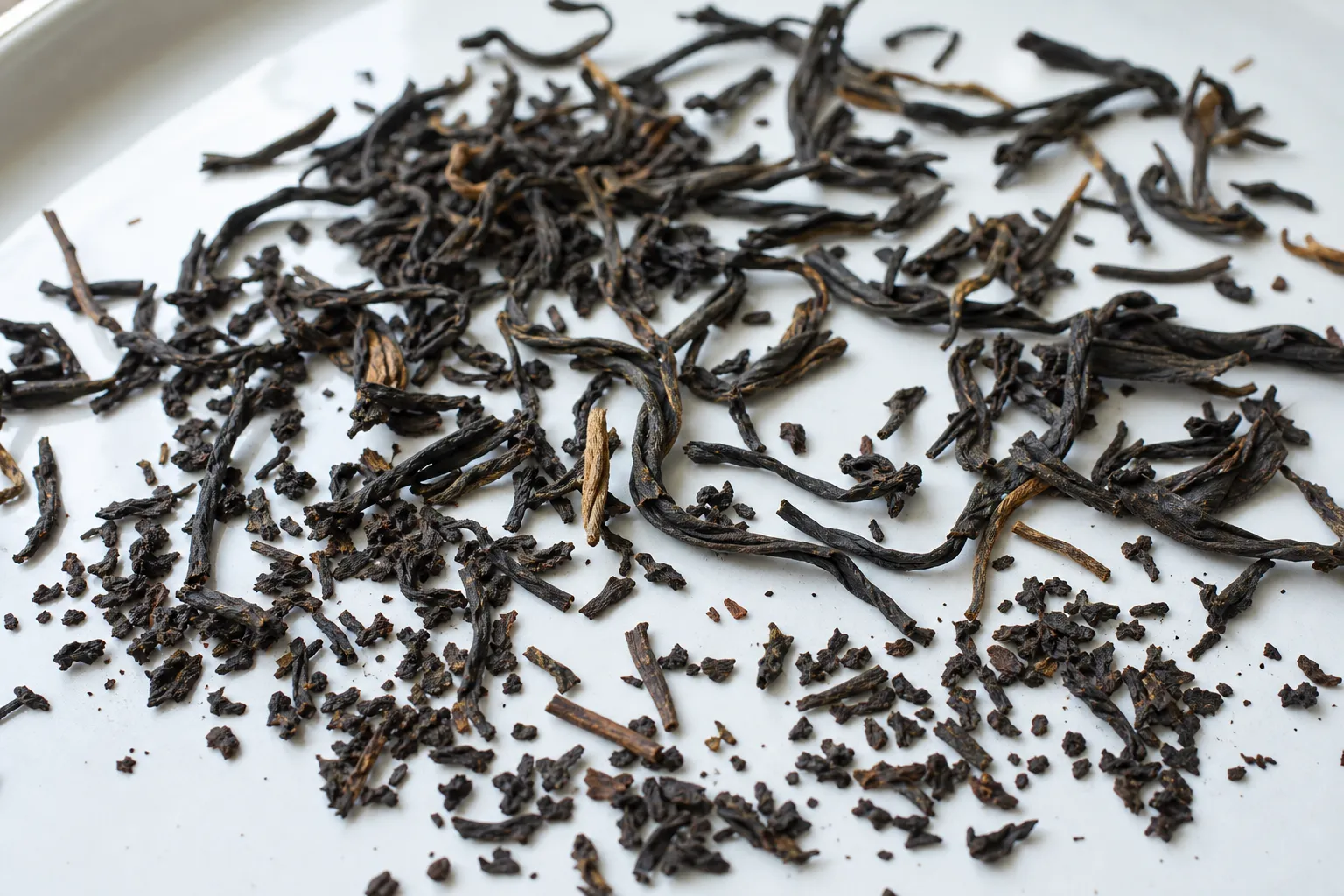
The most useful black tea product photos are plain, close, and focused on the dry leaf. They let you see whether the tea appears mostly long and twisted, wiry, rolled, curled, tippy, flat, chopped, or mixed in size. That visual read does not identify the tea by itself, but it tells you more than a lifestyle image of a teapot, saucer, or dark brewed liquor.
The phrase “whole leaf” needs that kind of visual check. In a photo, look for pieces that seem larger and more recognizable than fannings or fine fragments. Some whole leaf black tea looks long and slender; some looks curled, uneven, or loosely twisted. The point is not perfect leaves. The useful cue is whether the image supports the basic claim that this is loose tea with visible leaf pieces, not mostly powdery material.
Leaf size helps, but it is easy to overread. Larger-looking leaves may suggest a slower infusion and more room needed in the infuser. Smaller broken black tea leaves may brew faster and more briskly. Neither size proves smoothness, aroma, value, or strength. A large leaf can taste flat if the tea is stale or poorly stored; a broken leaf can make an excellent strong morning cup.
Dust is another practical cue. Black tea dust in photos may appear as powder at the bottom of the pile, dark specks around larger leaves, or a fuzzy layer inside a pouch. A little fine material is common after handling and transport. A lot of powder, especially in a listing described as whole leaf, is a reason to check the description and expect a quicker, sharper brew.
Golden tips often catch the eye. They may appear as tan, bronze, or golden strands among darker leaves, and they can be part of a tea’s visual appeal. Still, tips in a photo do not confirm origin, grade, freshness, or flavor. Lighting, contrast, editing, and the blend of leaf material can all make tips look more dramatic on a screen.
Color works the same way. Dry black tea may show black, dark brown, coppery, grayish, or golden tones depending on leaf material, processing, lighting, and camera settings. Color variation can be worth noticing, but it is not a shortcut to quality. Treat it as a prompt to read what the seller says about the tea and how it is expected to brew.
Photo Context Changes the Clue
A spoonful of tea on a white background may show size and color clearly. A warm, styled image may make the leaf look richer than it appears in ordinary kitchen light. A photo inside a dark pouch may hide dust, stems, or uneven fragments. A brewed-cup photo may show liquor color, but not the dry leaf condition.
Good black tea product photos answer simple visual questions: Can you see the dry leaf closely? Is there a scale cue, such as a spoon, hand, or open tin? Does the listing show more than one angle? Can you see broken pieces, stems, fine material, or only a dark pile?
Scale
Without a reference point, small broken leaves can look substantial in a macro shot, while long leaves can look like a uniform dark mass from far away.
Lighting
Warm light can emphasize golden tips, high contrast can make dark leaves look glossy, and soft focus can hide dust.
Wording
Terms such as whole leaf, broken leaf, loose leaf, fannings, dust, tips, blend, single origin, harvest season, estate, or grade give you something to compare against the picture.
If the package says whole leaf and the photo shows mostly small fragments, that mismatch is worth a question. If the image is beautiful but the listing gives no brewing notes, no package details, and no origin context, the photo is doing too much of the selling.
What Photos Cannot Tell You
Photos and tea freshness are often linked in a buyer’s imagination, but the link is weak. A dry leaf photo cannot reliably show when the tea was harvested, when it was packed, how long it sat in storage, or whether it was exposed to heat, light, air, or moisture. Tidy leaves can be past their best. Less polished leaves can still brew a lively cup if handled well.
Aroma is outside the image. You cannot smell malt, cocoa, dried fruit, smoke, flowers, spice, or stale cupboard notes through a photo. If aroma matters to your purchase, look for specific tasting notes, storage details, and seller descriptions that go beyond broad praise.
Flavor depends heavily on brewing. Water temperature, leaf amount, steeping time, vessel size, and whether you drink the tea plain or with milk can change the cup. A photo of intact leaves does not tell you whether the infusion will be brisk, mellow, sweet, woody, malty, drying, or thin. The image may suggest a leaf form; brewing notes tell you how the seller expects that leaf to behave.
Origin needs special caution. Similar-looking black teas can come from different regions, and different-looking teas can come from the same broad region or style family. A photo can match the general look you expect from a style, but it cannot verify place by itself. Origin claims need support from seller transparency, package wording, producer details, or other documentation.
Grade is also limited by the image. Tea grading terms can vary by market, producer, and style. A photo may show larger leaves, broken pieces, tips, or dust, but it cannot settle a grade claim without clear wording and context. Even then, grade is one buying detail, not a promise of flavor.
Storage history is mostly invisible. A pouch, tin, or jar can look clean in a listing, but the photo does not reveal temperature, humidity, oxygen exposure, or time since opening. For online buying, storage confidence usually comes from packaging details, seller practices, turnover, and how the tea smells and tastes after arrival.
How to Read a Product Photo Before Buying
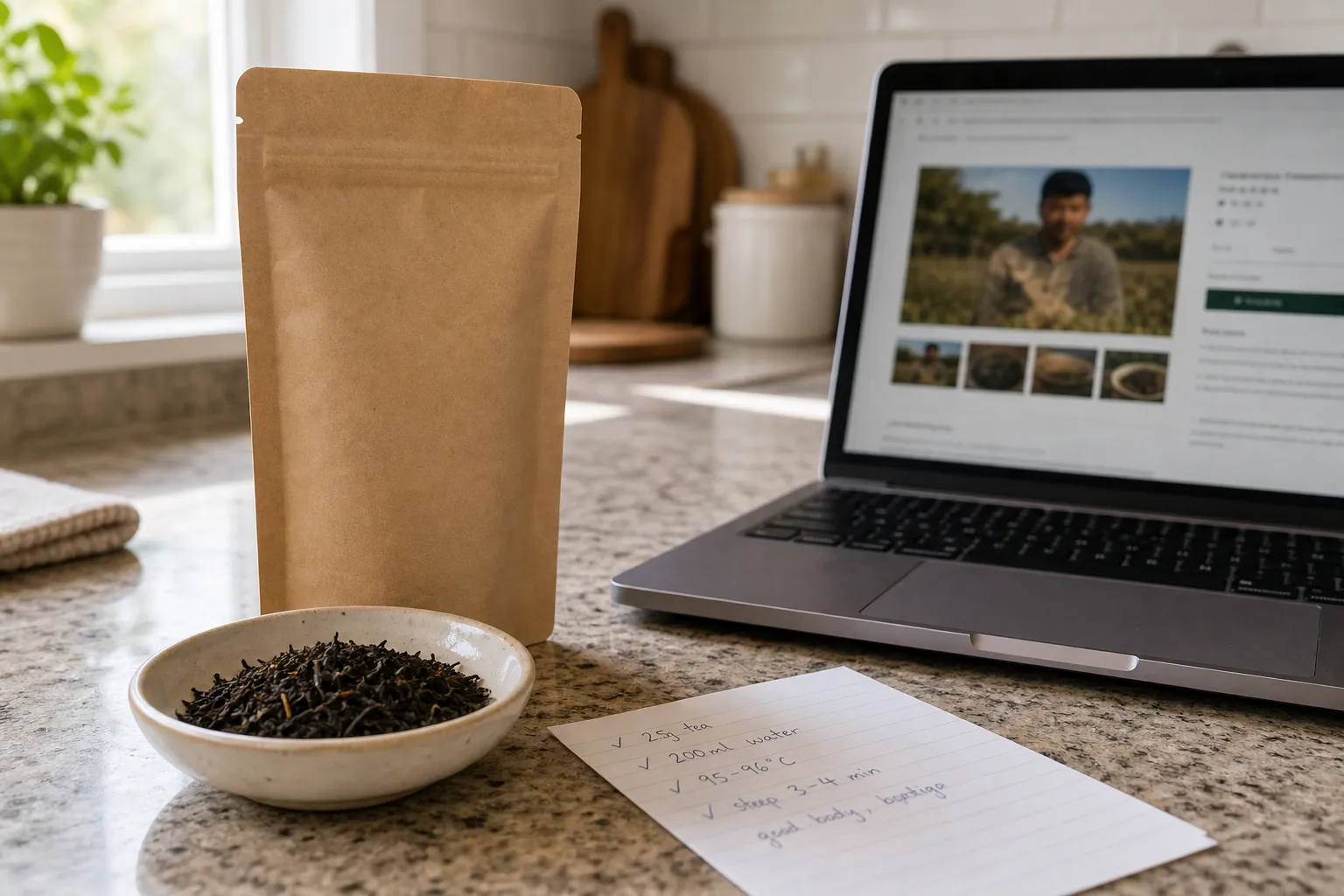
Start with the leaf, not the mood of the image. Ask whether the photo shows the dry tea clearly enough to compare size, shape, breakage, and dust. If it does not, the photo is more decorative than useful.
Then compare the image with the label language. If the description says whole leaf black tea, do the visible leaves look mostly intact or recognizably larger than fine fragments? If it says broken leaf, does the photo show smaller, more even pieces? If the seller emphasizes golden tips, are those tips visible, or only mentioned in the text? These are practical checks, not final verdicts.
Next, look for what is missing. A useful listing does not need to be crowded, but it should not rely only on a handsome image. Helpful details may include dry leaf description, cup color, aroma notes, flavor notes, brewing temperature or water guidance, steeping time, leaf amount, package size, and storage advice. If the seller mentions origin, harvest, estate, or grade, the wording should be specific enough to understand what is being claimed.
Use the image to plan your first brew. Larger, twisted leaves may need more room to open in an infuser or teapot. Smaller broken leaves may infuse quickly and become strong if steeped hard. A dusty-looking tea may call for a shorter first test steep if you dislike sharp astringency. These are cautious starting points, not fixed rules.
When the tea arrives, let the cup revise the photo. Compare the dry leaf in your hand with the listing image. Smell the tea before brewing. Make a small plain cup using the seller’s instructions or a measured method you trust. Notice body, aroma, bitterness, briskness, sweetness, and finish. That is where the photo becomes useful, incomplete, or misleading.
Common Misreadings
Whole leaf is not a flavor guarantee
Whole leaf can be a desirable format, and many buyers like its slower infusion and visible leaf character. Still, flavor depends on the tea itself, storage, brewing, water, and personal preference.
Dust needs proportion and context
A large amount of dust may be a warning sign if the listing promises intact leaves, but small particles can appear from ordinary handling.
Golden tips can be overvalued
They are visually attractive, but they are not standalone proof of origin, grade, or cup character. Ask what the tea is, how it is described, and how the seller expects it to brew.
Color is easy to romanticize
A dark glossy leaf, coppery strand, or mixed pile may look meaningful, but screen color is shaped by camera, lighting, editing, and display settings.
Finally, do not confuse a clear photo with a transparent listing. Excellent photography can still leave important questions unanswered. A modest photo may sit beside careful package details and useful brewing notes. For buying, the strongest cue is alignment: the image, wording, and practical information point in the same direction.
A Short Buyer Checklist
Before giving a photo much weight, ask:
- Can you see the dry leaf clearly, not just the brewed cup or package?
- Is there enough scale to judge whether the leaves are long, broken, fine, or mixed?
- Do the visible leaves match wording such as whole leaf, broken leaf, tips, or dust?
- Are dust, stems, and uneven fragments visible enough to set brewing expectations?
- Does the listing add brewing notes, package details, and flavor description beyond the image?
- Are origin, harvest, grade, or freshness claims supported by wording beyond the photo?
If several answers are unclear, the image may still be attractive, but it should carry less weight in your decision.
The Practical Bottom Line
Whole leaf black tea photos are useful when they show the dry leaf: shape, size, breakage, dust, tips, color variation, and presentation. They are weak evidence for the things buyers often care about most: freshness, aroma, flavor, exact origin, storage history, grade reliability, and final cup quality.
Use the photo as a first filter. Let it raise questions, compare those questions with the package wording and seller notes, then judge the tea by brewing a measured cup. For black tea, the image can guide expectations; the leaf in hot water gives the answer you can actually taste.