Black tea service guide
Afternoon Tea, High Tea, and Black Tea Service
People often look up afternoon tea and high tea because the phrases sound like two ranks of the same occasion: one ordinary, one grand. At the table, the more useful difference is not status. It is service context.
Neither phrase names a black tea variety. They describe how tea may sit among food, timing, presentation, and social expectation. For a black tea drinker, the better question is not “Is this tea afternoon or high?” but “How is the tea being served, how strong is the cup, will milk be added, what food is beside it, and what kind of occasion is the host naming?”
The leaf still matters. The service gives the cup its setting.
upward
Start with the broader guide
Use the broader guide first if you need the full scope before this page.
The practical difference: service context, not tea type
Afternoon tea is commonly understood as a social tea service built around tea, light foods, and presentation. Heritage accounts often connect the afternoon tea origin story with Anna, Duchess of Bedford, who is described as taking tea and something small to eat during the long gap between meals. That story helps explain the familiar association with mid-afternoon timing, a set table, and lighter food, but it should not be stretched into the whole history of British tea drinking.
High tea is easier to misread. Many modern readers hear “high” and assume it means more elegant, more formal, or more luxurious than afternoon tea. The stronger editorial reading is more cautious: high tea should be treated as a different meal or service context, not as a superior version of afternoon tea. It is not a separate kind of black tea, and a strong cup with milk does not automatically make the occasion high tea.
For black tea service, the table usually gives better clues than the label.
What You Can Observe
Afternoon Tea Often Emphasizes
High Tea Needs a More Careful Reading
Timing
A mid-afternoon social pause
Often discussed as a meal context, though usage varies
Food
Small sandwiches, scones, cakes, or other light items in many modern settings
May involve more substantial food in some descriptions, but the menu is not universal
Tea presentation
Pot service, cups, milk, sugar, and a visible table setting
May include black tea, but tea alone does not define the term
Tone
Social, presentational, sometimes celebratory
Not simply “fancier afternoon tea”
Tea choice
Black teas that can stand beside milk and food
Strong black tea may fit, but it does not settle the meaning
The distinction becomes clearer when the labels stop being treated as grades. “Afternoon tea” usually tells you something about occasion and presentation. “High tea” tells you that another usage may be in play, and the best reading depends on the menu, timing, region, and host language.
What black tea does at the table
Black tea works well in these settings because it can bring body, color, aroma, and briskness beside food. That does not mean every black tea should be brewed the same way. Origin, blend, grade, freshness, water, tea amount, and steeping time all change the cup.
At afternoon tea, black tea often has two jobs. It should be pleasant on its own, with enough aroma and structure to feel complete, but it may also need to hold up to milk, sugar, sandwiches, scones, jam, cream, cake, or pastry. A very delicate cup can disappear beside sweet or buttery foods. A very astringent cup can make a light table feel severe. The useful middle is usually a tea with enough body and briskness to stay present without flattening the food.
Good cup-level signs
- Liquor color: A deeper amber or reddish-brown cup can suggest enough extraction for milk, though color alone does not prove strength.
- Aroma: Malty, fruity, floral, woody, or toasted notes shape which foods feel natural beside the tea.
- Body: A fuller mouthfeel tends to work better with milk and richer foods.
- Briskness: A lively edge can refresh the palate between bites, especially with buttery or sweet items.
- Astringency: Some dryness gives structure; too much can dominate the service.
This makes black tea for afternoon tea a practical choice, not a strict category. A breakfast-style blend may be useful when milk and rich foods are expected. A smoother single-origin black tea may suit a lighter table where the tea is served plain. A scented black tea can work when its aroma fits the food, but strong flavoring can compete with delicate sandwiches or pastries.
None of those choices proves the occasion’s name. They only help the tea behave well in the service.
Milk, strength, and steeping time
Milk in black tea is one of the clearest places where service language and cup language meet. A tea that tastes thin before milk may become flat after milk. A tea that is sharply bitter before milk may still feel rough after it. A milk-friendly cup usually needs enough strength, body, and briskness to remain recognizable once diluted.
Steeping time matters, but it should not be presented as one fixed rule for every black tea. Precise universal instructions would overreach because leaf form, tea amount, water, cup size, freshness, and intended strength all matter. As a practical starting point, many black tea drinkers think in terms of a few minutes, then adjust by taste and service.
The better service question is: what happens after the tea leaves the pot?
If milk will be added, the infusion often needs more structure. That may come from a slightly stronger ratio, a longer steep within a sensible range, or a blend designed for milk. If the tea will be served plain, especially with lighter food, a softer infusion may be more graceful. If the pot sits on the table, the host also needs to know whether the leaves remain in contact with the water. Tea left steeping too long can become increasingly dry and forceful, especially with small broken leaves or dustier grades.
Cup size changes perception too. A small cup poured from a pot can make a strong tea feel measured and social. A large mug can make the same strength feel more casual, more substantial, and more meal-like. The tea has not changed identity, but the service reads differently.
Thresholds to watch
- Too light: Pale liquor, weak aroma, little body, and a cup that disappears beside milk or food.
- Balanced: Clear aroma, enough color, pleasant structure, and food that still tastes like itself.
- Too forceful: Harsh dryness, bitterness, or a cup that overwhelms lighter foods.
- Over-held: A pot that grows sharper as it sits, especially if leaves remain in the water.
The most reliable adjustment is small: change the tea amount, steeping duration, or milk option before changing the whole service.
Food changes how the cup reads
Black tea food pairings are not only about flavor matching. They also affect how the occasion feels. A cup served with small sandwiches and sweets reads differently from the same cup beside a more filling plate. That is one reason afternoon tea versus high tea becomes confusing: the drink may look similar while the food and timing change the service language.
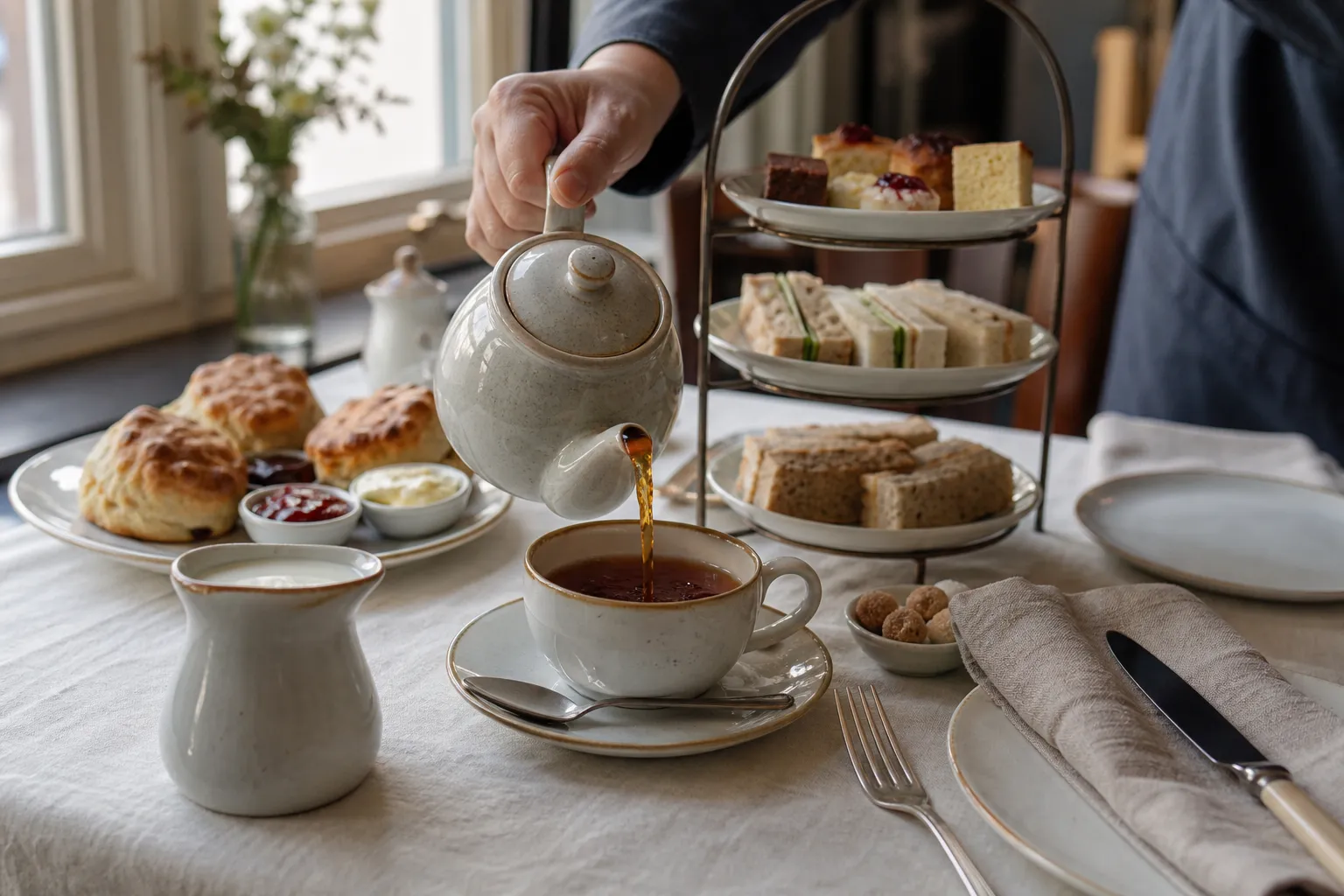
In afternoon tea traditions, food is often part of the presentation. Tiered stands, small portions, cups and saucers, napkins, milk, sugar, and a pot on the table all suggest a social pause rather than a purely functional drink. The tea is not isolated; it is part of a composed table.
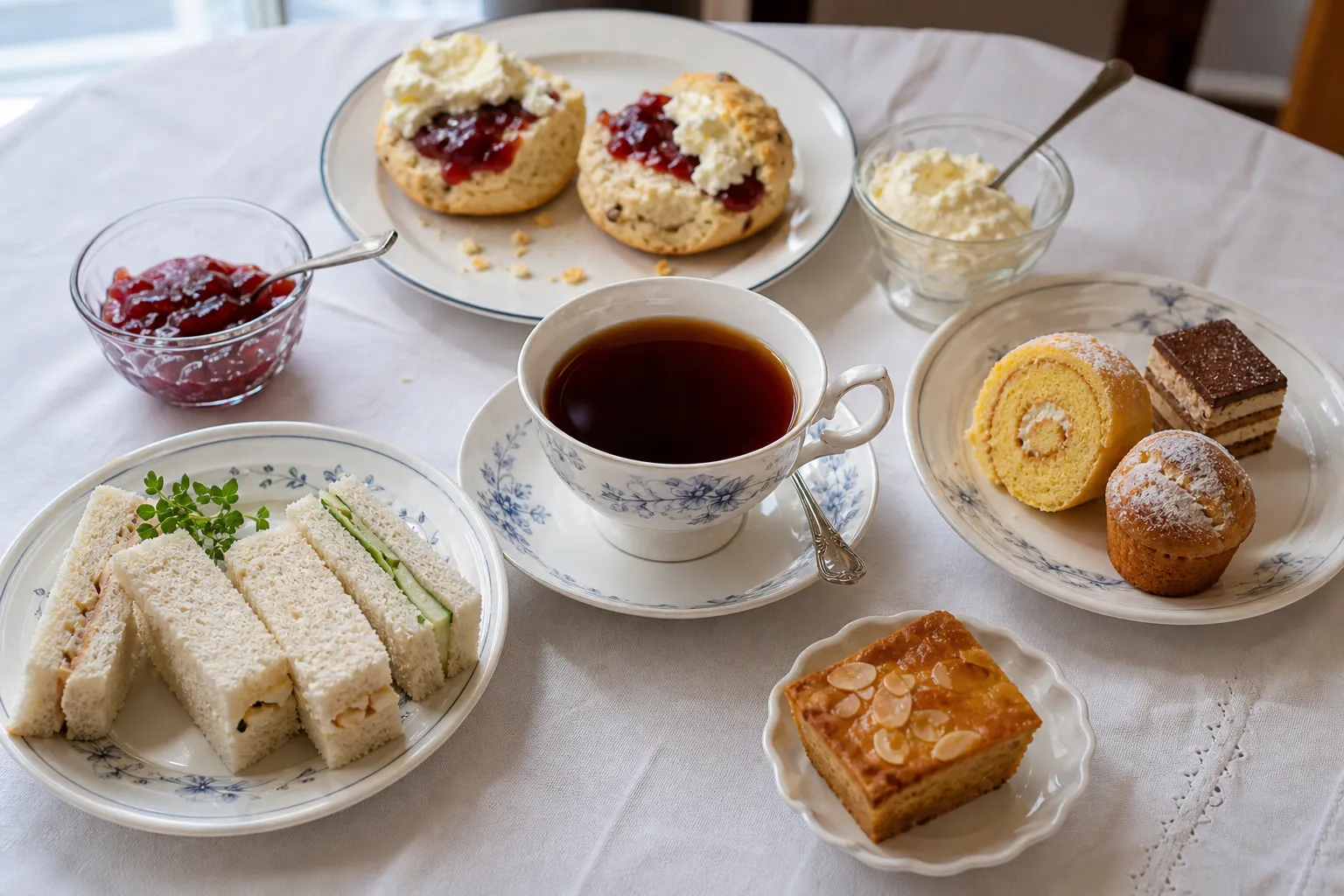
How black tea behaves beside food
- With cucumber, egg, or light sandwiches, a brisk but not severe black tea can keep the palate awake without masking the filling.
- With scones, jam, cream, or buttery pastry, a fuller tea can balance richness.
- With chocolate or dark fruit desserts, a malty or deeper black tea may feel more compatible than a very floral cup.
- With lemon cake or fruit tart, a brighter black tea may echo the acidity, though too much astringency can make the pairing feel sharp.
- With strongly savory food, the tea may need more body if it is expected to remain central.
Presentation can mislead. A beautiful table does not automatically make the service afternoon tea in a narrow historical sense. A strong black tea served with milk and substantial food does not automatically become high tea. The label depends on how the host, venue, menu, and cultural context use the term.
A black tea buyer can still use the service idea when choosing tea. Package wording such as “breakfast,” “afternoon,” or “traditional blend” may suggest intended use, but it is not a sensory guarantee. Leaf form, freshness, aroma, and descriptors such as full-bodied, brisk, smooth, malty, or suited to milk usually say more about how the cup may behave than the occasion label alone.
Why the terms get mixed up
First, “high” sounds like it should mean higher status. That makes “high tea” easy to reinterpret as a grander afternoon tea, especially in hospitality, gift, and menu language. It is still worth naming the common misunderstanding: high tea should not be assumed to mean the most formal version of afternoon tea.
Second, “tea” can mean both the drink and the occasion. It may refer to a cup of black tea, a pot served with milk, a social event, or a meal depending on context. If someone says they are “going to tea,” the answer may be about timing and food rather than the leaf in the cup.
Third, black tea is so common in British tea culture that it can fade into the background. A table may feature black tea prominently, but the occasion is shaped by service: pot, cups, milk jug, sugar, food, timing, and social expectation. The tea supports the setting; it does not name it by itself.
Fourth, market language smooths distinctions. Menus, hotels, packaged tea blends, and gift experiences may use familiar terms because readers recognize them. That does not make every usage wrong, but it does mean a buyer should read the actual menu and tea description rather than relying only on the heading.
Five plain questions to decode the wording
- Is the term describing a tea leaf, a blend, a meal, or an event?
- What time of day is implied?
- Is the food light, sweet, savory, substantial, or mixed?
- Is the black tea served from a pot, by the cup, or as part of a larger menu?
- Is milk expected, optional, or not mentioned?
Those answers usually reveal more than the label itself.
Reading an afternoon tea table through black tea
Afternoon tea table presentation gives the reader visible evidence. You do not need every historical detail to understand what the table is asking of the tea.
A pot service tea suggests shared pacing. The pot allows multiple cups, conversation, and adjustment with milk or sugar. The cup is part of a setting, not just a container. Food is portioned so the drink can return between bites. A black tea with moderate body and clean aroma fits that rhythm better than a cup that demands all the attention.
The order of pouring, the presence of milk, and the exact table etiquette can vary by setting, so they should not be turned into universal rules here. The practical point is simpler: the tea must be brewed for the service. A cup poured before the food arrives may taste different once cream, jam, pastry, or savory fillings enter the picture. A tea that seems bold alone may become balanced at the table. A tea that seems refined alone may seem too quiet with food.
A practical frame for a modest afternoon tea at home
- Choose one dependable black tea rather than several competing cups.
- Brew with enough strength to survive milk if milk will be offered.
- Use a clean pot or infuser so the tea does not carry stale aromas.
- Keep milk, sugar, and lemon separate so guests can adjust.
- Pair lighter teas with lighter foods and fuller teas with richer foods.
- Avoid leaving leaves in the pot so long that the second cup becomes rough.
Storage matters before service too. Black tea that has absorbed kitchen odors, moisture, or stale air will struggle in a setting where aroma is part of the pleasure. A closed container, away from heat, light, and strong smells, helps preserve the qualities the service depends on.
Keep caffeine in the background
Black tea contains caffeine, so it may matter when tea is served late in the day or when someone is sensitive to it. Keep that point modest. People vary in tolerance, and cup strength can change with tea amount, steeping time, serving size, blend, and timing. General consumer guidance can help frame caffeine as something to be aware of, but it should not take over a discussion about afternoon tea and high tea.
For hosting or ordering, the practical move is simple: recognize that a stronger pot, larger cups, or repeated refills may feel different from a small single cup. If caffeine is a concern for someone, offer choice and clarity rather than making promises about how the tea will affect them.
A simple judgment frame
When you see afternoon tea, high tea, and black tea service on a menu, invitation, or package, do not start with the most romantic reading of the words. Start with what is observable.
If the setting is mid-afternoon, social, carefully presented, and built around tea with light foods, “afternoon tea” is probably being used in the familiar service sense. If the term “high tea” appears, do not assume it means a more refined version of the same thing. Look for meal context, food substance, timing, and how the host or venue describes the service. If a package says “afternoon tea blend,” treat that as a suggested use or flavor style, not as proof of a formal tradition.
For the black tea itself, judge by the cup
- Does it have enough body for milk?
- Does the aroma suit the food?
- Does the liquor look and taste strong enough for the serving size?
- Does the briskness refresh the palate or become too dry?
- Does the table presentation invite slow pot service or a more substantial meal?
The cleanest answer is that afternoon tea and high tea name contexts, while black tea service describes how the tea is prepared, poured, and understood at the table. Once that distinction is clear, the labels become less intimidating. Read the occasion through the pot, the cup, the milk, the food, and the timing, then choose a black tea that makes sense for the service in front of you.
Sources
Sources and further reading
Reference links are limited to sources considered suitable for public citation in this page.