
Brewing ratio
How Cup Size Changes Black Tea Steeping Ratio
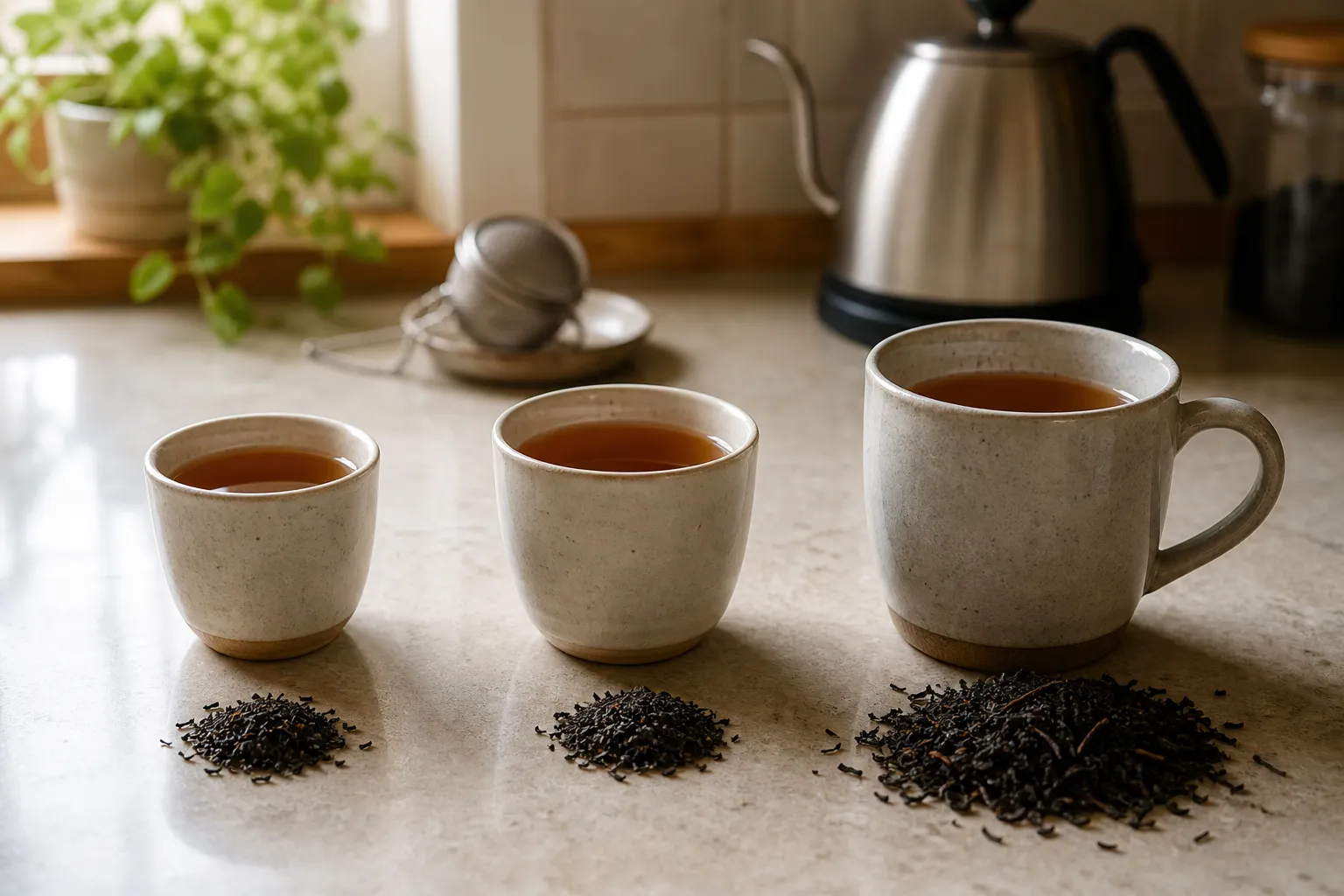
A larger cup makes black tea taste lighter unless the tea amount rises with the water, the mug is filled less, or you choose a lighter cup on purpose. As a practical starting point, keep the same black tea steeping ratio when you scale up: if your usual black tea per 8 oz cup is one measured portion of loose leaf or one standard tea bag, a 250 ml cup usually needs little or no change, while a 12 to 16 oz mug often needs more leaf, a stronger bag setup, or a careful adjustment in steeping time.
That is the usable answer to black tea ratio by cup size: scale the tea with the water first, then correct by taste.
The exact amount is not a universal rule. Black tea strength changes with leaf form, cut size, blend, grade, freshness, water temperature, steeping time, and whether you drink it plain or with milk. Cup size changes dilution; the leaf and method decide how that dilution tastes.
upward
Read the full overview first
Use the broader guide first if you need the full scope before this page.
A Practical Starting Ratio By Cup Size
Most cup-size problems start with the word “cup.” An 8 oz cup is about 237 ml. A 250 ml cup is only slightly larger, so it rarely needs a dramatic correction. A large mug may hold 300 ml, 350 ml, 400 ml, or more, and that is where black tea can start tasting thin if the tea amount stays the same.
Use this as a starting map, not as a fixed standard:
Drinking vessel
Approximate water volume
Starting adjustment
8 oz cup
about 237 ml
Use your usual portion of black tea
250 ml cup
about 250 ml
Keep the same portion, or add a small pinch if the cup tastes light
10 oz mug
about 295 ml
Increase leaf modestly, or use a stronger bag if needed
12 oz mug
about 355 ml
Start near one and a half times your 8 oz amount
16 oz mug
about 475 ml
Start near twice your 8 oz amount, or brew in a pot and pour
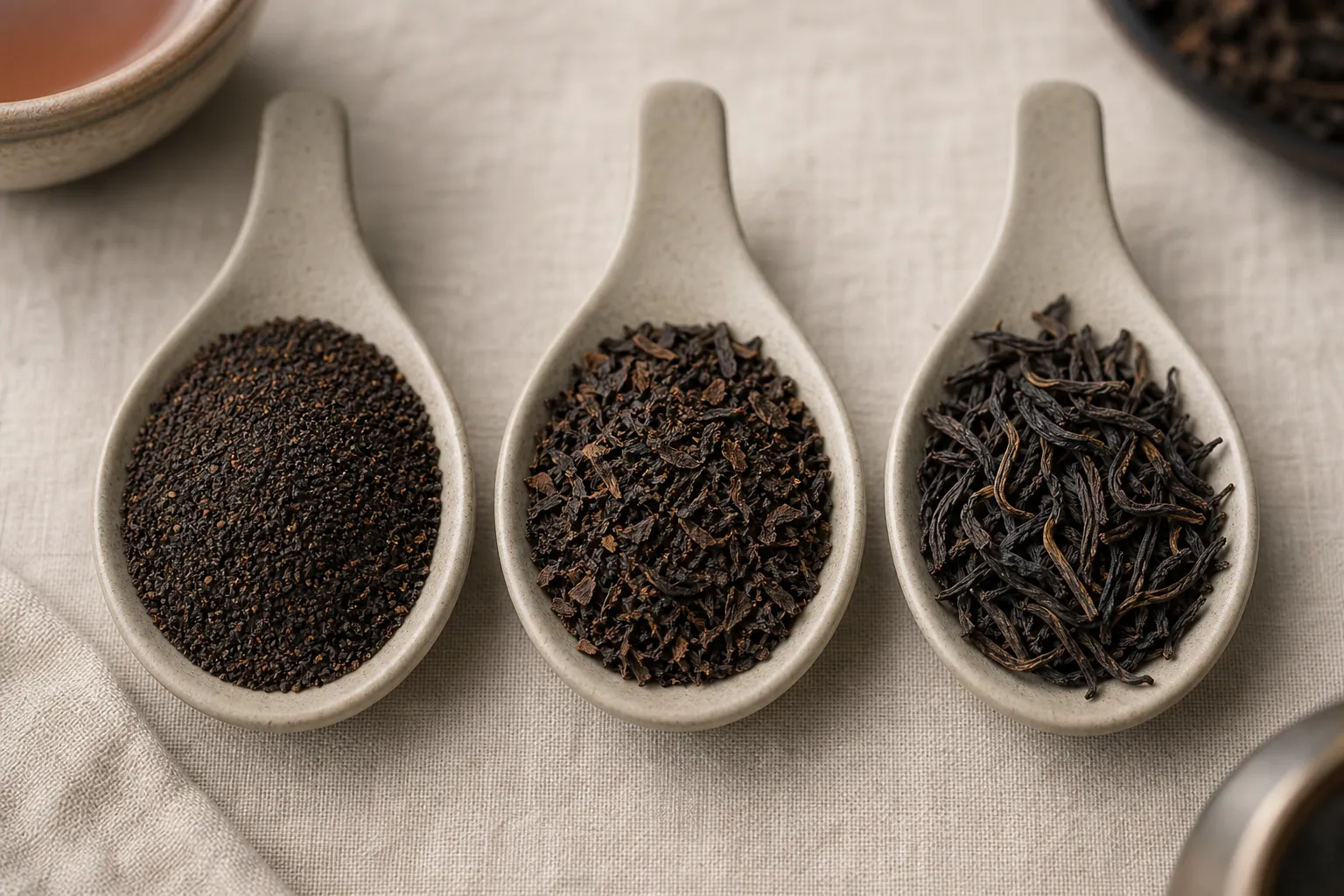
For loose leaf, “one portion” depends on the tea. Broken-leaf breakfast blends often extract quickly and taste brisk with a smaller scoop. Large whole leaves can look generous in the spoon but brew more gently because they occupy more space. Fine-cut black tea in a bag often releases color and astringency quickly, so adding time may make the cup sharper before it makes it fuller.
For tea bags, the issue is bag size as much as cup size. A small bag that tastes balanced in an 8 oz cup may seem hollow in a large mug. Two bags in a 16 oz mug can be a reasonable starting point for many drinkers, but it may be too strong for fine-cut, very brisk blends. Let the cup decide the next change.
Why 250 ml Is Close To 8 oz
The move from 8 oz to 250 ml is small. It adds only a little water, so the black tea amount by cup does not need a large correction. If your usual 8 oz brew has good aroma, body, and briskness, try the same leaf amount in 250 ml before changing anything. Many cups will still taste close enough.
The better question is what you notice in the liquor. If the color looks only slightly paler but the aroma still rises clearly, the ratio is probably close. If the tea smells muted, feels watery, or loses its finish quickly, add a little more leaf next time rather than pushing the steep much longer.
This matters because steeping time and leaf amount do different jobs. More leaf can build body and aroma intensity. More time can build extraction, but it can also increase bitterness and black tea astringency, especially with smaller leaf particles. When the cup is only slightly larger, a small leaf adjustment is usually cleaner than a major time change.
For a 250 ml cup, start with your normal 8 oz habit. If it tastes thin twice in a row, increase the leaf slightly or choose a fuller blend. That is enough adjustment for most small cup changes.
How To Scale Black Tea Leaves For A Large Mug
A large mug changes the balance more noticeably. If you pour 12 oz or 16 oz of water over the same amount of tea used for 8 oz, the cup may look acceptable at first but taste diluted after the first few sips. Surface color can mislead you; black tea strength by cup is better judged through aroma, mouthfeel, and finish.
A simple way to scale is to keep the ratio close, then refine:
- Brew your usual 8 oz cup and notice its color, aroma, body, and astringency.
- Measure or estimate the mug volume.
- Increase the leaf roughly in proportion to the extra water.
- Keep steeping time steady for the first comparison.
- Taste before adding milk or sweetener, then adjust the next cup.
For a 12 oz mug, about one and a half times your 8 oz leaf amount is a sensible starting point. For a 16 oz mug, about twice the 8 oz amount usually keeps the brew from becoming watery. These are practical brewing starting points, not official measurements. They work best when you use the same tea, same water temperature, and similar steeping time.
If the large mug tastes weak but not harsh, add more leaf next time. If it tastes dark but flat, the leaf may be stale, the water may be dull, or the blend may not have much aroma to give. If it tastes strong but scratchy, reduce steeping time before reducing the leaf too much. A fuller cup is not the same thing as a rougher cup.
The black tea ratio for large mug brewing is easiest to control when you change one thing at a time. First scale the leaf. Then adjust steeping time. Then decide whether that tea suits the size of mug you want.
Leaf Form Changes The Answer
Black tea leaf form affects how quickly flavor enters the water. This is why two teas can use the same cup size and still need different ratios.
Fine-cut tea and bags
Fine-cut tea and many tea bags tend to infuse quickly. They often show color fast and can become brisk or drying if steeped too long. In a larger cup, adding a second bag may work better than stretching the steep far beyond your usual time, but the result depends on the blend and bag fill.
Broken-leaf black tea
Broken-leaf black tea usually gives a strong cup with clear body. It can suit breakfast-style mugs, especially if milk is added, because the cup has enough weight to remain present after dilution. Still, broken leaves can become assertive if both the leaf amount and steep time are increased at once.
Whole-leaf black tea
Whole-leaf black tea may need more space and sometimes a little more patience. Large leaves can look like a lot in the infuser but may produce a softer cup than a small amount of broken leaf. For a larger mug, use enough leaf to keep the liquor aromatic, and make sure the infuser is not packed so tightly that water cannot move around the leaves.
Freshness also matters. A tea that has lost aroma in storage may not become lively simply because you add more. More stale leaf can make a bigger cup, but not necessarily a better one. If the dry leaf smells flat before brewing, judge the tea gently and avoid turning the ratio into the only explanation.
Use Sensory Cues Instead Of Chasing One Number
Cup size and dilution are measurable, but taste is the final check. A useful black tea steeping ratio should produce a cup that smells present, feels balanced, and finishes in a way you enjoy.
Look for these cues:
- Liquor color: A larger cup may look lighter, but color alone does not prove weak flavor.
- Aroma intensity: If the steam carries malt, fruit, spice, smoke, or clean tea fragrance, the ratio is probably doing some work.
- Mouthfeel: A thin cup feels watery even when it looks dark; a well-scaled cup has some body.
- Briskness: A lively edge can be pleasant, especially in breakfast blends, but it should not feel harsh by default.
- Astringency: Dryness on the tongue can mean the steep is too long, the leaf is very fine, or the ratio is too aggressive for your taste.
When a larger mug tastes thin, do not automatically steep much longer. Longer steeping can pull more from the leaf, but it may also bring out a sharper edge. Try a little more tea first. When a larger mug tastes too strong, do not blame the cup size alone; the leaf cut, blend style, and steeping time may be doing most of the work.
If you drink black tea with milk, the ratio usually needs more body than a plain cup. Milk softens briskness and changes mouthfeel, so a tea that tastes balanced plain may disappear once milk is added. For a black tea with milk ratio, begin with a slightly stronger brew rather than adding milk to a weak one and expecting it to recover. The tea should taste full before milk goes in.
Common Confusion About Cup Size And Tea Bags
The most common mistake is treating one tea bag as one serving in every vessel. That works only if the bag, tea cut, blend, and water volume match the cup you want. A single bag in a small cup may taste strong; the same bag in a tall mug may taste pale and quiet.
Another confusion is assuming that more color means more flavor. Black tea can darken before it develops the body you want, especially with fine particles. It can also taste tannic or drying while still lacking aroma. Judge the cup after a few sips, not only by the first shade in the water.
A third mistake is changing every variable at once. If you move from an 8 oz cup to a large mug, add more leaf and steep several minutes longer, you will not know which change caused the result. Keep the first large-mug trial simple: scale the tea amount, keep the steep familiar, and taste. The next cup can be adjusted with more confidence.
The final confusion is expecting a single ratio to fit every black tea. A malty breakfast blend, a smoky tea, a fruity black tea, and a delicate whole-leaf style may all ask for different handling. Cup size sets the dilution problem; black tea leaf form sets the extraction pattern.
What This Ratio Can And Cannot Tell You
A cup-size ratio can help you avoid a watery brew when moving from an 8 oz cup to 250 ml or a larger mug. It cannot tell you the exact amount for every tea, every bag, every water source, or every preference. The available material for this page does not provide a citable authority or controlled brewing test, so the measurements here are practical starting points rather than universal standards.
That boundary keeps the method focused on what you can observe: dry leaf amount, water volume, steeping time, liquor color, aroma, body, and astringency. If the cup is too light, increase leaf before stretching time too far. If it is too sharp, shorten the steep or reduce fine-cut tea. If milk is part of the cup, brew with enough strength to remain present after dilution.
For your next brew, write down only three things: cup size, tea amount, and steeping time. Taste it plain first, then adjust for milk or sweetener if you use them. After two or three cups, your own black tea ratio by cup size will be more useful than a single number copied across every tea in the cupboard.