
Brewing Adjustment
How to Adjust Black Tea Ratio for a Stronger Cup
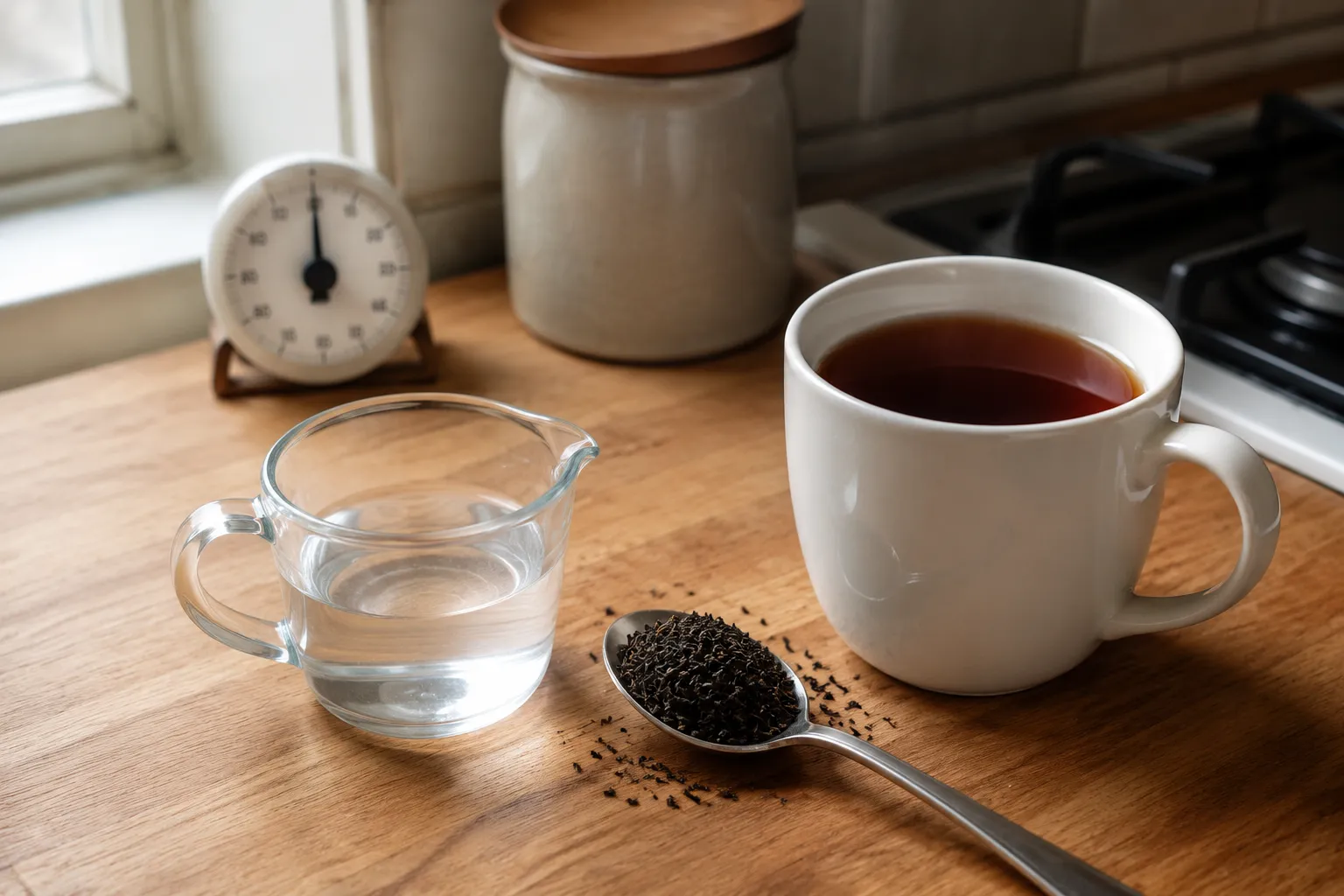
Use more tea for the same amount of water before you extend the steep. That is the cleanest way to adjust a strong black tea ratio because it builds flavor, aroma, color, and body without asking the leaf to sit until the cup turns harsh. If your tea tastes thin, keep the mug, water volume, and steep time steady, then add a modest amount of leaf on the next brew. Look for darker liquor where it fits the tea, a fuller body, stronger aroma, and briskness that feels firm rather than scratchy.
upward
Read the full overview first
Use the broader guide first if you need the full scope before this page.
Start With Ratio, Not Just Time
A weak black tea cup often gets blamed on timing: leave it longer, wait for the liquor to darken, and hope the flavor catches up. Sometimes a little more time helps. Often, though, it brings bitterness and astringency forward faster than it builds the kind of strength most drinkers want.
A stronger cup can mean several different things:
- More aroma rising from the cup
- Deeper flavor across the tongue
- Fuller body or a heavier mouthfeel
- Enough briskness to feel lively
- Darker liquor, when that suits the tea style
- Enough structure to hold milk, sugar, lemon, or food
Those are not the same as bitterness. Bitterness can make tea feel forceful, but it does not always make it taste fuller. A ratio adjustment gives you a more controlled path: increase the amount of leaf while keeping water volume, temperature, and steeping time steady.
If your usual mug tastes pale or hollow, do not change everything at once. Use the same tea, cup, kettle setting, and steep time. Add a little more tea next time. If the cup becomes fuller but still balanced, ratio was probably the missing variable. If it becomes dry, sharp, or flatly bitter, the ratio may now be too heavy for that leaf or for your taste.
The practical rule: when choosing between more tea leaves or longer steep, try more leaf first.
A Simple Ratio Adjustment Method
You do not need a laboratory setup to make black tea stronger. You do need consistency. The cup will teach you more if you change one variable at a time.
- Brew your usual cup exactly as normal.
- Notice what is missing: aroma, body, color, briskness, or depth.
- On the next cup, keep the same water amount and steep time.
- Add a small extra pinch of loose leaf, or use a little less water with a tea bag.
- Taste before adding milk, sugar, or lemon.
- If it is still weak, repeat with another small ratio increase.
- If it turns rough, dry, or sharply bitter, step back slightly.
Water volume matters as much as leaf amount. A large mug can make a normal scoop taste weak simply because the tea is spread through more water. If you brew in a bigger cup than usual, either increase the leaf or reduce the water. If you brew in a smaller cup, the same leaf may suddenly feel bold or too brisk.
Loose leaf gives you the easiest adjustment: add slightly more leaf. Tea bags are narrower to work with. You can use less water, use a second bag for a large mug, or choose a smaller cup. Because tea bags vary in leaf amount and cut, one bag does not always fit every mug.
The checkpoint is not a universal number. It is the cup: stronger aroma, fuller body, suitable color, and astringency that feels lively rather than punishing.
What Changes the Answer
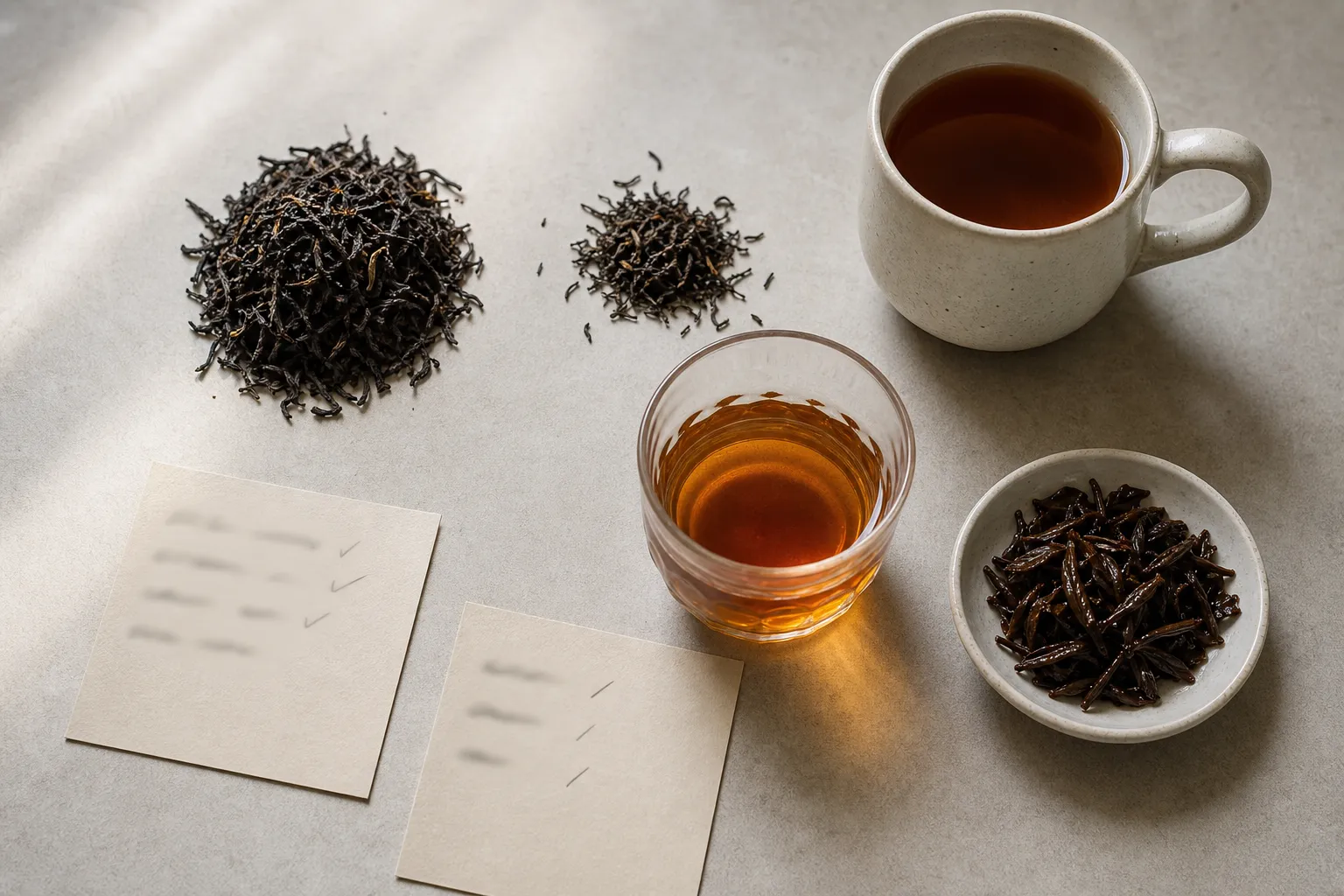
A strong black tea ratio is not universal because black teas do not behave as one single ingredient. The right adjustment depends on leaf form, cup size, freshness, blend, and how you want to drink the brew.
Leaf Form
Whole leaf, broken leaf, fannings, CTC-style granules, and tea-bag contents can release flavor differently. Leaf appearance is a practical clue, not a fixed law. Smaller pieces often respond quickly because more surface meets the water. Larger leaves may need room to open before the cup shows its full body.
Use your senses rather than forcing a formula. If a fine-cut breakfast-style tea becomes harsh with only a small increase, adjust the water instead of piling on more tea. If a larger-leaf tea remains thin, make sure the leaves have enough space in the infuser before judging the ratio.
Freshness and Storage
Stale or poorly stored tea can taste weak even when the ratio is heavy. If the dry leaf has little aroma, or the brewed cup tastes flat rather than simply light, adding more leaf may only deepen the color. It may not bring back lost fragrance.
Before blaming the ratio, smell the dry leaf and check storage. Tea kept near heat, moisture, strong odors, or loose air exposure can lose the bright edge that makes a cup feel alive. In that case, a ratio adjustment may help body, but it will not fully solve a tired leaf.
Water Volume
Many weak cups come from oversized mugs. A tea bag or scoop that tastes firm in a small cup can feel washed out in a large one. If you want to make black tea stronger without changing the tea itself, reduce the water first. That is often cleaner than extending the steep until the finish dries out.
The reverse can happen in a small teapot. Too much leaf in too little water may darken quickly and grip the mouth before the flavor rounds out. Strength is useful only while the cup remains drinkable.
Additions
Milk, sugar, lemon, and food change how strength is perceived. Milk can soften astringency and make a light cup seem even thinner if the tea lacks body. Lemon can sharpen brightness, but it may make a delicate brew feel more pointed. Sweetness can round rough edges, but it does not fill in a hollow infusion.
If you plan to add milk, brew the tea strong enough to taste before the milk goes in. If you drink it plain, stop sooner; the same ratio may feel more assertive without anything softening it.
How to Read the Cup While You Adjust
Judge a ratio change before the tea cools completely and before additions hide the structure. Taste in small sips. Look at the liquor, smell the aroma, then notice the body and finish.
Color is useful, but not enough. A darker black tea liquor can suggest a stronger infusion, yet color alone can mislead. Some teas darken quickly without much aroma. Others look lighter but carry clear fragrance and body. Use color as the first signal, not the final decision.
Aroma is often the better clue. If the cup smells stronger and the flavor follows, the ratio is moving in the right direction. If the color deepens but the aroma stays muted, the tea may be old, the water volume may still be too high, or the style may be less aromatic than expected.
Body is the middle of the cup. A fuller black tea feels less watery and more present across the tongue. It does not have to be heavy. It should feel like the tea has shape: an opening aroma, a middle flavor, and a finish that does not vanish immediately.
Astringency is the warning light. Some astringency belongs in brisk black tea. It can make the cup feel clean and lively. But if your mouth feels scraped, puckered, or dry in a way that overwhelms flavor, the brew has moved past strength into roughness. Next time, use less leaf, less time, or more water.
The best adjustment makes the tea taste more like itself.
More Tea Leaves or Longer Steep?
Use more tea leaves when the cup is weak but still clean. Use a slightly longer steep when the tea has enough leaf but tastes underdeveloped.
That distinction matters. A weak but pleasant cup usually needs a higher tea-to-water ratio. A cup with faint aroma, pale liquor, and little body may improve when you add leaf. A cup that smells promising but tastes short or unfinished may need a little more time instead.
Do not combine both changes at once. If you add more leaf and steep longer, you will not know which change helped or which one caused bitterness. Changing one variable at a time is slower for a cup or two, but it is faster than chasing a moving target.
A useful comparison is to brew two nearby cups:
- Same tea, same water, same time, more leaf
- Same tea, same water, same leaf, slightly more time
If the first cup gains aroma and body without much extra dryness, ratio was the better answer. If the second cup becomes rounder without harshness, the original steep may have been too short. If both turn bitter, that tea may not suit the strength level you want, or the cup size and additions may need rethinking.
Preference matters here. Some drinkers want a brisk breakfast-style cup that stands up to milk. Others want plain black tea with clarity, aroma, and moderate body. Both can be stronger, but they are different targets.
Common Confusion: Strength Is Not Only Bitterness
Bitterness is easy to notice, so it often gets mistaken for strength. A bitter cup can feel intense, but intensity is not always depth. Stronger black tea without oversteeping should taste more present, not simply more severe.
Ask what part of the cup is missing. If the tea is pale and watery, adjust the tea-to-water ratio. If it has color but little scent, check freshness and storage. If it smells good but tastes short, try a small time change. If it starts strong and collapses into dryness, reduce brewing pressure rather than adding more.
Packaging language can blur the issue. Words such as strong, bold, brisk, malty, breakfast, or full-bodied can set an expectation, but they are not a brewing guarantee. They may describe a style, blend aim, or market position. Your cup still depends on leaf amount, water volume, steep time, freshness, and how you drink it.
Use label language as a hint. Let the brewed cup make the decision.
Where the Guidance Has Limits
There is no single ratio that is correct for every black tea. The available source set for this page did not provide usable public references for exact gram-to-water ratios, steeping temperatures, leaf-form behavior, or tested comparisons. For that reason, this answer stays practical and observable rather than pretending one measured formula applies across all teas.
That limit is not a reason to brew randomly. It means the safest adjustment is to control what you can see and taste: leaf amount, water amount, steep time, cup size, liquor color, aroma, body, and astringency.
Style variation is the main boundary. A broken-leaf blend made for milk, a delicate whole-leaf black tea, a smoky tea, a malty tea, and a flavored black tea may all respond differently to extra leaf. A stale tea may become darker without becoming more aromatic. A large mug may need more tea than a small cup. A tea bag may leave less room for fine adjustment than loose leaf.
Black tea contains caffeine, and a stronger preparation may feel more intense depending on leaf, time, water, and personal tolerance. If caffeine affects your sleep, anxiety, pregnancy considerations, medication questions, or other health concerns, keep the brew within your own limits and seek appropriate professional guidance when needed.
A Compact Brewing Check
Use this short check the next time your cup tastes weak:
- Keep the same tea, water source, cup, and steep time.
- Add a little more leaf, or use slightly less water.
- Taste plain before adding milk, sugar, or lemon.
- Look for stronger aroma and fuller body, not just darker color.
- Stop increasing when astringency turns rough.
- If more leaf does not help, check freshness, storage, cup size, or steep time.
For a stronger cup of black tea, start with ratio: more tea for the same water, or less water for the same tea. Let the next sip decide how far to go.