
Brewing by leaf form
Why Black Tea Steeping Time Changes With Leaf Size
Black tea steeping time changes with leaf size because smaller pieces expose more cut surface to hot water. A tea bag filled with fine particles can turn dark, brisk, and drying quickly, while larger whole leaves usually need more time to wet through, open, and build aroma, body, and layered flavor. That is the practical reason black tea steeping time by leaf size matters.
Start with the form in front of you: give large intact leaves more time, broken leaves a moderate steep, and fine particles a shorter first brew. Then let the cup correct you. If the liquor darkens fast and the taste turns sharp before it feels full, shorten the next steep. If the aroma is quiet and the body feels thin, add time before blaming the tea.
upward
Read the full overview first
Use the broader guide first if you need the full scope before this page.
First steeping cue
Large intact leaves usually need more time, broken leaves usually need moderate time, and fine particles usually need a shorter first brew. The cup still decides the next adjustment.
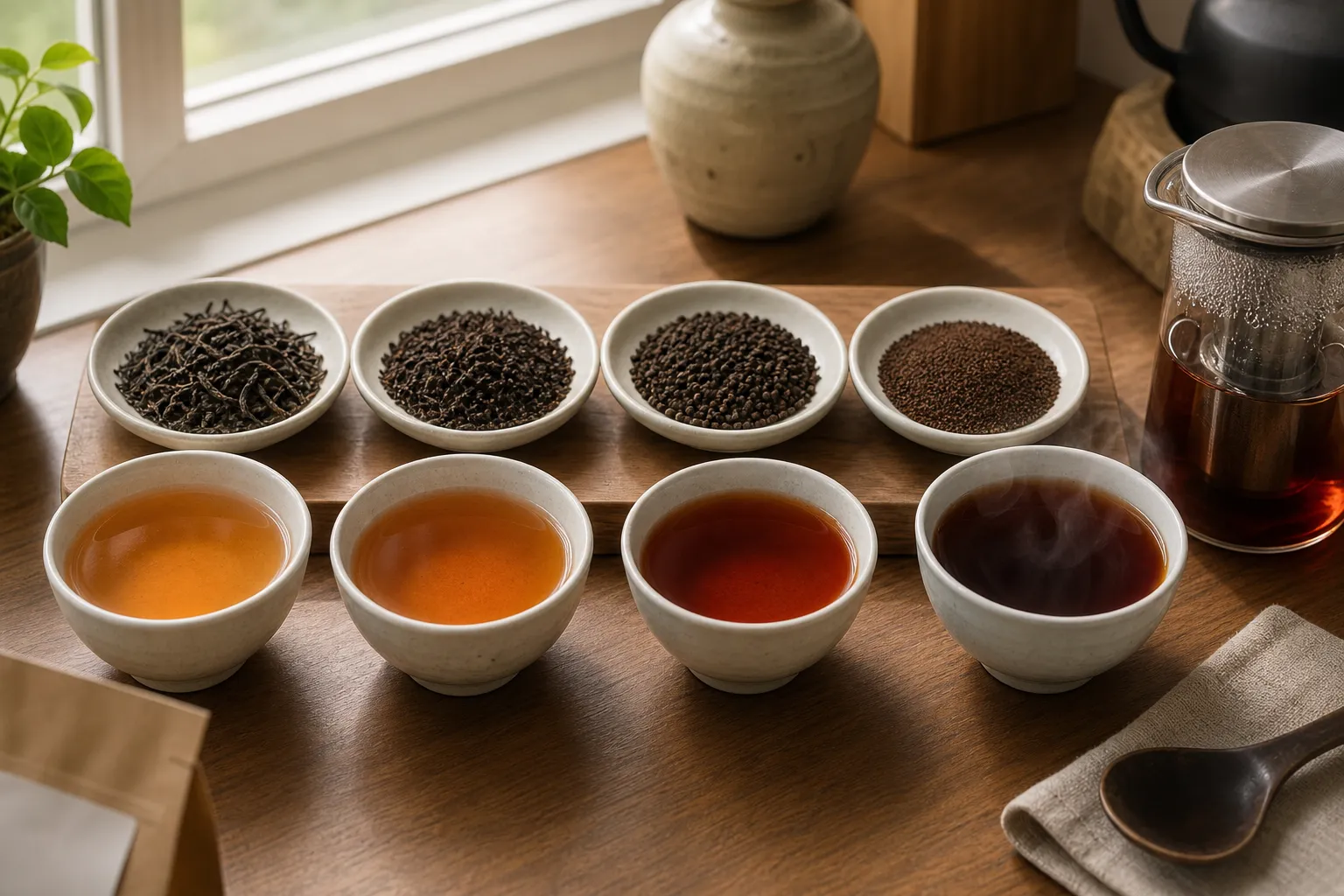
How Leaf Size Changes the Brew
A whole leaf is not just a larger version of the same brew. It is a bigger piece of processed leaf that needs time to absorb water, open, and release flavor. When the leaf is broken, cut, crushed, or reduced to small particles, water reaches more edges at once. Color, strength, and briskness can arrive sooner.
This is why whole leaf vs broken leaf tea can behave differently even when both are black tea. Whole leaf black tea steeping time often feels more forgiving because the infusion builds gradually. Broken leaf black tea steeping time usually needs closer attention because the cup can move from lively to rough more quickly.
Very fine grades change the pace again. Fannings and dust are small particles often found in tea bags and fast-brewing blends. Fannings black tea steeping time and dust tea steeping time are usually shorter in household brewing because the liquor may darken quickly and the drying bite can appear early. Fine particles are not automatically poor tea; they simply ask for a different steeping decision.
The available references support tea-processing vocabulary and the broader point that preparation changes tea liquor, but they do not provide a tested timing chart for every black tea leaf size. Treat any timing number here as a practical first brew, not a fixed rule.
Practical Steeping Times by Visible Leaf Form
Use the package term, then check what you can actually see in the infuser or tea bag. Black tea package terms are not perfectly consistent, and grade labels are not a complete quality ranking, but they can help you predict how quickly the cup may develop.
Whole leaf
Larger, twisted, wiry, rolled, or more intact pieces.
About 3 to 5 minutes
Broken leaf
Smaller fragments that still look leafy.
About 2.5 to 4 minutes
CTC
Small, firm pellets or granular pieces.
About 2 to 3.5 minutes
Fannings
Fine small particles, often in tea bags.
About 1.5 to 3 minutes
Dust
Very fine particles in quick-darkening bags.
About 1 to 2.5 minutes
These ranges are home brewing guidance, not laboratory values. ISO-style sensory preparation standards show that tea liquor can be prepared under controlled conditions for evaluation, but that is not the same as a personal steeping rule for breakfast tea, Assam, Darjeeling, Ceylon, Keemun, or a blended bag.
For CTC black tea steeping time, begin shorter than you would for a loose whole-leaf tea of similar strength. CTC is commonly understood as a cut-tear-curl processing style, and its small granular particles often infuse quickly. If you take milk, you may prefer the longer side of the range. If you drink the tea plain and notice roughness, shorten the steep first.
Change one variable at a time. Keep the same mug, amount of tea, and water temperature for two brews, then move the time by 30 seconds. That small adjustment teaches more than changing the tea, kettle, vessel, and steeping time all at once.
Read the Cup Before You Blame the Tea
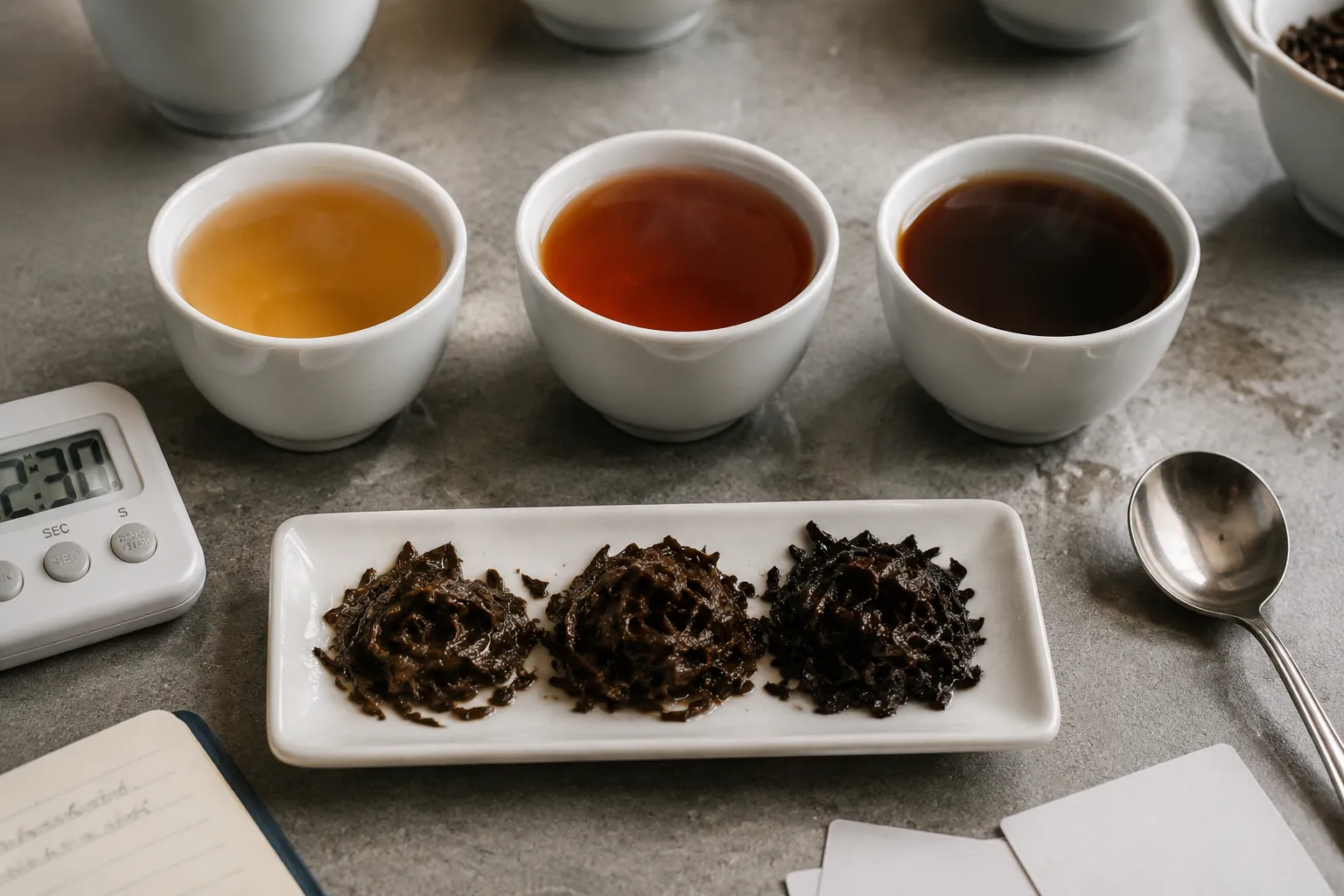
Black tea steeping cues are more useful than the printed minute count when the leaf size is uncertain. Watch the liquor color, then taste for aroma, body, briskness, bitterness, and astringency.
Black tea liquor color is an early clue, not the whole answer. Some teas darken quickly without tasting complete; others stay coppery or amber while still offering plenty of aroma. A fine-particle tea bag that turns deep red-brown in one minute may already be close to your preferred strength. A wiry whole leaf may still need time after the water has taken on color.
Aroma tells you whether the cup is opening or merely darkening. Malt, fruit, spice, cocoa, smoke, wood, or floral notes may appear before the liquor feels heavy. If the fragrance is present but the body is thin, add a little time. If the fragrance fades and the taste turns sharp, the leaf may have stayed in too long for your ratio and water temperature.
Black tea briskness is the lively, drying snap many drinkers enjoy, especially in breakfast-style teas. Black tea astringency is the drying grip that can feel pleasant, firm, or harsh depending on the tea and the drinker. Smaller particles can bring briskness forward quickly; left too long, the same brew may feel drying before it feels balanced.
Simple tasting path
- If the cup is pale, thin, and quiet, add 30 seconds next time.
- If the cup is fragrant but light, add a little time or a small amount of leaf.
- If the cup is dark, flat, and rough, shorten the steep before reducing the tea.
- If the cup is strong but enjoyable with milk, keep the time and note that preference.
- If the finish feels too drying when drunk plain, reduce time or water temperature slightly.
The goal is not to remove all briskness. It is to find the point where strength, aroma, and texture meet your cup.
What Else Changes the Timing
Black tea leaf size matters, but it is not the only variable. Two teas with similar-looking particles can still steep differently because origin, cultivar, harvest, oxidation style, sorting, blend design, storage, and freshness all affect the result.
Water temperature changes the pace. Hotter water usually extracts flavor faster than cooler water. Many black teas are brewed with water near a full boil, but a delicate or highly aromatic black tea may taste smoother with slightly cooler water or a shorter steep. If the same tea tastes harsh at your usual time, leaf size may not be the only cause.
Amount matters too. A heaped teaspoon of broken leaf can behave very differently from a level teaspoon of long twisted leaf because the pieces pack into the spoon differently. Fine particles settle densely, so a small-looking amount may be stronger than expected. If a tea bag tastes too intense, shorten the time first; if loose tea tastes weak, check the amount before adding several extra minutes.
The vessel also affects extraction. A roomy teapot lets large leaves open more easily than a cramped ball infuser. Fine particles in a paper tea bag may infuse quickly because water reaches them readily, though the bag can limit movement. A small mug, large pot, covered vessel, and open cup all hold heat differently, which changes how the steep develops.
Freshness and storage matter in a different way. Tea that has lost aroma may still darken the water, but the cup can taste dull. Extending the steep may add bitterness or dryness without restoring fragrance. If the dry leaf smells flat before brewing, a longer steep is not always the right fix.
Common Misunderstandings
One time for all black tea
A package may suggest a general range, but the visible leaf form should still guide your first brew. Whole leaf, broken leaf, CTC, fannings, and dust do not release into the cup at the same pace.
Smaller means worse
Leaf size and quality can be related in some grading systems, but they are not the same thing as taste preference. A small-particle breakfast blend may be designed for speed, strength, and milk.
Lab method as kitchen rule
Controlled preparation helps tasters compare tea under consistent conditions. Everyday brewing is more personal, shaped by mug size, water, tea amount, and preferred strength.
The clean correction is simple: brew by form, then confirm by taste. Let the leaf size set the first guess. Let the cup set the second.
A Simple Adjustment Method for the Next Brew
If you are unsure where to start, sort the tea by what you can see.
- Large, intact loose leaves: start around 3 minutes. Extend toward 4 or 5 minutes if the cup is aromatic but light. Give wiry or rolled leaves room to expand.
- Broken loose leaves: start around 2.5 to 3 minutes. If the cup has good body but the finish dries the mouth too much, reduce by 30 seconds. If it tastes thin, extend gently.
- CTC or granular black tea: start around 2 minutes if drinking it plain, or closer to 3 minutes if you want a stronger cup for milk. Watch closely because color and briskness can build fast.
- Fannings or dust in tea bags: start short. Lift the bag at 60 to 90 seconds and taste. If it needs more body, steep longer in small steps. Squeezing the bag can make the cup taste harsher, so judge the steep before pressing extra liquid out of the leaves.
When comparing black tea steeping time by leaf size, keep notes in plain language: “2 minutes, dark but sharp,” “3 minutes, malty and full,” or “4 minutes, too drying.” A few words beside the kettle are more useful than a universal chart.
For the next cup, change only the time. Once the brew tastes close, adjust leaf amount, water temperature, or milk to match how you actually drink black tea.
FAQ
Does smaller black tea always need less time?
Usually it needs a shorter first steep, but not always the same short steep. Blend design, freshness, water temperature, tea amount, and your preferred strength can change the result. Use the smaller leaf size as a signal to start carefully, then taste.
Is whole leaf black tea always better than broken leaf tea?
No. Whole leaf often gives a slower, more aromatic infusion, while broken leaf or CTC tea may suit a strong, brisk cup, especially with milk. Leaf size helps predict brewing speed; it does not decide whether you will enjoy the cup.
Can I use the same time for loose tea and tea bags?
You can start there, but tea bags often contain smaller particles than loose whole-leaf tea. If the bag darkens quickly or tastes drying, shorten the steep before changing anything else.
What should I do if my black tea tastes bitter?
First shorten the steep by 30 seconds. If it still tastes harsh, try slightly cooler water, a little less tea, or more room for the leaves to move. If the dry leaf smells stale, longer steeping may only add roughness without bringing back aroma.
Sources
Sources and further reading
Reference links are limited to sources considered suitable for public citation in this page.