
Teapot brewing
How to Brew Black Tea in a Teapot Without Leaving the Leaves Steeping
To brew black tea in a teapot without oversteeping it, use the teapot for brewing, then separate the tea from the leaves. Measure the tea, add boiling or near-boiling water, steep for about 3 to 5 minutes for many black teas, then stop the infusion by lifting out the basket, removing the teabags, pouring through a strainer, or decanting the whole pot into a second warmed vessel.
A timer helps you know when to act. Physical separation is what keeps the second cup from turning harsher while the leaves sit in the pot.
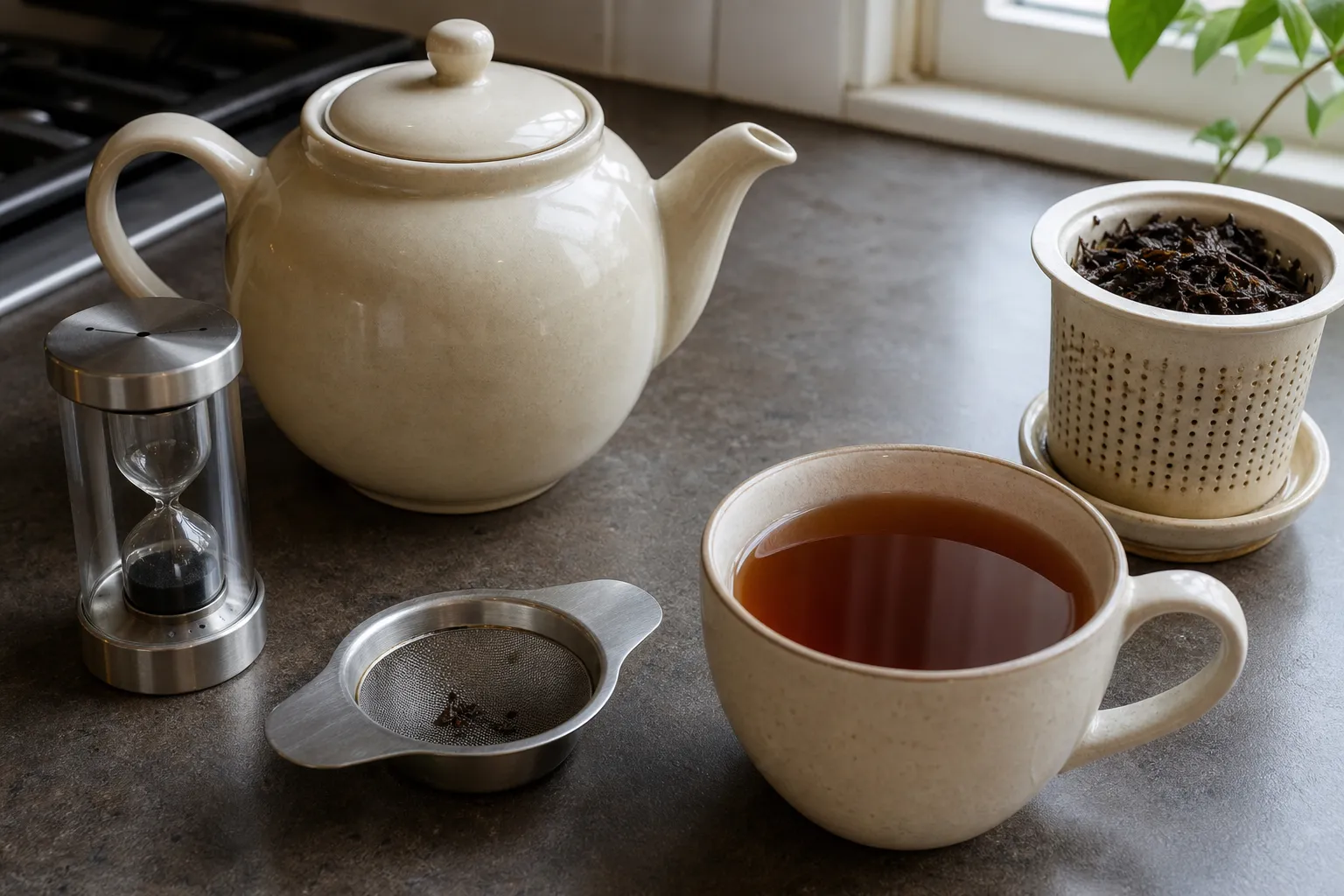
upward
Read the full overview first
Use the broader guide first if you need the full scope before this page.
A simple western teapot method
Use this as a starting point, then adjust for the tea in front of you.
-
1. Warm the teapot.
Swirl hot water in the empty pot, then discard it. This keeps a ceramic or porcelain pot from pulling too much heat out of the brew at the start.
-
2. Measure the tea.
Start with one teaspoon of loose black tea, or one teabag, per 6 oz cup of water. If your teapot holds four 6 oz cups, use four teaspoons or four bags. Large mugs may need a little more water and tea than the word “cup” suggests.
-
3. Add boiling or near-boiling water.
Many black teas are brewed around 205°F to 212°F / 96°C to 100°C. Fully boiling water is a normal starting point, though a delicate black tea or a package with specific directions may call for slightly cooler water.
-
4. Cover and steep.
Use 3 to 5 minutes as the working range. Three minutes often gives a lighter, brisker cup; five minutes usually gives more color, body, and grip.
-
5. Separate the tea from the leaves.
Do not leave loose leaves or teabags sitting in the pot while you drink cup by cup. Remove them, strain them out, or pour the finished tea away from them.
In tea writing, the brewed liquid is often called the liquor. It does not mean alcohol; it simply means the tea infusion in the pot or cup. Once the steeping time is done, your goal is to get that liquor off the leaf.
Four ways to stop the steep
The right method depends on your teapot. The taste principle is the same: once the tea is strong enough, the leaves should no longer be sitting in hot water.
Use a roomy basket infuser
If your teapot has a removable basket infuser, this is the easiest option. Put the loose black tea in the basket, pour hot water over it, cover the pot, and lift the basket out when the timer ends.
The basket should give the leaves room to open. A small ball infuser can work for one cup, but it is often cramped for a full teapot. A wider basket lets water move around the leaf and makes the removal step simple.
Set the basket on a saucer after steeping. The tea left in the pot is now separated from the leaf, so later cups should not keep getting sharper as the pot sits.
Remove teabags promptly
For black tea teabags in a teapot, follow the same pattern: one bag per 6 oz cup as a starting point, near-boiling water, cover, steep 3 to 5 minutes, then remove the bags.
Let the bags drain gently rather than squeezing them hard against the pot. Pressing aggressively can make an already strong cup taste rougher.
Pour through a tea strainer
If you place loose leaves directly in the teapot, use a strainer when pouring. Set a small tea strainer over each cup and pour through it.
This keeps leaves out of the cup, but it only solves part of the problem. If leaves remain inside the teapot, the tea left behind keeps steeping. This method works well when everyone is served at once. If the pot will sit on the table for another ten minutes, strain the entire pot into a second vessel instead.
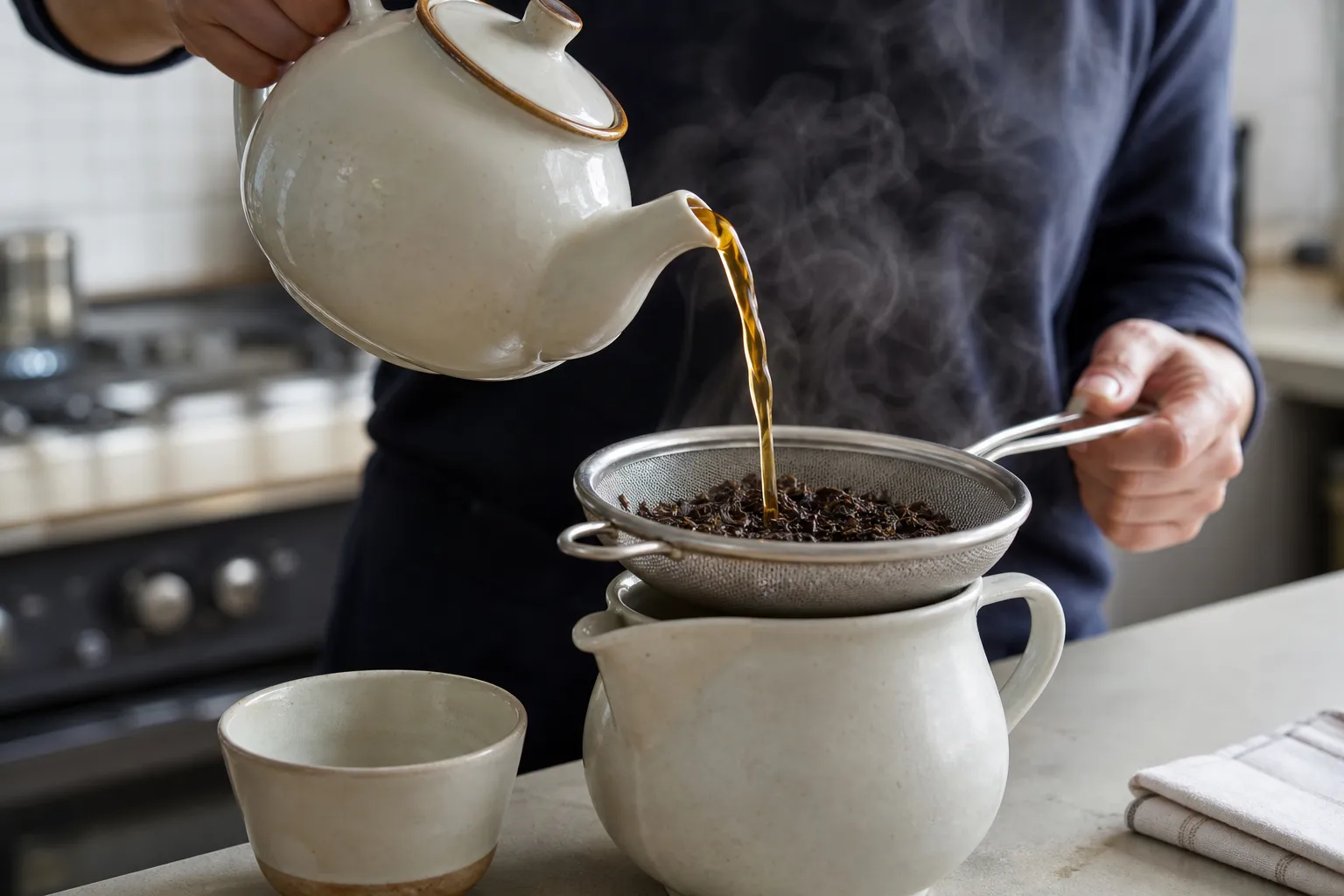
Decant into a second pot or server
If your teapot has no removable infuser and you want later cups to taste like the first, decant the black tea after the timed steep.
Use another teapot, a heat-safe pitcher, or a serving vessel. Warm it first if you want the tea to stay hot. Pour the entire brewed pot through a strainer into the second vessel. The leaves stay behind or are caught in the strainer, and the finished tea is held separately.
For loose leaf black tea in a traditional teapot without an infuser, this is the most dependable approach.
Why the second cup turns harsh
The first cup may taste balanced because it is poured at the intended steeping time. The second cup may taste darker, flatter, bitter, or drying because the leaves are still in contact with hot water.
Steeping time, water temperature, tea amount, water composition, method, and utensils can all affect the color, strength, aroma, bitterness, astringency, and mouthfeel of tea. For this teapot problem, the practical point is simple: tea left on the leaf does not stay fixed. It continues to change.
That change is not always unwanted. Some people like a very strong breakfast-style cup, especially with milk. But if your first cup tastes lively and your second cup tastes harsh, the continued steep is the first thing to fix.
Two useful tasting words
- Bitterness is the sharp taste you notice on the tongue.
- Astringency is the drying or puckering feeling in the mouth.
Black tea can be brisk and structured without becoming unpleasantly bitter or drying. Timed separation helps keep those qualities in balance.
If you want stronger black tea, change the ratio first
A common misunderstanding is that stronger black tea in a teapot always needs a longer steep. A longer steep can add strength, but it can also push the cup toward bitterness and astringency.
Try this adjustment path instead:
- Use a little more loose tea or one extra teabag next time.
- Keep the steep close to the same 3 to 5 minute range.
- Taste earlier if the tea is finely cut, very brisk, or in teabags.
- Taste later if the tea is whole leaf, mild, or meant to take milk.
This matters because leaf form changes quickly in the cup. Broken-leaf teas and many teabags can extract fast. Larger whole leaves may take longer to show body. Package directions are worth checking because blend style, leaf size, and intended use vary.
If the cup tastes thin at 3 minutes, try 4 minutes. If it still tastes thin but already has a bitter edge, add more tea next time rather than pushing the steep much longer.
What can shift the 3 to 5 minute range
The usual range is a starting point, not a rule for every black tea.
Leaf size and form
Finely cut black tea and many teabags usually release flavor quickly. Larger loose leaves may open more slowly and can feel smoother at the same steep time.
Tea style and blend
A malty Assam-heavy breakfast blend, a scented Earl Grey, a softer Chinese black tea, and a brisk Ceylon-style tea may not taste best at the same minute mark.
Tea-to-water ratio
More tea in the same amount of water gives more strength without requiring a much longer steep. Too little tea can make the cup seem weak even when the timer is right.
Water temperature
Boiling or near-boiling water is the normal black tea starting point. Slightly cooler water may soften a tea that tastes too sharp, but it does not replace the need to remove or decant the leaves.
Water taste
If your tap water tastes strongly chlorinated or mineral-heavy, that taste can show up in the cup. Filtered water may help in some households, but it is a flavor adjustment rather than a universal fix.
Teapot size and heat retention
A large ceramic pot, a thin-walled pot, and a pre-warmed porcelain pot can hold heat differently. The main method does not change: steep, then separate.
A quick fix for “first cup fine, second cup harsh”
Next time, try this exact sequence:
- Warm the teapot.
- Add one teaspoon loose tea or one teabag per 6 oz cup of water.
- Use boiling or near-boiling water.
- Set a timer for 4 minutes.
- At 4 minutes, taste or pour.
- Remove the basket, remove the bags, or strain the whole pot into a second warmed vessel.
- If it was too light, use more tea next time before steeping much longer.
- If it was too bitter or drying, shorten the time or slightly reduce the tea amount.
This keeps the western teapot method simple while solving the part that usually causes the cup to keep changing.
Where this advice stops
This page is about western teapot brewing for black tea: a larger pot, measured tea, a timed infusion, and a separation step. It is not a guide to gong fu cha, masala chai, iced tea, cold brew, or other tea types, which use different ratios, timing, temperatures, or preparation goals.
There also is not a controlled household study comparing every teapot and leaf-removal method. The guidance here rests on common brewing instructions and the broader, well-supported idea that steeping variables affect extraction and sensory character. That is enough to answer the teapot question, but not enough to make precise claims about caffeine quantity, nutrition, teaware materials, or which infuser design works better in every pot.
For your own cup, the useful test is still observable: color, aroma, body, bitterness, astringency, and whether the second pour tastes like the first cup’s continuation rather than tea that kept steeping in the pot.
FAQ
Can I leave black tea bags in the teapot if I like strong tea?
You can, but the flavor will keep changing. If you want a stronger cup, it is usually better to use more tea and still remove the bags after the timed steep. That gives strength without letting the later cups become increasingly bitter or drying.
Do I need a special teapot to stop oversteeping?
No. A removable basket infuser is convenient, but it is not required. If your teapot has no infuser, brew the tea loose, then pour the full pot through a strainer into a second warmed teapot, pitcher, or server.
Is 5 minutes too long for black tea?
Not always. Five minutes can work well for some black teas, especially fuller breakfast blends or teas meant for milk. If the cup tastes bitter, drying, or flat, try 3 to 4 minutes next time or use slightly less tea.
Why does straining into each cup not fully solve the problem?
A cup strainer catches leaves as you pour, but any tea left in the teapot is still sitting with the leaves. If the pot will be finished immediately, that may be fine. If you want later cups to stay closer in flavor, decant the whole pot after the timed steep.
Sources
Sources and further reading
Reference links are limited to sources considered suitable for public citation in this page.