Buying decision
How to Compare Black Tea for Milk Before You Buy
A black tea for milk should look, smell, and read like it can make a concentrated cup before the milk goes in. Before buying, compare the package wording, leaf form, freshness clues, and expected cup character: you want enough liquor strength, body, aroma, briskness, and controlled astringency to stay noticeable after dilution. A delicate or highly floral black tea may be lovely plain, but it can disappear once milk is added.
Because there are no citable tea sources available for this page, use this as a practical buying framework rather than a fixed rule. The most useful clues are the ones you can observe on the package, in the dry leaf if visible, and later in a small test brew.
upward
Start with the broader guide
Use the broader guide first if you need the full scope before this page.
Start With the Cup You Want After Milk
The first question is not “Which black tea is strongest?” It is “What should still be present after milk softens the cup?”
Milk rounds sharp edges, lightens color, and can mute high aromas. A good milk tea base usually needs more than fragrance. It needs structure.
Four cup-level traits to compare
- Liquor strength: the brewed tea should look deep enough before milk that it will not turn pale and watery.
- Body: the cup should feel substantial, not hollow or papery.
- Briskness: a lively, drying snap can keep the tea clear through milk, as long as it is not rough.
- Aroma: malt, toast, spice, cocoa, dried fruit, or gentle smoke often carry through milk better than very faint floral notes.
Strong black tea for milk is not simply the most bitter tea on the shelf. You are looking for concentration with enough body to carry the milk, plus enough briskness to keep the cup from tasting dull.
If you cannot smell or see the tea before buying, read the package as a set of clues. Words such as “breakfast,” “strong,” “bold,” “full-bodied,” or “for milk” may suggest the intended use, but they are still label language. They should start the comparison, not finish it.
Read Package Wording Without Treating It as Proof
Package wording can help when buying black tea for milk tea, but it cannot prove freshness, quality, or performance in your cup.
Start with use-case language. If a package points to breakfast-style brewing, milk tea, chai-style preparation, or a strong cup, it is telling you how the seller expects the tea to be used. That matters because some teas are selected for lighter straight drinking, where aroma and delicacy may matter more than density with milk.
Then look for body language. Phrases such as “full-bodied,” “malty,” “robust,” “brisk,” or “rich” are useful because they describe traits that often remain after milk is added. They are not measurements, but they help separate a likely milk-friendly tea from one described mainly as “delicate,” “subtle,” “fragrant,” or “soft.”
Blend wording is also worth reading. A blend may be designed for consistency or strength, while a single-origin tea may emphasize a more specific flavor profile. Neither is automatically better. For milk, the practical question is whether the label suggests a sturdy cup or a nuanced cup that may be better without milk.
Be careful with origin names and grade terms. They can be helpful when you already understand the tea context, but they are not universal promises. A region name does not automatically mean the tea will take milk well. A grade term does not automatically mean better taste. A famous style name does not tell you how fresh the tea is, how it was stored, or how it will behave with your water and brewing ratio.
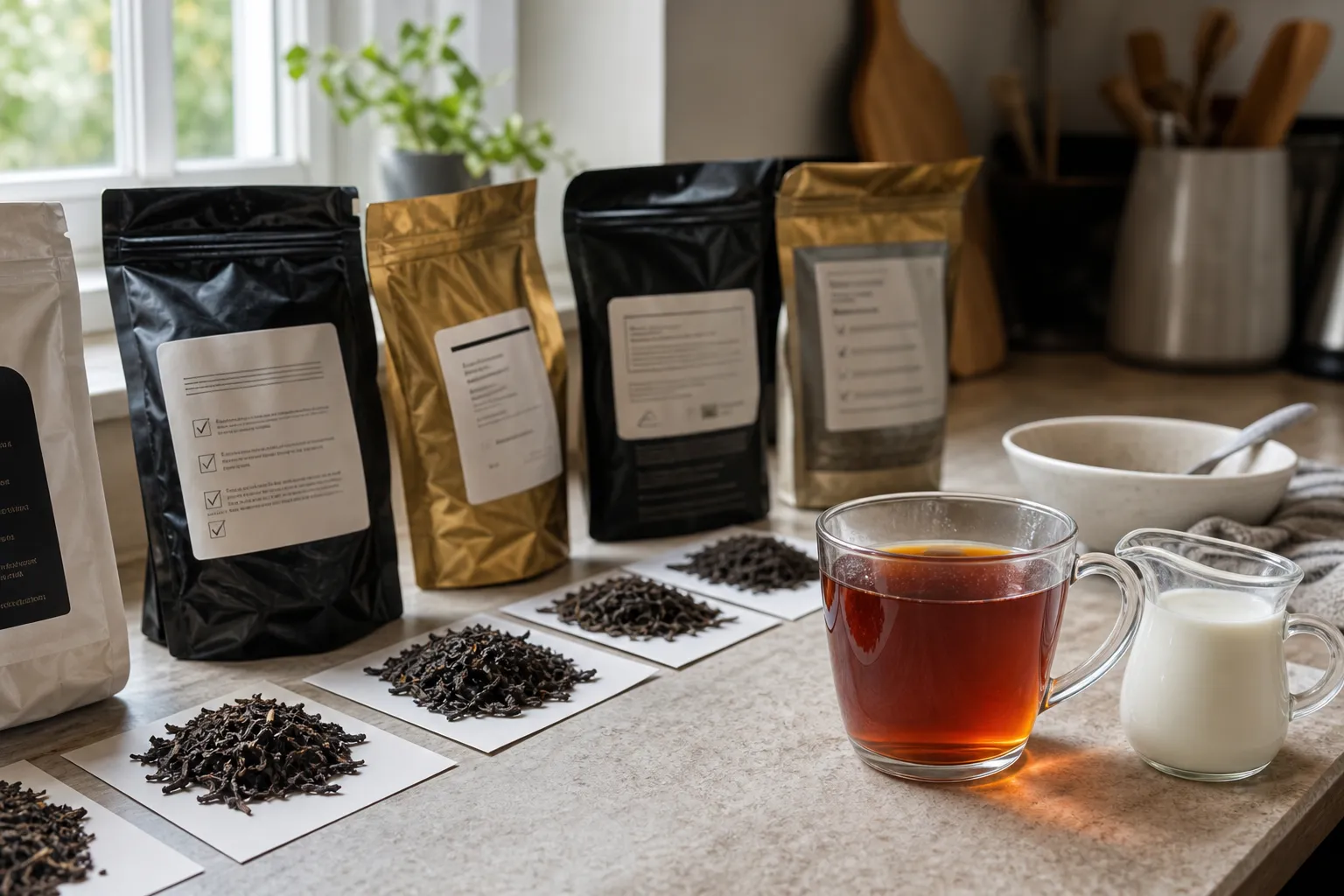
A useful buying move: compare two packages side by side and mark the words that describe strength, body, briskness, cut, and intended preparation. If one package gives you only scenery and romance, while another gives cup traits and brewing use, the second is easier to judge before purchase.
Compare Leaf Form, Cut, and Freshness Clues
Leaf form for milk tea affects how confidently you can predict the brew. Whole leaf, broken leaf, fannings, and tea bags can all make enjoyable cups, but they often behave differently.
Larger leaf pieces may extract more gradually. They can offer layered aroma and a smoother cup, but they may need enough leaf, time, and hot water to produce the strength you want before milk. Smaller cut leaf, broken leaf, and many tea bag formats often infuse quickly and deeply, which can help when you want a stronger brew for milk. The tradeoff is that a fast, intense infusion can also turn sharp if pushed too long.
If you can inspect the leaf, look for consistency. A package with many sizes mixed together may brew unevenly, with fine particles extracting quickly while larger pieces lag behind. Some dustiness is expected in many broken or bagged teas, but excessive powder, stale-looking fragments, or a flat dry smell are not encouraging signs.
Freshness matters because milk will not bring a tired tea back to life. If the package has a packing date, harvest note, or best-before date, use it as one comparison point. If it has no timing information, look harder at the packaging condition. A sealed, opaque, well-closed package is more reassuring than one that is loose, light-exposed, damaged, or poorly sealed.
Dry aroma is one of the best quick checks when smelling is possible. A useful black tea aroma for milk does not have to be loud, but it should feel alive. Malt, bread crust, dried fruit, cocoa, spice, wood, or light smoke can all suggest a cup with something to say after milk. A flat, cardboard-like, musty, or faded aroma is a warning sign. Still, do not overread one sniff; packaging, room smells, and storage can interfere.
For tea bags, use the same clues in a narrower way: intended use, strength wording, freshness date, package seal, and whether the tea is positioned for milk or for lighter drinking. Since you may not see the leaf, the first test brew matters more.
Estimate Milk Performance Before Buying
Milk performance before buying is only an estimate. You can still make a better estimate by asking how the tea might behave when brewed slightly stronger than you would drink it plain.
A milk-friendly black tea should be able to handle concentration. That does not mean steeping until it becomes punishing. It means the tea can make a deeper liquor without turning into bitterness alone. If a label suggests a short, delicate steep and emphasizes gentle aroma, it may be better for straight drinking. If it points toward a robust brew and gives body language, it is more likely to suit milk.
Expected liquor strength is especially useful once you brew. Milk dilutes both color and flavor. A tea that brews amber and light may become beige and quiet. A tea that brews coppery, reddish-brown, or dark before milk has more room to remain present. Color is not a perfect guide, but it is an early signal.
Body is the next test. A tea with body feels rounded or weighty across the palate. Without enough body, milk can make the cup taste like warm milk with tea color rather than tea with milk. If the seller’s wording mentions body, richness, malt, or a breakfast-style cup, that is a helpful cue. If the wording focuses only on perfume, sweetness, or elegance, expect a softer result unless you already know the tea is concentrated.
Briskness and astringency need a careful read. Black tea briskness can be useful with milk because it keeps the cup from tasting heavy or flat. Black tea astringency can become unpleasant if you simply push the brew harder to force strength. The comparison question is not “Does it bite?” but “Does it have lift without roughness?”
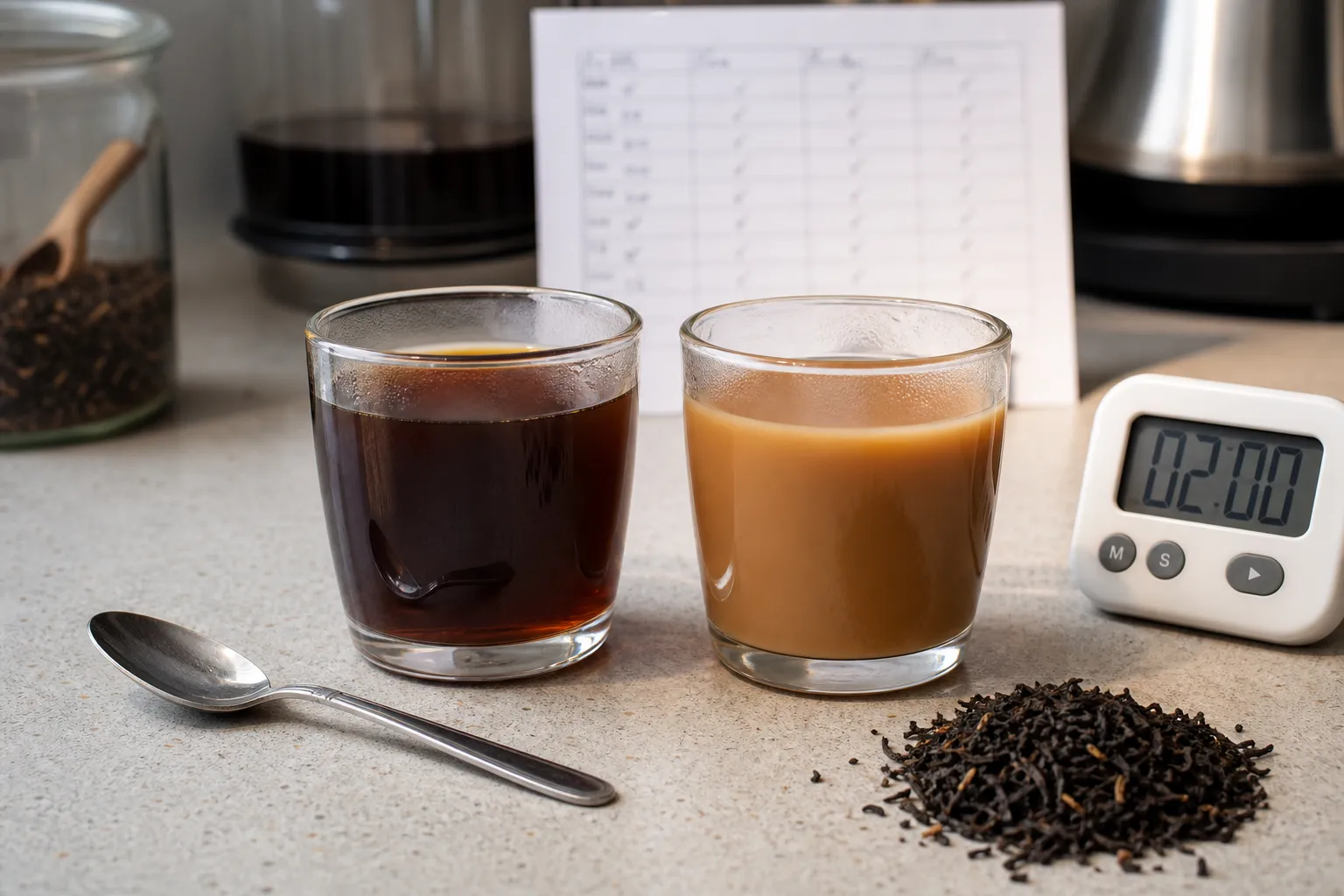
If you can buy a small quantity, sample size is the cleanest answer. Brew a small cup stronger than usual, add the amount of milk you normally use, and judge it after a minute. If the aroma disappears, the color thins quickly, or the finish tastes watery or chalky, it may not fit your milk habit. If the cup keeps its core flavor and the milk rounds rather than erases it, you have a better match.
A Practical Pre-Buy Checklist
Use this when comparing two or three options, not when trying to rank every black tea on the shelf.
- 1. Does the package name a milk-friendly use?Breakfast-style, strong, bold, robust, and milk tea wording suggest the intended direction. Treat these as clues, not proof.
- 2. Does the description mention body or liquor depth?For black tea body, look for richness, fullness, malt, or strength. A thin but fragrant tea may be lovely without milk and quiet with it.
- 3. Can you see the leaf form?Whole leaf may need a more deliberate brew; broken leaf or smaller cut tea may infuse faster and stronger. Consistency of cut matters more than one impressive-looking piece.
- 4. Are there freshness and storage clues?Prefer clear dates, sealed packaging, and dry, protected storage. Be cautious with packages that look damaged, faded, poorly closed, or exposed to strong odors.
- 5. Does the aroma still seem present?If smelling is possible, choose a tea with a live dry aroma. A faded smell usually gives you less to work with once milk is added.
- 6. Can you buy less first?A smaller package lowers the risk of committing to a tea that sounds strong but tastes rough, or one that smells elegant but disappears under milk.
This checklist does not certify a tea as better, more authentic, or higher quality. It helps you predict whether the cup is likely to keep enough flavor after milk.
Common Confusion When Choosing Black Tea for Milk
One common confusion is assuming that “strong” always means better. Strength helps, but balance matters. A tea that becomes aggressively bitter when brewed stronger may be less pleasant with milk than one with steady body and moderate briskness.
Another confusion is treating grade clues as a final answer. Black tea grade clues and cut descriptions may suggest leaf size or sorting style, but they do not tell the whole story. Freshness, storage, blend design, water, and brewing ratio can change the result in the cup. Use grades as one clue among several.
A third confusion is expecting milk to fix weak tea. Milk can soften edges and add creaminess, but it also dilutes. If the tea has little aroma, little body, and a pale infusion before milk, milk usually makes that more obvious.
There is also a style confusion. Some black teas are valued for qualities that do not need milk: high fragrance, delicate texture, or a clean finish. That does not make them unusable with milk, but it changes the buying question. If you want those details, try the tea plain first. If you want a morning cup with milk, buy for structure first.
What You Can and Cannot Know Before Buying
Before purchase, you can compare visible and stated cues: package wording, leaf form, cut, aroma, freshness information, storage condition, and intended preparation. You can also choose smaller quantities when uncertainty is high.
You cannot know the full milk performance until you brew the tea with your water, your ratio, your steep time, and your milk. Two teas with similar wording may behave differently. One “bold” tea may be brisk and rounded; another may be dark but flat. One broken-leaf tea may make a clean strong cup; another may turn coarse quickly.
The best buying decision is practical: choose the tea that gives the clearest signs of strength, body, freshness, and intended milk use, then test it in a small stronger brew before deciding whether it belongs in your regular cupboard.