Brewing Method
Gongfu Brewing for Black Tea
A deep amber cup can turn sharp fast when black tea is pushed too hard. Gongfu brewing black tea helps because it breaks the brew into smaller decisions: more leaf, less water, shorter pours, and repeated tasting instead of one long steep. It is not a fixed recipe. It is a way to watch how one black tea changes from pour to pour.
The evidence boundary for this page is deliberately modest. The available source set does not support exact universal ratios, historical claims, regional rules, or style-by-style performance promises. The guidance below stays with what a drinker can observe: leaf amount, vessel size, water temperature, infusion length, liquor color, aroma, body, briskness, sweetness, bitterness, thinness, and astringency.
upward
Read the full overview first
Use the broader guide first if you need the full scope before this page.
What Gongfu Brewing Means for Black Tea
A gongfu-style brewing approach uses a small vessel, a generous amount of leaf for that vessel, and short repeated infusions. For black tea, it changes the question from “How long should I steep this?” to “What is this cup doing now, and what should I adjust next?”
That matters because many black teas release color, aroma, briskness, and drying structure quickly. A long Western-style infusion gives one broad cup. A black tea gongfu method divides the same leaf into several smaller cups, so you may notice an early aromatic pour, a fuller middle steep, and a later cup that becomes softer, thinner, woodier, or less sweet.
This does not make gongfu automatically better. It makes the brewing more responsive. If the first cup is fragrant but too light, lengthen the next infusion. If the liquor is dark but rough, shorten the pour, use slightly cooler water, or reduce the leaf next time. The method rewards attention more than obedience.
It also separates flavor preference from brewing error. A brisk Assam may still taste brisk when brewed carefully. A smoky or roasted black tea may still carry smoke. A broken-leaf breakfast blend may still release strength quickly. Gongfu brewing is not a way to turn every black tea into the same soft cup; it is a way to hear the leaf in smaller increments.
The Working Setup: Leaf, Vessel, Water, and Pouring
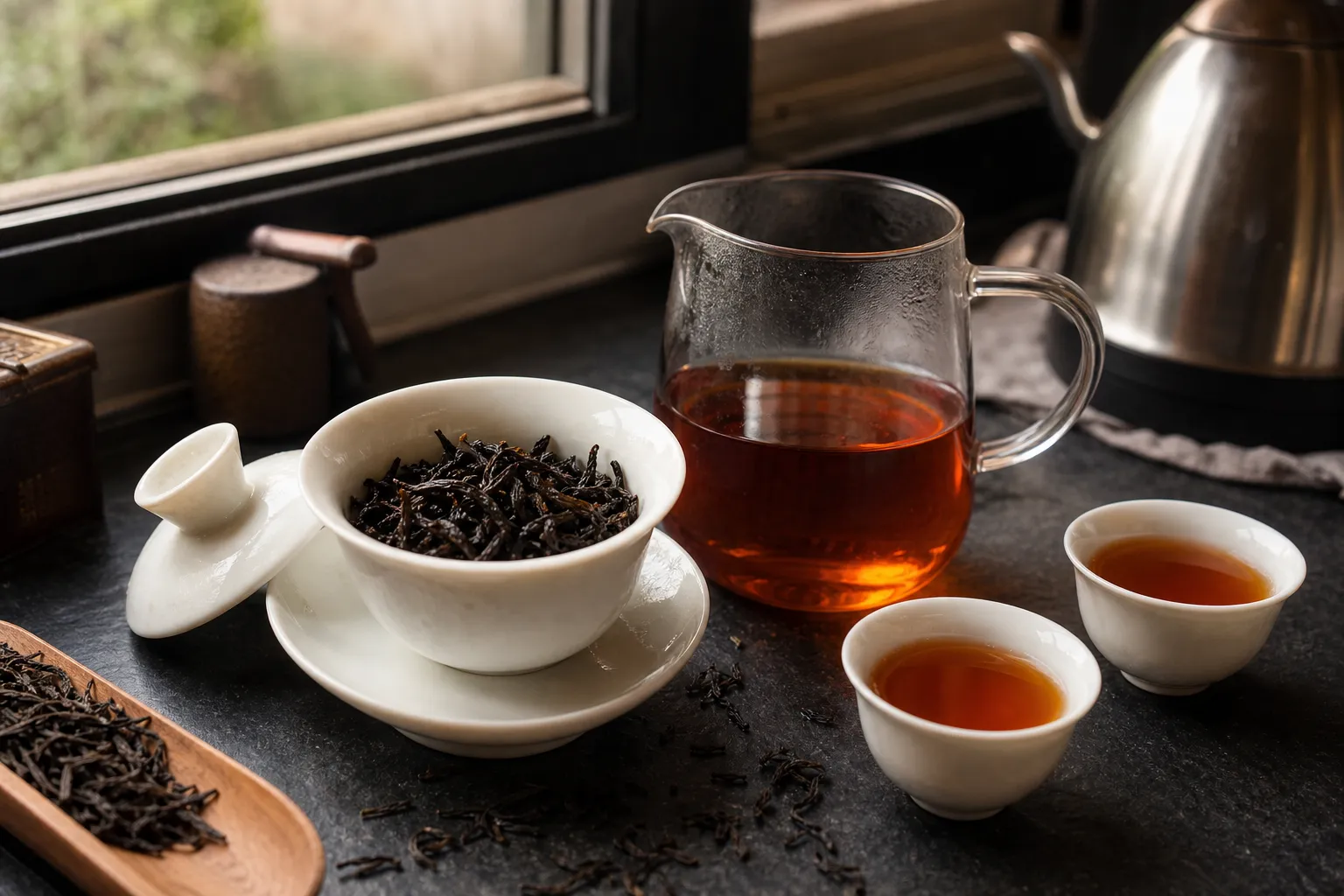
The simplest setup is a small gaiwan or small teapot, a fairness cup if you want to combine the pour, and cups small enough that each infusion can be tasted while warm. The exact vessel matters less than control. You need to pour cleanly, empty the vessel fully, and keep the leaf from sitting in leftover water between infusions.
For gongfu black tea in a gaiwan, the lid makes it easy to control the pour and smell the wet leaf after each infusion. A small teapot may hold heat differently and feel steadier in the hand. The gaiwan vs small teapot choice is mostly about handling, heat retention, and clean decanting. If a pot keeps brewing in the spout or traps liquid around the leaf, the next cup may taste stronger than planned.
Leaf amount for gongfu brewing should be treated as a dial, not a rule. More leaf usually means faster extraction, deeper color, and stronger body in short infusions. Less leaf gives more room for longer timing and may be easier with teas that become bitter or drying quickly. Whole or larger leaves often behave differently from small broken particles; finer leaf can release intensity fast, so it often needs a lighter hand.
Vessel size changes everything. A large pot with a small pinch of leaf is not behaving like gongfu, even if the infusions are short. A small vessel packed too tightly can also make the tea hard to control. The practical aim is enough leaf to give clear flavor in short pours, but not so much that every cup turns harsh before you can adjust.
Water temperature is another flexible control. Many black teas can handle hot water, but hot water should still be used with attention. If a tea tastes flat, sour-edged, or underdeveloped, hotter water or a slightly longer infusion may help. If it tastes aggressively bitter or drying, a shorter pour, a little cooler water, or less leaf may be the cleaner correction. Change one thing at a time.
How to Gongfu Brew Black Tea in a Gaiwan
Warm the vessel first if you want steadier heat, then add the dry leaf and smell it. Dry-leaf aroma gives a useful starting point: malt, honey, cocoa, fruit, spice, smoke, wood, or dried flowers may appear before water touches the tea. Those notes may not all show in the cup, but they help you notice what changes.
Add water, cover, and pour fairly quickly for the first infusion. Because there is no source-backed universal timing for gongfu black tea steeping times, treat the first pour as a short test. If the cup is too pale and thin, extend the next steep. If it is already dark, sharp, or rough, shorten the next one or reduce water temperature in the next session.
Empty the gaiwan completely. This is one of the most important habits in multiple infusions black tea brewing. If water remains around the leaf, the tea keeps extracting between pours, and the next cup may taste unexpectedly heavy or dry. A clean decant makes each infusion easier to read.
Then repeat. The second and third infusions often tell you more than the first: body may build, aroma may become clearer, sweetness may appear after the first brisk edge, or astringency may start to dominate. Later infusions usually need more time because the easiest flavor has already moved into earlier cups. The useful question is not “How many infusions should this tea give?” but “Is the next cup still giving flavor I want to drink?”
A rinse is optional. Some drinkers use a very quick wetting pour to open compact or tightly twisted leaves. For many black teas, especially smaller leaf styles, a rinse may simply remove a flavorful early cup. If the first infusion tastes good, there is no practical need to discard it just because the method looks more formal with a rinse.
Gongfu Black Tea Steeping Times by Infusion
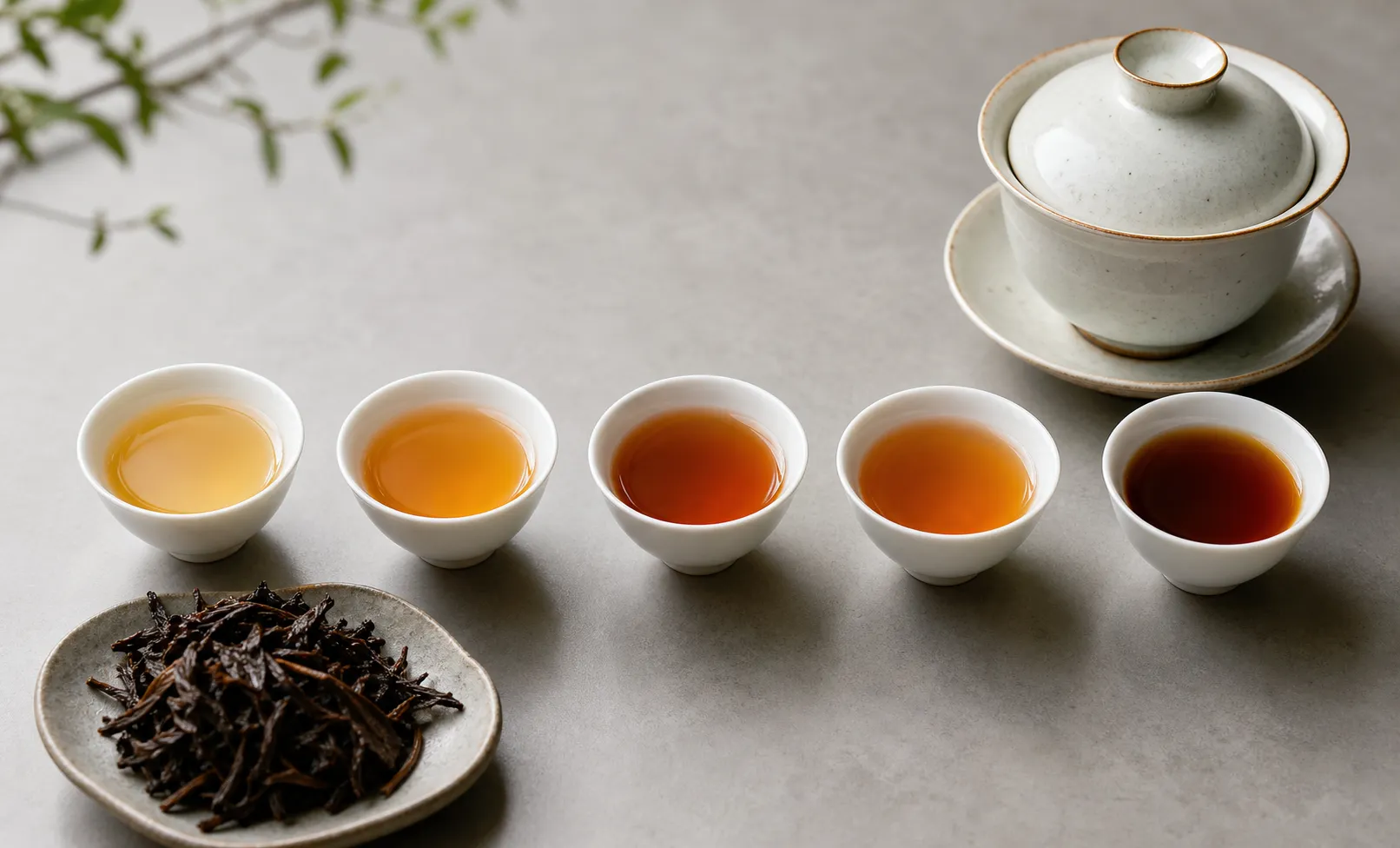
Instead of treating steeping times as a strict chart, use a sensory ladder. Each pour should tell you whether the next one needs more time, less heat, more space, or no correction.
This ladder is useful because black teas vary widely. A whole-leaf Chinese black tea, a tippy black tea, a Ceylon tea, a strong Assam, and a breakfast blend may not respond the same way. Leaf grade, particle size, freshness, storage condition, and blend composition all change how quickly flavor enters the water.
Short infusion timing is not about making every pour tiny and rushed. It is about keeping the tea within a range where you can still steer it. If a tea needs more time to show body, give it more time. If it becomes severe at the first sign of dark color, shorten the pour. The cup is the control panel.
Which Black Teas Work Well for Gongfu Brewing
Black teas with visible whole or larger leaf often give more room for repeated steeps because they may release flavor in stages. Teas with aromatic dry leaf, clear malt or fruit notes, cocoa-like depth, floral hints, spice, or gentle smoke can be interesting in a small vessel because each infusion may emphasize a different part of the profile.
Smaller leaf teas are not unusable, but they may be less forgiving. A broken-leaf tea, a fine breakfast blend, or a tea designed for strong milk-friendly brewing can darken quickly and turn brisk or drying in a small vessel. You can still gongfu brew black tea of this kind; use less leaf, pour fast, and judge the first cup cautiously.
Can you gongfu brew Assam, Ceylon, or breakfast tea? Yes, as a brewing experiment, but expectations should change. Assam often appears in the market as a strong, brisk tea, though individual lots vary. Ceylon can range from bright and lively to fuller and deeper. Breakfast tea is usually a blend category rather than one leaf style, so the cup may be built for strength, milk, or a familiar morning profile rather than layered repeated infusions.
The best candidate is not always the most expensive or the most dramatic-looking leaf. It is the tea that stays pleasant as you change time and water. If the first two pours give aroma, body, and a finish you want to follow, the tea is suitable enough for your own gongfu practice.
Avoiding Harsh Astringency Without Flattening the Tea
Bitterness and astringency are not the same experience. Bitterness is a taste; astringency is the drying or gripping sensation that can make the mouth feel tight. A black tea can be brisk and lively without being unpleasantly rough. Gongfu brewing black tea without harsh astringency means learning which dial is causing the problem.
If the cup is bitter from the first pour, the leaf load may be too high, the water too hot for that tea, or the infusion too long. Start by shortening the pour. If the next session is still rough, use slightly less leaf. If the aroma collapses when you reduce leaf, return some leaf and soften the water temperature instead.
If the cup is thin but astringent, longer time may not fix it. Thinness suggests low body; astringency suggests the extraction is already pulling drying structure. In that case, a smaller vessel, fresher leaf, different water, or a different tea may matter more than simply adding seconds.
If the tea smells wonderful but tastes flat, the problem may be too little leaf, water that is not hot enough, or pours that are too quick for that leaf shape. Give the middle infusions a modest increase in time and watch whether body improves. If only color increases while flavor stays dull, the tea may not be a strong candidate for this method.
If the early cups are sweet and aromatic but the later cups fade quickly, that is not failure. Some black teas give their best in a small number of focused infusions. Stop when the cup becomes mostly hot water and memory. Repeated steeps should serve the drinking experience, not a target count.
Why Gongfu Black Tea Tastes Different Across Infusions
Repeated short infusions divide extraction into a sequence. Early pours may emphasize aroma and brighter edges. Middle pours may bring fuller body, deeper color, and a more settled flavor. Later pours may reveal wood, grain, mineral-like dryness, or fading sweetness. These are tasting observations, not guaranteed stages.
The shift happens because water keeps meeting a changing leaf. The first contact wets the surface and pulls out easily available flavor. As the leaf opens and the session continues, different balances of color, aroma, body, and drying structure show in the cup. Vessel heat, pour speed, water temperature, and leaf size all affect the path.
Black tea sensory feedback is more useful here than a fixed recipe. Look at the liquor, but do not judge by color alone. A dark cup can be smooth; a pale cup can be sharp. Smell the lid or wet leaf, then confirm in the mouth. Notice whether the finish feels sweet, clean, gripping, sour-edged, smoky, malty, or hollow. Then adjust the next infusion with one clear intention.
A simple tasting sequence
- If the cup is aromatic but weak, add a little time.
- If it is full but rough, shorten the next pour.
- If it is sweet but fading, increase time gradually.
- If it is dark and dull, use less leaf next session.
- If it is bright but too sharp, try slightly cooler water.
The point is not to remove all intensity. Black tea often has structure, and some drinkers enjoy briskness. The aim is to keep strength, aroma, and mouthfeel in a range that suits the tea and your preference.
Common Mix-Ups Around the Black Tea Gongfu Method
One common mix-up is treating gongfu as a cultural badge rather than a brewing format. Without stronger source support, this page should not make claims about historical authority or regional correctness. For the reader at the kettle, the useful part is the method: small vessel, more leaf than a long mug steep, quick decants, and repeated tasting.
Another mix-up is assuming every black tea improves with gongfu. Some do; some simply become stronger faster. A tea blended for milk may taste blunt or drying when brewed in concentrated short pours. A delicate whole-leaf tea may show more aroma and sweetness. A brisk tea may remain brisk. The method reveals character; it does not rewrite it.
A third confusion is chasing infusion count. “How many times can you infuse black tea gongfu style?” has no single honest answer from the available material. The better answer is sensory: continue while the cup has aroma, body, and a finish worth drinking. Stop when extra time only brings heat, dryness, or faint color.
Color is another tempting shortcut. Black tea liquor can be copper, amber, red-brown, or deep brown depending on leaf and brewing. Color helps, but it cannot tell you everything. Mouthfeel and finish are better judges of balance.
A Practical Decision Frame for Your Next Session
Start with the tea in front of you. If the leaf is large, aromatic, and not too broken, use the gongfu method to explore stages. If it is fine, dusty, or clearly built for a strong breakfast cup, use a lighter leaf amount and faster pours, or choose a standard mug infusion instead.
Choose a small vessel you can empty completely. Use enough leaf that the first short infusion has a clear voice, but not so much that the cup becomes harsh before you can taste the aroma. Keep water hot enough to develop body, but adjust downward if bitterness and astringency dominate. Let each infusion answer one question.
A clean session can be built around three observations: aroma, body, and finish. Aroma tells you whether the tea is opening. Body tells you whether the brew has enough presence. Finish tells you whether the strength is pleasant or drying. Those three cues are more useful than memorizing a single gongfu black tea steeping times table.
The next time you brew, write down only the variables that changed: leaf amount, vessel size, water temperature, and the timing of each pour. Then note the cup in plain language: thin, brisk, sweet, malty, fruity, smoky, full-bodied, bitter, drying, or fading. That small record will help you judge your own black tea with steadier hands than any universal rule.