Tea comparison
Keemun vs Yunnan Black Tea: Flavor, Body, and Brewing Differences
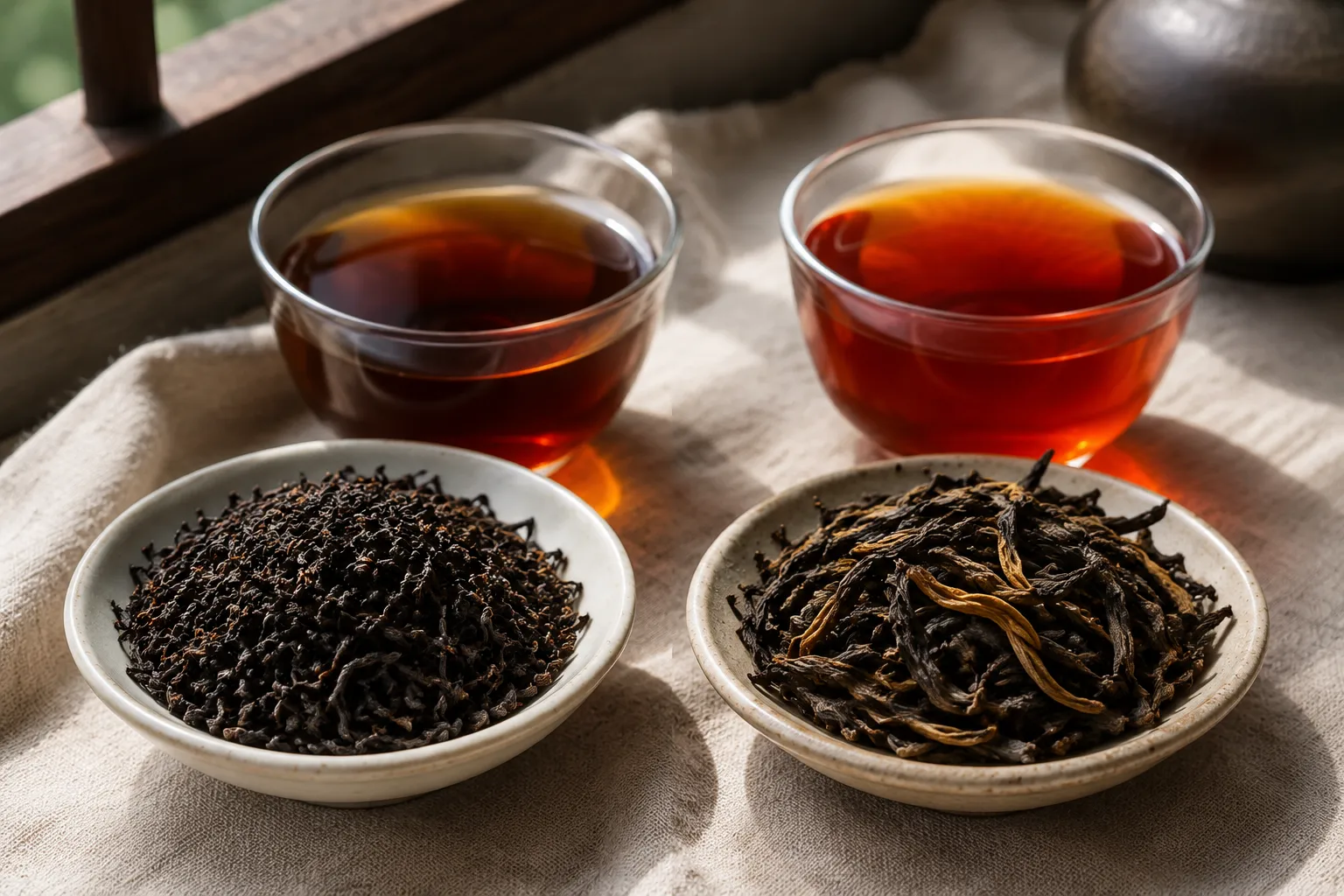
A dry Keemun often looks darker, finer, and more tightly shaped; a Yunnan black tea often shows larger leaf or visible golden buds. In the cup, Keemun vs Yunnan black tea usually comes down to aroma and body: Keemun is commonly chosen for cocoa, toast, floral-fruity lift, light smoke in some examples, and a brisker finish, while Yunnan is commonly chosen for a rounder, sweeter, fuller-feeling cup with caramel-like, malty, honeyed, or golden-bud richness.
That is the useful first answer, not a fixed rule. Leaf grade, bud content, processing, storage, water, ratio, and steeping time can make the two overlap. Taste them side by side before treating either name as a guaranteed flavor.
upward
Read the full overview first
Use the broader guide first if you need the full scope before this page.
The Quick Cup Difference
Keemun black tea, also written as Qimen, is best understood as an aroma-led Chinese black tea. Many labels and tasting notes describe Keemun black tea flavor with cocoa, bittersweet chocolate, toast, floral fruit, mild smoke, and a smooth but sometimes brisk structure. A good Keemun does not need to feel heavy; much of its appeal can sit in fragrance and finish.
Yunnan black tea is often sold under or near the name Dianhong. It is commonly associated with Yunnan large-leaf material and, in many specialty presentations, golden buds or golden tips. Yunnan black tea flavor is often described as mellow, sweet, caramel-like, malty, honeyed, or round. When the dry leaf has a high bud content, the brew may feel plush rather than sharply brisk.
If you want lift, fragrance, and a more defined finish, start with Keemun. If you want a softer, rounder cup with more perceived sweetness and body, start with Yunnan. If you are buying blind, choose the tea whose leaf appearance and package wording match the cup you want.
Leaf Appearance and What It Can Suggest
Keemun leaf appearance tends to be more restrained than many tippy Yunnan teas. You may see slender, dark, twisted leaf, sometimes with neat shaping depending on the style. Market terms around Keemun include Congou Keemun, Maofeng Keemun, Hao Ya, Gongfu, Xin Ya, Jinzhen Keemun, and Xiangluo Keemun. These words can be useful clues, but they are not universal quality guarantees.
The stronger Keemun-specific research in the available material supports one careful point: different Keemun styles can share a recognizable Keemun fragrance while still differing by processing and aroma profile. That matters when buying. A Maofeng Keemun, a Congou Keemun, and a Jinzhen Keemun may not behave exactly the same in the pot, even when the label points to the same broad tea identity.
Yunnan black tea often gives the buyer a more visible clue when golden buds are present. “Yunnan golden buds” usually signals a tippy presentation, with more golden leaf material in the dry tea. That can suggest a softer, sweeter, rounder cup, but it should not be read as proof of quality by itself. Golden appearance, whole-leaf presentation, freshness, storage, and processing all matter.
The name Dianhong is worth knowing because it is commonly associated with Yunnan black tea. When a package says Dianhong, Yunnan black, Yunnan golden tips, or Yunnan large-leaf material, it is usually pointing you toward the Yunnan side of this comparison. Still, the package cannot tell you everything. Smell the leaf, inspect whether it is broken or whole, and brew a measured cup before deciding what the tea actually offers.
Flavor, Aroma, and Body
The Keemun aroma profile is often the reason people seek it out. Common descriptions include cocoa, chocolate, toast, dried fruit, floral fragrance, and a faint smoky edge. The smoke point needs care: slight smoke appears in market language, but it is not a required Keemun trait. Some Keemun cups lean clean, sweet, and floral-fruity instead.
Yunnan black tea body is usually the clearer contrast. In many descriptions, Yunnan feels rounder and more mellow, with caramel-like sweetness and a fuller mouthfeel. The available scientific background supports the broader idea that tea variety, leaf material, and processing can shape aroma and sensory quality, but it does not make every Yunnan tea taste the same.
The overlap is real. Some Yunnan teas can taste floral, brisk, or less heavy than expected. Some Keemun teas can feel smooth, thick, and sweet enough to sit close to a mellow Yunnan. Processing and leaf form can push either tea toward more aroma, more body, or more astringency.
A better tasting question is not “Which one is better?” It is “Which one gives me the cup I want today?” Keemun often makes sense when aroma matters most. Yunnan often makes sense when body and sweetness matter most.
Brewing Differences That Change the Answer
Keemun brewing differences usually show up in the balance between fragrance and sharpness. If the water is very hot, the ratio is strong, or the steep runs long, a delicate or broken Keemun may become brisk and drying before its aroma has room to open. A moderate first brew is a cleaner test: use freshly boiled water allowed to settle briefly, a measured leaf amount, and a 2- to 3-minute first steep for a Western-style cup. Then adjust.
Yunnan brewing behavior is often more forgiving when the leaf is whole and tippy, but not always. A bud-rich Yunnan can produce sweetness and body quickly; a broken or heavily oxidized lot may deepen fast and become drying if pushed. If you want more weight, increase leaf slightly before greatly extending time. If the cup turns flat or rough, shorten the steep before judging the tea.
Longer steeping changes extraction in black tea generally, which is why the same leaves can move from fragrant and smooth to stronger, darker, and more astringent. That mechanism is not unique to Keemun or Yunnan. It is one reason a side-by-side tasting should use the same water, vessel, leaf weight, and steep time.
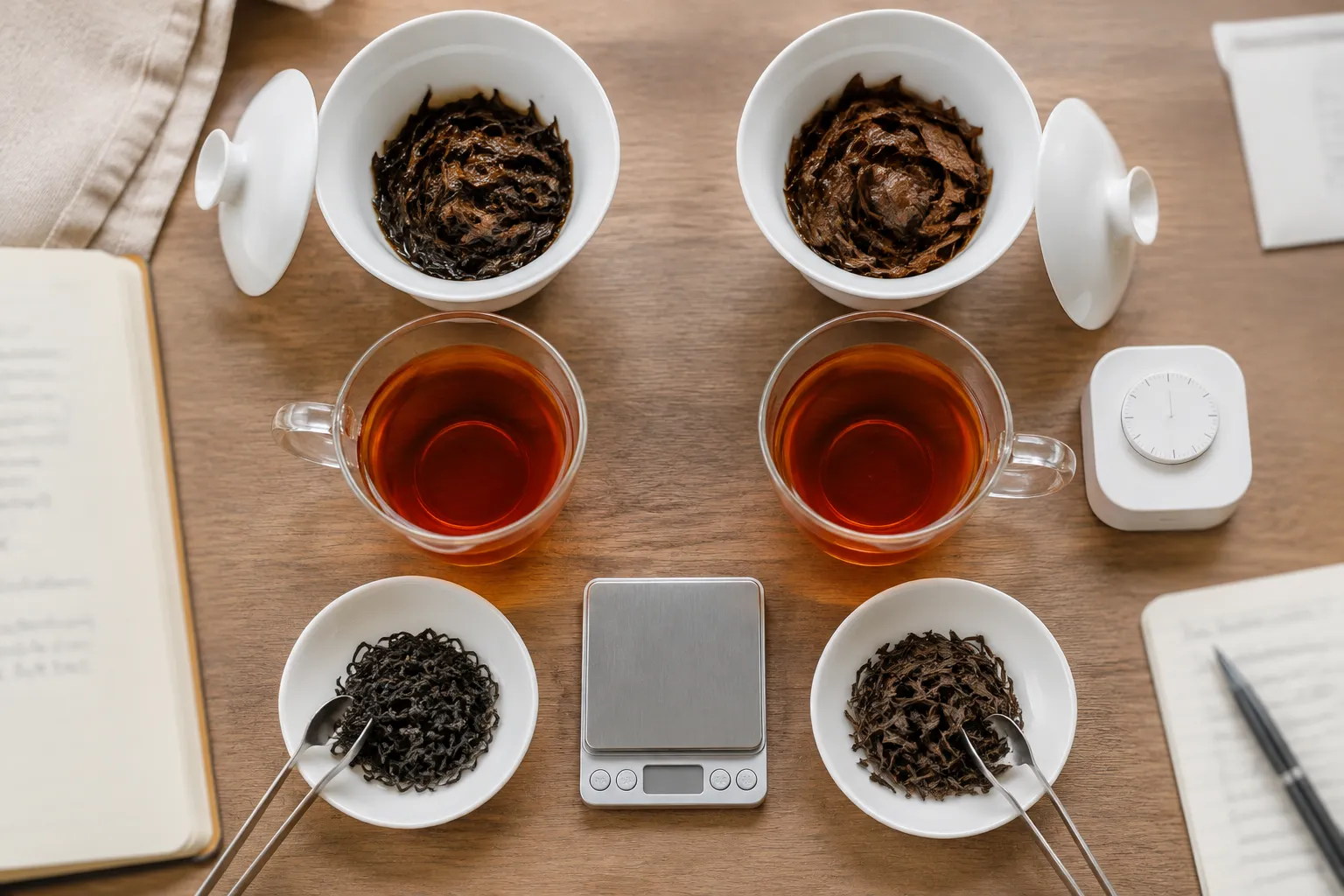
For a fair comparison
- Use the same cup size, water, and leaf ratio for both teas.
- Start with about 2 grams of leaf per 100 ml of water, then adjust after tasting.
- Brew both for the same first infusion, around 2 to 3 minutes for Western-style tasting.
- Smell the dry leaf, wet leaf, and liquor before sipping.
- Note aroma first for Keemun, then mouthfeel and sweetness for Yunnan.
- Repeat with a slightly shorter or longer steep to see which tea changes more sharply.
If you brew gongfu-style, keep the same principle: equal vessels, equal water, equal attention. Short infusions can make Yunnan’s sweetness and Keemun’s fragrance easier to separate, while longer infusions can exaggerate body and briskness.
Buying Terms That Can Mislead
Qimen black tea origin language, Anhui references, and Keemun/Qimen naming can help orient the buyer, but origin wording on a package is not the same as a full provenance check. Treat origin terms as shopping clues, then judge the leaf and cup.
For Yunnan, “Dianhong” and “Yunnan large-leaf material” are useful terms to recognize. Golden buds are also a visible cue. But “golden” does not automatically mean the tea will be deeper, sweeter, or better for your taste. It tells you something about presentation and material; brewing tells you the rest.
Seller grade words deserve caution. Competition, Premium, Imperial, Hao Ya, Mao Feng, and similar labels may appear in product listings, but they are not always standardized across sellers. A package can use impressive grade language while the cup still depends on freshness, storage, leaf handling, and the seller’s own naming system.
The label suggests what to look for; it does not complete the tasting for you.
Which One Should You Choose?
Choose Keemun if you want a black tea that often feels aromatic, cocoa-toned, toasty, floral-fruity, and brisk enough to stay lively. It is a good choice when you drink tea plain and pay attention to fragrance, finish, and the way the cup changes as it cools.
Choose Yunnan if you want more roundness, body, and natural sweetness in the cup. It is a strong candidate when you like mellow black tea, golden-bud presentation, caramel-like aroma, or a fuller mouthfeel without needing the tea to be aggressively brisk.
Choose neither by name alone. Keemun and Yunnan can overlap, and both categories contain many leaf styles. A lighter Yunnan may not satisfy someone looking for a dense, malty cup. A fuller Keemun may surprise someone expecting only delicacy. Storage can also dull aroma, flatten sweetness, or make a tea seem harsher than it should.
The best next step is a two-tea tasting with controlled brewing. Put one Keemun black tea and one Yunnan black tea side by side, keep the method steady, and write down only what you can observe: dry leaf, wet leaf aroma, liquor color, body, briskness, sweetness, and finish. After that, the choice becomes clearer: Keemun for fragrance and definition, Yunnan for roundness and body, with the actual leaf having the final word.
Sources
Sources and further reading
Reference links are limited to sources considered suitable for public citation in this page.