Troubleshooting the cup
Why Black Tea Tastes Flat Instead of Malty, Bright, or Aromatic
Black tea tastes flat when the cup has lost contrast: little dry-leaf fragrance, weak wet-leaf aroma, thin body, dull finish, or almost no briskness. That does not always mean the tea is “bad.” A flat cup can come from too little leaf, water that is not hot enough for that tea, a short steep, too much water, old or poorly stored leaves, unsuitable water, a naturally mild blend, or expecting malt and brightness from a style that was not made to emphasize them.
Before judging the tea itself, check what you can observe: the smell of the dry leaf, the aroma of the wet leaf, the liquor color, the body in the cup, your steeping time, the water, and how the tea has been stored.
First check
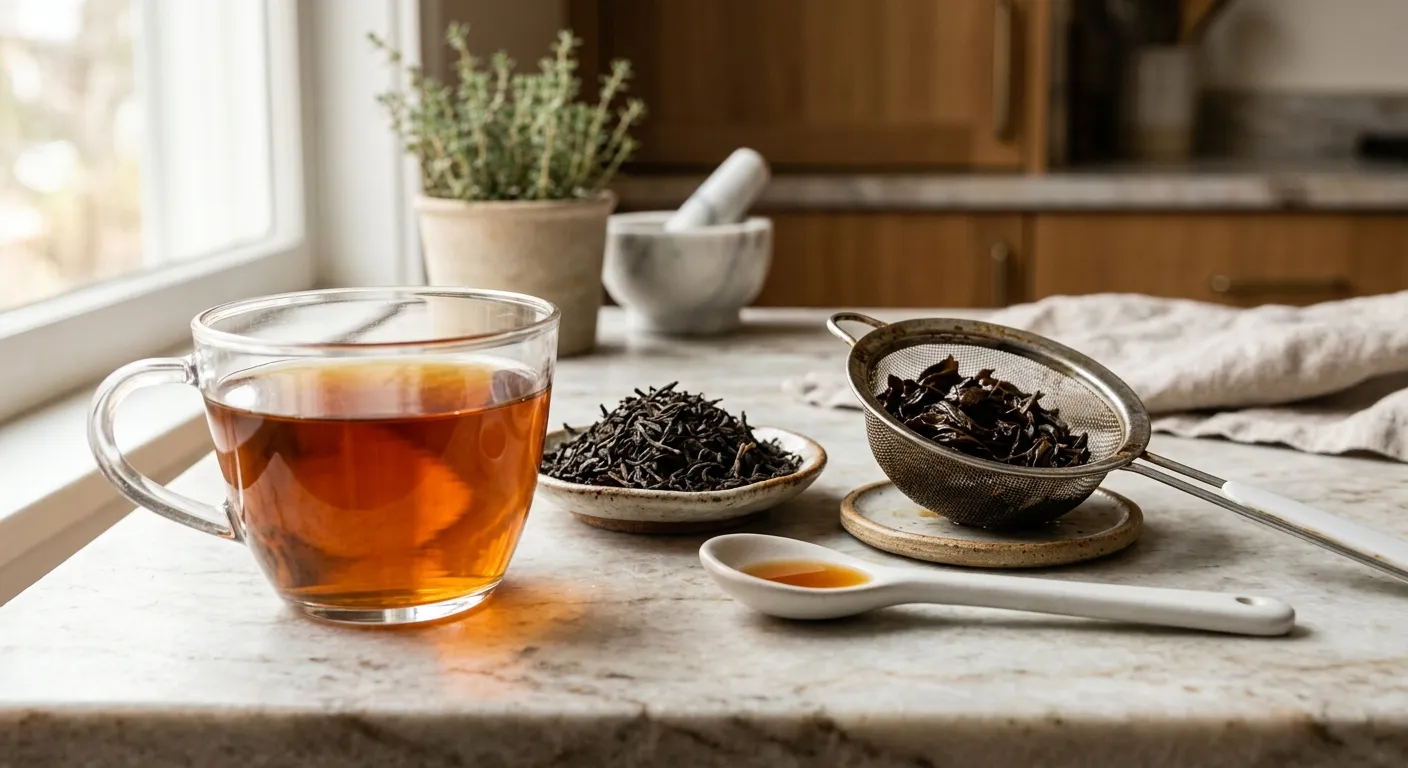
A dark cup is not enough evidence. Smell the leaf, taste the body, notice the finish, and compare one controlled brew before blaming the tea.
upward
Read the full overview first
Use the broader guide first if you need the full scope before this page.
First, decide what kind of “flat” you mean
“Flat” is a useful word only after you separate a few cup-level impressions.
A dull tasting black tea may be weak because not enough flavor was extracted. It may be muted because the aroma is faint even though the liquor looks dark. It may taste stale because both the dry leaf and wet leaf smell tired. Or it may simply be a mild style that was never meant to taste especially malty, brisk, or bright.
Dry-leaf smell
Fresh black tea often has some scent before brewing, though the exact character varies. If the dry leaf smells like almost nothing, cardboard, dust, or a closed cupboard, aroma loss is possible.
Wet-leaf aroma
After steeping, the leaves should usually tell you more than the dry leaf. If the wet leaf smells warm and fragrant but the cup tastes thin, the brew may be under-extracted or over-diluted. If the wet leaf also smells muted, the tea itself or its storage may be the issue.
Liquor color versus aroma
A dark cup is not proof of a flavorful cup. Some black tea can brew deep amber or brown while still lacking lift, fragrance, or finish.
Mouthfeel and finish
Flat black tea often feels thin, hollow, or short. It may have color but little body, little grip, and no clean edge after swallowing.
This first pass keeps the problem specific. “Black tea lacks aroma” is not the same as “black tea tastes weak,” and both are different from “this tea is gentle by style.”
Brewing choices that can make black tea taste dull
If the dry leaf still smells reasonably alive, look at the brew next. Black tea is not one fixed thing: a broken breakfast blend, a wiry Yunnan, a brisk Assam, a high-grown Ceylon style, and a smoky or floral black tea can all respond differently. Still, the same practical levers usually matter: leaf amount, water temperature, steeping time, dilution, and consistency.
Too little leaf makes the cup thin
A common cause of weak black tea brewing is simply too little leaf for the amount of water. This is easy to miss with large mugs, very fluffy whole leaves, or tea bags used in more water than expected. The liquor may color the water, but the body never arrives.
If the cup tastes thin rather than stale, repeat it with the same water and steeping time but slightly more leaf. If the aroma improves and the body fills out, the first cup was probably under-leafed.
A short steep can leave malt and briskness behind
Under-extracted black tea often tastes watery, incomplete, or sweetly dull. It may lack tannic grip, briskness, and finish. If the wet leaf smells promising but the liquor is weak, a longer steep may help.
But more time is not a universal fix. If the tea already tastes harsh, dry, or bitter while still lacking aroma, a longer steep may only make the roughness louder. Maltiness and brightness do not always appear just because the cup is pushed harder.
Water temperature can make some black teas seem unfinished
Black tea water temperature matters because heat changes extraction. If the water is too cool for the tea you are brewing, the cup can taste soft, thin, or incomplete. This is especially noticeable when the leaf seems to have body and briskness available, but the infusion never pulls them into the cup.
Not every black tea wants identical handling, though. Some delicate black teas can turn coarse if brewed too aggressively. The practical move is to test consistently: same amount of tea, same cup size, same water, and one changed variable at a time.
Too much water or too many additions can hide the tea
A tea can be brewed well and still taste flat if it is spread across too much water or softened by additions. Milk, sweetener, lemon, ice, or a large mug can all change how much body and aroma you perceive. That is not a problem if you enjoy the result, but it can make a black tea seem not malty or not bright even when the base liquor has more structure.
If you usually add milk or sweetener, taste one plain sip first. You are not looking for the “correct” way to drink it. You are checking whether the tea has body, aroma, and finish before additions soften the edges.
When the leaf has gone quiet
If both the dry leaf and wet leaf smell muted, brewing changes may not bring back much. Black tea can keep better than some more delicate teas, but it is still vulnerable to air, moisture, heat, light, and nearby odors. Poor storage can lead to stale black tea flavor: less fragrance, less brightness, a flatter finish, and a cup that tastes older than it looks.
Check the storage situation:
- Package age: An old opened package is more likely to taste dull than a recently opened one, especially if it has been exposed often.
- Container seal: A loose bag, thin paper package, or jar opened daily may let aroma fade faster than a tighter container.
- Location: Tea stored near spices, coffee, cooking fumes, sunlight, or heat can lose its own character or pick up unwanted smells.
- Moisture signs: Damp clumping, visible mold, a musty odor, or compromised packaging should be treated differently from ordinary flatness. Stale flavor alone does not prove a safety issue, but moisture damage is not just a flavor note.
Black tea storage aroma loss is often most obvious before brewing. If the leaves smell faint in the packet and faint again after steeping, the tea may have lost much of its aromatic expression. Using more leaf may add strength, but it may not restore the original fragrance.
Water can make a good tea taste quiet
Water looks neutral, but it does not always behave neutrally in the cup. Water with a strong mineral character, a noticeable chlorine smell, or a stale taste of its own can make black tea seem dull, harsh, or strangely hollow. Very different water can also change how brisk or rounded a tea feels.
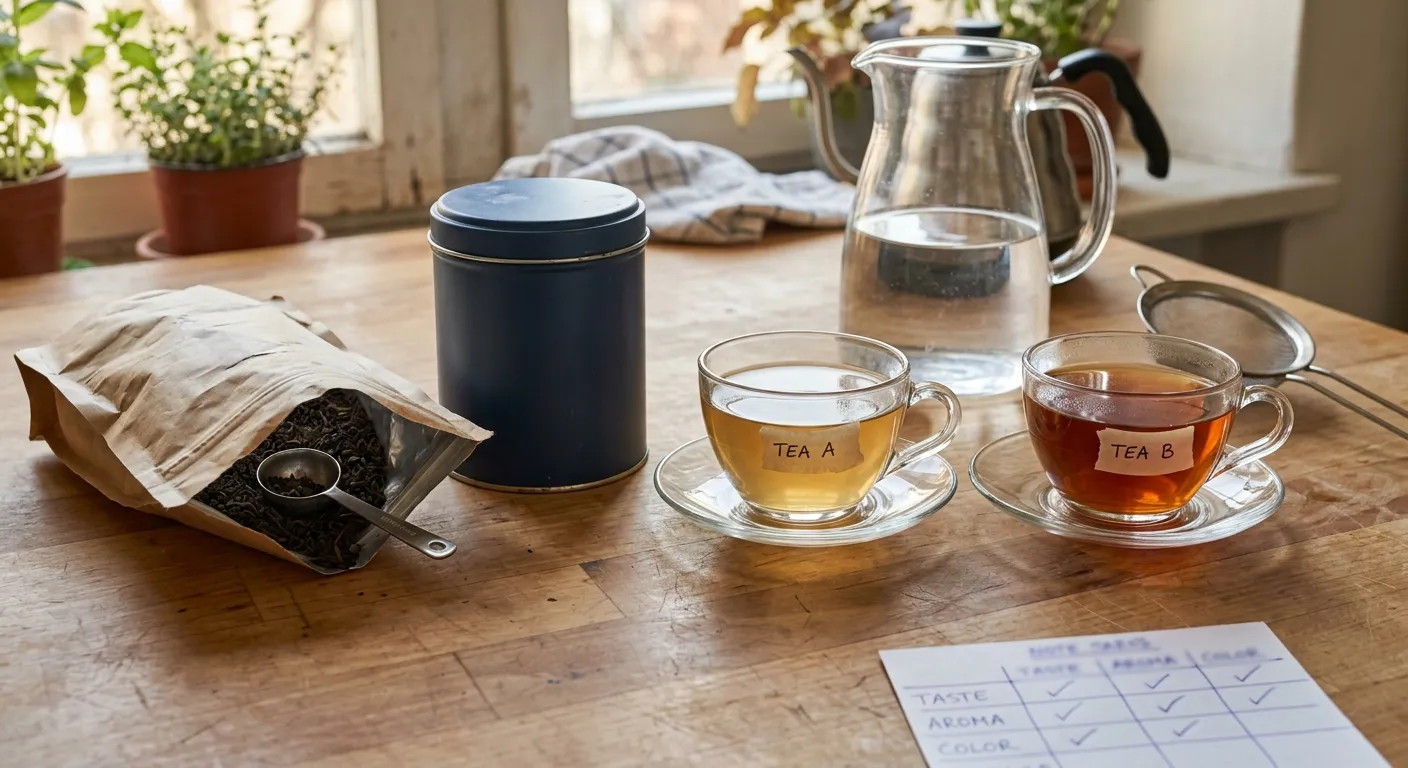
A simple check is enough. Brew the same tea twice with the same leaf amount and steeping time, but use a different water source for the second cup. If one cup has clearer aroma and the other tastes muted, water may be part of the answer.
This is also why consistency matters. Formal tea sensory testing uses controlled preparation so samples can be compared under the same conditions. At home, the useful lesson is simpler: before deciding a tea is flat, make one comparison cup with the same leaf amount, water, vessel, cup size, temperature approach, and infusion time. Then change only one thing.
Sometimes “flat” is an expectation mismatch
Sometimes the tea is not failing; it is not the style you expected. “Malty,” “bright,” and “aromatic” point to different qualities, and not every black tea carries all three.
A malty cup may feel rounded, grainy, sweet-edged, or full. A bright cup often has lift, briskness, and a cleaner high note. An aromatic cup may be floral, fruity, honeyed, spicy, woody, smoky, or otherwise fragrant depending on origin, processing, leaf grade, and blend.
A tea can be full but not bright. It can be bright but not especially malty. It can be fragrant but light in body.
Packaging language can add to the confusion. A tea sold as “smooth” or “mellow” may intentionally avoid sharp briskness. A blend made for milk may taste plain when drunk without it, while a delicate whole-leaf black tea may seem weak to someone expecting a strong breakfast cup. Leaf form matters too: fine broken leaf often gives quick color and punch, while larger leaf may need a different ratio or time to show its aroma.
So if your black tea smells muted, tastes thin, and has little finish, troubleshoot it. But if it is soft, balanced, and low in astringency, it may simply be a mild style rather than a defective tea.
A quick diagnosis path before you give up on the tea
Use this as a tasting reset, not a rigid rulebook.
- 1. Smell the dry leaf. If it has almost no scent, storage or age may be involved.
- 2. Brew one plain cup consistently. Use a measured amount of leaf, a known cup size, the same water, and a timed steep.
- 3. Smell the wet leaf. If the wet leaf is fragrant but the cup is weak, adjust extraction. If the wet leaf is also dull, the tea may be muted or stale.
- 4. Compare color with body. Dark liquor with thin mouthfeel shows why color alone is not a reliable guide.
- 5. Check briskness and astringency. No edge at all may suggest under-extraction or a very mild tea. Harsh dryness suggests that simply steeping longer is not the answer.
- 6. Change one variable. Add leaf, extend the steep slightly, adjust water temperature, or try different water—but not all at once.
- 7. Inspect storage. If the package has been open for a long time, stored warm, or exposed to odors, flatness may come from aroma loss.
- 8. Separate dull flavor from damage. Mustiness, damp clumps, visible mold, or moisture-compromised packaging should not be treated as ordinary flatness.
One disappointing cup does not prove the tea is bad. A flat cup tells you to check extraction, freshness, storage, water, and expectation before making that call. If a second controlled brew still tastes hollow, the dry and wet leaves both smell muted, and the package is old or poorly stored, then the tea itself becomes the more likely cause.
Sources
Sources and further reading
Reference links are limited to sources considered suitable for public citation in this page.