Brewing troubleshooting
Why Black Tea Tastes Watery Even When the Color Looks Dark
Black tea can look dark and still taste thin because color is only one part of strength. If black tea tastes watery, the cup may have enough visible color but not enough aroma, body, briskness, or finish. The fastest checks are practical: use a little more leaf, confirm the water is hot enough for the tea style, steep in small time adjustments, and smell the dry leaf before brewing.
A dark weak black tea usually comes from a mismatch between what the eye reads as “strong” and what the mouth reads as satisfying: weight on the tongue, a clear tea aroma, a gentle astringent grip, and flavor that lingers after swallowing.
upward
Read the full overview first
Use the broader guide first if you need the full scope before this page.
Fastest next-cup checks
- Use a little more tea before stretching the steep much longer.
- Keep water properly hot for the tea style.
- Add steeping time in small, controlled steps.
- Smell the dry leaf to check whether aroma has faded.
Dark color is not the same as strong flavor
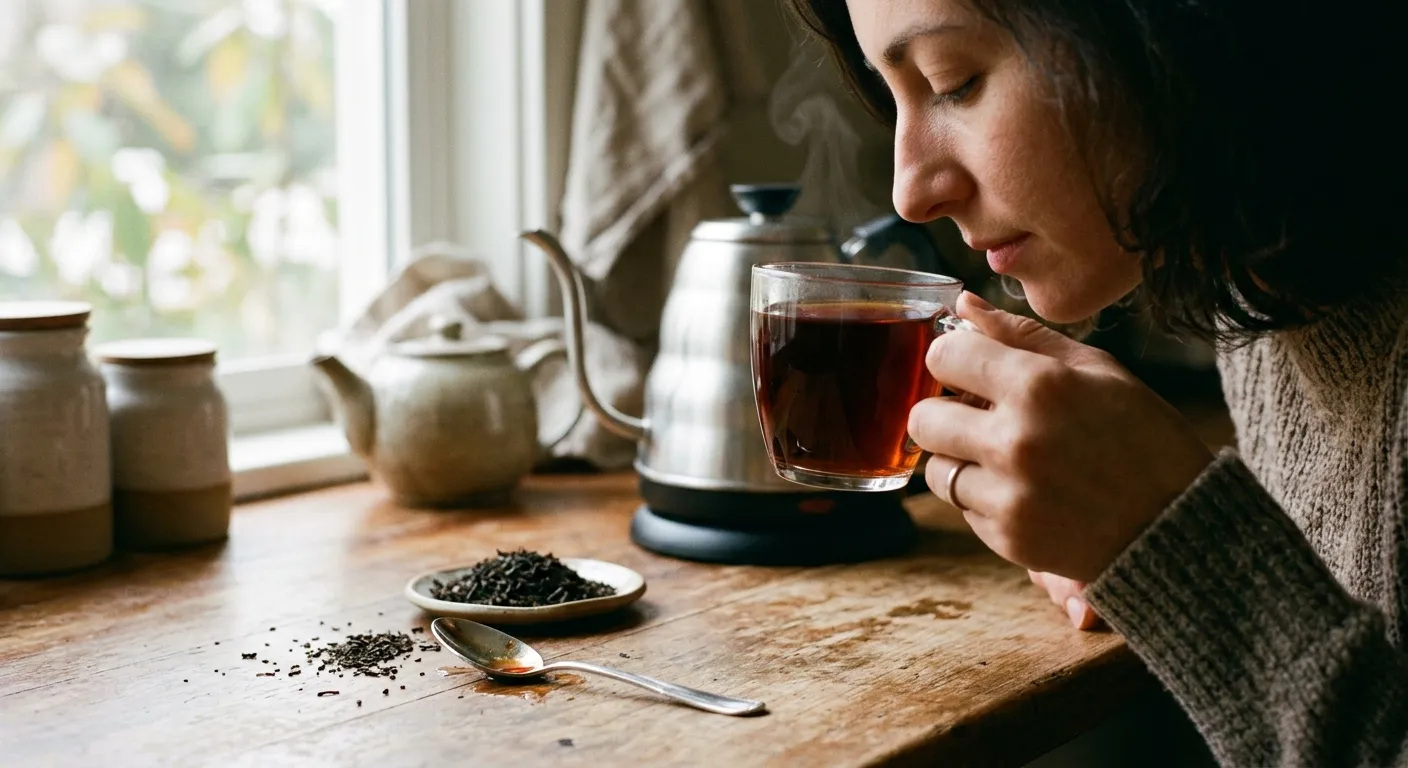
A deep red-brown, copper, or mahogany cup can look as if it should taste full. Sometimes it does. But color can appear before the brew has developed enough body and aroma for your taste.
When dark tea tastes weak, ask what is missing:
Aroma
Does the brewed tea smell like malt, toast, fruit, honey, wood, spice, or dried leaves, or does it smell flat?
Body
Does it feel rounded and present, or does it pass quickly like tinted hot water?
Briskness
Is there a clean, lively edge, or is the cup dull?
Astringency
Is there a light drying grip, or no structure at all?
Finish
Does any flavor remain after swallowing?
A watery black tea usually lacks two or more of these. It may be visually dark but still have low aroma, thin body, and little briskness. That is why black tea color vs strength is a useful distinction: color is what you see; strength is what you smell, feel, and taste.
The causes below are best treated as likely cup-level checks, not universal rules. Tea style, origin, blend, grade, freshness, storage, water, vessel size, and personal preference all change what “strong enough” means.
The fastest next-cup fix: change the tea-to-water ratio
If the tea looks dark but tastes watery, start with the tea to water ratio. Too little leaf can give you color without enough flavor concentration, especially in a large mug.
For the next brew, change only one thing:
- If you used one tea bag in a very large mug, try a smaller mug or a second bag.
- If you used loose leaf and the cup tasted thin, add a little more leaf before adding more time.
- If the tea became dark quickly but still tasted hollow, do not assume it only needs a longer steep.
Steeping time affects what the water draws out during the brew. Leaf quantity sets how much tea is available in the first place. When there is too much water for the amount of tea, the cup may look colored but taste diluted in aroma and body.
This often happens when you change vessel size. A spoonful that works in a small teacup may taste weak in a tall mug. A tea bag made for an average cup can also feel underpowered in a travel tumbler.
Check infusion time without chasing bitterness
The next variable is black tea infusion time. If the tea is pale and watery, a short steep is an obvious suspect. When the tea is already dark, the problem is subtler: the brew may have gained color early while still lacking the flavor structure you expected.
Try a controlled adjustment:
- 1. Brew the same tea with the same amount of water.
- 2. Keep the leaf amount the same.
- 3. Add 30 seconds to the steep.
- 4. Taste for body, aroma, and finish, not only darkness.
If the cup becomes fuller, the first steep was probably too short for your preference. If it becomes harsher but not richer, time alone is not the best fix. Use more leaf and return to a moderate steep rather than pushing a small amount of tea for much longer.
“Strong” can mean different things. Some drinkers want more body. Others want more briskness. Others want a cup that can hold milk. A longer steep may add edge and dryness before it adds the roundness you were hoping for.
Make sure the water is hot enough
Many black teas are brewed with very hot water. If the water is much cooler than expected, the cup may still darken but taste muted, especially in aroma and finish. This can happen when water sits too long after heating, when a cold mug steals heat, or when a kettle setting meant for gentler teas is used out of habit.
For the next cup:
- Use freshly heated water rather than water that has cooled for several minutes.
- Warm a thick mug or pot first if it is very cold.
- Cover the cup or pot while steeping to hold heat.
- Keep the same leaf amount and steep time so you can notice what temperature changed.
There is no need to force one temperature rule onto every black tea. But when black tea tastes watery despite a dark liquor, water temperature for black tea is worth checking because a too-cool brew often feels muted rather than full.
Leaf form can change how strength shows up
Leaf size and strength are connected, but not in a simple “small leaf is better” or “whole leaf is weak” way. Leaf form changes how quickly the brew develops and what kind of strength you notice.
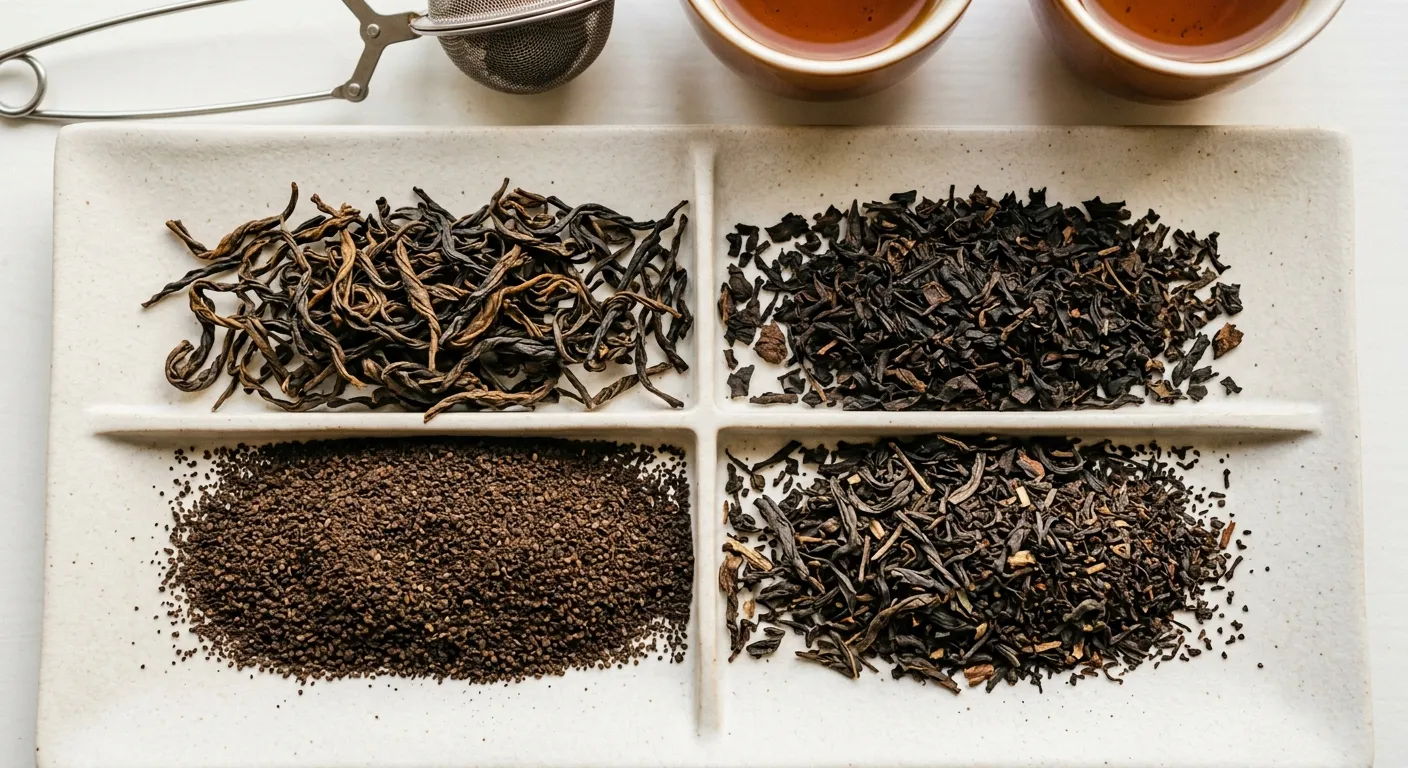
Larger, twisted, or whole-looking leaves
May need enough space, leaf quantity, and time to show aroma and body.
Smaller broken leaves
Often give color and briskness quickly.
Very fine particles or dust-like tea
Can darken fast and taste sharp, flat, or one-dimensional if pushed too far.
Mixed-size blends
May brew unevenly if some pieces release quickly while others need more time.
A broken leaf tea taste can be brisk and useful, especially for a stronger everyday cup or milk tea. But small particles can also make a brew look strong before it tastes balanced. The liquor may darken quickly while the middle of the cup still feels thin.
With larger leaf black teas, the opposite can happen. The cup may look attractive, but the flavor feels restrained because the leaves were crowded in a small infuser or the leaf amount was too low. If the leaves cannot open well, try a roomier basket or pot before blaming the tea.
Freshness and storage often show up as low aroma
A stale black tea flavor is often noticed as absence rather than an obvious bad taste. The cup may look normal, even dark, but the dry leaf smells faint and the brewed tea has little lift. Poorly stored black tea can also taste flat, papery, dusty, or tired.
Before brewing again, smell the dry tea:
- Does it have a clear aroma before water touches it?
- Does the brewed tea smell stronger than the dry leaf, or still faint?
- Has the tea been stored near spices, coffee, soap, sunlight, heat, or moisture?
- Is the package loosely closed or nearly empty with a lot of air space?
If aroma has faded, adding more time may only create a darker, rougher version of the same flat cup. A slightly stronger ratio may help, but it cannot always bring back the high notes of fresher tea.
Storage is especially worth considering when a tea used to taste full and now tastes watery under the same brewing method. If nothing changed except time and how the tea was kept, the leaf condition may be part of the answer.
Sometimes the tea is built for a different cup
Not every watery impression is a brewing mistake. Some black teas are blended or cut for a brisk, milk-friendly cup. Others are meant to be drunk plain and may emphasize fragrance, sweetness, fruit, malt, smoke, or softness rather than blunt strength.
A tea can taste watery if you expect one style and brew another as if it were the same.
For example:
- A delicate, aromatic black tea may look dark enough but feel lighter than a breakfast-style blend.
- A tea intended for milk may taste plain or severe without milk, yet balanced when brewed stronger and softened.
- A very fine tea bag may give fast color but not the layered aroma you expect from loose leaf.
- A lightly dosed large-leaf tea may seem elegant to one drinker and too thin to another.
“Thin body black tea” is not always a flaw in the tea itself. Sometimes it means the tea is too light for the way you want to drink it. The better question is: strong in what way — aroma, grip, bitterness, malt, sweetness, milk-holding power, or finish?
A simple troubleshooting path for the next brew
If your black tea looks dark but tastes weak, do not change everything at once. Use the same tea and adjust one variable per cup.
1. Smell before you steep
Open the package and smell the dry leaf or bag. If the aroma is very faint, the cup may stay low in aroma no matter how dark it brews. If it smells clear and appealing, the problem is more likely method than age or storage.
2. Use slightly more tea
Increase the leaf amount before adding a much longer steep. This is often the cleanest way to add body without making the cup overly dry.
3. Keep the water properly hot
Use freshly heated water and avoid a cold brewing vessel. Cover the tea while it steeps if the room or cup cools quickly.
4. Add time in small steps
If the cup is still thin, add 30 seconds on the next attempt. Stop when the tea gains body, briskness, or finish. If it only gains roughness, go back and adjust ratio instead.
5. Give the leaf enough room
For loose leaf, use an infuser with space. Packed leaves may brew unevenly. If the cup improves in a larger basket or pot, the problem was partly leaf movement and water contact, not only the tea itself.
6. Decide whether the tea needs a different role
If it remains dark but hollow after ratio, time, temperature, and leaf space are corrected, it may not suit the cup you want. Use it for a lighter plain tea, brew it stronger for milk if the flavor supports that, or blend it with a more aromatic black tea. If it tastes stale or storage-damaged, it may simply be past its best drinking window.
Common confusion: dark, bitter, strong, and full are not the same
A dark cup is not always full. A bitter cup is not always strong in a pleasant way. A brisk cup is not necessarily harsh. A full cup does not have to be nearly black in the mug.
These terms help separate the problem:
Dark
What the liquor looks like.
Strong
A broad word; it may mean more flavor, more bitterness, more body, or a caffeine expectation depending on the speaker.
Full-bodied
Weight and presence in the mouth.
Brisk
A lively, clean edge often associated with a refreshing black tea.
Astringent
A drying sensation, which can be pleasant in moderation or unpleasant when too strong.
Watery
Weak aroma, thin body, short finish, or a diluted impression.
When someone says “my dark tea tastes weak,” they are usually not complaining about the color. They are noticing a lack of body, aroma, or grip.
If the cup is dark but watery, start with more leaf, not more guesswork. Then check steeping time, water heat, leaf space, freshness, and storage. The goal is not the darkest liquor possible; it is a cup where the color, aroma, body, briskness, and finish feel like they belong together.