Brewing Troubleshooting
Why Black Tea Tastes Sour, Metallic, or Bitter From the Water
Black tea can taste sour, metallic, flat, or overly bitter when the water changes how the leaf shows in the cup. If black tea tastes bitter from water, the cause is usually not water alone. It is more often the combination of water, kettle condition, water temperature, steep time, and leaf-to-water ratio.
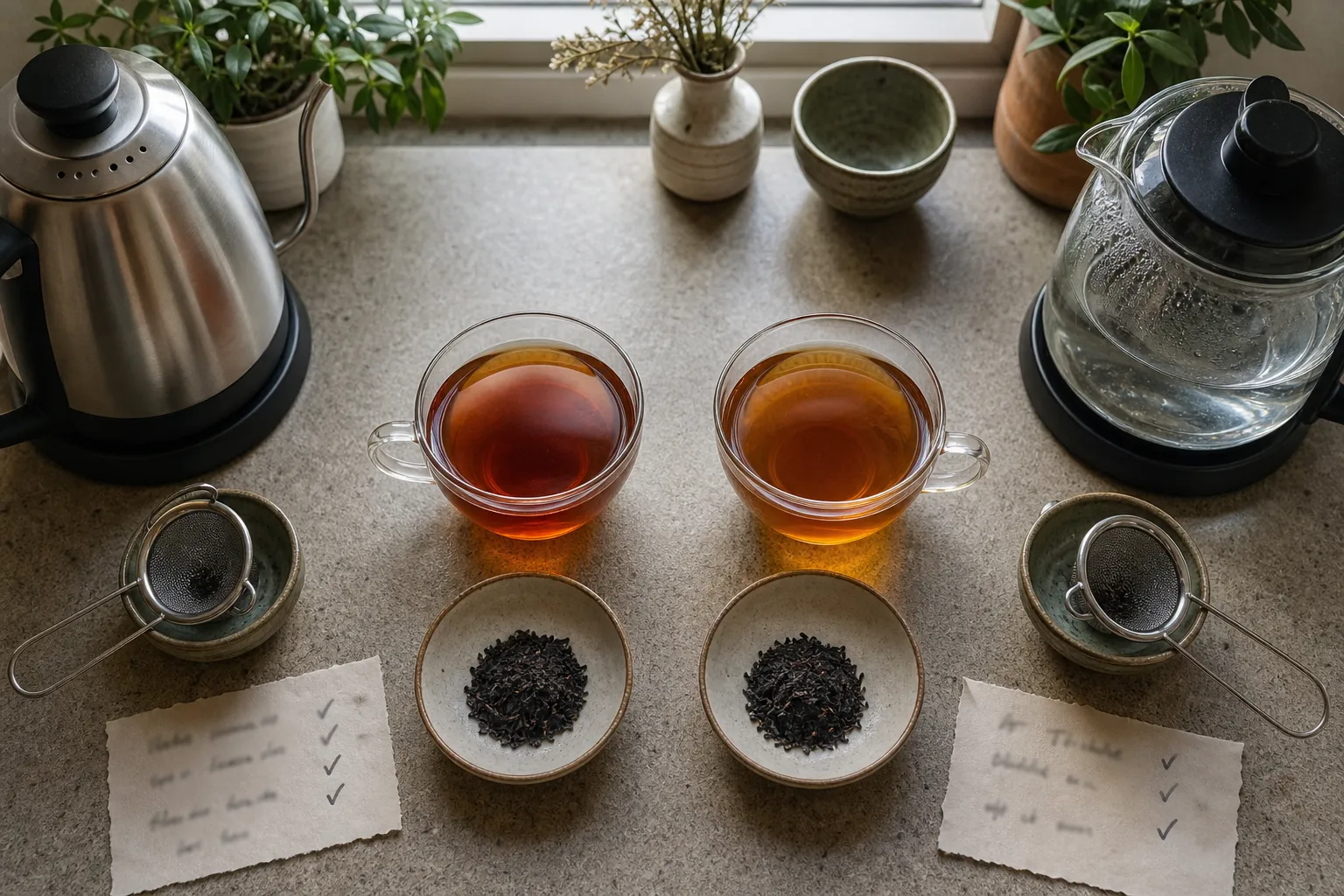
The quickest useful check is simple: brew the same tea twice, once with your usual water and once with fresh drinking water from another source, while keeping the tea amount, vessel, temperature, and steeping time as close as possible. If the off-flavor follows the water, you have a water clue. If it follows the tea or the method, the answer is probably elsewhere.
Taste can point you toward the next brew, but it cannot identify exact water chemistry, plumbing causes, or filter performance on its own. Keep the troubleshooting tied to what you can observe: liquor color, aroma, mouthfeel, bitterness, astringency, sour edge, metallic note, and aftertaste.
upward
Start with the broader guide
Use the broader guide first if you need the full scope before this page.
Start With What Changed in the Cup
When water makes tea taste bad, the first question is not “What is wrong with the water?” It is “What changed compared with the cup that tasted normal?”
Look at the tea in front of you:
- Is the liquor much darker than usual for the same black tea?
- Does the aroma seem dull even though the color is strong?
- Does bitterness hit immediately, or does it arrive as a drying grip along the gums and sides of the mouth?
- Is the odd note cleanly bitter, tinny and metallic, or faintly sour and thin?
- Did the kettle, water source, tea amount, or steep time change?
Those distinctions matter because normal black tea strength can overlap with water-related flavor problems. A strong Assam, a brisk breakfast blend, or a finely cut tea can taste more forceful than a whole-leaf Darjeeling-style tea even when the water is not the main issue. A darker liquor may come from more leaf, smaller leaf particles, hotter water, or longer steeping. Astringency can feel dry or rough rather than simply bitter.
Before changing everything, note four things:
- The tea: same package, same age, same leaf form, or a new tea?
- The water: fresh, previously boiled, bottled, filtered, or from a different tap?
- The kettle: clean, recently descaled, holding old water, or carrying another smell?
- The method: same steep time, tea amount, cup size, and water temperature?
A single bad mug does not prove a water problem. A pattern is more useful: the same black tea tastes normal with one water source and unpleasant with another, or several teas develop the same metallic, sour, or harsh edge from the same kettle.
How Water Can Show Up in Black Tea
Water can affect black tea in three practical ways: it can bring its own taste, change how strong the brew seems, or make existing tea flavors feel sharper.
A bitter cup may not mean the water itself tastes bitter. Often, the water and method together make the tea seem stronger, drier, or harsher. If the same tea becomes smoother with a slightly shorter steep or a lower temperature, the problem may be brewing intensity rather than a distinct water flaw.
A metallic black tea note feels different from normal briskness. It may show as a hard edge, a tin-like finish, or a taste that seems closer to the vessel than the leaf. Do not jump from that taste to a specific cause. Compare instead: does plain hot water from the kettle also smell or taste odd? Does the note appear in every tea made from that kettle? Does it disappear when the same tea is brewed with fresh water in a clean vessel?
A sour black tea taste can also come from several places. Some black teas naturally have fruity, winey, or tangy notes, especially when brewed lighter. But a sour edge that feels thin, stale, or disconnected from aroma may point to the water, kettle, tea storage, or a weak brew without enough body. If the liquor is pale, the aroma is faint, and sourness sits up front, adjust the ratio before blaming the water alone.
A Simple Side-by-Side Test
The cleanest home test is a controlled comparison.
Use the same black tea, cup size, leaf amount, and steep time. Change only the water. If possible, compare your usual water with fresh drinking water from another source you already use. Do not add milk, lemon, sweetener, or spices during the test, because they can hide or reshape bitterness and sourness.
Try this:
- Rinse the mug or brewing vessel so no old tea film remains.
- Use the same measured amount of tea in two cups or small pots.
- Heat each water sample in a clean kettle or clean vessel.
- Steep both cups for the same time.
- Compare aroma first, then sip when both are comfortably warm.
- Note liquor color, bitterness, astringency, metallic note, sour edge, and aftertaste.
If one cup is clearly cleaner, rounder, or more aromatic while the other repeats the off-note, water is likely part of the flavor problem. If both cups taste equally harsh, look at tea amount, steeping time, temperature, and the tea itself. If neither cup tastes like the original bad cup, the issue may have been old water in the kettle, residue in the mug, or an inconsistent brewing step.
This test does not tell you what is in the water. It only tells you whether changing water changes the black tea enough to guide the next brew.
Fresh Water and a Clean Kettle
Fresh water for black tea is partly about avoiding stale or carried-over flavors. If water has been sitting in a kettle, boiled repeatedly, or held in a vessel with residue, the next brew may taste flatter, rougher, or less aromatic.
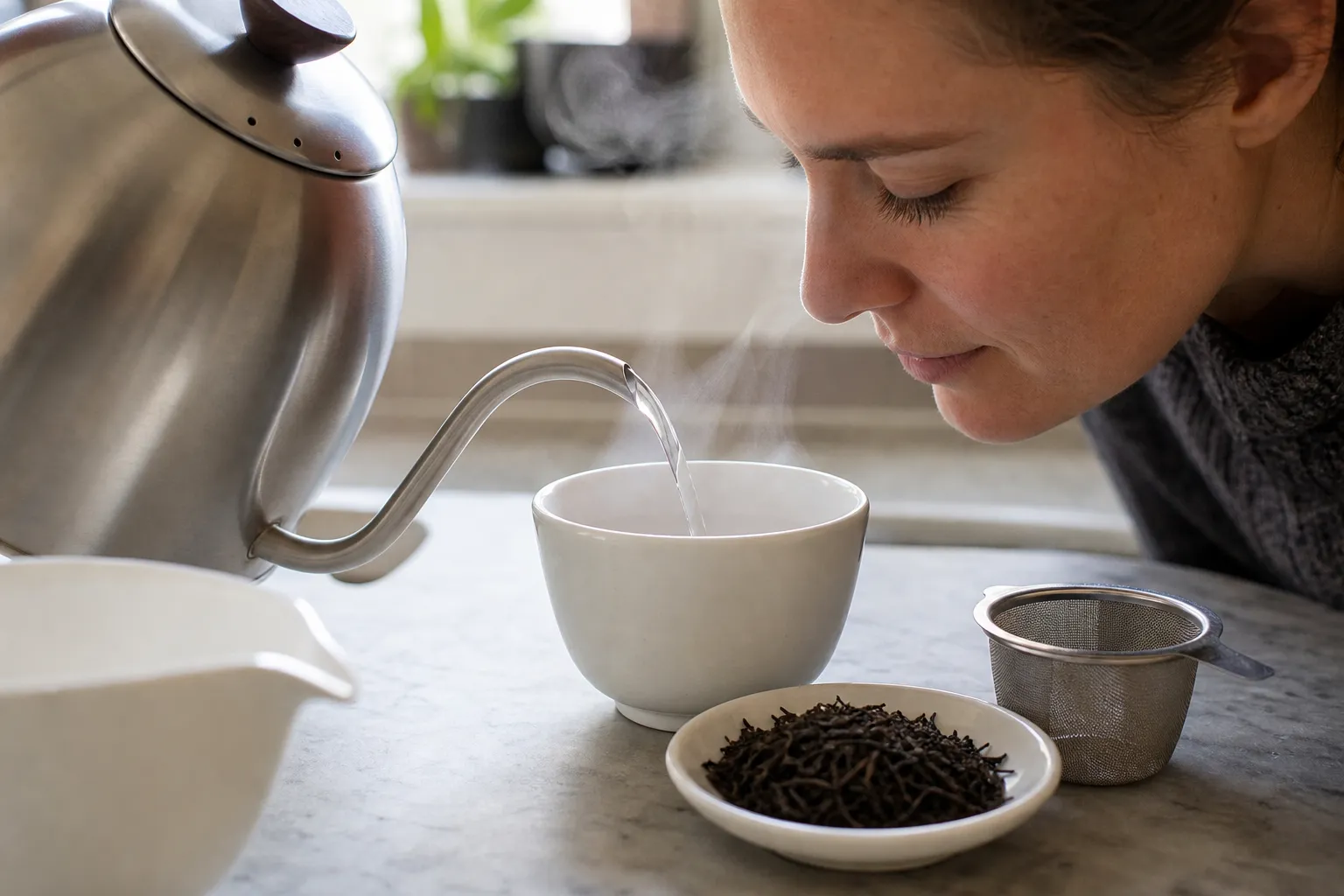
A quick clean-kettle check is useful: heat plain water, pour a little into a clean cup, let it cool slightly, and smell it. If the plain hot water has an obvious stale, metallic, or odd aroma, black tea will not hide it well. If the plain water seems neutral but the tea still tastes harsh, return to brewing variables.
Kettle cleanliness matters because black tea is often brewed hot and strong. Residue in a kettle or tea film in a mug can muddy the cup. This does not need to become a plumbing or appliance investigation. For tea troubleshooting, the narrower question is enough: does a clean vessel and fresh water make the same tea taste clearer?
If yes, keep that change. If no, move to temperature, time, and ratio.
When Cooler Water or a Shorter Steep Helps
Black tea is often brewed with very hot water, but different black teas respond differently. A robust breakfast blend, CTC-style tea, broken-leaf tea, and delicate whole-leaf black tea can behave very differently in the same kitchen. If the cup is bitter, drying, or aggressively dark, slightly cooler water may soften the edge.
You do not need special equipment. Brew the same tea again with water allowed to cool briefly after boiling, or stop the steep 30 to 60 seconds earlier than usual. Keep the leaf amount the same. If the tea becomes less harsh but still tastes like itself, the issue may be over-extraction for that tea and water combination.
Steep time bitterness is easy to confuse with a water problem. A cup that steeps too long can become darker, more drying, and less aromatic. The liquor may look strong but taste blunt. If shortening the steep improves the cup, water may still influence the result, but the immediate fix is method-based.
The brewing ratio matters too. Too much leaf in too little water can make even good water produce a heavy, bitter cup. Too little leaf can create a thin infusion where sourness or a strange edge stands out because there is not enough body to balance it.
Use three separate levers:
- Temperature changes sharpness and extraction speed.
- Steep time changes strength, color, and drying texture.
- Leaf-to-water ratio changes body, concentration, and balance.
Change only one lever at a time. Otherwise, you may improve the cup without learning why.
Common Confusion: Bad Water, Strong Tea, or Astringency?
Astringency is one reason water gets blamed too quickly. It is the dry, grippy sensation that can make the mouth feel slightly rough after a sip. It is not identical to bitterness, though the two often appear together in strong black tea.
A brisk black tea can taste pleasant with milk, sugar, or food and feel too forceful when drunk plain. That does not mean the water is the problem. It may mean the tea style, cut, or blend is built for a stronger cup. On the other hand, if every black tea suddenly tastes metallic or sour from the same kettle, including teas you normally enjoy, water and vessel conditions deserve attention.
Liquor color can also mislead. A darker cup is not automatically better or worse. It is only one clue. If the liquor is unusually dark and rough, steep time or leaf amount may be too high. If the liquor is pale and tastes sour or thin, the brew may be underpowered. If the color looks normal but the aftertaste is metallic, compare water and vessel cleanliness.
Filtration is another common assumption. A filter may improve one person’s cup and flatten another person’s, depending on the water, tea, and preference. This page cannot compare filter types or promise what they will change. The practical test is whether one water choice makes your specific black tea taste clearer, fuller, and more like the leaf.
What You Can Conclude From Taste
You can reasonably conclude that water is involved when the same black tea, brewed the same way, changes noticeably with a different water source or a cleaner kettle. You can also conclude that method is involved when shorter steeping, cooler water, or a changed brewing ratio reduces bitterness, sourness, or metallic aftertaste.
You cannot conclude much more from taste alone. A metallic note does not identify a specific source. Sourness does not prove a water chemistry problem. Bitterness does not prove the water is unsuitable. If a taste concern appears in plain drinking water, persists across many foods or drinks, or raises a household water concern, check local water guidance or appropriate testing rather than relying on tea flavor as the answer.
For the next cup, keep it practical:
- Use fresh water instead of water that has been sitting in the kettle.
- Clean the kettle or brewing vessel and taste plain hot water before brewing.
- Brew the same tea with a different drinking water source.
- Shorten the steep if the liquor is dark, harsh, or drying.
- Use slightly cooler water if the tea tastes sharp from the first sip.
- Adjust the tea amount if the cup is heavy and bitter or thin and sour.
Short FAQ
Why does my black tea taste bitter after changing water?
The new water may be making the tea seem stronger, sharper, or more drying, but steep time, temperature, and tea amount can cause the same effect. Brew the same tea with only the water changed, then test a shorter steep if both cups are still harsh.
Does metallic black tea mean the water is the cause?
Not by itself. A metallic note is a useful clue, especially if it appears in plain hot water or in every tea from the same kettle. It still needs comparison with fresh water and a clean vessel before you can blame the water with confidence.
Can sour black tea come from the water?
It can, but sourness may also come from a weak brew, stale tea, storage issues, or a black tea style with naturally tangy notes. If the cup is pale and thin, adjust the leaf-to-water ratio before assuming the water is the main problem.
Should I use filtered water for black tea?
Use the water that makes your tea taste clearer and more balanced in a side-by-side brew. Filtered water is not automatically better for every black tea, and taste alone cannot verify what a filter changes.
The Short Answer for the Next Brew
When black tea tastes sour, metallic, or bitter from the water, handle it as a comparison problem. Brew the same tea again with fresh water, a clean kettle, and one controlled change. If the off-note disappears with different water, water was likely part of the flavor problem. If it improves with a shorter steep, cooler water, or a different brewing ratio, the method was probably the bigger lever.
The best next cup is not the most complicated one. Use a clean vessel, fresh water, a measured amount of tea, and a repeatable steep. Then taste for aroma, liquor color, body, astringency, sour edge, bitterness, and any metallic note. That small routine gives you more useful information than guessing from one disappointing mug.