Brewing Troubleshooting
Does Boiling Water Make Black Tea Bitter
Boiling water can make some black tea taste sharper, stronger, or more drying, but it is rarely the only reason a cup turns bitter. The practical answer to “does boiling water make black tea bitter” is: sometimes, especially when very hot water is combined with a long steep, too much leaf, fine tea particles, older tea, or a naturally brisk style.
If your cup tastes harsh, do not blame the kettle alone. Look at the whole brew: how much tea you used, how long it sat, how small the leaf pieces are, how fresh the dry tea smells, and whether the finish feels clean, dry, flat, or biting.
upward
Start with the broader guide
Use the broader guide first if you need the full scope before this page.
The Short Answer in the Cup
Many black teas are commonly brewed with very hot water. A full-bodied breakfast blend, a malty Assam-style tea, or a brisk Ceylon-style cup may be expected to taste bold rather than soft. In those cases, heat can help bring out the strong black tea taste the drinker wants.
The problem starts when strength turns into harshness. A cup may taste bitter, raspy, or overly dry when several brewing choices pile up at once. Boiling water can make those edges more noticeable, but the better question is not only “hot or not hot?” It is “hot, for how long, with how much leaf, and what kind of leaf?”
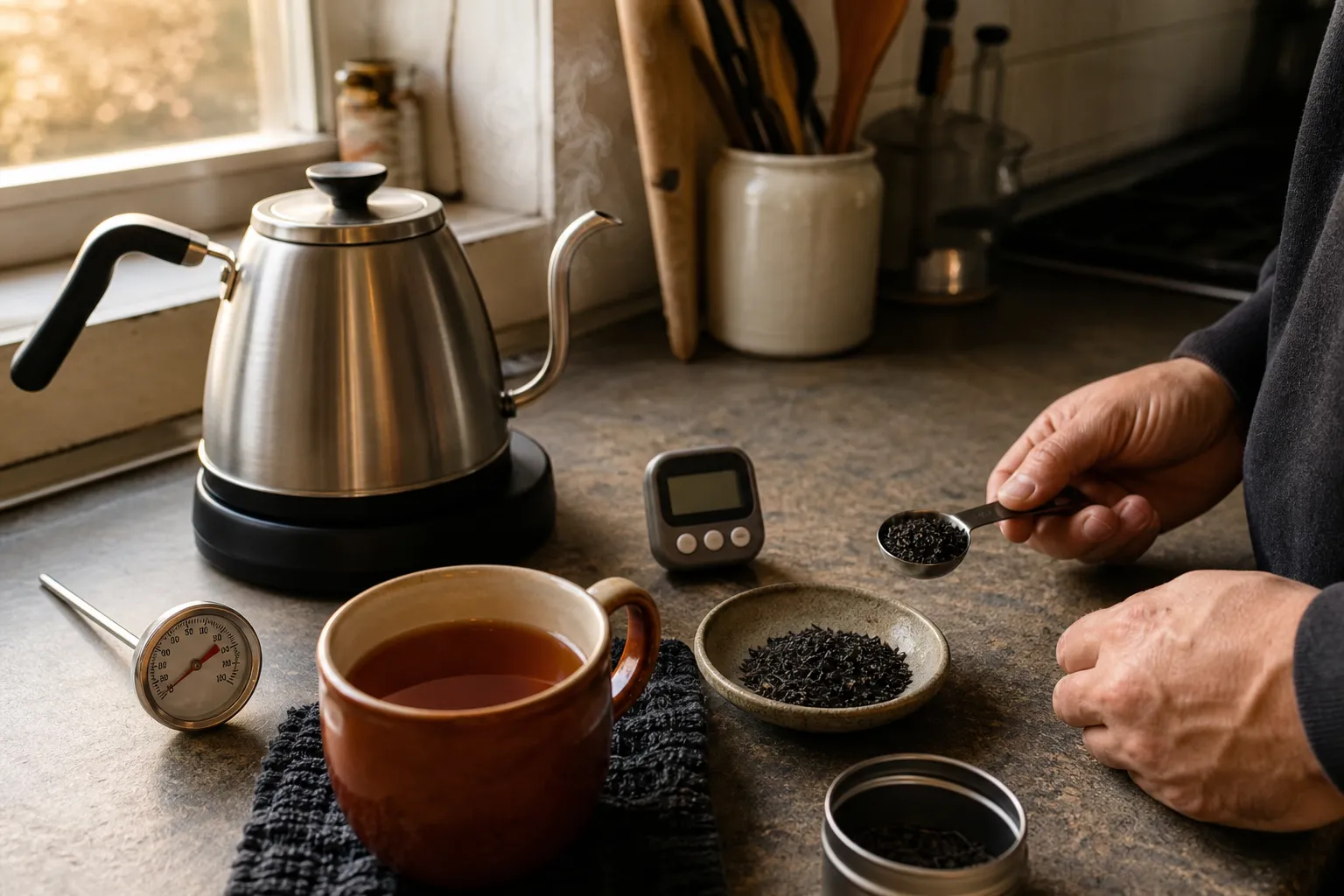
If you are troubleshooting bitter black tea, change one variable at a time. Shorten the steep first. If the cup is still rough, use slightly less leaf. If it still feels sharp, try water that has cooled briefly after boiling. That gives you a clearer comparison than guessing from one overbrewed mug.
What Else Makes Black Tea Taste Bitter?
Bitterness is not always a simple temperature problem. The same kettle, mug, and water can produce a pleasant cup one day and a rough cup another day if the leaf amount or steeping time changes.
Steeping time is usually the first place to look.
A black tea that tastes rounded at a shorter steep may become heavy, dry, or bitter when left too long. If you forget the tea in the pot, boiling water may get blamed, but the extra minutes may be doing much of the damage. Brew the same tea again and stop earlier. If the aroma stays present while the harsh finish drops away, time was likely a major factor.
Leaf amount changes the whole brew.
Too much tea leaf can make the cup feel crowded: darker liquor, thicker body, stronger aroma, and a finish that may turn biting. This is especially easy with small broken leaves or dense tea in a bag, because a spoonful can contain more brewing surface than it appears to. If the cup tastes bitter and heavy at the same time, reduce the leaf before assuming the tea itself is poor.
Leaf cut matters.
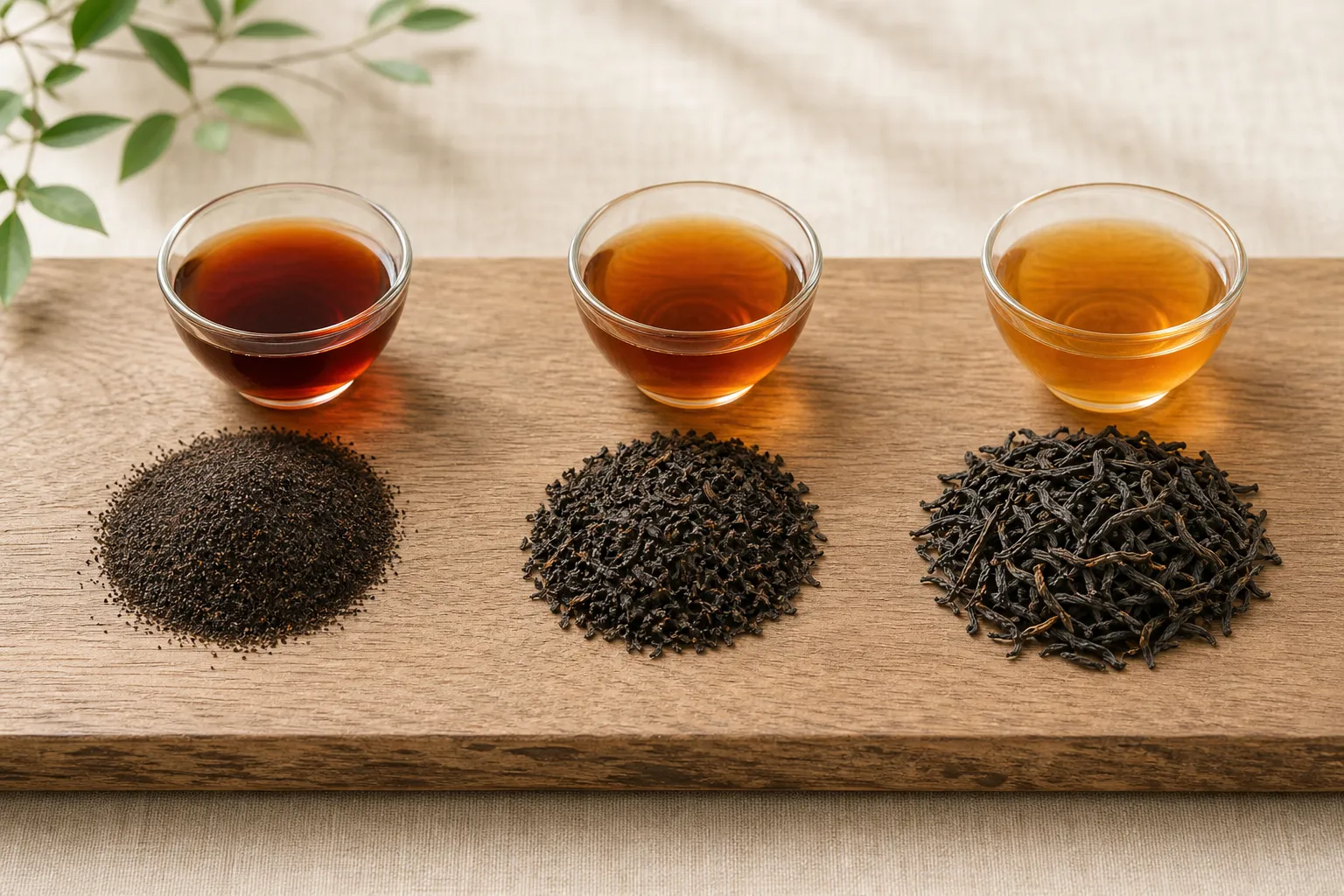
Fine particles, dustier tea, and very small broken leaves tend to brew quickly in everyday use. They can be useful for a strong morning cup, but they leave less room for error. A whole-leaf or larger broken-leaf tea may give you a wider window before the cup feels harsh. This does not make small leaf tea bad; it means the clock matters more.
Freshness affects the impression.
Older black tea does not always become bitter in a clean way. It may taste flat, woody, stale, or oddly sharp. If the dry leaf has little aroma, the brewed tea may lack sweetness or lift, making any roughness stand out more. Lowering the temperature may soften the cup slightly, but it will not bring back lost fragrance.
Water can change the taste.
Some water makes tea feel bright; some makes it taste dull, chalky, thin, or metallic. If every black tea you brew tastes harsh, even with short steeps and moderate leaf, compare the same tea with a different water source. You are simply asking whether the unpleasant edge follows the tea or follows the water.
Bitterness and Astringency Are Not the Same
Many drinkers use “bitter” for several different sensations. That is understandable, but it can lead to the wrong fix. A cup can be bitter, astringent, strong, brisk, stale, or just brewed in a style you do not enjoy.
Bitterness is a taste. It often registers at the back of the tongue or as a hard edge in the finish. Astringency is more of a drying or gripping feeling in the mouth. It can make the tongue and gums feel rough, as if the cup has pulled moisture away. A tea may be astringent without tasting sharply bitter, and some drinkers enjoy that brisk, drying structure with milk, sugar, lemon, or food.
This is why hot water tea astringency gets confused with boiling water black tea bitterness. A very hot brew can feel bold and drying, especially when the tea is steeped long or made with fine leaf. But the cup may not be bitter in the narrow sense. It may be brisk, strong, or tannic in feel without being unpleasant to everyone.
Use sensory cues before you adjust the kettle
- If the tea smells good but finishes harsh, shorten the steep.
- If the liquor is very dark and heavy, use less leaf.
- If the mouthfeel is dry but the flavor is lively, you may be tasting briskness rather than a flaw.
- If the aroma is flat and the finish is woody, freshness may be the issue.
- If the same roughness appears across many teas, check the water.
These observations are more useful than treating boiling water as a universal mistake.
When Boiling Water Is More Likely to Be a Problem
Boiling water is more likely to push a cup toward bitterness when the tea already brews fast or has little margin for error. Fine tea bags, small broken leaves, and blends intended for a quick strong cup can become intense quickly. If you pour boiling water over them and let them sit while you answer a message, the result may be darker, drier, and harsher than intended.
It can also be a problem when you prefer a softer black tea style. Some drinkers want round body, gentle malt, fruit, honeyed aroma, or a smooth finish. For that preference, a slightly cooler pour or a shorter steep may make the cup feel more balanced. This is not about finding one correct black tea brewing temperature. It is about matching the method to the cup you want.
Boiling water may also expose weakness in older tea. If the leaf has lost aroma, a very hot, long steep may emphasize flatness and roughness rather than fragrance. The fix may be partly brewing-related, but it may also be a sign to use that tea differently: brew it shorter, drink it with milk, blend it with fresher tea if that suits your kitchen habits, or stop expecting it to taste like a newly opened package.
There is one important exception: a strong cup is not automatically a bad cup. Some black tea drinkers like briskness, dark color, and a firm finish. A tea that seems harsh when drunk plain may taste balanced with milk. A breakfast-style blend may be designed around strength rather than delicacy. If the cup tastes bold but not unpleasant to you, there is no need to fix it.
A Simple Way to Troubleshoot Bitter Black Tea
The most useful test is a small side-by-side comparison. Keep the tea and water the same, then change only one brewing variable. You are not trying to run a formal test; you are trying to learn what your cup responds to.
Start with steeping time. Brew the tea as usual, then brew a second cup with the same amount of leaf and a shorter steep. If the shorter cup keeps the aroma and loses the harsh finish, you have a clear next step.
If it still tastes bitter, reduce the leaf. Use the same water temperature and steeping time, but slightly less tea. This is especially helpful with small leaf tea, dense blends, or bags that produce a strong color quickly.
If the cup remains rough, adjust the water temperature. Boil the water, then let it stand briefly before pouring. You do not need to obsess over exact numbers for this practical check. You are looking for whether a less aggressive pour makes the tea smoother without making it thin.
If the tea becomes weak when you lower the temperature, shorten the steep instead of cooling the water further. A flat, pale cup is not necessarily better than a bold one. The goal is balance: enough aroma, enough body, and a finish that does not scrape.
You can also change the serving style. Some brisk black teas are more enjoyable with milk, a little sweetener, or food. That does not hide a brewing mistake in every case; it may simply fit the style. Plain drinking and milk tea often reward different levels of strength.
Bitter, Strong, Brisk, and Harsh
A strong black tea taste can be satisfying. It may have depth, color, aroma, and body. Briskness can feel lively and refreshing. Harshness is different: it is the point where the cup feels sharp, rough, or unpleasantly drying beyond your preference.
Dark cup, heavy body, rough finish
This may suggest too much leaf or too long a steep. First try shortening time, then reducing leaf.
Good aroma, dry mouthfeel, clean finish
This may suggest a brisk black tea style. Keep the method or add milk if preferred.
Sharp taste with little aroma
This may suggest older tea or overbrewing. Check freshness and shorten the steep.
Bitter edge from fine tea particles
This may suggest a fast-brewing leaf form. Use less tea or steep briefly.
Harshness across many teas
This may suggest water or habitual oversteeping. Compare water and timing.
This kind of language keeps the focus on what you can observe. Without stronger source material for this page, it would be too confident to name one exact temperature or one single cause. The sounder boundary is simple: boiling water can contribute to a bitter or astringent cup, but the result depends on the rest of the brew.
What to Try Next Time
If your black tea tastes bitter, try this order:
- Brew the same tea for less time.
- Use slightly less leaf.
- Watch small leaf, dustier tea, and tea bags more closely.
- Let just-boiled water cool briefly if the cup still feels harsh.
- Check whether the tea smells fresh before brewing.
- Compare water if many teas taste rough in the same way.
This order helps you avoid overcorrecting. Many bitter black tea causes are simple: the tea sat too long, the leaf amount was high, or the tea brewed faster than expected. If you immediately drop the temperature too far, you may get a thin cup and still miss the real problem.
A good black tea does not have to be soft. It can be brisk, full, malty, dark, bright, or firm. The question is whether the cup has shape and aroma, or whether it collapses into roughness. Boiling water may be part of that answer, but it is only one part. For most readers, the cleanest fix is not a new rule about the kettle. It is a smaller adjustment: shorter time, a little less leaf, closer attention to leaf size, and a willingness to brew for the taste you actually want.