Black tea troubleshooting
Why Old Black Tea Tastes Weak, Stale, or Sharply Bitter
Old black tea can taste weak, stale, or sharply bitter for several different reasons. Start with the practical checks before blaming age alone: smell the dry leaf, look at the package, check the storage container, then review your leaf amount, water temperature, and steeping time.
A flat cup may come from tired leaf, but it may also come from too little tea, water that cooled too much, a short infusion, or a naturally light-bodied black tea. A harsh bitter cup may be over-steeped, over-leafed, brewed too aggressively for the leaf form, or affected by poor storage. With no strong public source set attached to this page, the best answer is observation-based: judge what you can smell, see, brew, and taste.
upward
Start with the broader guide
Use the broader guide first if you need the full scope before this page.
Start With the Leaf, Not the Label
Before adjusting everything at once, separate the problem into three simple questions.
Does the dry leaf still smell like tea?
Open the package and smell the leaves before brewing. A lively black tea may suggest malt, fruit, cocoa, honey, smoke, spice, wood, flowers, or a clean tannic edge, depending on the style. An older tea that has gone tired may smell faint, papery, dusty, cupboard-like, or hard to place. That smell does not prove quality by itself, but it gives you a useful first clue.
What does the brewed liquor look like?
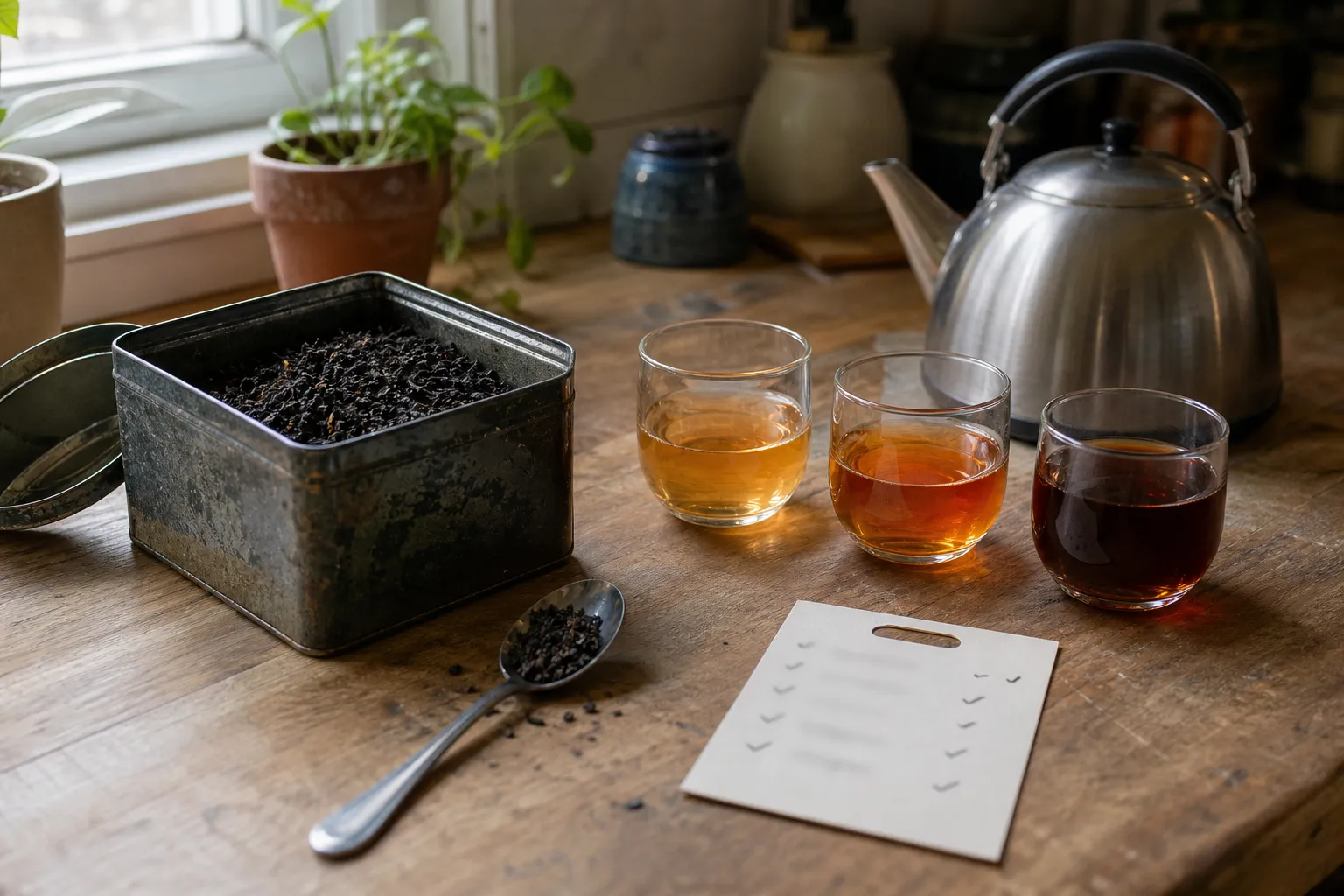
Black tea liquor color varies by origin, grade, blend, leaf size, and brewing method. Still, if a tea you remember as coppery, amber, reddish-brown, or deep brown now brews unusually pale under the same method, the weak flavor may be tied to either leaf condition or brewing strength. If the liquor is dark but the taste is thin, the issue may be body and aroma rather than color.
Where does the unpleasantness sit?
Weak tea often feels watery, hollow, or short in finish. Stale black tea taste tends to feel flat, muted, dull, or storage-like. Old tea bitterness may feel sharp on the tongue, drying along the gums, or rough after swallowing. These are different problems, even when they come from the same forgotten tin.
If you have a fresher black tea nearby, brew it next to the old one using the same cup, water, leaf amount, and steeping time. This is not a formal tasting test. It simply removes a few variables so you can tell whether the old tea is truly dull or whether the method is making it seem dull.
If the Cup Is Weak, Check Brewing First
When old black tea tastes weak, begin with the variables you can change.
Use enough leaf
A common cause of weak black tea is too little tea for the amount of water. Loose leaves vary in size and density: a teaspoon of large twisted leaf is not the same as a teaspoon of small broken leaf. If you measure by spoon and the tea looks bulky, try a little more leaf before deciding it has lost its character.
Check the steeping time
A short infusion can make even a sturdy black tea seem watery. If the dry leaf still smells recognizably pleasant, extend the steep slightly and taste again. Do not jump straight from a short brew to a very long one; that can move the cup from weak to rough without showing you the useful middle range.
Check the water temperature
Black tea is usually brewed with hot water, but if the water cools too much before it reaches the leaves, extraction may be light. This can happen in a cold mug, a thin pot, or a large vessel that sheds heat quickly. If the cup tastes weak but not stale, hotter water and a warmed vessel may help.
Look at leaf form
Small broken leaves and tea bag fannings usually infuse faster than large whole leaves. A large-leaf black tea may need more time or a higher leaf-to-water ratio to show body. A fine-cut tea may become strong quickly and then turn harsh if pushed too far. If the old tea is a different leaf form from what you usually drink, the problem may be expectation as much as age.
Also consider the style. Some black teas are brisk and strong; others are aromatic, soft, or light-bodied. An older Darjeeling-style black tea, a mellow golden-tip tea, a smoky tea, and a breakfast blend should not be judged by the same strength standard. “Black tea loses flavor” is a reasonable concern, but not every quiet cup has failed in the same way.
If the Cup Tastes Stale, Read the Storage Clues
Staleness is often noticeable before the tea touches water. If the dry leaf smells more like cardboard, pantry air, old paper, or a mixed cupboard than tea, storage may be part of the answer.
Look at the package condition. Is the inner pouch still sealed, or has it been folded loosely for months? Is the tin tight, or does the lid sit unevenly? Was the tea kept near spices, coffee, cleaning products, smoke, or strongly scented foods? Black tea can carry surrounding odors from ordinary kitchen storage, so a stale tea aroma may reflect the environment as much as the age on the label.
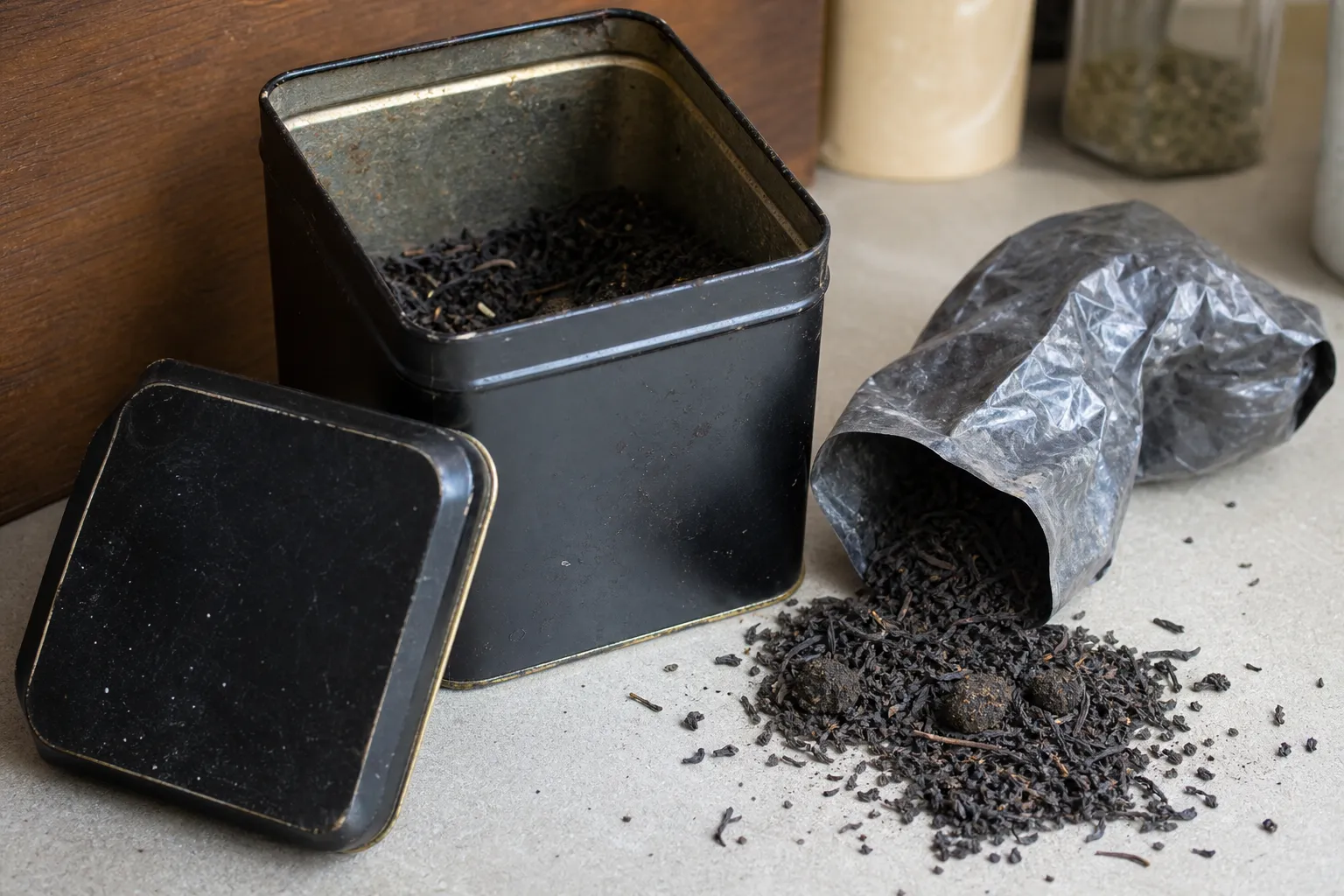
Inspect the storage container too. A clean, dry, tightly closing container gives tea a better chance of staying pleasant than an open bag or a decorative tin with a loose lid. If the empty container smells stale, the tea may carry that smell into the cup. If it has crumbs, residue, dampness, or old mixed teas inside, the flavor problem is not only a brewing issue.
Practical storage boundary
Light, heat, air, and moisture are often mentioned in tea storage advice. This page does not have source material strong enough to make a detailed technical claim about what each one does inside the leaf. The practical point is narrower: if the package has been open, warm, loosely closed, or sitting in a scented place, and the leaves smell dull or foreign, storage exposure is a reasonable suspect.
Do not try to rescue visibly questionable tea by brewing it stronger. If the leaf looks clumped, damp, unusually discolored, dirty, or contaminated by debris, the problem has moved beyond weak flavor. A simple cup-level rule is enough here: do not drink tea that looks or smells clearly wrong.
If Old Tea Is Bitter Instead of Weak
Bitter old black tea can be confusing because many people expect old tea to fade, not bite. A sharp cup does not automatically mean age created bitterness. It may mean the brewing method is too forceful for the leaf in front of you.
Start with steeping time. A long infusion can make black tea taste more drying and severe, especially if the leaf is small or broken. Brew a second cup with the same amount of leaf but a shorter steep. If the bitterness drops and the aroma improves, the method was probably a major part of the problem.
Then check the amount of leaf. Too much tea in too little water can create intensity without balance. That is different from a full-bodied cup. A balanced strong black tea has aroma, structure, and finish. An over-leafed cup may have dark color and force but little sweetness, little aroma, and a rough edge.
Water temperature can also change how severe the cup feels. If the tea is delicate, broken, or already muted in aroma, very hot water plus a long steep may emphasize harshness more than flavor. That does not mean cooler water is always better for black tea. It means this particular old tea may deserve a gentler test before you decide it is unusable.
Taste the bitterness alongside mouthfeel. Briskness is valued in many black teas: it can feel lively, clean, and pleasantly drying, especially with milk or food. Sharp bitterness feels narrower. It arrives fast, dominates the tongue, and leaves the cup feeling stripped rather than structured. That distinction is subjective, but it prevents a common mistake: not every drying black tea is flawed, and not every bitter old black tea is bitter because it is old.
A Quick Troubleshooting Path for One Old Tin
Use this sequence when you are unsure whether to keep, adjust, or discard an older black tea.
- 1. Smell the dry leaf in its actual container. If it smells clean but faint, continue. If it smells strongly of cupboard air, perfume, dampness, smoke, or something unrelated to tea, note that before brewing.
- 2. Check the package and container. A sealed pouch, clean tin, or well-closed jar tells a different story from a torn bag in a warm kitchen drawer.
- 3. Brew a small cup, not a full pot. Use a moderate leaf-to-water ratio, hot water, and your normal black tea steeping time.
- 4. If it is weak, change only one variable. Add more leaf or extend the steep slightly. If the cup gains body and aroma, the tea may still be useful.
- 5. If it is sharply bitter, change only one variable. Shorten the steep or use slightly less leaf. If the harshness softens, brewing strength was part of the issue.
- 6. If it is stale at every strength, accept the limit. More leaf can make stale tea stronger, but it will not necessarily make it taste fresher.
This check will not identify the exact cause in a laboratory sense. It helps you avoid two everyday mistakes: blaming the tea when the brew was too light, and over-brewing old tea in an attempt to force flavor back into it.
Common Confusions About Old Black Tea Flavor
Age is not the only variable
An old tea can be weak because it has faded, but a fresh tea can also taste weak if the leaf amount is low, the water is not hot enough, or the infusion is too short. Likewise, an old tea can taste bitter because it was brewed aggressively, not because age alone changed it.
Color is only one clue
Dark liquor can still taste stale. Pale liquor can still be aromatic. Black tea liquor color is useful, but it is only one clue. Aroma, body, finish, and dry leaf condition matter more when diagnosing a disappointing cup.
Black teas do not all decline alike
Black tea is not one single product. Leaf size, processing style, blend purpose, packaging, storage, and personal preference all affect what “old” tastes like in the cup. A tea bought for milk may seem blunt when taken plain; a fragrant whole-leaf tea may seem weak if brewed like a breakfast blend.
Market language may not explain the cup
Words such as “aged,” “vintage,” “reserve,” or “mature” may appear on some tea products, but they do not automatically explain why a forgotten everyday black tea tastes flat or bitter. For this question, the useful evidence stays close to the cup: how the leaf smells, how it brews, how it feels, and how it was stored.
What This Page Can Conclude
This page can help you make a practical cup-level judgment. If the tea smells clean but brews thin, adjust leaf amount, water temperature, and steeping time. If it smells like its container or cupboard, storage is likely part of the stale character. If it tastes sharply bitter, test a shorter or lighter brew before deciding the tea itself is the only problem. If the leaf looks or smells clearly wrong, brewing is not the solution.
What this page cannot do is identify the exact mechanism behind every changed cup. The material available for this article does not include citable public sources, professional tasting records, storage science, or verified firsthand tests. So terms such as aroma loss, flavor degradation, moisture effects, and age-related bitterness should be read as cautious cup descriptions, not as technical findings.
The useful takeaway is modest: diagnose old black tea by changing one brewing variable at a time and by paying attention to dry leaf smell, package condition, liquor color, aroma, body, and mouthfeel. If adjustment brings back balance, the tea may still have a place in your cupboard. If every version tastes flat, stale, or harsh, the clearest answer may be that the leaf is no longer giving the cup you want.