Brewing Troubleshooting
Why Black Tea Tastes Weak Even After a Long Steep
Black tea can taste weak after a long steep because time is only one part of strength. If there is too much water for the amount of leaf, the water has cooled, the tea is stale, or the leaves have lost aroma in storage, a longer steep may only make the cup flatter, drier, or more bitter—not fuller.
That is the practical answer to why black tea tastes weak: a satisfying cup depends on leaf amount, water heat, freshness, leaf form, storage, and mouthfeel. Steeping time can deepen color and astringency, but it cannot always create aroma, body, or flavor that was never extracted well or is no longer present in the leaf.
upward
Start with the broader guide
Use the broader guide first if you need the full scope before this page.
Read the Cup Before Changing the Timer
A weak black tea usually gives a few clues:
- The liquor looks pale, watery, or dull.
- The aroma is faint even while the cup is hot.
- The first sip feels thin across the tongue.
- The finish disappears quickly after swallowing.
- The tea becomes dry or sharp before it becomes flavorful.
- Milk turns it into a bland, beige cup instead of a fuller drink.
Those signs do not all mean the same thing. Pale liquor can point to too little leaf, cooler water, or a naturally lighter tea style. A faint aroma may suggest stale black tea leaves or poor storage. Thin body often points to the tea to water ratio. Harshness without depth usually means extra steeping is pulling out more dryness than flavor.
A strong cup is not only a dark cup. It may be brisk, malty, sweet, fruity, smoky, spicy, full-bodied, or cleanly drying, depending on the tea. A dark but hollow cup can still taste weak.
The Most Common Cause Is Too Much Water
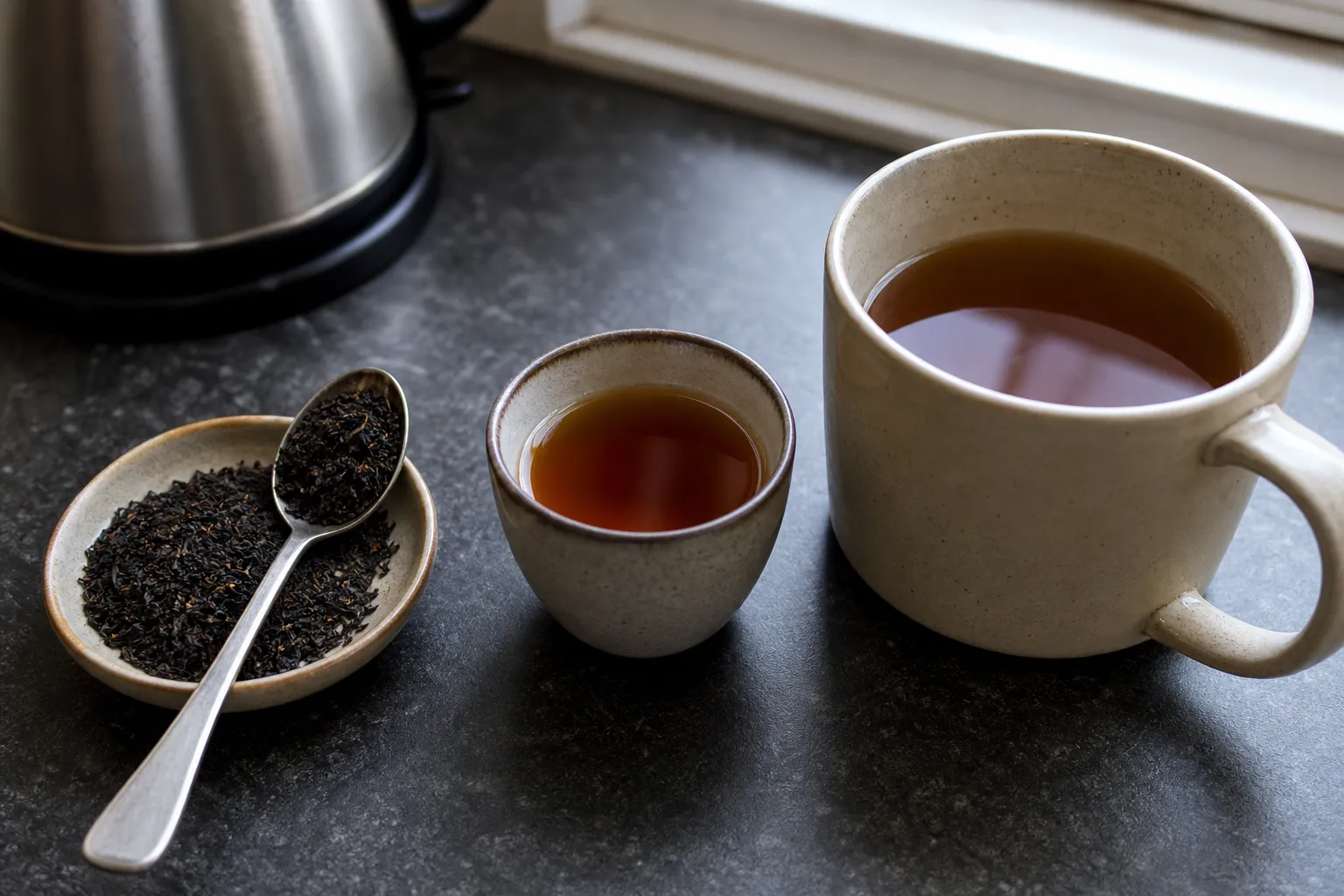
If the tea tastes watery after a long steep, check the tea to water ratio first. A small amount of leaf in a large mug can taste thin no matter how long it sits.
This is easy to miss with oversized mugs, travel cups, and teapots. A spoonful that works in a small cup may not carry enough flavor in a much larger vessel. If the liquor has some color but the taste feels hollow, the amount of leaf may simply be too low for the water volume.
Try this before adding more minutes
- Brew the same tea again with the same water and steep time.
- Increase the leaf amount instead of increasing the time.
- Taste before adding milk, sugar, lemon, or spices.
- Notice whether the body improves, not just the color.
If the second cup has more aroma and body, the problem was probably concentration, not time. From there, adjust for the way you drink it: a little more leaf for a fuller plain cup, or more again if the tea needs to stand up to milk.
Cooler Water Can Make a Long Steep Taste Short
Black tea water temperature matters because cooler water can leave the cup underpowered even after several minutes. This can happen when boiled water sits too long, a cold pot absorbs heat, or a large mug cools the brew quickly.
You do not need a laboratory setup. Watch the practical signs: pale color, slow aroma, and a soft, watery taste can all suggest the water was not hot enough for that leaf and vessel.
Try a side-by-side adjustment
- Warm the mug or pot with hot water, then discard it.
- Use freshly heated water.
- Brew the same amount of tea for the same time.
- Cover the cup or pot while it steeps.
- Compare aroma and body, not only darkness.
If the hotter, covered brew tastes fuller, temperature loss was part of the issue. If it still tastes weak, look next at leaf amount, freshness, and storage.
Very long steeping is not always a rescue method. Black tea astringency can be pleasant when it gives structure and briskness, but a dry, rough cup with little aroma is not strong in a satisfying way. It is just overextended in one direction.
Long Steeping Cannot Restore Lost Aroma
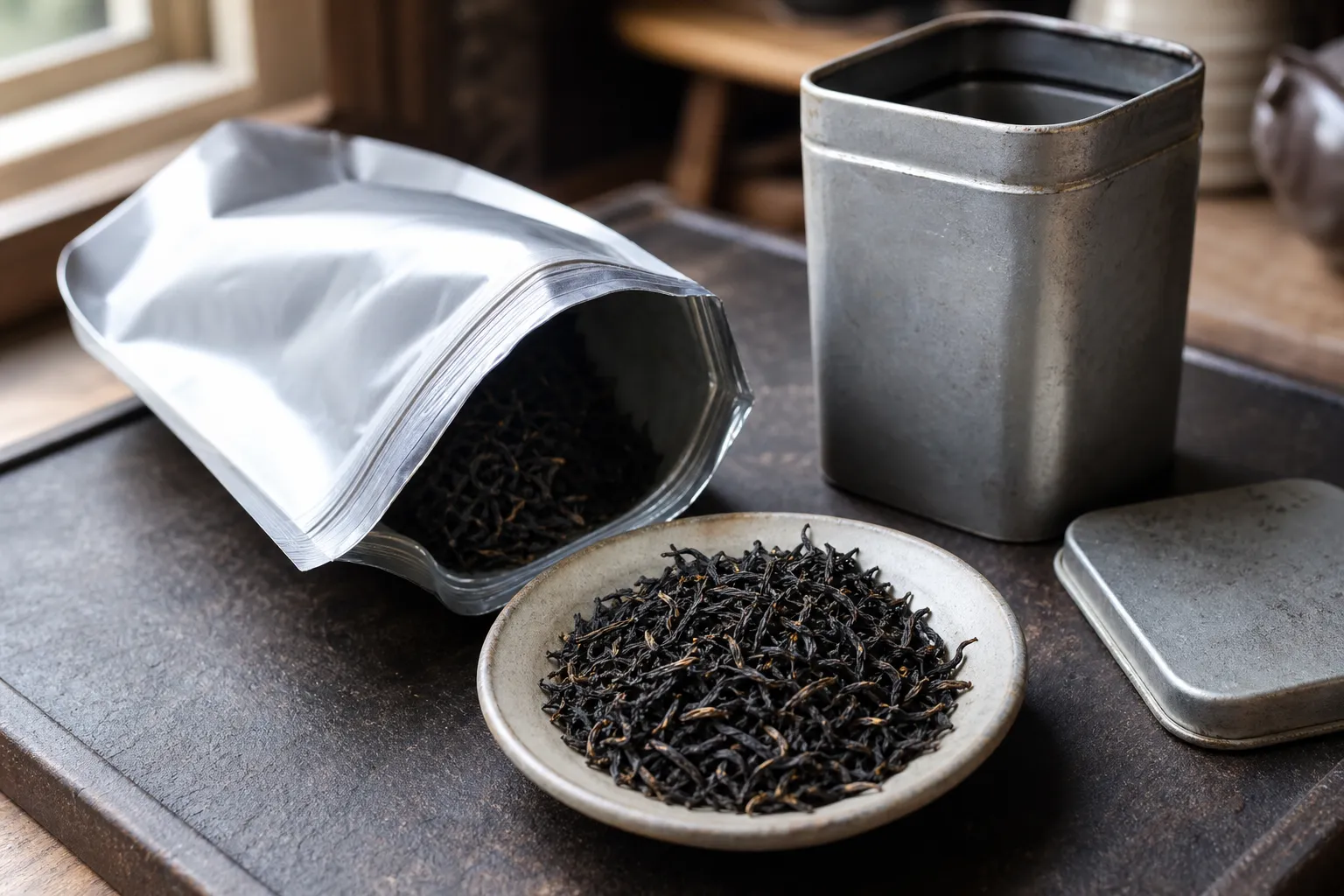
If black tea lacks flavor even with enough leaf and hot water, the leaves may be tired. Stale black tea leaves can still color the water, but the cup may smell flat, taste dusty, or feel empty in the finish.
Check the dry leaf before brewing
- Does it smell like tea, or mostly like paper, cupboard, or nothing?
- Does the package close tightly?
- Has it been stored near spices, coffee, soap, heat, sunlight, or damp air?
- Has the same thin bag been opened many times?
- Does the brewed tea show aroma early, or only color?
Black tea storage condition matters because tea carries much of its character through aroma. Air, moisture, heat, light, and strong neighboring smells can make the cup lose definition. A long steep can pull more color from the leaves, but it cannot reliably rebuild aroma that has faded.
For a quick check, brew a small, concentrated cup from the same leaves. Use more leaf than usual in less water, but keep the steep moderate. If even that cup smells faint and tastes muted, the tea may be past its best drinking condition. It may still work in sweetened tea, spiced preparations, cooking, or strong blends, but it may not give a clear plain cup.
Leaf Form Changes How Weakness Shows Up
Leaf form can affect how a weak cup behaves. You do not need a full grading lesson; just look at what is in the infuser or bag.
Whole, twisted, broken, fine, and compressed-looking leaves do not brew in exactly the same way. Smaller pieces may darken the liquor quickly and turn brisk or drying sooner. Larger pieces may need enough room, enough heat, and enough leaf weight to show body. A tea bag can look dark fast and still taste flat if the leaf inside lacks aroma or if the mug is too large for one bag.
That is why weak tea liquor color can be misleading. A pale cup may be weak, but a dark cup can also be thin. Darkness means something has moved into the water; it does not guarantee aroma, sweetness, body, or balance.
Loose Leaf
Give the leaves room to open or move.
Tea Bags
Test whether one bag is enough for the mug size.
Very Large Mugs
Try a smaller cup before blaming the tea.
Broken or Fine Leaf
Shorten the steep if dryness appears before flavor.
Larger Leaf
Keep the water hot and adjust leaf amount before adding many extra minutes.
The point is not that one form is always better. The same steep time can produce different results depending on the leaf.
Sometimes “Weak” Means the Style Is Not What You Expected
Sometimes weak black tea is not a brewing failure. It may be a mismatch between the tea and the cup you wanted.
If you expected a bold breakfast-style tea, a gentler black tea may seem too light even when brewed well. Another drinker may call the same cup smooth and balanced. If you plan to add milk, you may need more body and briskness than you would choose for drinking plain. If you want a soft afternoon cup, that lighter style may be exactly right.
Thin
Little weight or texture on the tongue.
Flat
Low aroma and little finish.
Brisk
Lively, clean, and lightly drying.
Astringent
Noticeably drying or gripping.
Full-bodied
Rounded, present, and not watery.
Fragrant
Clear aroma before and during sipping.
These words point to different fixes. A thin black tea usually needs more leaf or less water. A flat tea may be stale or poorly stored. A brisk but shallow tea may need a ratio adjustment. A very astringent cup may have steeped too long for that leaf, even if it still does not taste rich.
A Short Troubleshooting Path for the Next Cup
Change one variable at a time so the answer stays visible.
- First, keep the same tea and use less water or more leaf. If the cup improves, ratio was the main issue.
- Second, keep that stronger ratio and focus on heat. Warm the vessel, use freshly heated water, and cover the cup or pot while brewing. If aroma and body improve, temperature loss was part of the problem.
- Third, smell the dry leaf and check the package. If the tea smells faint, papery, dusty, or like the cupboard around it, storage or age may be limiting the cup.
- Fourth, watch what happens as the steep gets longer. If the tea becomes more drying but not more flavorful, stop treating time as the main solution. Use more leaf, a smaller cup, or a different tea style.
- Fifth, taste before additions. Milk, sweeteners, lemon, and spices can be enjoyable, but they make troubleshooting harder. A tea that is already thin will usually seem weaker once diluted or covered by other flavors.
What a Long Steep Can and Cannot Tell You
A long steep can show that the tea still has color, grip, bitterness, or structure to give. It can also show whether the cup has enough presence for milk.
But it cannot tell you everything about quality, origin, grade, or freshness. It cannot turn a low-aroma tea into a fragrant one. It cannot fix a very diluted ratio. It cannot fully overcome poor storage. It also cannot mean the tea has no use at all; a plain cup, milk tea, iced tea, spiced tea, and cooking all ask different things from the leaf.
The most useful frame is the one you can verify at home: amount of tea, amount of water, water heat, steep time, dry-leaf aroma, storage condition, liquor color, cup aroma, body, and astringency. Those observations are enough to solve many weak-tea problems without pretending one mug can explain every cause.
The Bottom Line
If black tea tastes weak after a long steep, do not keep extending the timer as the first fix. Increase the leaf-to-water strength, keep the water hot, check whether the tea still smells fresh, and judge the cup by aroma, body, and finish rather than color alone.
A stronger black tea is usually built before the timer starts: enough leaf, a suitable vessel, hot water, decent storage, and a tea style that matches how you want to drink it. Time can help, but it is not a substitute for those basics.