
Gongfu brewing answer
How Many Times Can You Infuse Black Tea Gongfu Style
A realistic starting point is about 3 to 6 gongfu-style infusions for many loose black teas. Broken or very fine leaves may give only 1 to 3 satisfying cups, while intact, well-stored whole leaves may last longer if the later cups still taste pleasant.
That range is practical brewing guidance, not a fixed standard. For multiple infusions black tea, the useful question is not “What number is correct?” but “Does the next cup still have aroma, color, body, sweetness, briskness, and clean flavor?”
If the liquor turns pale, the aroma fades, the body feels hollow, or the cup tastes mostly like hot water with a rough edge, the tea is finished for that session.
upward
Start with the broader guide
Use the broader guide first if you need the full scope before this page.
The Practical Infusion Range
Gongfu brewing uses more leaf, less water, and shorter steeps than a large Western-style mug or pot. Instead of pulling most of the flavor into one long infusion, you take several small cups as the leaf opens, peaks, and fades.
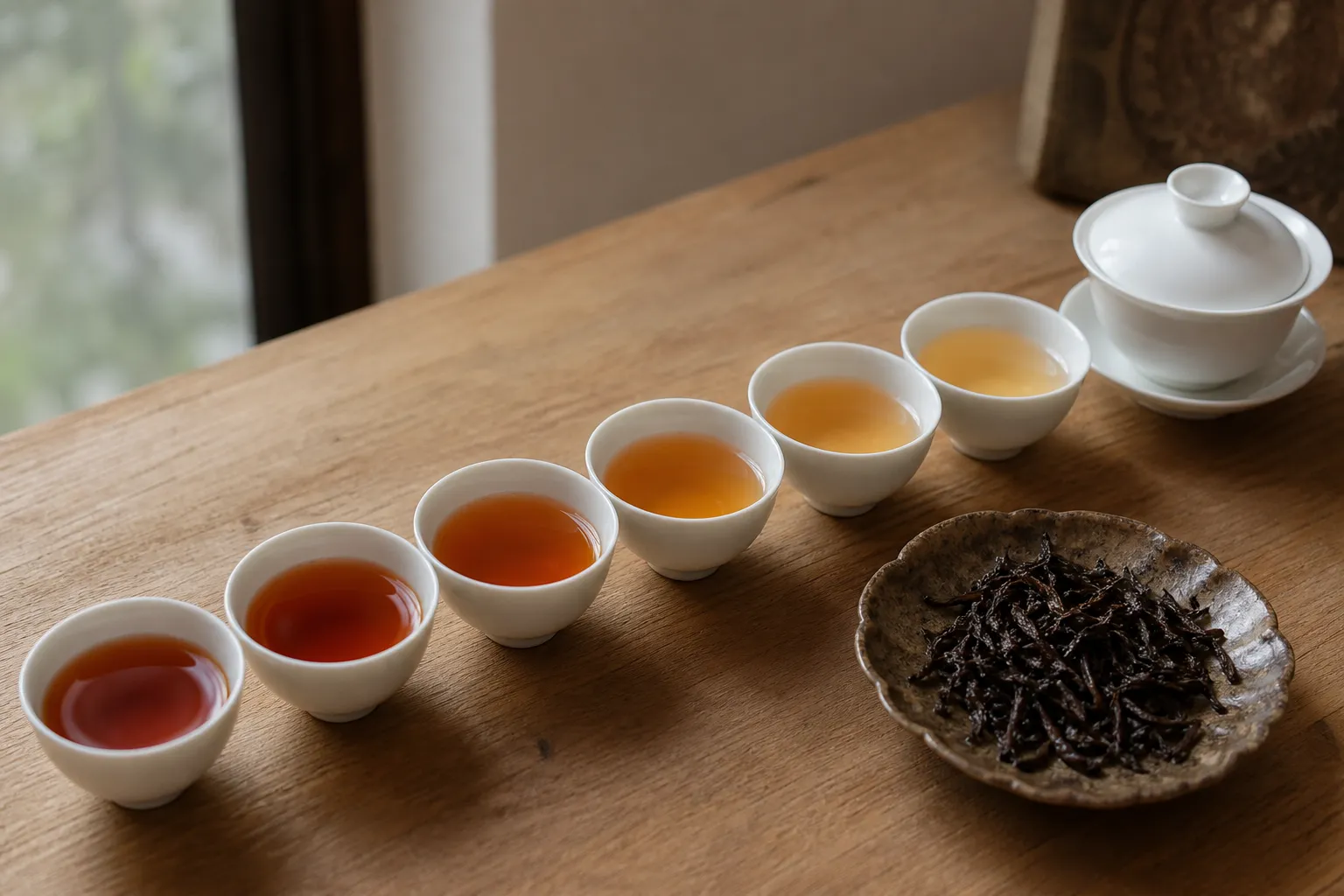
For many black teas, the first infusion shows the clearest opening aroma and color. The second and third often feel rounder, especially after the leaf has loosened. Later cups may become softer, sweeter, thinner, brisker, or more woody depending on the tea. Some drinkers enjoy that quiet finish; others stop once the main flavor is gone.
Treat the table as a tasting map, not a promise. Exact gongfu black tea re-steeps depend on the leaf, vessel, ratio, water, timing, and your own threshold for fading flavor.
What Changes the Number of Infusions
Leaf form
Whole leaf black tea tends to resteep more gracefully because intact pieces release flavor more gradually. Broken leaf can brew strong early, but it often gives up color and briskness quickly. That does not make it poor tea; it simply may suit a bold first cup better than a long gongfu session.
Tea-to-water ratio
Gongfu black tea brewing usually works with a higher amount of leaf in a small vessel. If you use too little leaf, the early cups may already taste thin. If you use enough leaf, short infusions can draw out strength in stages.
Vessel size
A small gaiwan or small teapot concentrates the brew and lets you adjust each steep quickly. A large pot with the same leaf amount may taste weak, not because the leaf cannot be resteeped, but because the ratio is too dilute for the method.
Steep length
If the first steep runs too long, much of the soluble flavor comes out early. The first cup may be dark and forceful, but later cups may fall away. Short early steeps usually give a clearer sequence: aromatic opening, fuller middle cups, then a softer finish.
Water temperature
Water temperature is a lever, not a contest. Black tea is commonly brewed with hot water, but hotter water is not always better for every leaf or palate. If the cup turns sharp or drying early, shorten the next steep. If it tastes flat and pale from the start, the water may be too cool, the ratio too light, or the leaf may have lost freshness.
Storage
Storage can decide the session before you brew. Black tea kept away from moisture, strong odors, heat, and light is more likely to show clear aroma across several cups. Tea that smells dull in the dry leaf or carries cabinet odors may still brew, but it may not reward repeated short infusions.
Watch the Cup, Not Just the Count
The best black tea resteeping signs are sensory. Pour each infusion into a cup where you can see the liquor and smell the steam, then decide whether the next steep is worth making.
A tea still has life when the aroma remains recognizable. It may shift from fruit to malt, from cocoa to wood, or from spice to a softer sweetness. A shift is normal. A collapse is different. When the scent becomes faint, papery, or mostly warm water, the session is close to done.
Black tea liquor color helps, but it should not decide alone. Deep amber, copper, red-brown, or reddish liquor may suggest there is still enough extraction, but some teas brew lighter by nature. The better question is whether the color still matches the mouthfeel. Pale liquor with no body usually means the next infusion will be weak.
Body is the weight of the tea in the mouth. A good middle infusion may feel rounded, lightly syrupy, brisk, or firm. As the leaf fades, the body becomes thin. A watery black tea infusion can still have color, but it no longer feels substantial.
Flavor strength should fade gradually. The first cups may be vivid, the middle cups balanced, and the last cups quiet but still pleasant. Stop when the tea has lost the flavor you care about: malt, honeyed sweetness, dried fruit, cocoa, spice, rose, smoke, or clean briskness.
Astringency needs a little judgment. Some black teas are naturally brisk, and that lively dryness can be part of the style. But if later steeps become mostly rough, woody, or mouth-drying while aroma and sweetness have disappeared, continuing will not improve the cup.
A Simple Black Tea Re-Steeping Method
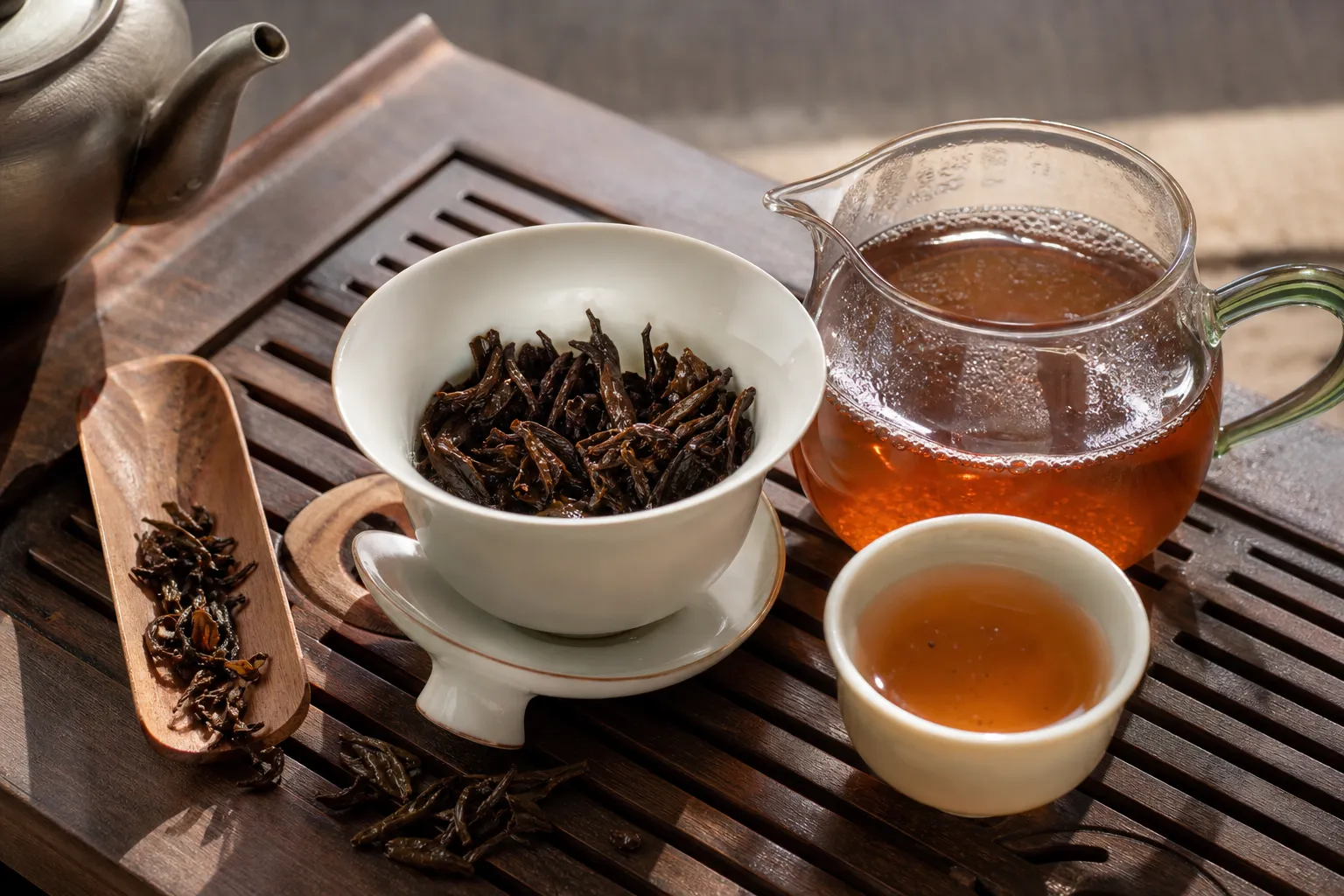
- Start with a small vessel and enough leaf. Use a small brewing vessel, enough leaf to cover the base generously, and short infusions. Exact weights are not required for every casual session, but consistency helps. If the first attempt tastes weak, use more leaf next time rather than stretching the first steep much longer.
- Skip the rinse unless you already prefer it. A quick rinse is not required for answering how many infusions black tea can give. For many drinkers, the first real infusion is more useful because it shows the tea’s opening aroma and strength.
- Keep the first steep short. Pour, smell, taste, and notice the texture. If it is too light, add a little time to the next infusion. If it is sharp or drying, pour the next one sooner. Gongfu brewing works best when each cup adjusts from the last cup, not from a rigid timer.
- Use the second and third cups to find the center. This is where many black teas show their best balance of aroma, body, flavor strength, and briskness. If the second cup is much weaker than the first, the leaf may be broken, the ratio may be light, or the first steep may have been too long.
- Extend later infusions only if they improve the cup. For later infusions, increase time gradually. If a longer steep brings sweetness and body, continue. If it only makes the cup darker and rougher, stop. The goal is not a high number; it is avoiding a flat cup just because one more infusion seems possible.
Common Confusion About Resteeping Black Tea Gongfu
One common mistake is treating all black tea as if it behaves the same. A delicate whole-leaf Chinese black tea, a tightly rolled style, a tippy leaf, a smoky tea, a breakfast blend, and a small broken grade will not necessarily give the same arc. Packaging terms can help, but the cup gives the clearer answer.
Another mistake is comparing gongfu-style brewing with Western-style brewing without changing the method. A mug brewed for several minutes with a modest amount of leaf has already extracted heavily. It may not give many pleasing re-steeps. A small vessel with more leaf and shorter pours separates extraction into stages, so the same tea can seem more resteepable.
Seller steep-count claims can also sound more precise than they are. Product pages sometimes say how many times a tea can be infused, but those numbers depend on the seller’s method, vessel, leaf amount, water, and taste threshold. Use them as expectation-setting language, not as a rule for your kettle.
Darkness is not the same as lasting power. A black tea that gives a dark first cup is not automatically better for multiple infusions. If the second cup is hollow, the first cup may simply have extracted quickly. For gongfu, the better measure is progression: aroma, liquor, body, flavor, and finish across cups.
When to Stop Resteeping Tea
Stop when the next cup no longer gives enough pleasure for the water and attention you are spending. That point can arrive after two infusions for small broken leaf or after several cups for a fuller whole-leaf tea.
Before making another steep, check:
- Aroma: Does the cup still smell clearly like the tea?
- Liquor: Is the color fading in a way that still matches flavor and body?
- Body: Does the tea still have weight, or has it become hollow?
- Sweetness or malt: Is there still a pleasant center to the flavor?
- Briskness: Is the dryness lively, or has it become rough and empty?
- Finish: Do you want another sip after swallowing?
If most answers are no, stop. If one or two are still yes and you enjoy softer late infusions, continue with a longer steep.
Evidence Limits for Exact Infusion Counts
The current source set for this page does not include usable public reference links, transparent brewing tests, institutional guidance, or confirmed firsthand tasting records that support one precise number of black tea gongfu infusions. For that reason, the range here is framed as cautious brewing guidance rather than a documented standard.
That limit matters because infusion count is shaped by leaf style, grade, freshness, storage, vessel size, ratio, water, temperature, steep length, and personal taste. A single exact number would be easier to remember, but it would be less useful at the tea table.
Expect roughly 3 to 6 useful gongfu-style infusions for many loose black teas, fewer for very broken leaf, and more only when the tea continues to show aroma, color, body, sweetness, and clean flavor. Your next practical choice is simple: pour one more short steep, taste it carefully, and stop as soon as the cup turns thin, flat, harsh, or watery.