Gongfu brewing
Why Gongfu Black Tea Tastes Different Across Infusions
A gongfu-brewed black tea changes because each short steep pulls a different balance from the same leaves. The first infusion may show quick aroma, color, and briskness. The middle cups often feel rounder as the leaf opens. Later cups can turn softer, thinner, sweeter, drier, or more woody, depending on the tea and the way it is brewed.
Those gongfu black tea flavor changes are shaped by leaf size, oxidation and firing style, freshness, storage, water temperature, steep time, and the tea-to-water ratio. They are not a fixed quality ladder. Some small or broken leaves give most of their flavor quickly. Some whole leaves unfold over several rounds. The useful question is not “which infusion is best,” but “what is changing in the cup?”
upward
Read the full overview first
Use the broader guide first if you need the full scope before this page.
The Brewing Logic Behind the Change
Gongfu brewing uses more leaf, less water, and shorter steeps than a large mug or western-style teapot method. Because the contact time is brief, each infusion becomes a snapshot rather than one full extraction of the tea.
The first cup may carry surface aroma and fast color. The next few cups may show more body as the leaves hydrate, separate, and expose more surface area. Later cups depend on how much flavor remains and whether the brewer lengthens the steep.
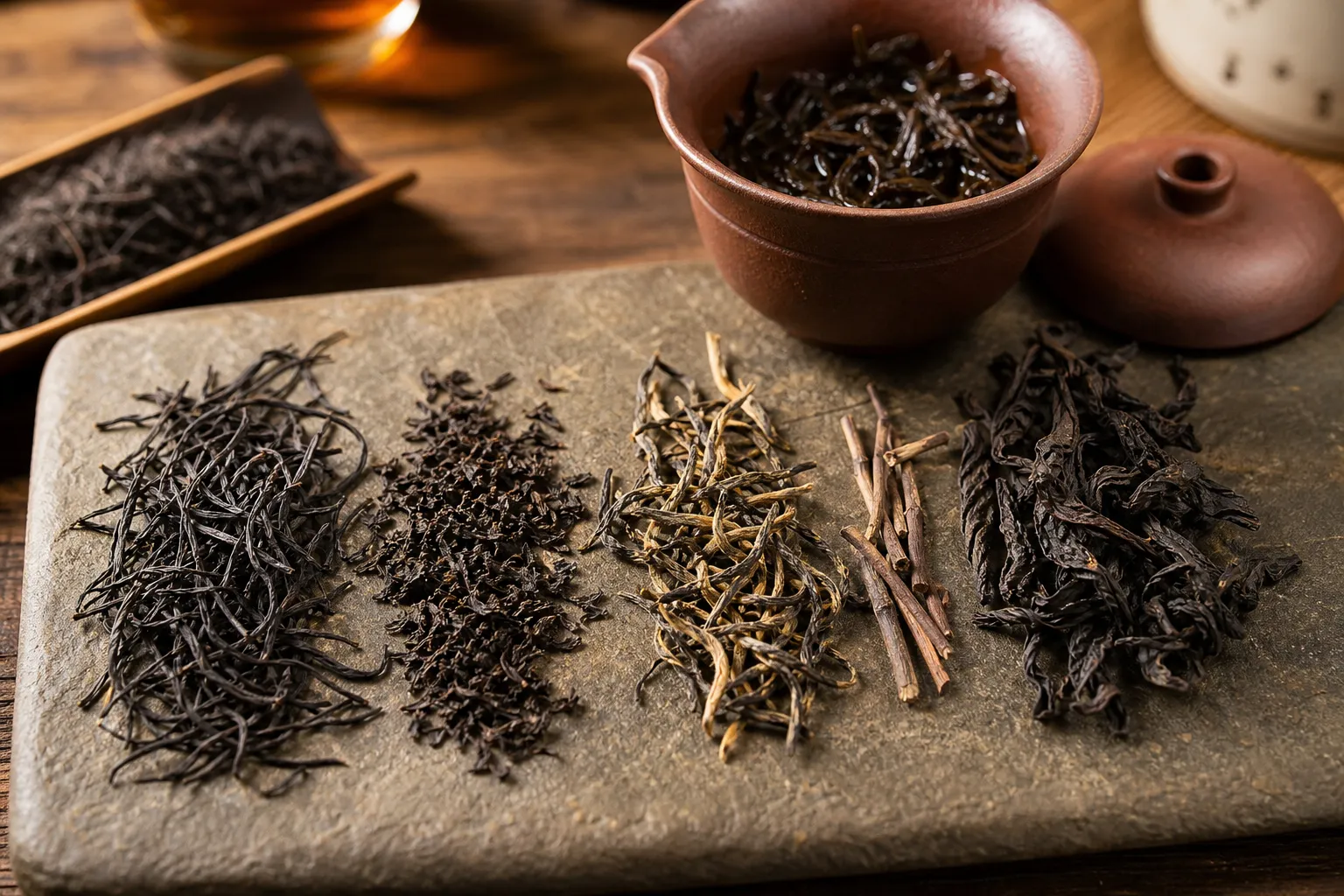
A black tea leaf is not a uniform block. Tippy buds, twisted leaves, broken particles, stems, and larger intact leaves release flavor at different speeds. Small fragments may darken the cup quickly and become brisk or drying early. A wiry whole-leaf tea may need one or two short steeps before it feels fully open. A tightly rolled or compressed presentation, when present, may shift more slowly as the leaf loosens.
So when black tea across infusions feels inconsistent, the tea is not necessarily changing identity. The brew is changing emphasis. One pour may highlight aroma, the next body, the next sweetness, and the next astringency. If color, scent, and mouthfeel move together, the shift usually comes from extraction pace. If they feel out of step, check water, timing, storage, or whether that tea is suited to repeated short infusions.
What Usually Changes From Cup to Cup
The main changes are aroma, strength, body, sweetness, bitterness, and astringency. They overlap, but tasting them separately makes multiple infusion black tea taste easier to read.
Aroma often speaks first
The first infusion may smell malty, fruity, floral, smoky, spicy, warm, or bright depending on the tea. Gongfu black tea aroma changes can be vivid early, then settle into deeper or quieter tones. If the aroma fades while the liquor still tastes strong, the tea may be moving from fragrance toward structure.
Liquor color can rise, peak, then fade
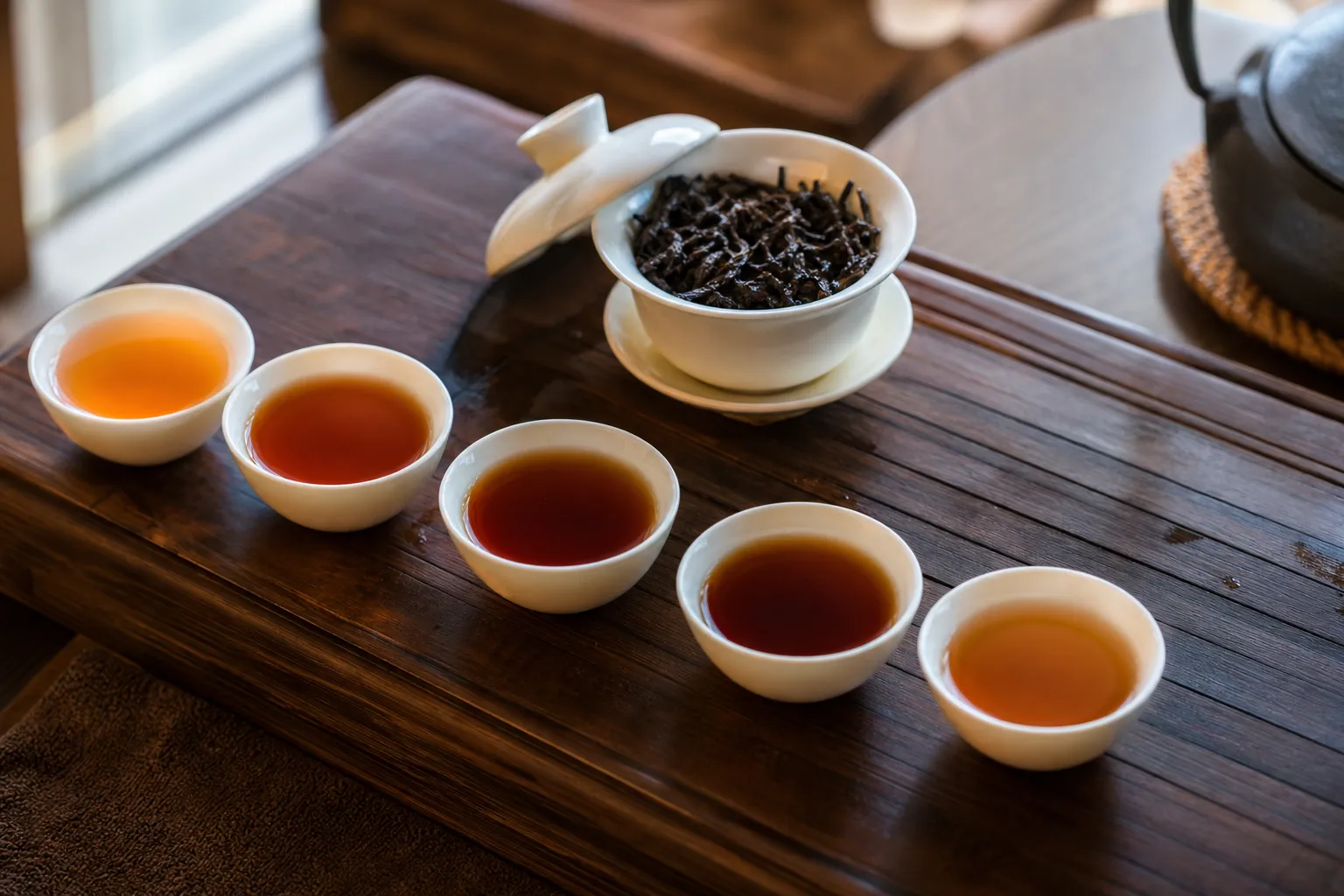
A pale first cup may simply mean the leaves have not opened. A dark early cup may point to small leaf size, broken particles, longer steeping, or fast extraction. Color helps, but it is not a full measure of flavor. A coppery cup can taste thin; a lighter cup can still carry aroma and sweetness.
Body may arrive after the first steep
Black tea body changes show as thickness, roundness, or weight on the tongue. In a gongfu session, the first cup can be fragrant but light, while the second or third feels fuller. If later cups become watery even with longer steeping, the leaf may be near the end of what it can give under that ratio.
Sweetness can become clearer
Black tea sweetness changes are not always sugary. They may appear as honeyed roundness, dried fruit, malt, baked grain, or a smoother finish. Sometimes the tea seems sweeter because bitterness and sharpness have faded, not because the cup has become simply “sweet.”
Bitterness and astringency are not the same
Bitterness is a taste. Astringency is a drying or gripping sensation. Black tea bitterness changes may come from steep time, water temperature, leaf breakage, or the tea’s natural profile. Black tea astringency changes often show in the cheeks, gums, or tongue after swallowing. A cup can be mildly bitter without much dryness, or drying without tasting sharply bitter.
A simple tasting path
Pour three small cups in sequence and write four notes for each: aroma, body, sweetness, dryness. That keeps the session focused on what changed instead of forcing a verdict too early.
Why the Same Tea Can Taste Different Tomorrow
Gongfu style black tea taste is sensitive to small choices. A few seconds, a hotter kettle, a different pour speed, or a slightly heavier scoop can change the first few infusions enough that the tea feels unfamiliar.
The biggest variable is usually ratio. More leaf in the same vessel gives stronger early infusions and can make bitterness or astringency arrive faster. Less leaf gives more room for longer steeps, but the cups may feel flatter. Neither approach is automatically better. Ratio decides how concentrated each short extraction feels.
Steep time is the next lever. If the first infusion is hollow, a slightly longer second steep may help. If the first cup is sharp and drying, shortening the next steep may let aroma show before structure takes over. Gongfu brewing is responsive; the next pour is a correction, not a failure.
Water temperature matters too, though one universal rule would be too neat. Hotter water can bring out color, strength, and briskness quickly. Slightly cooler water may soften a tea that becomes harsh early, but it can also mute aroma or body. Use the cup as the guide: if the tea is thin, increase time or heat; if it is harsh, reduce one variable before changing everything.
Freshness and storage also shape black tea infusion differences. A tea stored with too much air, heat, light, or moisture may lose aroma before it loses color. In gongfu brewing, that can produce cups that look active but smell muted. Before blaming the method, check whether the dry leaf still has a clean scent and whether the package has been kept closed, dry, and away from strong odors.
Leaf Style Changes the Infusion Curve
Not all black teas are sold, processed, or enjoyed with the same brewing logic. Gongfu brewing can reveal useful changes, but some teas show those changes more clearly than others.
Whole-leaf black teas
Whole-leaf black teas often give the clearest sense of stages because the leaves have room to open over repeated short steeps. They may start aromatic, deepen in body, then fade gradually. That does not prove higher quality by itself; it only means the leaf form can support a longer sequence.
Broken-leaf teas
Broken-leaf teas usually release quickly. They may make a satisfying strong cup, but in a gongfu setup they can become intense early and fade sooner. If the first infusion is dark and drying after only a short steep, leaf size may be part of the answer.
Bud-heavy and mature leaves
Bud-heavy teas can feel soft, sweet, or aromatic, but they are not all the same. Some show gentle body and pale liquor; others carry more briskness. Larger mature leaves may bring structure, woody depth, or a firmer finish. Origin, harvest, processing, grade, freshness, and storage all matter, so these are tasting cues rather than strict rules.
Blends
Blends add another layer. If a black tea contains leaves of different sizes or styles, each component may extract at a different pace. One infusion can seem malty and full, while another becomes brisk or slightly rough. That is not always a flaw. It may be the blend showing its parts at different moments.
“Different” Does Not Always Mean “Better”
A changing cup is part of the appeal of gongfu brewing, but change alone is not a quality guarantee. A tea can shift across infusions and still be ordinary. Another tea may stay steady and be exactly right for a drinker who prefers consistency.
One common mistake is expecting every black tea infusion flavor stage to follow the same arc: light, rich, sweet, fading. That pattern can happen, but it is not a rule. Some teas peak in the first cup. Some need the second infusion to settle. Some become more drying before they become sweeter. Some never offer many distinct stages because their leaf form or processing gives flavor quickly.
Another confusion is reading bitterness as proof of strength. A bitter cup may be strong, but it may also be over-steeped for the ratio, brewed too hot for that particular tea, or made from smaller particles that extract quickly. Strength includes aroma, body, finish, and flavor clarity, not just bite.
Astringency is easy to misread too. A little dryness can make black tea feel lively, especially when the cup has malt, fruit, or sweetness around it. Too much dryness can flatten the finish and hide aroma. The practical test is simple: after swallowing, does the mouthfeel make you want another sip, or does it make the next sip harder to taste?
How to Adjust a Gongfu Session
If the first cup is thin
Do not judge the tea immediately. Try a slightly longer second infusion, a little hotter water, or a brief pause to let the leaf open. Watch whether liquor color and aroma rise together. If both remain weak, the ratio may be too low, or the tea may not have much to give in this method.
If the first cup is harsh
Shorten the next steep before changing the tea. Harshness early in a gongfu session often means extraction is moving faster than expected. You can also try slightly cooler water or fewer leaves next time. Change one variable at a time, or the cause becomes hard to read.
If aroma is pleasant but body is missing
Extend the middle infusions gradually. A black tea may smell ready before it has enough weight in the cup. If body never arrives, the tea may be built more for fragrance than depth, or it may perform better in a larger teapot with a longer steep.
If later cups are sweet but weak
That may be the natural fade of the session. Longer steeps can stretch the leaf, but they cannot create the same concentration forever. When the cup becomes mostly warm water with a faint finish, the session has reached its practical end.
What This Answer Can and Cannot Prove
This page stays with observable brewing cues: leaf form, liquor color, aroma, steep time, water temperature, ratio, mouthfeel, sweetness, bitterness, and astringency. It should not be read as a sourced tea science review, a regional authority, or a rule that all black teas follow the same infusion pattern.
That boundary matters because gongfu black tea sensory changes are real at the cup level, but the causes are not always visible from the cup alone. Processing, cultivar, origin, harvest, grade, storage, water chemistry, and brewing equipment can all influence what you taste. The careful approach is to compare cups side by side and avoid turning one session into a universal rule.
For the next brew, keep the setup steady: same tea, same vessel, same water, same amount of leaf. Taste three or four infusions in order, then adjust only one variable. If the tea becomes clearer, rounder, sweeter, sharper, or drier, you have learned something practical about that leaf. That is the best way to understand why black tea taste changes across gongfu infusions without forcing the tea into a script.