Brewing Method
How to Keep a Pot of Black Tea from Over-Steeping
To keep black tea from over steeping, stop the infusion when the tea tastes as strong as you want it, then separate the brewed liquor from the leaves. A teapot only holds finished tea if the leaves are no longer sitting in the liquid.
Use the method that fits your setup: remove an infuser basket, lift out a tea sack, pour the pot through a strainer, decant the brewed tea into a second warmed serving pot, or brew a smaller batch that will be poured right away.
The key point is simple: steeping does not stop just because the tea is in a pot. If wet leaves remain in hot liquor, the cup can keep moving from brisk and full-bodied toward bitter, flat, or drying.
upward
Start with the broader guide
Use the broader guide first if you need the full scope before this page.
The Core Rule
Black tea stops over-steeping when the leaves stop touching the brewed liquor. Every practical method is a way to make that separation clean at the table.
The Practical Way to Stop the Brew
Set up the pot so the leaves can be removed or the liquor can be moved. That choice matters more than the exact style of teapot.
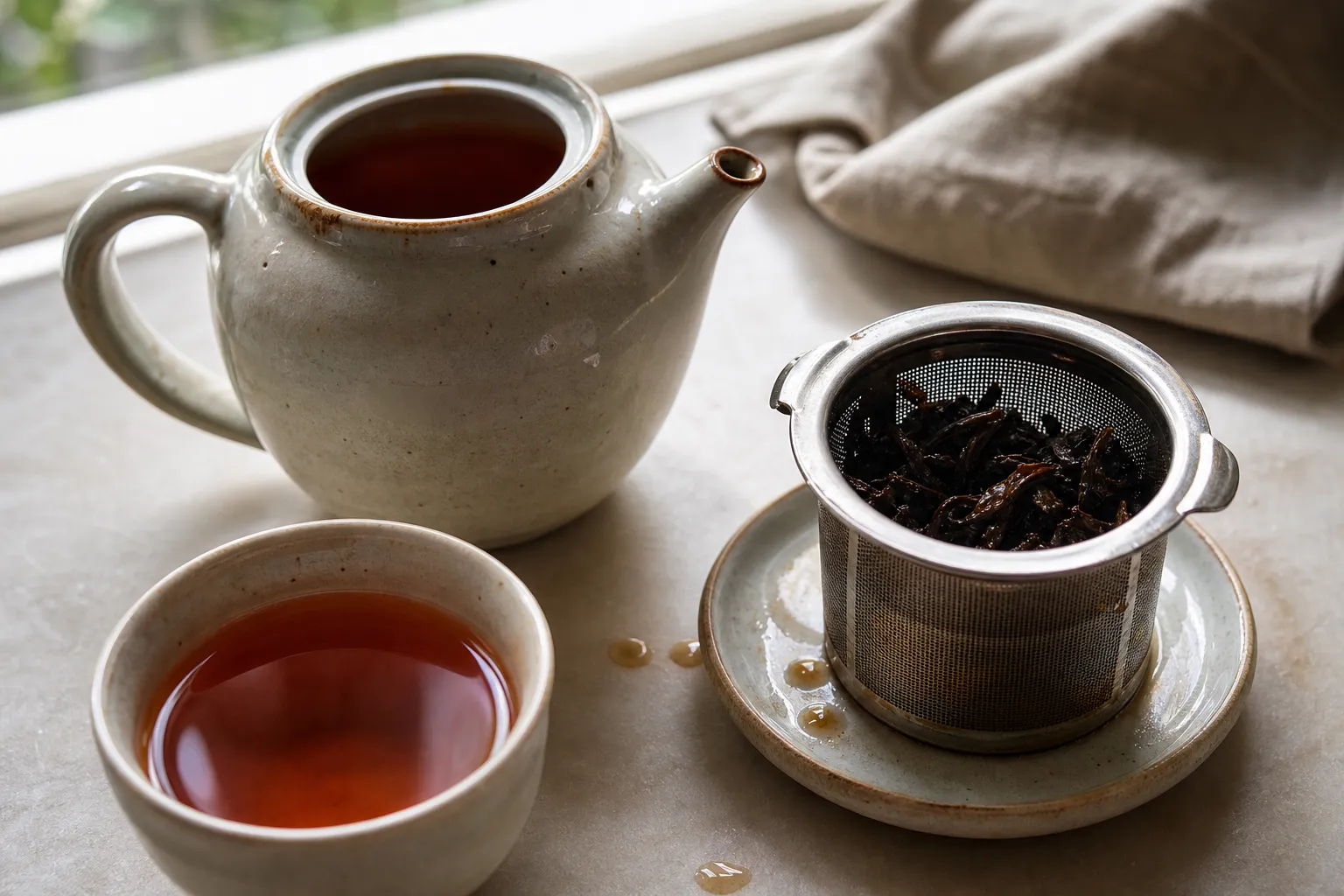
If your teapot has a removable infuser basket, put the dry leaves in the basket, steep to your preferred strength, then lift the basket out and set it on a saucer or drip bowl. The tea left in the pot is now brewed liquor, not an active infusion. This is one of the tidiest methods for a western-style teapot because the same pot can become the serving vessel after steeping.
If you use a paper tea sack or cloth tea bag filled with loose black tea, lift it out when the tea reaches the strength you want. Let it drip briefly over the pot, but do not leave it floating “just in case.” A tea sack is convenient, but it behaves like any other leaf holder: while it stays in the liquor, extraction continues.
If the leaves are loose in the pot, pour the brewed tea through a strainer. You can strain directly into cups if everyone is ready to drink, or into a second pot if the tea will sit on the table. The strainer’s job is not only to catch leaf fragments; it is the step that separates tea leaves from liquor.
If you are serving several cups over time, decanting brewed black tea into a second warmed serving pot is often the cleanest workflow. Warm the second pot with hot water, empty it, then pour the brewed tea from the first pot through a strainer into the warmed pot. The first pot was the brewing vessel. The second pot is now the serving pot.
For one or two cups, brewing smaller tea batches may be easier than trying to hold a large pot at its best. Use less water and the right amount of leaf for that volume, steep, pour all of it, then brew again if needed. This avoids the common problem of a large teapot holding more tea than people can drink before the flavor changes.
Why Black Tea Changes When Leaves Stay in the Pot
Black tea is not fixed at the moment the timer rings. While hot water surrounds the leaves, the liquor continues to take on color, aroma, body, briskness, and astringency. Those changes can be welcome up to a point. Past that point, the same pot may taste harsher, more bitter, or more drying on the tongue.
The signs are easy to follow. The liquor usually deepens in color. The aroma may become heavier or less lively. The mouthfeel may move from rounded to rough. A brisk cup can become sharp. A pleasant finish can turn into drying astringency that makes the mouth feel tight.
Watch the Cup
Color, aroma, strength, and mouthfeel are better guides than treating one black tea steep time as universal.
Expect Variation
A small-cut breakfast blend, whole-leaf tea, flavored tea, older packet, broken-leaf grade, or full infuser can all behave differently.
Those cues are more useful than treating a single black tea steep time as universal. A small-cut breakfast blend may darken and strengthen quickly. A larger whole-leaf black tea may unfold more gradually. A flavored black tea, a fresh loose-leaf tea, an older packet, a broken-leaf grade, or a very full infuser can all behave differently in the pot. Water temperature, leaf-to-water ratio, and teapot size also change the result.
This does not mean brewing needs to become complicated. It means the “done” point is a tasting decision. Use a timer as a reminder, then check the cup: color, aroma, strength, and mouthfeel. When the tea is where you want it, stop the contact between leaves and liquor.
Pick the Method That Fits Your Teapot
The best method is the one that reliably removes the leaves from the brewed tea without making service awkward.
Removable Infuser Basket
A removable infuser basket works well when the basket is roomy enough for the leaves and easy to lift out cleanly. If the basket is tiny, densely packed, or awkward to handle, the tea may brew unevenly or drip when removed. The method is still sound; the limitation is the fit between basket, leaf amount, and pot size.
Tea Sack
A tea sack is useful when you want the convenience of a tea bag with loose tea. It is especially simple for everyday breakfast-style black tea. The tradeoff is that an overfilled sack can crowd the leaves, and a very fine leaf cut may shed small particles. The main rule remains the same: lift out the sack when the liquor tastes finished.
Loose Leaves and Strainer
A pot with loose leaves and a handheld strainer gives the leaves more room, but it requires a pour. This works best when you can serve the whole pot immediately or strain it into another vessel. If you pour only one cup and leave the rest of the pot with leaves inside, the remaining tea will keep steeping.
Second Warmed Serving Pot
A second warmed serving pot is useful when the first teapot is really a brewing pot. This is the clearest answer to black tea oversteeping in teapot situations where people want to linger over multiple cups. The warmed pot does not improve the tea by itself; it simply holds finished liquor after the leaves have been left behind.
Smaller Pot
A smaller pot may be the most overlooked fix. If a large teapot gives you a first cup you like and a second cup that is too strong, the pot may be too large for the pace of drinking. Adjusting teapot size for black tea can be less fussy than changing every other variable. Brew what you will actually pour.
What Changes the Right Stopping Point
The right stopping point depends on the tea, the water, the amount of leaf, and the drinker’s preference. That is why hard universal timing rules are not very useful without more context.
Leaf Cut
Smaller broken leaves and fine particles expose more surface area to water, so they often produce a strong cup quickly. Larger leaves may take more time to show body and aroma. That does not make one form better than the other; it changes how closely you should watch the pot.
Leaf-to-Water Ratio
A generous spoonful in a small pot can become intense quickly. A modest amount of leaf in a larger pot may need more time to taste complete. If your black tea keeps turning harsh before it tastes full, try using a little less leaf rather than only shortening the steep. If it tastes thin but then suddenly bitter, the leaf amount, pot size, or water temperature may be out of balance.
Water Temperature
Water temperature matters at the cup level, even without making a rigid rule out of it. Very hot water can make many black teas taste strong quickly. Slightly cooler water may give a softer impression, depending on the tea. The point is not to chase a perfect number here, but to notice whether your usual water and pot are giving you the kind of briskness and body you want.
Serving Pace
A pot poured immediately is a different situation from a pot left on the table with leaves still inside. If people are drinking slowly, use a serving pot, remove the infuser, or brew less at a time.
Milk, sugar, lemon, or extra hot water can change the taste of a cup that has become too strong. They can soften bitterness or dilute intensity. They do not stop the pot itself from continuing to extract if the leaves are still there. Treat them as cup adjustments, not as the main solution to over-steeping.
A Simple Pot Workflow
For a straightforward western-style black tea service, use this sequence:
- 1. Warm the teapot if you like the tea to stay hot longer.
- 2. Add the measured black tea leaves to an infuser basket, tea sack, or directly to the pot.
- 3. Add hot water and start timing.
- 4. Watch the liquor color and aroma as the tea brews.
- 5. Taste a small pour near your expected stopping point.
- 6. When the tea has the strength, body, and briskness you want, remove the leaves or strain the liquor.
- 7. Serve from the pot only after the leaves are no longer in contact with the tea.
That sequence works because it separates two jobs that are often confused. Brewing is the contact time between water and leaf. Serving is holding and pouring the finished tea. A single teapot can do both jobs only if you have a way to end the brewing stage.
If your pot has no removable filter and you do not want to use a strainer, pour all the tea into cups as soon as it is ready. If that is too much tea, use a smaller pot next time. Leaving the extra tea behind with the leaves is the situation that creates the problem.
Common Confusion About Over-Steeped Black Tea
One common misunderstanding is that a teapot keeps black tea at the same strength once it has been made. It keeps the tea together, and it may help retain warmth, but it does not pause extraction. A pot with wet leaves inside is still brewing.
Another confusion is treating bitterness as the only sign of over-steeping. Bitterness is one clue, but drying astringency in tea can be just as noticeable. The cup may feel tight, rough, or mouth-drying even if the flavor is not sharply bitter. Some drinkers like a brisk, assertive black tea, especially with milk. That preference is different from accidentally leaving leaves in the pot until the liquor becomes harsher than intended.
A third confusion is assuming the equipment has to be specialized. It does not. A basket, sack, strainer, second pot, or smaller brewing vessel can all solve the same problem. What matters is the workflow: finish the steep, separate the leaves, then serve.
There is also no need to turn this into a product choice. A fine teapot can still over-steep tea if the leaves remain inside. A plain pot can serve excellent tea if the brewed liquor is separated at the right time. The method carries the result more than the accessory does.
The Useful Limit of This Advice
This page is about flavor and serving workflow, not a universal rule for every black tea. Since no strong public reference set was available for this article, the guidance stays within practical, observable brewing terms rather than claiming an official steeping standard or a single correct time.
Use your cup as the check. If the first pour tastes lively, aromatic, and balanced, but later cups from the same pot taste heavy, bitter, or drying, the tea probably continued steeping after it should have been separated. Fix the process before blaming the tea: remove the infuser basket, lift out the tea sack, strain the pot, decant into a second warmed serving pot, or brew a smaller amount.
The shortest answer is also the most reliable one: black tea stops over-steeping when the leaves stop touching the brewed liquor. Everything else is a way to make that happen cleanly at your table.