
Western Brewing Decision
Should You Rinse Black Tea Before Western Brewing
For most Western-style brewing, you do not need to rinse black tea before brewing. A quick rinse is optional, but it often costs you part of the tea’s first contact with hot water: early aroma, color, briskness, and strength. If you pour that away, the main cup may taste softer, thinner, or less fragrant.
The better question is not “Should I always wash black tea leaves?” but “What am I trying to change in the cup?” In a mug, teapot, or infuser basket, a rinse only makes sense in limited cases: visibly dusty loose tea, broken leaves or fannings that extract very fast, tightly compressed or tightly rolled tea that needs help opening, or a personal preference for a gentler first cup. It should not be treated as a cleanliness rule or a required step.
Default answer
Brew normally first. If the cup is too sharp, adjust steeping time before discarding the first contact with hot water.
upward
Start with the broader guide
Use the broader guide first if you need the full scope before this page.
What a Rinse Changes in the Cup
A black tea first rinse is a brief contact with hot water, followed by discarding that water before the main steep. In Western brewing, that small step matters because the method usually depends on one main infusion rather than many short infusions.
Black tea starts giving up flavor as soon as hot water reaches the leaf surface. Smaller particles, broken leaf, fannings, and dust extract especially quickly. Even a short rinse may carry away first-cup aroma, early color, and some of the briskness many people expect from black tea.
That is not always a problem. If a tea tastes harsh, muddy, or too sharp to you, a brief rinse may make the next infusion feel calmer. But it can also flatten the cup. A breakfast blend that normally gives a strong reddish-brown liquor, firm body, and lively astringency may seem weaker after the first contact is discarded. A more aromatic whole-leaf black tea may lose some of its opening fragrance.
Rinsing tradeoffs
You discard the first contact with hot water
The main cup may be lighter in aroma and strength.
You wet dusty or compacted leaves first
The brew may look clearer or the leaves may open more evenly.
You soften the first extraction
The cup may feel gentler, but less brisk.
You rinse small particles or fannings
You may lose flavor quickly because they infuse fast.
A Western brewing black tea rinse is best treated as a brewing variable, like steeping time, water temperature, leaf amount, and cup size.
When Rinsing Loose Leaf Black Tea Can Make Sense
Rinsing loose leaf black tea can be reasonable when you are adjusting texture, cup balance, or leaf opening rather than following a rule.
One case is visibly dusty tea. Some black teas contain fine particles from handling, cutting, or settling in the package. If you see powder at the bottom of the tin or pouch, you may want to rinse black tea leaves to reduce cloudiness or a gritty impression. A very quick rinse can remove some loose surface dust, but it may also remove flavor. Often, a finer strainer, careful pouring, or a slightly shorter steep is a better first adjustment.
Broken leaf teas and fannings need special care. They have more exposed surface area than large whole leaves, so they produce strong liquor quickly. If the rinse water turns dark and smells like tea, you are not just removing dust; you are throwing away part of the brew. For these teas, adjusting black tea steeping time is usually more useful than rinsing. A shorter steep can reduce bitterness or astringency while keeping the first extraction in the cup.
A rinse may also make sense with tightly rolled, pellet-like, or compressed black tea if the leaf seems slow to unfold. The aim is not to wash the tea but to wake the leaf surface and help the later steep extract more evenly. Keep it brief. If the rinse water turns amber, red-brown, or strongly fragrant within seconds, brewing has already started.
There is also the preference case. Some drinkers simply like a smoother, less punchy first cup. If that is your aim, rinsing can be part of your personal method. Name it honestly: it is a taste choice, not proof that the tea needed washing.
When You Should Usually Skip the Rinse
Skip the rinse when you want the fullest first-cup aroma from black tea. Many Western brews are built around one satisfying infusion, especially in a teapot, mug infuser, or tea bag. The first steep is where you expect the main body, color, and fragrance. Discarding part of that extraction can leave the cup underpowered.
Skip it for most tea bags. Tea bags often contain small particles, fannings, or cut leaf designed to infuse quickly. Once hot water hits the bag, the tea starts releasing color and flavor almost immediately. Rinsing the bag can strip away the first burst and leave the final cup weaker. If the bag tastes too strong or bitter, try cooler water, a shorter steep, more water, or a different tea.
Skip it when the tea is well packaged, smells fresh, and shows no obvious problem in the leaf. There is no useful reason to add a rinse just because a tea is black tea. If your concern is torn packaging, dampness, stale aroma, visible mold, or poor storage, a rinse is not a dependable fix. Better checks are the package condition, dry-leaf smell, visible appearance, and whether the tea has been stored away from moisture and strong odors.
Skip it when you are trying to understand a new tea. The first few times you brew a tea, it helps to taste what the leaf does under a simple method. Use a standard ratio, suitable hot water, and a moderate steep. Then adjust. If you rinse immediately, you may misread the tea as naturally light or muted when your method caused that effect.
A Practical Way to Decide at the Kettle
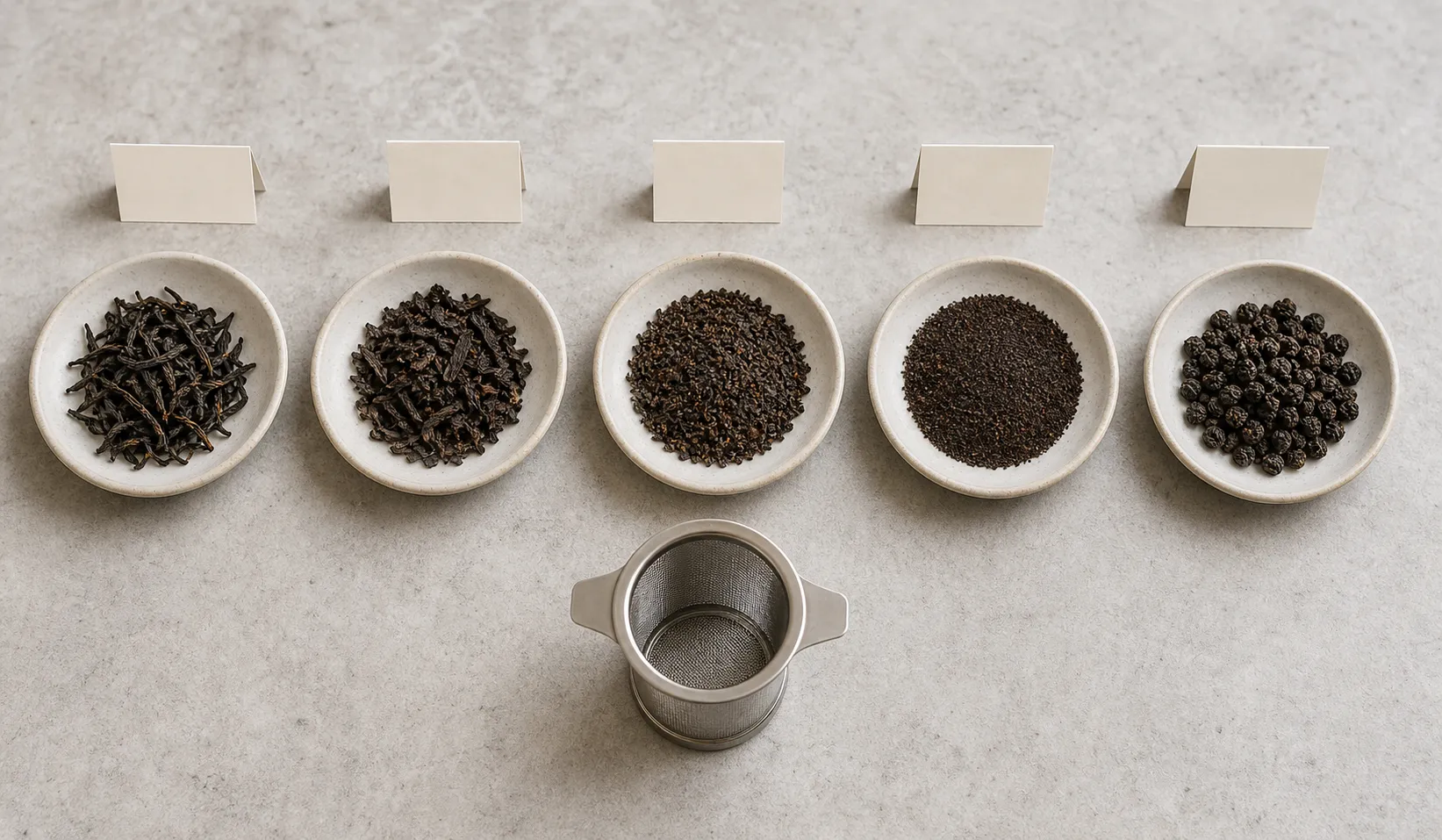
Start with the leaf form. Large, twisted, wiry, or intact loose leaves usually do not need rinsing for Western brewing. They tend to release more gradually than dust or fannings. Broken leaf and small particles extract quickly, so a rinse can remove a noticeable amount of flavor. Very fine black tea dust is usually better handled with filtration and careful steeping than with a long wash.
Next, consider the cup you want. If you want a full-bodied black tea liquor with firm color, milk-holding strength, or breakfast-style briskness, do not rinse. If you want a lighter cup and do not mind losing some early flavor, a brief rinse may fit your preference.
Then check whether the problem is really overbrewing. If the tea tastes bitter, drying, or too astringent, try shortening the main steep by 30 seconds, using slightly less leaf, or reducing water temperature a little before adding a rinse step. These changes let you keep the first infusion while adjusting extraction.
Simple decision path
- For whole loose leaf black tea: usually skip the rinse.
- For broken leaf or fannings: usually skip the rinse and shorten the steep if needed.
- For dusty tea: improve straining first; rinse only if the dust bothers you more than flavor loss.
- For compressed or tightly rolled tea: consider a very brief rinse if the leaf needs help opening.
- For tea bags: skip the rinse in most cases.
The “Wash Black Tea Leaves” Confusion
The phrase “wash black tea leaves” can make rinsing sound like a required hygiene step. That is where the question becomes easy to misunderstand.
In ordinary Western brewing, rinsing should not be described as making black tea meet a particular cleanliness standard or removing unwanted substances in a dependable way. The material available for this page does not support that kind of claim. The narrower, more useful answer is this: rinsing may change the cup, but it should not be presented as a safety process.
This matters because the sensory effect is visible while the broader claim is not. You can observe liquor color, aroma loss, leaf opening, sediment, body, bitterness, and astringency. You cannot tell from a quick rinse that a tea meets a particular production or storage standard. If you are worried about the condition of a tea, look to the source, packaging, storage, and visible condition instead of relying on a quick wash.
There is also a cultural confusion. Some tea drinkers know about first rinses in other brewing styles, especially methods built around small vessels, high leaf amounts, and multiple short infusions. That practice should not be automatically imported into Western black tea brewing. Western brewing often uses more water, a longer steep, and fewer total infusions. The first infusion is usually the cup, not a throwaway step.
If You Try It, Keep the Rinse Short
If you still want to test rinsing, keep the experiment simple. Use the same tea, same amount of leaf, same water, same vessel, and same black tea water temperature. Brew one cup without a rinse. Brew another with a very quick rinse, then the same main steep. Compare the aroma before you sip, the liquor color, the body on the tongue, the briskness, and the level of bitterness or astringency.
Do not judge only by whether the rinsed cup is smoother. Smoother can also mean weaker. Ask whether the tea still has enough fragrance, depth, and structure. If you add milk, notice whether the rinsed cup still carries through milk or becomes thin. If you drink it plain, notice whether the top notes feel reduced.
A rinse, if used, should be brief: wet the leaves, swirl or let them sit only momentarily, then pour off. Avoid turning the rinse into a miniature steep unless you are comfortable discarding a meaningful amount of flavor. For many black teas, especially small-leaf teas, the line between “rinse” and “first infusion” appears quickly.
Bottom Line
You usually should not rinse black tea before Western brewing. The first hot water contact is often part of the cup’s aroma, strength, body, briskness, and color. Pouring it away can make the tea gentler, but it can also make it flatter.
Rinsing is most defensible as a personal adjustment for dusty leaf, tightly compacted tea, or a deliberately softer first cup. It is least useful for tea bags, fannings, and black teas where you want a strong Western-style infusion. If the reason for rinsing is concern about the tea’s condition, treat that as a buying and storage question rather than something a quick first rinse can settle.
A good default is simple: brew the tea normally first, taste the result, and change one variable at a time. If the cup is too sharp, shorten the steep before discarding the first infusion. If the leaf is visibly dusty or slow to open, try a very brief rinse once and compare. Let the cup decide, not a universal rule.