Western Brewing Decision
Tea Bag vs Loose Leaf Black Tea in Western Brewing
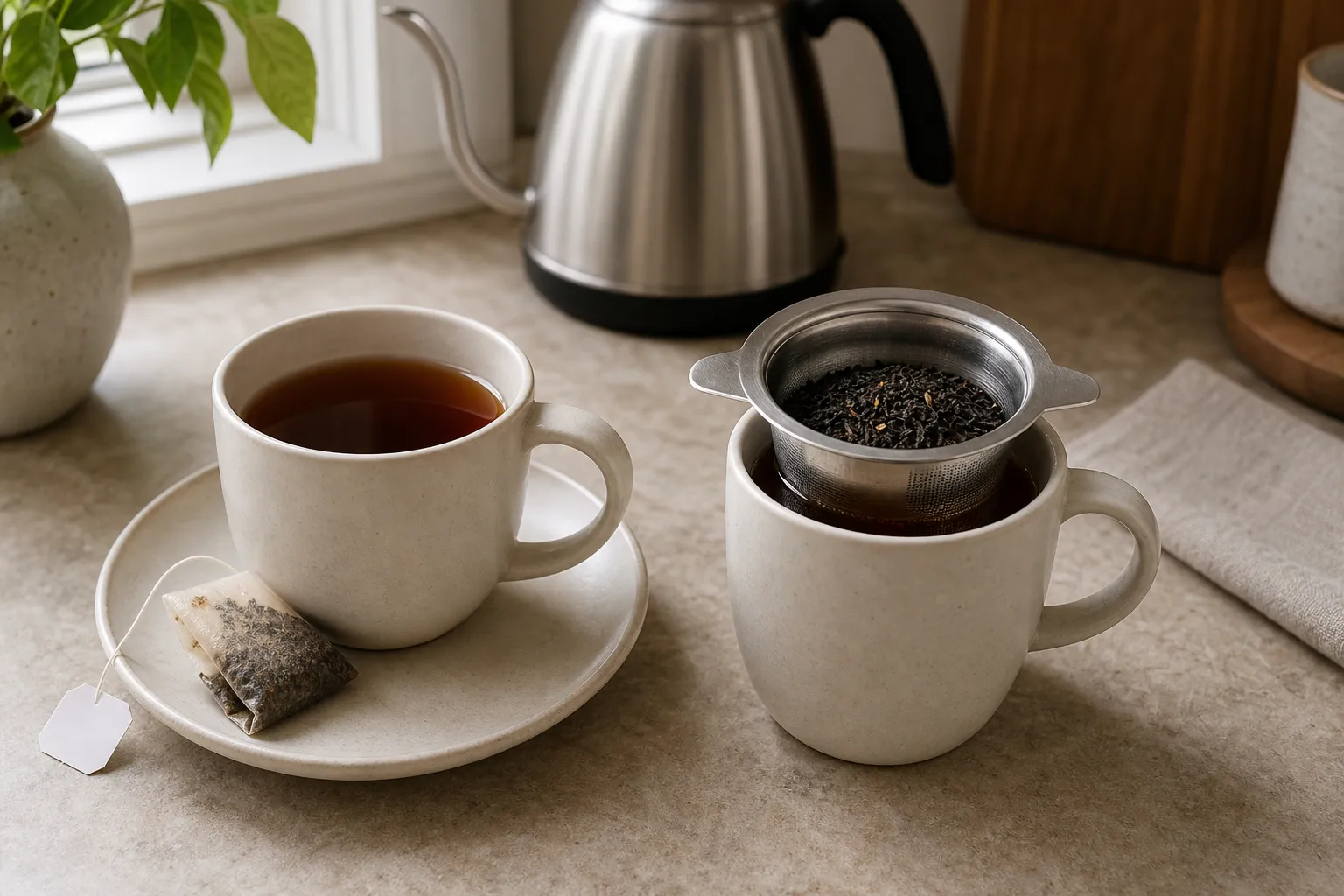
For everyday Western brewing, a tea bag is usually the easier choice when you want a quick, repeatable mug with little cleanup. Loose leaf black tea is usually the better fit when you want more control over strength, aroma, body, and how the cup changes when you adjust the brew.
So the practical answer to tea bag vs loose leaf black tea brewing is not that one format is always better. A tea bag gives you convenience and a built-in portion. Loose leaf gives you more room to change the ratio, inspect the tea, and fine-tune the cup.
upward
Start with the broader guide
Use the broader guide first if you need the full scope before this page.
Start With What You Can See
Before judging the drink, look at the dry tea.
With a tea bag, much of the leaf is hidden. You may be able to see whether the bag contains fine particles, small broken pieces, or larger fragments, but the bag limits the view. Package wording can help, but it should be treated as a clue, not a guarantee of cup quality.
With loose leaf black tea, the leaf form is easier to inspect. You can see whether the tea is made of fine particles, broken pieces, wiry leaves, curled leaves, or larger twisted leaf. That visible form does not tell you everything about origin, processing, freshness, or flavor, but it can guide brewing. Smaller pieces often need a more cautious steep. Larger pieces may tolerate a little more time or leaf volume, depending on the tea.
In Western style black tea brewing, the cup is usually built around one mug or teapot infusion rather than many short infusions. That makes the first steep important. A tea bag can produce a strong, dark, brisk cup with little effort. Loose leaf can do the same, but it usually needs a clear tea-to-water ratio and enough room for the leaves to open.
The useful question is not which format looks more refined. It is whether the brewed tea gives you the strength, aroma, body, and finish you want.
When Tea Bags Make Sense
Tea bags are strongest as a practical format. They are portioned, portable, fast to remove, and easy to repeat. If your morning black tea is mostly about a steady mug, milk-ready strength, or a predictable workday routine, black tea bag brewing can be a sensible choice.
A tea bag also removes some measuring decisions. You do not need a scale, scoop, basket, or teapot. You heat water, steep the bag, remove it, and clean up almost nothing. For many drinkers, that convenience matters more than a small gain in aroma or brewing control.
Tea bags can also be useful when consistency matters. If you buy the same box and use the same mug, water level, and steeping time, the result is easier to repeat. That does not mean every bag from every product will taste the same. Blend, age, storage, bag size, water, and steeping habit still matter. But the format nudges you toward a standard routine.
The tradeoff is flexibility. You have less control over the exact amount of tea, less visibility into the leaf, and less space for adjustment. You can change steeping time and water volume. You can use two bags or a smaller mug. But compared with loose leaf, the portion is less adjustable.
Tea bags are often the better choice when:
- You want a quick mug with low cleanup.
- You drink black tea with milk and want reliable strength.
- You need tea at work, while traveling, or in a shared kitchen.
- You prefer repeatability over fine adjustment.
- You do not want to handle loose tea or extra brewing tools.
The common mistake is assuming convenience means the cup must be poor. It does not. A tea bag can suit the moment perfectly. The better question is whether the cup feels flat, harsh, thin, dull, or hard to adjust. If it does, the format may be limiting you, or that specific tea may not match your taste.
When Loose Leaf Gives You More Control
Loose leaf black tea is useful when you want to shape the cup more deliberately. You choose how much tea to use, how much water to pour, how long to steep, and how much room the leaves have in the infuser or pot. That extra control is the main advantage of loose leaf western brewing.
The difference shows up quickly when you adjust strength. If a tea bag tastes too light, your main options are to steep longer, use less water, or add another bag. With loose leaf, you can add a little more tea without doubling the portion. If the cup is too strong, you can reduce the leaf amount while keeping the steep time similar. That makes black tea ratio and strength easier to fine-tune.
Loose leaf also lets you smell and inspect the tea before brewing. Dry aroma, leaf size, color variation, and dust at the bottom of the package are not perfect measures of quality, but they are useful clues. After brewing, the wet leaf can show whether the tea had enough space or remained packed in a small infuser. A cramped infuser may make the brew less even, especially when the leaf expands.
For aroma and body, loose leaf gives you more room to experiment. A slightly heavier measure can produce a fuller cup. A slightly shorter steep can keep briskness while reducing roughness. A wide basket infuser or teapot usually gives the leaf more space than a tiny mesh ball packed full.
Loose leaf is often the better choice when:
- You want to adjust strength without guessing.
- You care about aroma, mouthfeel, and finish.
- You want to compare black teas by leaf form and cup character.
- You use a teapot, basket infuser, or roomy mug infuser.
- You are willing to trade cleanup for control.
The limitation is practical. Loose leaf needs storage, a measuring habit, and brewing equipment. It can also become inconsistent if you scoop casually, change mugs, or use different amounts each time. Loose leaf offers more control, but only if you keep the variables steady.
Strength Is Not Only About Bag Versus Leaf
A strong black tea is not created by format alone. Strength comes from the relationship between tea amount, water amount, steeping time, water temperature, leaf form, blend, and your own taste for briskness and astringency.
This is where tea bag black tea strength is often misunderstood. If a bag tastes stronger than a loose leaf tea, that does not mean bags are always stronger. The bag may contain a different blend, a smaller leaf form, a larger portion for the mug, or a tea designed for a brisk cup. If a loose leaf tea tastes stronger, that may come from using more leaf, steeping longer, or choosing a bolder style.
For Western brewing, adjust one variable at a time:
Thin or watery
Use a little more tea or slightly less water.
Strong but rough
Shorten the steep before reducing the tea.
Dark but flat
Try fresher tea, a different product, or better storage.
Aromatic but weak
Increase leaf amount rather than only steeping longer.
Too sharp or drying
Shorten time, reduce leaf, or avoid squeezing the bag hard.
Steeping time matters, but longer is not always better. A longer steep may deepen color and strength, yet it can also push the cup toward more drying or harsh sensations, depending on the tea. If you want more body without extra roughness, increasing the amount of tea slightly may work better than leaving the tea in the water much longer.
Water volume matters too. A tea bag brewed in a large mug may taste weaker than the same bag in a smaller cup. Loose leaf measured casually into different mugs can shift in the same way. When black tea tastes inconsistent, the cause is often a moving ratio rather than the format alone.
Convenience, Cleanup, and Repeatability
The real black tea brewing tradeoff is not “quality versus bad quality.” It is convenience versus adjustability.
Tea bags win on cleanup. The spent bag lifts out in one piece, which helps in offices, hotels, travel, and rushed mornings. They also reduce equipment. You do not need a strainer, basket, pot, or compost routine. If the goal is a clean, fast mug, a bag fits the job.
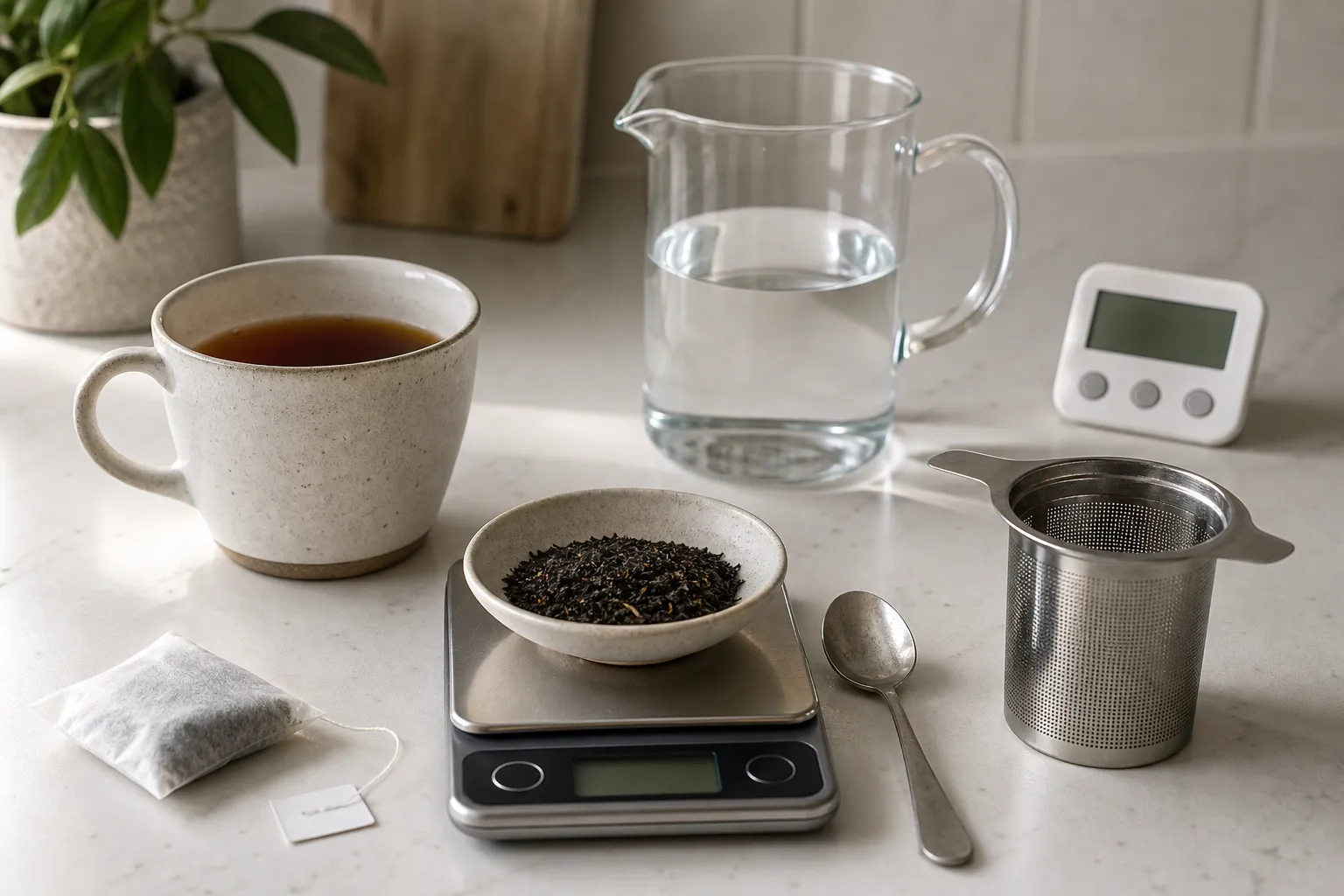
Loose leaf wins on control, but it asks for a small system. You need a container that protects the tea from kitchen odors and moisture. You need an infuser with enough space. You need a way to remove the leaves cleanly. You need a rough measure that you can repeat. None of that is difficult, but it is more involved than dropping a bag into a mug.
Repeatability can work in either direction. Tea bags are repeatable because the portion is built in. Loose leaf is repeatable when you use the same spoon, scale, mug, water level, and steep time. If you change those each time, loose leaf can seem unpredictable even when the tea itself is not the issue.
For a simple Western loose leaf routine, choose one mug, one infuser, and one measuring habit. Brew the same tea a few times before changing everything at once. If the cup is too light, increase the leaf slightly. If it is too sharp, shorten the time. If it is both weak and rough, the tea may not suit your taste, or the water-to-tea balance may be off.
Packaging and Freshness Cues
Black tea packaging differences can help you choose, but they do not explain the whole cup. A box of bags, a foil pouch, a tin, and a loose paper bag all suggest different handling and storage conditions. Still, packaging alone cannot prove freshness or flavor.
Use packaging as a practical checkpoint:
- Is the tea protected from strong kitchen smells?
- Does the package close tightly after opening?
- Is the tea exposed to light, air, or humidity often?
- Does the dry tea still smell distinct, or does it seem dull?
- Is the leaf dusty, broken, wiry, curled, or mixed in size?
Loose leaf makes these checks easier because you can see and smell the tea directly. Tea bags hide more of the leaf, though the outer package may still protect the tea well. Individually wrapped bags can be convenient for storage and travel, while loose tea in a good container can be easy to manage at home.
The boundary is simple: freshness, aroma, and storage behavior depend on the specific tea and package. It would be too strong to say that all loose leaf stays fresher or that all tea bags lose aroma faster. What you can do is observe your own package, your own cup, and whether the tea still smells and tastes lively enough for your use.
How to Choose for Your Next Mug
Choose a tea bag if your main goal is speed, low cleanup, and a familiar cup. This is especially reasonable when you drink black tea with milk, brew at work, or want a dependable mug without thinking much about ratio.
Choose loose leaf if your main goal is control. It is the better fit when you want to adjust black tea brewing by small increments, compare leaf forms, notice aroma, and tune body or briskness. It rewards attention, but it also exposes sloppy measuring.
If you are unsure, compare them in a restrained way. Use the same mug size, similar water temperature, and a consistent steeping time. Do not judge a delicate loose leaf tea against a bold bagged breakfast blend and call it a format test. Compare what you can actually observe: color, aroma, body, briskness, astringency, aftertaste, and how much effort each cup took.
The most honest answer is situational. Tea bags and loose leaf black tea both belong in Western brewing. A bag is not automatically inferior, and loose leaf is not automatically better in every mug. The better format is the one that gives you the cup you want with the amount of control and cleanup you are willing to accept.