Western brewing comparison
Whole Leaf vs Broken Leaf Black Tea in Western Brewing
Whole leaf and broken leaf black tea can both brew well in Western-style cups, but they usually behave differently. The short answer is simple: whole leaf tends to open more gradually, while broken leaf usually releases color and briskness faster. That makes leaf size a useful brewing clue, but not a verdict on quality, strength, or flavor by itself.
The better question is not which one is “better.” It is which one gives you the cup you want, and how much you should adjust time, ratio, and water.
upward
Start with the broader guide
Use the broader guide first if you need the full scope before this page.
What You Can Tell Before Brewing
A visible leaf size comparison is the easiest place to start.
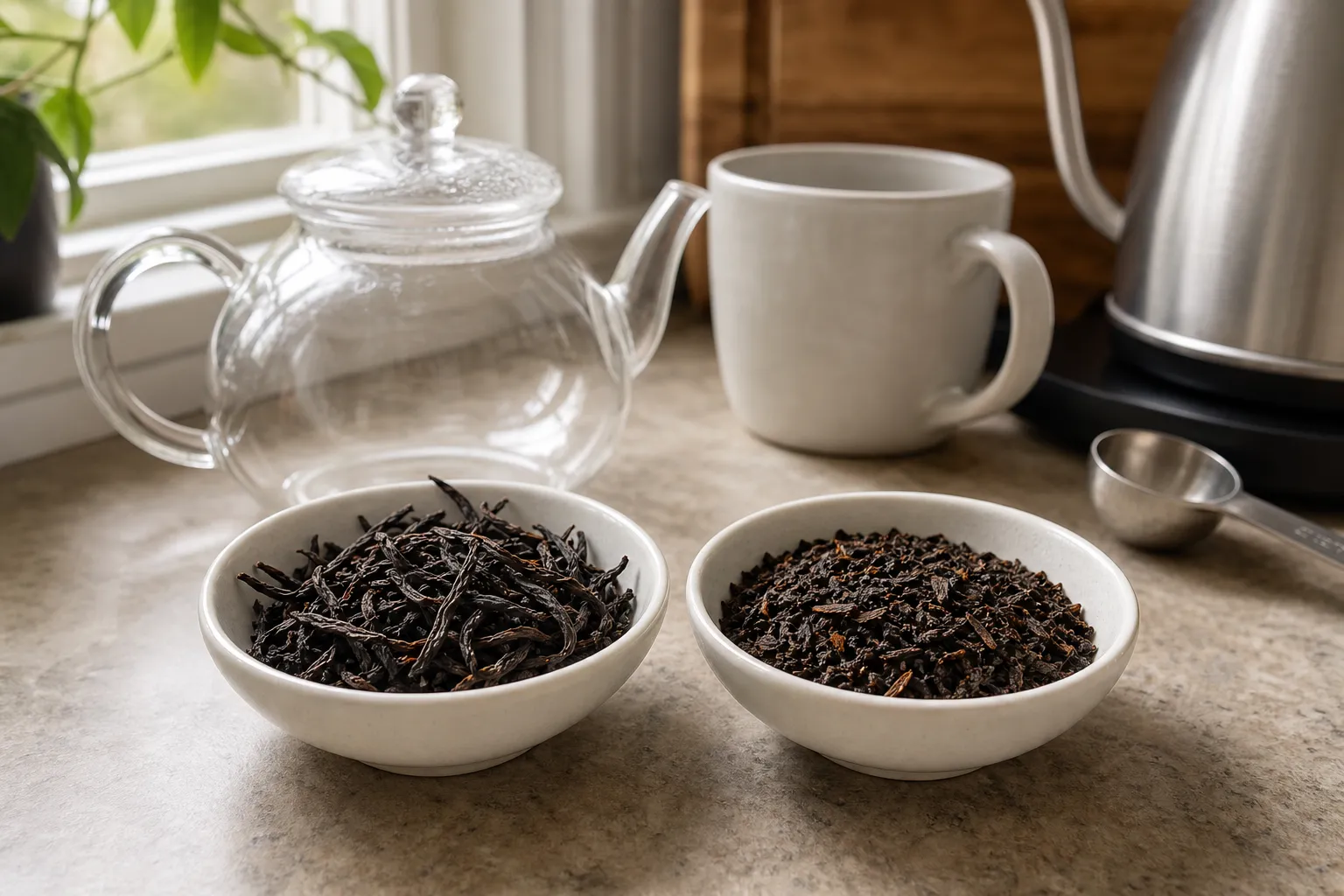
Whole leaf black tea usually shows larger pieces: twisted strips, curled leaves, or broad fragments that still look recognizably leaf-like. Broken leaf black tea appears smaller and more fragmented, often as short pieces, chips, flakes, or fine cuts.
That difference matters because smaller pieces expose more surface area to water. In practice, broken leaf tea often darkens sooner and can feel brisk earlier. Whole leaf tea may take longer to open, especially if the leaves are tightly rolled or twisted.
Still, the dry leaf only gives you a clue. Two teas with similar leaf size can taste very different because of origin, processing, freshness, storage, blend design, and water. A broken leaf tea can taste rounded and lively. A whole leaf tea can taste flat if it is stale or poorly stored.
Package wording can also be misleading. Terms such as whole leaf, broken leaf, fannings, dust, orange pekoe, and tea bag cut may describe form or sorting, but they do not guarantee a specific cup. If you can see the leaf, inspect it. If you cannot, the first steep is your real test.
How Leaf Size Changes a Western Steep
In Western-style brewing, tea usually sits in a larger amount of water for a single main steep. That makes leaf size easier to notice, because the tea has time to release body, briskness, bitterness, and astringency into the cup.
Whole leaf black tea brewed this way often needs a little patience. The liquor may look lighter at first, especially if the leaves are large or tightly shaped. As they hydrate, the aroma may open and the cup may gain depth. When the tea is fresh and suited to this method, the result can feel layered and clear.
Broken leaf black tea brewing usually moves faster. The liquor may darken earlier, and the cup may feel firmer sooner. That can be exactly what you want for a breakfast-style cup, a tea with milk, or a brisk plain cup. The tradeoff is that it can turn sharp or drying if the steep runs too long.
This is where “strength” is often misunderstood. A darker cup is not automatically better. A brisker cup is not automatically stronger in every useful sense. In practice, strength can mean color, body, aroma, bitterness, or astringency. Leaf size influences how quickly those show up, but it does not define them on its own.
Cup cues to watch
These are patterns, not fixed rules. Water, teaware, leaf amount, and steep time can change the result a lot.
Color release
Whole leaf may show slower darkening, depending on shape.
Broken leaf may show faster darkening, especially in smaller cuts.
Aroma
Whole leaf may open gradually as the leaves expand.
Broken leaf may appear quickly, but may feel less drawn out.
Body
Whole leaf can feel rounded or layered when balanced.
Broken leaf can feel direct, firm, and sometimes dense.
Astringency
Whole leaf may build more slowly.
Broken leaf may build quickly if oversteeped.
How to Adjust Time, Ratio, and Water
When whole leaf and broken leaf teas disappoint, the fix is usually small.
For whole leaf black tea brewing, do not judge too early by color alone. If the liquor looks pale at one minute, the leaves may simply still be opening. Give it enough time to show aroma and body, but stop before the finish turns dry or bitter. If the tea tastes thin but pleasant, try a little more leaf next time rather than pushing the steep far longer.
For broken leaf black tea steeping, start with restraint. If your usual whole leaf method makes a broken leaf tea taste harsh, shorten the steep before changing everything else. Smaller cuts can become assertive quickly in a Western mug. If the cup is dark but hollow, a shorter steep may help keep the aroma. If it feels sharp and drying, reduce the leaf amount rather than masking the problem.
Water matters too, but there is no single rule that fits every black tea. Freshly heated water usually brings out black tea clearly, yet some teas taste better if the water settles briefly after boiling. If bitterness in black tea brewing keeps showing up, try shortening the steep first. If a whole leaf tea tastes muted, check leaf amount, freshness, and whether the water cooled too much.
A practical comparison method
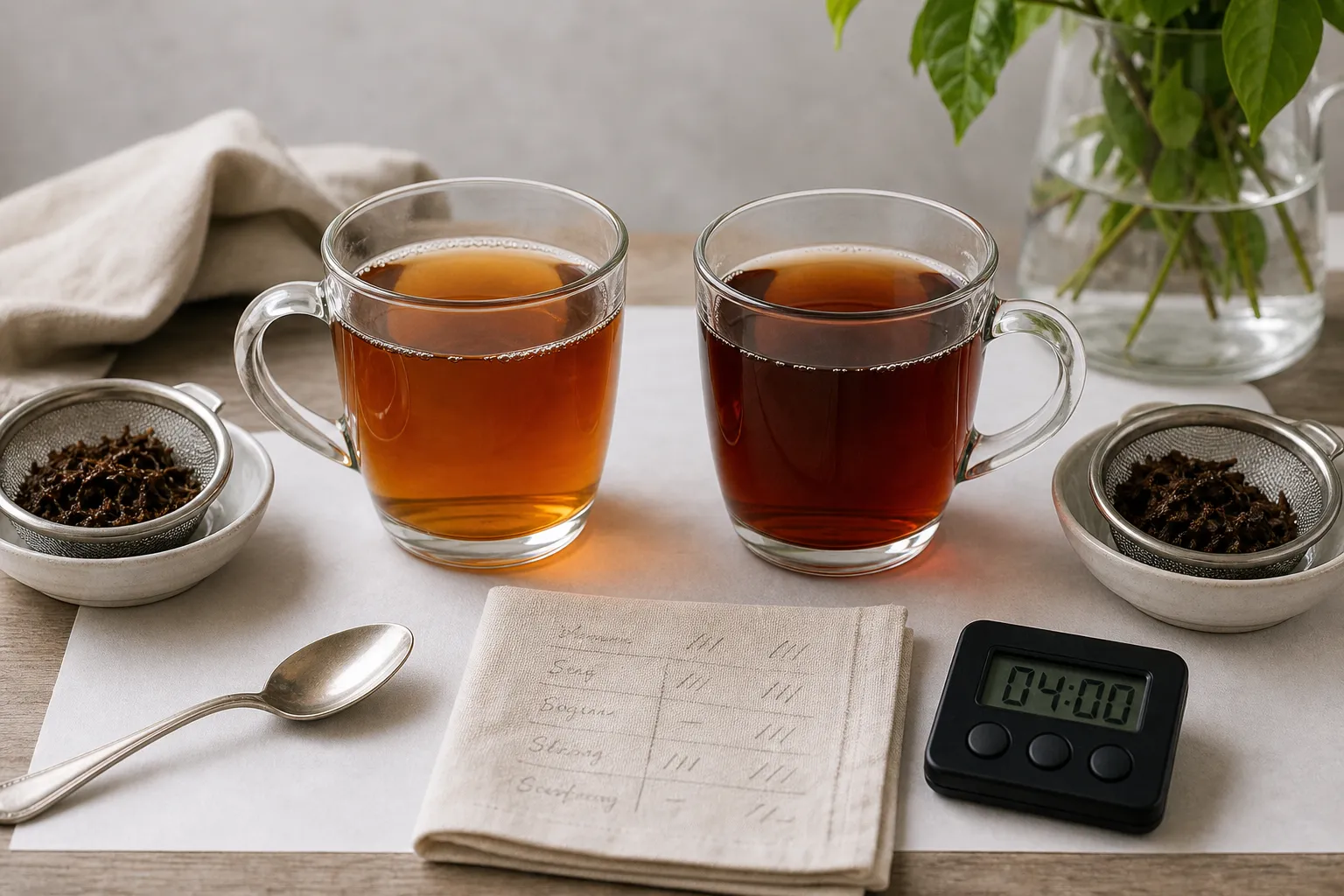
- Use the same mug or small teapot for both teas.
- Keep the water volume the same.
- Start with a familiar leaf amount.
- Taste once near the middle of the steep and once at the end.
- Note color, aroma, body, briskness, bitterness, and astringency.
This is not a formal test. It is a way to stop guessing.
Common Misunderstanding: Leaf Size Is Not a Quality Ranking
The biggest mistake is treating whole leaf vs broken leaf tea as a simple quality ladder.
Whole leaf can look more elegant and often gives more room for gradual aroma development, but it is not automatically better. Broken leaf can look less refined, but it is not automatically worse. Some broken leaf teas are designed for a bold, reliable cup. Some whole leaf teas are delicate, subtle, or simply meant for a different style of brewing.
Another common confusion is assuming leaf size decides caffeine on its own. It does not. In the cup, what usually feels like “strength” is shaped by extraction, ratio, steep time, and astringency. A broken leaf tea may seem stronger because it extracts faster, not because leaf size alone proves anything about caffeine.
Grade terms can add to the confusion. In black tea, grading language often describes appearance, cut size, or sorting categories more than a guaranteed flavor outcome. It can still be useful, especially when you compare teas from the same producer or style, but it is not a universal quality code.
There is also a style preference hidden in the choice. If you like a bright, brisk breakfast cup, broken leaf may fit better. If you drink black tea plain and want more room to follow aroma and texture, whole leaf may suit you better. Neither preference needs to be defended as the “correct” one.
A Practical Buying Check
When buying black tea for Western-style brewing, treat leaf form as one clue among several.
Look at the dry leaf if you can. Ask whether the tea is meant for plain drinking, milk tea, breakfast blends, or slower tasting. Notice whether the seller explains brewing behavior or only talks about appearance.
For whole leaf black tea western style, a good match is a tea that still gives enough body in a larger cup. Some large-leaf teas taste elegant but too quiet if brewed too lightly. If you want a fuller cup, be ready to use a slightly higher ratio while keeping the steep under control.
For broken leaf black tea brewing, a good match is a tea whose briskness feels lively rather than rough. If the tea is meant for milk, quick color and firm body may be exactly the point. If you drink it plain, watch the steep more closely so astringency does not take over.
Storage can blur the comparison. A fresh broken leaf tea may taste more vivid than an old whole leaf tea. A well-stored whole leaf tea may show more aroma than a broken leaf tea left in a loose pouch near heat or kitchen odors. Keep black tea sealed, dry, and away from strong smells if you want the leaf-form comparison to mean much.
The Short Version
If you are choosing between whole leaf and broken leaf black tea for Western brewing, start with the cup you want.
Choose whole leaf when you want a slower-opening tea with more room for aroma, body, and a gradual steep. Choose broken leaf when you want quicker color, quicker briskness, and a more direct cup, especially for breakfast-style brewing or tea with milk.
Then adjust gently. For whole leaf, consider a little more time or a slightly higher leaf ratio if the cup feels thin. For broken leaf, consider a shorter steep or a lighter measure if the cup turns sharp, bitter, or drying. The most useful clues are visible: the dry leaf size, the speed of color release, the aroma rising from the cup, and how the finish feels after a few sips.
Leaf size is a brewing clue, not a verdict. The best result comes from matching the leaf form to your preferred cup and changing one variable at a time.