Brewing judgment
Can Too Much Tea Leaf Make Black Tea Bitter or Just Stronger
Too much tea leaf can make black tea stronger, bitter, or both. The first change is usually concentration: darker liquor, heavier body, louder aroma, and more forceful briskness. Bitterness and a drying mouthfeel become more likely when that extra leaf meets a long steep, very hot water, a fine-cut tea, or a style that already leans sharp.
So the practical answer is simple: leaf amount raises intensity, but bitterness depends on the whole brew.
If your black tea tastes stronger but still rounded, you may simply like a fuller cup. If it tastes harsh, papery-dry, or sharply unpleasant after swallowing, the brew is not just strong; it is probably too leaf-heavy for your steep time, water volume, or taste preference.
upward
Read the full overview first
Use the broader guide first if you need the full scope before this page.
Stronger Is Not the Same as Bitter
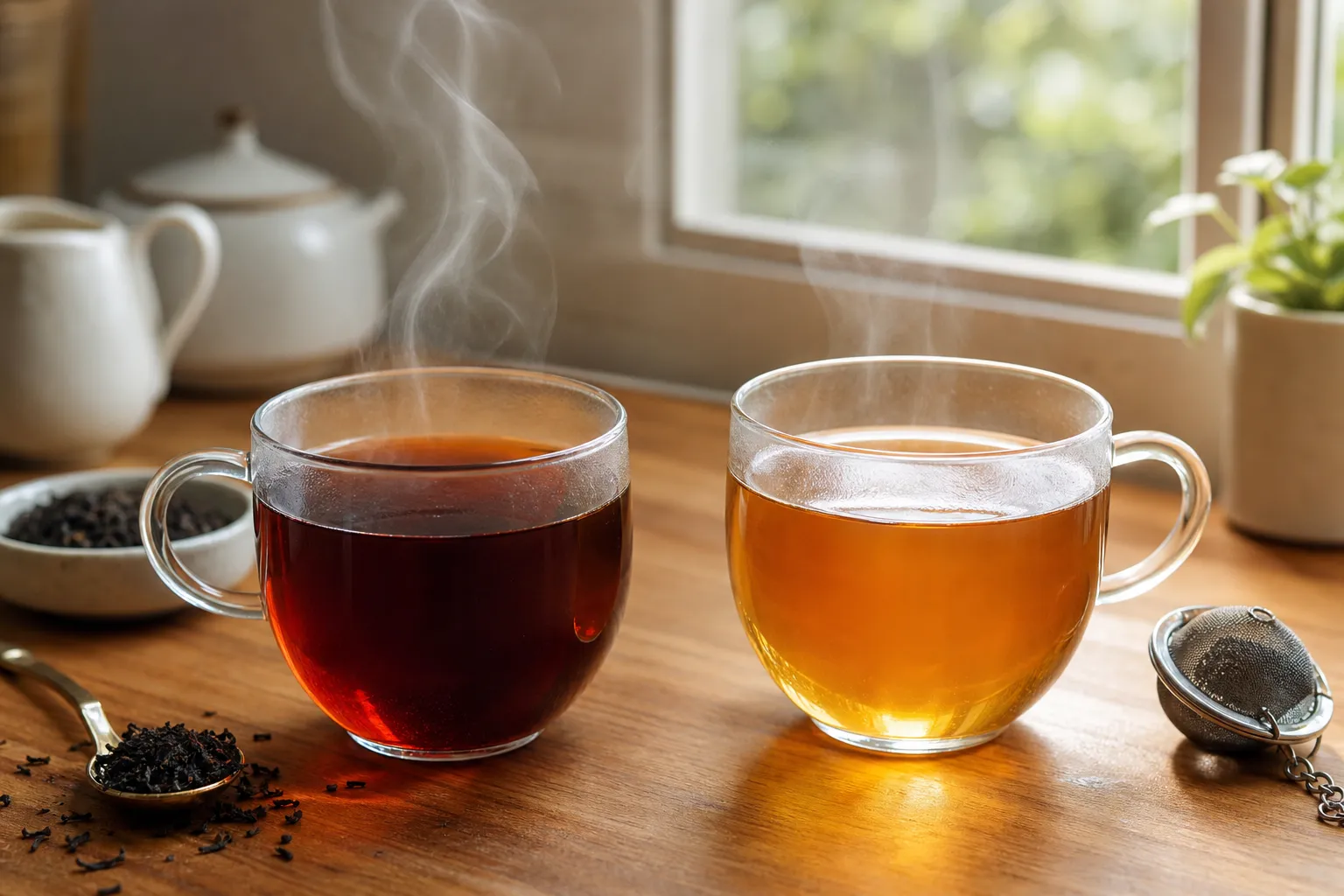
A stronger black tea has more presence in the cup. The color may move from amber-brown to deeper copper or dark reddish brown. The body may feel heavier. Malt, fruit, spice, smoke, or baked notes may become easier to notice. Milk may stand up better to the tea. That is strength.
Bitterness is narrower. It lands as a sharper, more biting taste. It can appear alongside astringency, but the two are not identical. Astringency is the drying, gripping sensation that makes the mouth feel tight after a sip. A cup can be brisk and drying without tasting deeply bitter; it can also taste bitter without much body.
That distinction matters because reducing tea leaf amount is not always the right first fix. If the cup is bold but pleasant, the leaf amount may be fine. If the cup is thin but bitter, the issue may be steeping time, water volume, tea freshness, or a leaf style that has been pushed past its comfortable range. If the cup is both heavy and harsh, leaf amount and time are probably working together.
A useful tasting check is simple: take one sip while the tea is hot, then another when it has cooled slightly. If the main issue is only force, the cooler cup may still taste balanced. If bitterness and drying grip become more obvious as it cools, the next brew needs a gentler adjustment.
When Too Much Black Tea Leaf Turns Harsh
Overleafed black tea is most likely to feel harsh when concentration and extraction pressure stack up. There is no single spoon measure that settles every cup, because black tea style, leaf size, water volume, and personal preference all change the result. Watch the cup, not just the formula.
Several variables can push a strong cup toward bitterness:
Leaf amount
More leaf in the same water volume gives the cup more density. That can be pleasant for milk tea or a brisk morning cup, but it leaves less room for a long steep.
Steeping time
A longer black tea steeping time can make an already leaf-heavy mug taste sharper. If the tea is strong and rough, shortening the infusion is often the cleanest first test.
Leaf size
Smaller pieces and broken leaves usually brew quickly in everyday use. A fine-cut tea bag or small-leaf blend can become intense faster than a larger whole-leaf tea.
Water volume
A packed infuser in a small mug is not the same as the same scoop in a larger pot. The question is leaf against water, not leaf alone.
Water temperature
Very hot water can make a concentrated brew feel more forceful. Some black teas handle that well; others show more edge.
Freshness and storage
A tired tea may not become more aromatic when you use extra leaf. It may simply turn darker, heavier, and more drying.
The pattern is easy to notice in the cup: darker liquor, heavier body, less clear aroma, stronger briskness, then a harsh aftertaste if the brew goes too far. Extra leaf does not automatically ruin black tea. It reduces the margin for a careless steep.
If you enjoy a strong black tea, keep the extra leaf but shorten the infusion. If you want a gentler cup, reduce the leaf and keep the time steady. Change one thing at a time.
How to Tell What Needs Adjusting
The fastest way to diagnose the problem is to separate the sip into appearance, aroma, body, and finish. You do not need formal tasting language; you need repeatable observations.
If the liquor is much darker than usual but the aroma still smells lively, the tea may simply be concentrated. Try the same leaf amount with a shorter steep before reducing the leaf. A shorter infusion can keep the body while trimming the rough edge.
If the aroma seems muted and the finish is sharp, reduce the leaf amount or add more water. Too much black tea leaf can crowd a small mug, especially when the infuser is tightly packed.
If the mouthfeel is the main problem, look at time. A drying mouthfeel often becomes more obvious when the brew sits too long. The cup may not taste extremely bitter at first, but the finish can grip the tongue and cheeks. Shortening the steep is usually more targeted than covering the sensation with sugar or milk.
If the tea tastes weak and bitter at the same time, do not add more leaf immediately. That combination can happen when the rounded aroma and body are low but the sharp notes have taken over. The next test should be a fresher tea, a shorter infusion, or a different water volume, not simply a larger spoonful.
Diagnosis by Cup Clue
Darker liquor, full body, pleasant finish
Strong, not necessarily bitter
Keep the leaf; steep a little less if needed.
Heavy body plus sharp aftertaste
Strong and overdone
Shorten time or reduce leaf.
Drying mouthfeel more than bitter taste
Astringent edge
Shorten steep time first.
Thin body but bitter finish
Not enough rounded flavor
Do not add leaf yet; adjust time, water, or freshness.
Muted aroma, rough finish
Concentrated but not expressive
Use less leaf or more water.
This comparison works better than chasing an exact spoon measure. A whole-leaf black tea, a broken-leaf breakfast blend, and a fine-cut tea bag will not behave the same way in the same mug.
Why Package Directions May Not Settle It
Package brewing instructions are useful as a starting point, not a verdict. They often assume a general serving size, a broad taste preference, and a particular way of preparing the tea. Your mug size, infuser space, water, and drinking style may be different.
This is where strong black tea bitterness becomes easy to misread. A package may suggest a generous amount of leaf because the tea is meant to hold milk. Brewed plain, that same amount may feel too brisk. Another tea may seem mild at the suggested amount, so a little more leaf gives it welcome body without bitterness. Neither result makes the label wrong; it means the label cannot know your cup.
Tea shop words can blur the issue too. Brisk, bold, robust, and full-bodied usually point toward intensity. They do not automatically mean bitter. A brisk tea can feel lively and clean. A harsh tea feels rougher and less balanced. Treat those words as expectations, then let the brewed cup confirm them.
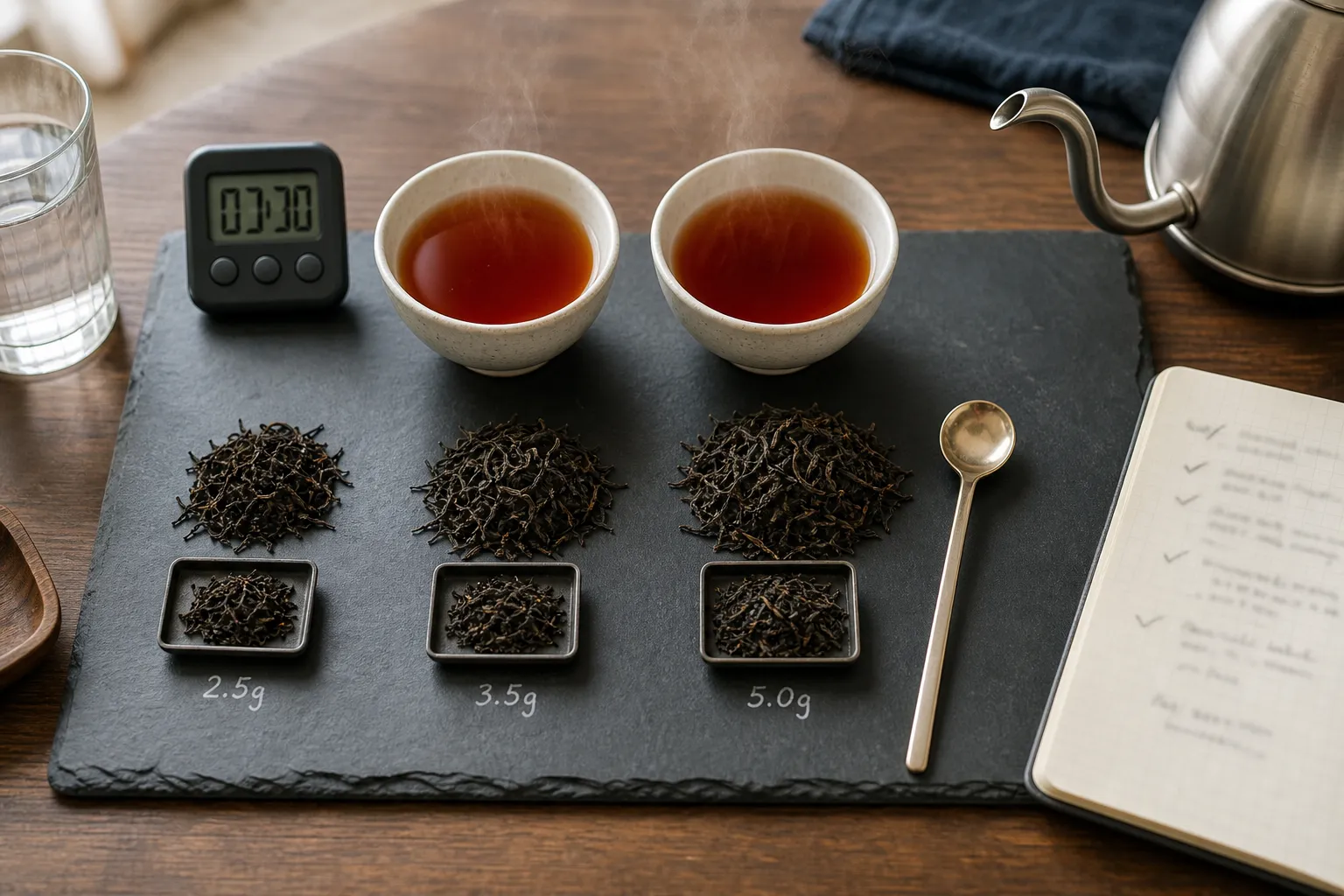
For your own reference point, use the same mug, water level, and steep time for two cups. Brew one with your usual leaf amount and one with slightly less. If the lighter cup keeps the aroma and loses the bite, the original was probably overleafed for your preference. If the lighter cup tastes hollow, keep the leaf and shorten the time instead.
A Simple Rule for the Next Cup
When black tea tastes bitter after you used extra leaf, do not assume all strong black tea is bitter. Ask which part changed: color, body, aroma, mouthfeel, or finish.
For a stronger cup without as much roughness, use a little more leaf and a shorter steep. For a smoother everyday cup, use less leaf with the same water volume. For a tea that turns sharp quickly, avoid packing the infuser tightly and taste earlier than usual.
A good black tea can be bold, dark, and brisk without becoming unpleasant. The warning sign is not strength by itself. It is the combination of heavy concentration, drying grip, faded aroma, and harsh finish. When that shows up, reduce the leaf, shorten the steep, or give the same leaves more water before judging the tea itself.