Black Tea Brewing
Why Tea Bags Make Black Tea Taste Bitter Faster Than Loose Leaf
A tea bag black tea tastes bitter faster mostly because many bags contain smaller, more broken tea particles than many loose-leaf black teas. Fine pieces release color, strength, briskness, and drying astringency quickly, especially in very hot water or a small mug.
That does not make every tea bag harsh, and it does not make every loose tea gentle. Blend style, leaf grade, freshness, storage, water, steeping time, temperature, and tea-to-water ratio all matter. But if your bagged black tea moves from strong to sharp in a short window, leaf form and brewing method are the first things to check.
upward
Start with the broader guide
Use the broader guide first if you need the full scope before this page.
The Fast Bitterness Problem Starts With Leaf Form
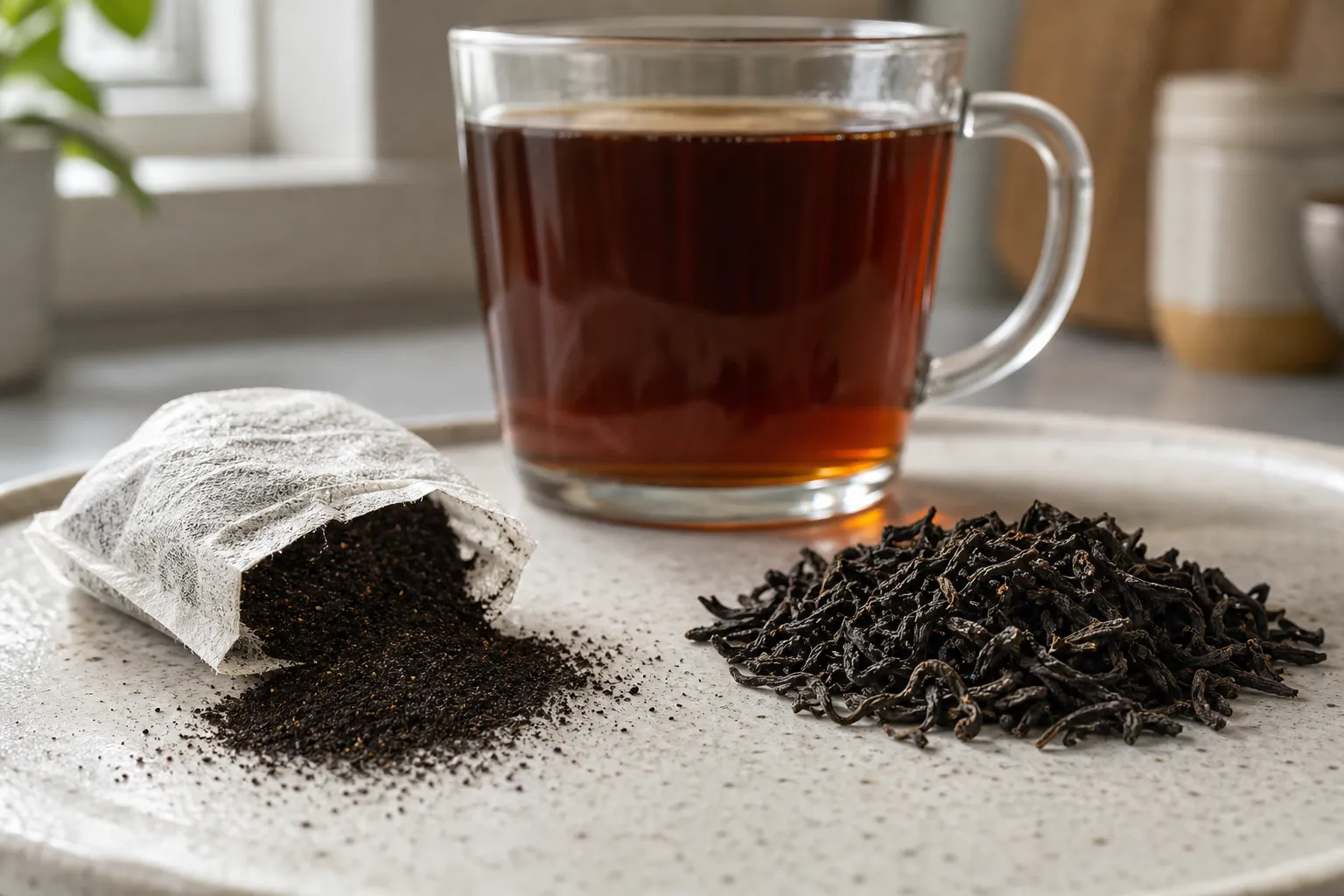
If the bag lets you see inside, look at the tea before brewing. Many everyday black tea bags hold fine particles rather than long, twisted, or visibly whole leaf pieces. Some packages use words such as “broken leaf,” “fannings,” or “dust,” though those terms are not always explained clearly on consumer packaging.
The practical point is simple: smaller pieces expose more leaf surface to the water. In the cup, that often means the liquor darkens quickly. A bagged black tea may turn deep amber or brown in the first minute or two, smell bold at first, then taste flatter, drier, or sharper as the steep continues.
Loose leaf black tea often behaves more gradually because the pieces are larger and less powdery. A larger-leaf Assam, Ceylon, Keemun, or breakfast-style blend can still become bitter if brewed too long or too strong, but the change is usually easier to watch. You can see the leaves open, taste the liquor as it builds, and stop before the finish turns too dry.
So the issue is not simply “bag versus loose.” It is how much leaf surface is exposed, how fast the brew concentrates, and whether the method suits that form of tea.
What Bitterness and Astringency Feel Like
People often use “bitter” for several sensations in black tea. Bitterness is a taste on the tongue. Astringency is the dry, gripping feeling on the gums, cheeks, and finish. A strong black tea liquor can have both: dark concentration plus a drying pull that makes the cup feel harsher than expected.
With black tea bags, the problem may show up as:
- Liquor that darkens quickly but tastes stronger than it smells.
- A drying finish before the tea tastes rounded.
- A flat, papery, or dull aroma after the first bold burst.
- A hard edge that becomes more obvious as the cup cools.
- A brew that tastes fine with milk but rough when taken plain.
Loose leaf black tea bitterness can happen too. A broken-leaf loose blend, stale tea, a heavy scoop, a small cup, or a long steep in very hot water can create a similar result. Loose leaf simply gives you more visible clues: whether the leaf is wiry, chunky, broken, or powdery, and how quickly it opens in the water.
Brewing Variables That Make Bagged Black Tea Turn Harsh
If a black tea bag tastes bitter, the bag may not be the only cause. The same tea can taste quite different with a few brewing changes.
Steeping time
Many tea bags are left in too long because they are easy to forget. If the liquor is already dark after two minutes, a five-minute steep may push the cup from brisk to harsh. With a new tea bag, taste before the package’s longest suggested time.
Water temperature
Black tea is often brewed with very hot water, but not every bagged blend responds well to the same heat. If the cup tastes sharp, try letting freshly boiled water stand briefly before pouring. Treat this as an adjustment, not a universal rule.
Tea-to-water ratio
One strong tea bag in a small mug can become concentrated fast. The same bag in a larger mug may taste lighter and less drying. If your usual cup is small, ratio may be part of the problem.
Agitation
Squeezing the bag, pressing it with a spoon, or stirring repeatedly can make the cup taste more forceful. Some drinkers like that brisk strength, especially with milk. If you drink black tea plain, remove the bag without squeezing and compare.
Freshness and storage
Black tea kept near heat, light, moisture, or strong kitchen odors can lose aroma. When fragrance fades, bitterness and astringency stand out more. Keep tea bags or loose leaf in a dry, closed container away from steam, sunlight, and spice cabinets.
Water character
Tap water can change the cup. Some water makes black tea seem flatter; some makes it sharper. If the same tea tastes better in another place, water may be one reason.
These are cup-level checks, not lab controls. They help you decide whether black tea bags bitterness is coming from leaf form, brew method, storage, or a mix of all three.
A Practical Test for Your Own Cup
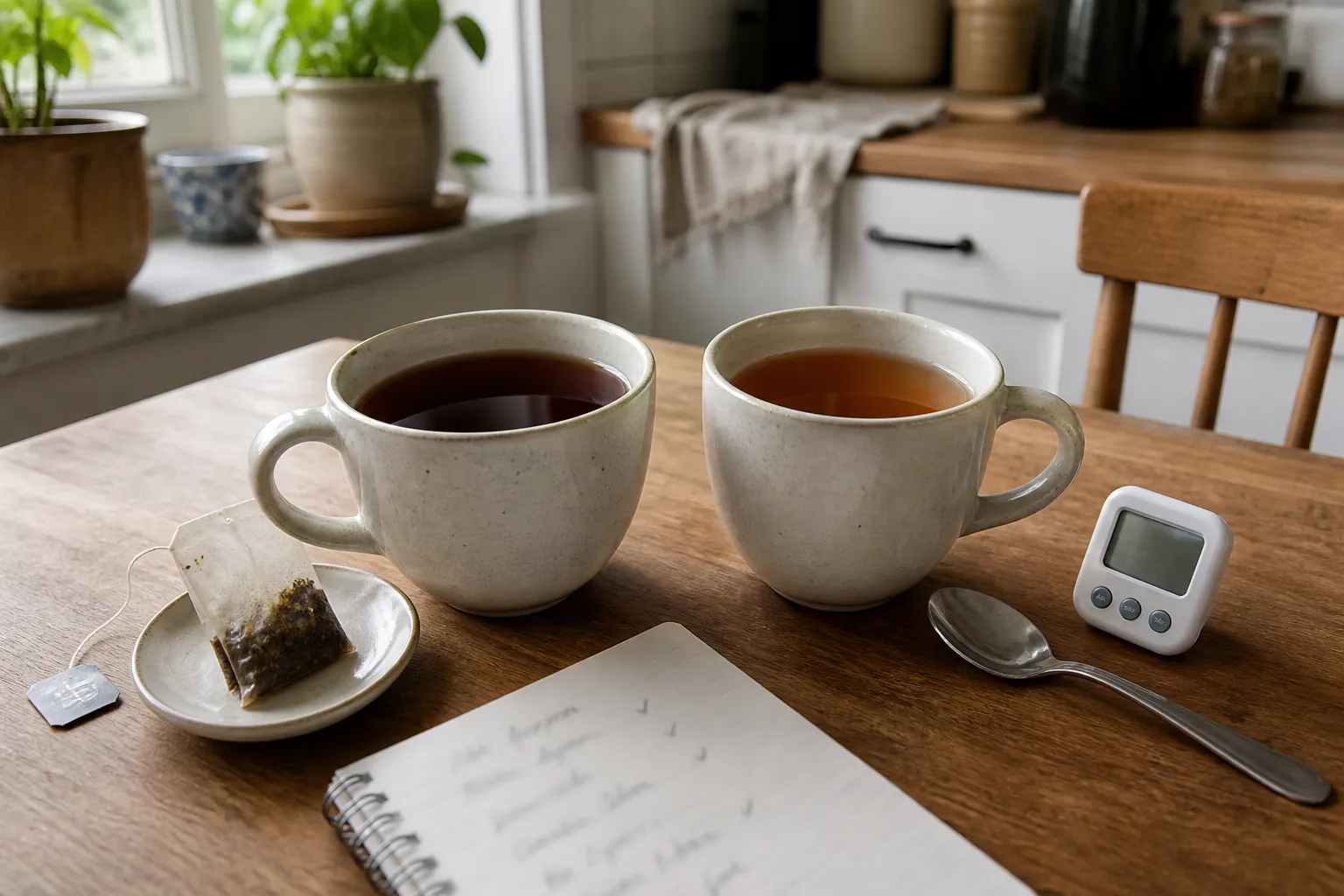
You do not need special equipment. Use one tea bag, one mug, and your normal water. Brew once the way you usually do, then brew again with a shorter, gentler method.
For the second cup:
- Use the same mug size.
- Pour hot water as usual, or let it stand briefly if the first cup was very sharp.
- Start tasting around two minutes.
- Remove the bag as soon as the liquor tastes full enough.
- Do not squeeze the bag.
- Notice whether the finish is brisk, dry, bitter, or simply strong.
If the shorter brew tastes cleaner, the original cup was probably over-extracted for that tea bag and mug size. If it still tastes harsh early, the tea may be very fine, stale, heavily blended for strength, or simply not suited to your taste plain. If it tastes thin when brewed shorter but rough when brewed longer, it may be a blend that works better with milk, sugar, lemon, or a larger volume of water.
You can run the same comparison with loose leaf. Use a reasonable amount, give the leaves room to expand, and taste at intervals. You may notice a slower build. Or you may find that a broken leaf black tea in loose form behaves much like a bag. That is useful: it shows that particle size, blend style, and brewing method matter more than format alone.
Tea Bags Are Not Automatically Lower Quality
A common misunderstanding is that tea bags taste bitter because they are always made from bad tea. That is too broad. Some bagged black teas are blended for speed, strength, convenience, and a consistent cup. Those goals are different from a slow, aromatic loose-leaf session, but they are not automatically wrong.
Another misunderstanding is that loose leaf cannot be bitter. It can. A loose tea with many small fragments, too much leaf, very hot water, or a long steep can taste just as rough as a bagged tea. Loose leaf gives more control, not immunity.
Package wording can also mislead. Terms such as “broken leaf,” “fannings,” and “dust” may suggest smaller leaf sizes, but they should be read as clues rather than final verdicts. A well-balanced small-particle blend may taste brisk and clean. A tired loose tea may taste dull and drying. The cup is the final check.
When Loose Leaf Is the Better Fix
If you drink black tea plain and dislike a drying finish, loose leaf may give you more room to adjust. Larger visible leaves make it easier to control steeping time, tea-to-water ratio, and strength. You can use less leaf, shorten the infusion, or brew in a pot where the leaves have space to open.
Loose leaf is especially helpful when you want aroma and texture: malt, cocoa, raisin, citrus peel, honeyed wood, floral hints, or a clean snap of briskness. Those notes can be harder to notice when a tea bag produces a strong liquor very quickly.
A tea bag may still be the better choice when you want speed, consistency, and a cup that takes milk well. In that case, bitterness may not mean the tea is “bad.” It may mean the brew has gone past the point you enjoy. Shortening the steep, using a slightly larger mug, or removing the bag without pressing it may be enough.
Watch the Liquor, Not the Clock Alone
The best answer is not “never use tea bags” or “always brew loose leaf.” Watch how quickly the cup changes. If the liquor darkens fast, the aroma fades fast, and the finish turns dry before the tea tastes rounded, treat that bag as a quick-infusing tea. Shorten the steep and stop before strength turns sharp.
If loose leaf opens slowly and the cup gains body over several minutes, give it more time while tasting along the way. If a loose broken-leaf tea becomes harsh quickly, handle it more like a strong tea bag: shorter infusion, more water, less agitation, or a smaller amount of leaf.
The practical conclusion is narrow but useful: many black tea bags can taste bitter faster because fine or broken contents, hot water, long steeping, strong ratios, storage, and water character can make harshness appear quickly. Loose leaf often gives more visible control, but it can also become bitter when brewed too hard.
For the next cup, change only one thing. Remove the bag sooner, use a little more water, skip squeezing, or try a fresher tea. If the cup becomes cleaner while staying flavorful, you have found the variable that mattered most.
FAQ
Why does my tea bag black tea taste bitter after only a few minutes?
It may contain fine or broken tea particles that release strength quickly. A small mug, very hot water, long steeping, or squeezing the bag can make that bitterness and drying astringency appear sooner.
Is loose leaf black tea always less bitter?
No. Loose leaf can become bitter if it is broken, stale, over-measured, brewed too hot, or steeped too long. It often gives more control because you can see the leaf and remove it cleanly, but it is not bitterness-proof.
Should I squeeze the tea bag?
If you like a forceful cup with milk, you may enjoy the extra strength. If you drink black tea plain and find the finish rough, try removing the bag without squeezing.
What is the easiest fix for bitter bagged black tea?
Start by shortening the steep. Taste around two minutes, remove the bag when the liquor is strong enough, and avoid pressing it. If the cup still tastes harsh, try more water, slightly cooler water, or a fresher tea.
What to Check First
- Look for fine, broken, or powdery leaf in the bag.
- Taste before the longest suggested steeping time.
- Remove the bag without squeezing if you drink tea plain.
- Change one variable at a time: time, water, ratio, or freshness.