Black tea tasting guide
Bitter vs Astringent Black Tea: How to Tell the Difference
Bitter vs astringent black tea comes down to a simple tasting split: bitterness is a flavor on the tongue; astringency is a drying, tightening mouthfeel. Bitter black tea tastes sharp, dark, burnt, or unpleasantly harsh. Black tea astringency feels more like grip: dry cheeks, tight gums, a rough tongue surface, or a puckering finish after you swallow.
A cup can be both, especially when it is brewed too strong. But if you slow down for two or three sips and change only one brewing variable at a time, you can usually tell whether the problem is taste, texture, or concentration.
The practical split
Bitterness shows as harsh taste during the sip. Astringency shows as a dry, tight, or puckering finish after the sip.
upward
Start with the broader guide
Use the broader guide first if you need the full scope before this page.
The Quick Cup Test
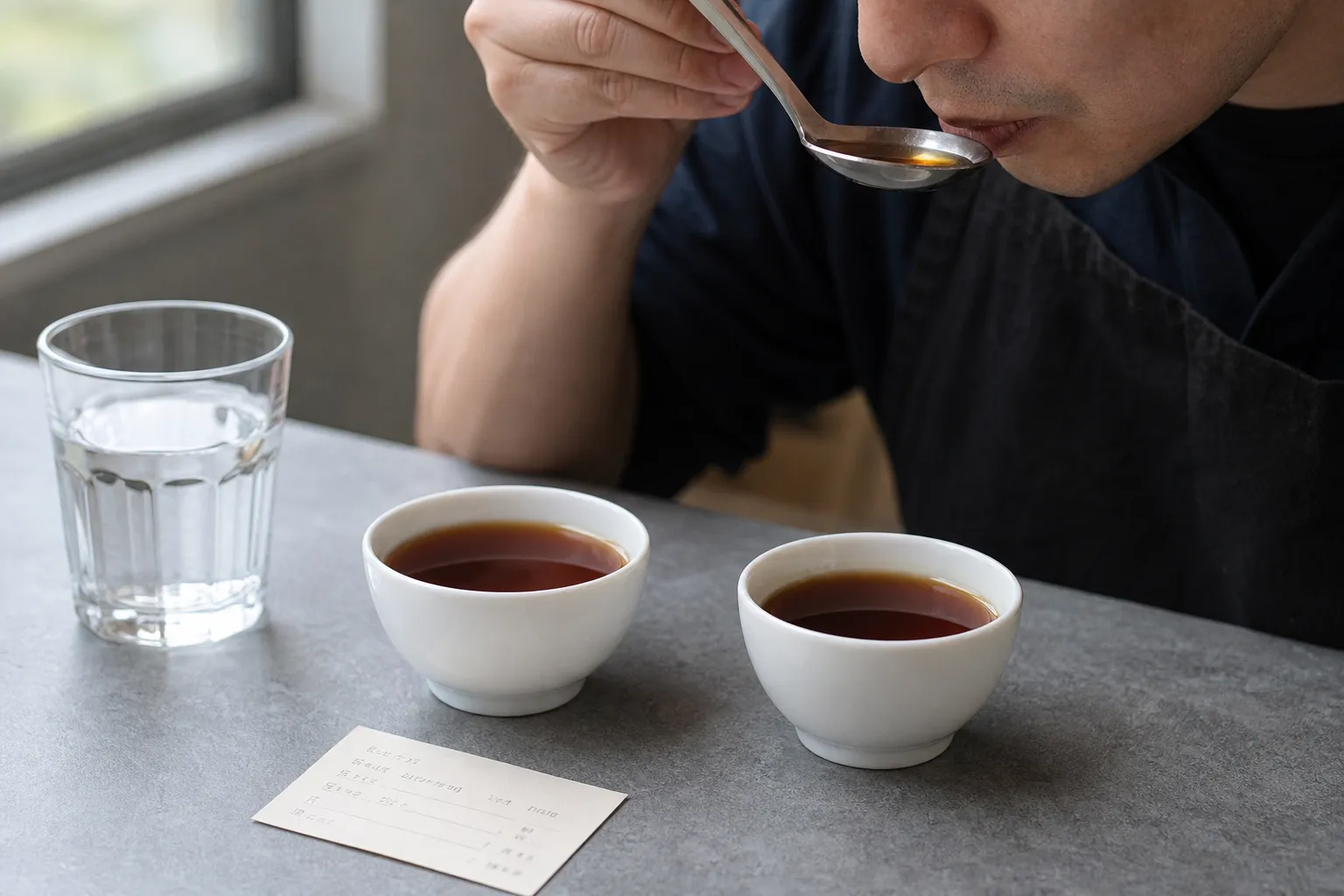
Sip the tea while it is warm but not scalding. Let it cross your tongue, swallow, then wait a few seconds.
If the main problem appears as a harsh flavor during the sip, you are probably noticing bitterness. It often lands on the center or back of the tongue and may taste sharp, burnt, overcooked, or aggressively dark.
If the main problem appears after the sip, when your mouth feels dry, tight, or slightly rough, you are probably noticing astringency. It may feel as if the inside of your cheeks has lost moisture, or as if your gums have a fine grip on them.
| What you notice | More likely bitterness | More likely astringency |
|---|---|---|
| Where it shows up | Tongue | Cheeks, gums, tongue surface |
| What it feels like | Sharp or unpleasant taste | Drying, tightening, puckering |
| When it appears | During the sip | Often in the finish |
| What you might say | “This tastes bitter” | “This makes my mouth feel dry” |
| First adjustment to try | Shorter time or slightly cooler water | Less leaf, shorter time, or dilution |
This is a practical cup test, not a final judgment on the tea. The same black tea can taste balanced in one brew and harsh in another if the steeping time, water temperature, leaf quantity, or water-to-tea ratio changes.
What Bitterness Feels Like in Black Tea
Bitterness is easiest to notice when it stands apart from the tea’s body and aroma. Some black teas are naturally brisk, malty, smoky, woody, or dark-fruited. Those qualities are not the same as bitterness. A strong breakfast-style black tea, for example, can feel full and firm without tasting unpleasant.
Bitter black tea taste becomes clearer when the cup feels sharp rather than simply strong. It may crowd out malt, honey, dried fruit, cocoa, spice, smoke, or floral notes, leaving mostly a hard edge.
Common clues include:
- The harsh taste appears immediately on the tongue.
- The tea tastes severe before the finish develops.
- Adding hot water softens the flavor quickly.
- A shorter steep makes the next cup taste cleaner.
- The aroma may be pleasant, but the sip feels too sharp.
Bitterness is not always a leaf flaw. It can come from steeping too long, using too much leaf, or brewing a fast-infusing tea as if it were a slower one. Broken-leaf blends and some tea bags can intensify quickly because smaller particles expose more surface area. That does not make them worse; it means they may need a shorter or gentler brew.
Water temperature can matter too. Many black teas handle very hot water well, but if your cup turns sharply bitter, try keeping the same leaf amount and time while using slightly cooler water next time. If the edge recedes and the tea still has body, temperature was probably part of the issue.
What Astringency Feels Like in Black Tea
Astringency is the drying mouthfeel in black tea: puckering, gripping, raspy, or tight. It can appear even when the tea does not taste especially bitter. That is why astringency vs bitterness is worth separating. One is mainly flavor; the other is tactile finish.
Some astringency can be pleasant. It gives black tea briskness and can help a strong cup feel lively, especially with milk or rich food. The problem is not astringency itself. The problem is a drying sensation that overwhelms the cup.
Look for these black tea tasting cues:
- Your cheeks or gums feel dry after swallowing.
- The sides of your tongue feel slightly rough.
- The finish feels tight even if the flavor was not very bitter.
- You want water after the sip because of dryness, not heat.
- The tea feels strong in texture more than strong in flavor.
Astringency often becomes clearer in the finish. The sip may begin normally, then the mouth starts to tighten. That delayed effect is one reason people call astringent tea “bitter.” If the discomfort is mostly a dry mouth feeling from tea rather than a sharp taste on the tongue, adjust for strength and finish first.
A dry finish also does not prove the tea is poor. Some black teas are made to be brisk. Some blends are meant to feel firm enough for milk. Some cups become drying simply because they were steeped too long or brewed too concentrated.
Why Bitterness and Astringency Get Confused
Bitterness and astringency often appear together in an over-strong cup. A heavy spoonful of leaf, very hot water, and a long steep can produce liquor that is both sharp in flavor and drying in texture. Once the whole cup feels punishing, the distinction becomes harder to make.
Everyday language adds to the confusion. Many drinkers use “bitter” for almost any unpleasant tea experience: burnt flavor, rough finish, too much strength, or dry mouth. For brewing, the more precise word helps you choose the next move.
Strength is another common mix-up. Strong black tea is not automatically bitter. A strong cup may have deep color, full body, and a long finish without tasting harsh. Bitterness and astringency become problems when they dominate the cup and hide aroma, sweetness, body, or style.
Freshness and storage can complicate the picture. Tea stored near heat, light, moisture, or strong odors may taste flat, papery, or dull, but that is different from a fresh cup brewed too concentrated. If one cup tastes rough, test the brew before blaming the tea.
Brewing Adjustments That Help You Tell Which Is Which
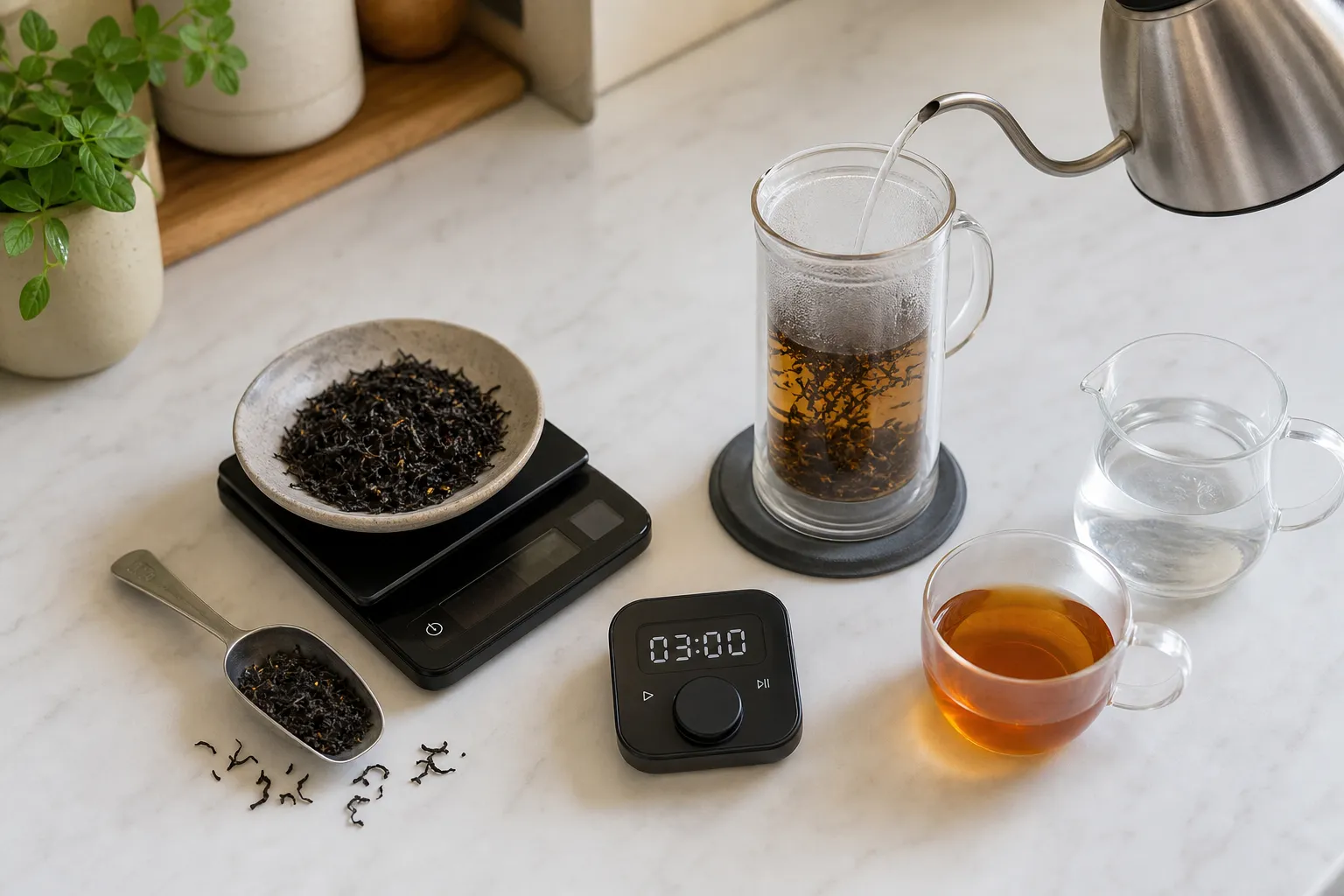
The clearest method is to change one variable at a time. If you change leaf amount, steeping time, water temperature, and mug size together, the next cup may improve, but you will not know why.
If the cup tastes bitter
Shorten the steep first. If you brewed for four or five minutes, reduce the next cup by 30 to 60 seconds while keeping the same leaf amount and water volume. If the bitter edge softens and the tea still has enough body, time was likely the main issue.
If the tea still tastes sharp, try slightly cooler water on the next brew. Do not make the cup lukewarm; just lower the heat enough to see whether the harsh flavor eases.
If the tea remains unpleasant, reduce the leaf quantity. Too much leaf can make bitterness appear quickly, especially with small or broken leaves.
If the cup feels drying or puckering
Reduce concentration first. Add a small splash of hot water to the current cup and taste again. If the drying mouthfeel becomes more manageable, the infusion was probably stronger than you prefer.
For the next brew, use slightly less leaf or a shorter steep. If you like the tea’s flavor but not the grip, adjusting the ratio may preserve more character than lowering every variable at once.
Watch the finish. If the tea tastes good at first but turns rough after swallowing, the issue may be more about astringency than bitterness.
If the cup is both bitter and astringent
Treat it as over-extracted or over-concentrated in practical terms. Use a little less leaf, shorten the infusion, or dilute the brewed tea with hot water. Once the cup is no longer harsh, you can taste more clearly whether the remaining issue is flavor or mouthfeel.
For many black teas, the useful comparison is not “good tea vs bad tea.” It is “this tea at this strength vs this tea brewed more gently.”
What the Leaf and Package Can Tell You
The leaf gives clues, not certainty. Smaller particles, broken leaves, and many tea bags often infuse quickly, so they need closer attention to time and strength. Larger loose leaves may open more slowly, but that does not guarantee a mild cup. Dark liquor can suggest strength, but color alone does not prove bitterness or astringency.
Package words such as “bold,” “brisk,” “strong,” “breakfast,” or “full-bodied” can prepare you for a firmer cup. They cannot tell you exactly how dry or bitter your brew will taste. Different sellers and styles use these words differently.
Water amount and vessel size matter more than many people expect. A heaped spoon in a small mug is not the same as the same spoon in a large pot. If you compare two teas, keep the vessel, leaf quantity, water amount, temperature, and steeping time as consistent as you can.
The main limit is simple: one cup is a clue, not a verdict. You can say, “This brew tastes bitter,” or “This infusion has a drying finish,” with confidence. Be slower to say, “This tea is bad,” unless you have brewed it carefully more than once and still dislike it.
A Short Tasting Routine for the Next Cup
Use this routine when you want a clearer answer without turning tea into a formal tasting session.
- 1. Brew the tea as you normally would.
- 2. Take one sip and ask whether the main problem is taste or mouthfeel.
- 3. Notice location: tongue for bitterness, cheeks and gums for astringency.
- 4. Notice timing: immediate sharpness or delayed dry finish.
- 5. Add a small splash of hot water and taste again.
- 6. For the next cup, change only one thing: time, temperature, or leaf amount.
If dilution improves the cup immediately, the brew was probably too concentrated for your taste. If a shorter steep fixes the next cup, time was the easier lever. If slightly cooler water softens the sharp edge while preserving aroma and body, temperature may be worth adjusting for that tea. If none of these helps, the tea’s style, freshness, storage condition, water, or your own preference may be the larger factor.
The useful answer is a brewing direction, not a permanent label. Bitterness tells you to look for sharp taste on the tongue and test time, temperature, and concentration. Astringency tells you to look for drying or puckering texture and test strength, finish, and dilution. Once you separate those cues, black tea becomes easier to adjust, compare, and describe.
FAQ
Can black tea be bitter and astringent at the same time?
Yes. An over-strong black tea can taste sharp on the tongue and leave a drying finish. If both happen together, make the next cup gentler before trying to identify the finer cause.
Is astringency always bad in black tea?
No. Moderate astringency can make black tea feel brisk, structured, and refreshing. It becomes a problem when the drying sensation overwhelms the flavor and finish.
Does a bitter cup mean the tea is low quality?
Not by itself. A bitter cup may come from steeping too long, using too much leaf, using very hot water for that tea, or brewing small leaf particles too aggressively. Brew it again with one adjustment before judging the tea.
What is the fastest fix for a cup that feels too dry?
Add a little hot water and taste again. If the drying mouthfeel softens, the tea was likely too concentrated for your preference.