Brewing Troubleshooting
Why Does Black Tea Taste Bitter Even When You Follow the Directions
Black tea can taste bitter even when you follow the directions because those directions are usually a starting point, not a guarantee. They cannot know your mug size, water, leaf form, tea age, or preferred strength. If you are wondering why does black tea taste bitter, the usual answer is a mismatch between the printed method and the actual cup: too much leaf for the water, a steep that ran long for that tea, water that pulled a sharper edge, very broken leaf, a concentrated tea bag, or tea that has gone dull in storage.
Sometimes the problem is not bitterness in the strict sense. It may be astringency: the dry, puckering feeling that makes black tea taste harsh even when the flavor itself is not sharply bitter.
upward
Read the full overview first
Use the broader guide first if you need the full scope before this page.
Start With What the Cup Is Doing
Before changing the whole method, name the unpleasant part of the cup.
A bitter cup feels sharp on the tongue and may linger after swallowing. An overly astringent cup feels drying, as if the inside of your mouth has tightened. A strong black tea can be bold, dark, and brisk without being wrong; it becomes a problem when the strength turns flat, rough, or hard to drink unless you add milk, sugar, lemon, or food.
Look at the liquor and aroma too. If the tea turns very dark quickly, especially from a small bag or finely broken leaves, it may have become concentrated faster than the packet suggested. If the dry tea smells papery, stale, musty, or like the cupboard around it, freshness and storage may be involved. If the aroma is still appealing but the sip feels rough, the issue is more likely brewing balance.
The useful question is not only “Did I follow the label?” It is “Did this method suit this tea, this water, this cup size, and the way I like black tea to taste?”
Package Directions Are Too General for Every Cup
Black tea directions often compress several choices into one short line: use hot water, steep for a few minutes, and remove the leaves or bag. That may make a drinkable cup, but it leaves out details that change flavor quickly.
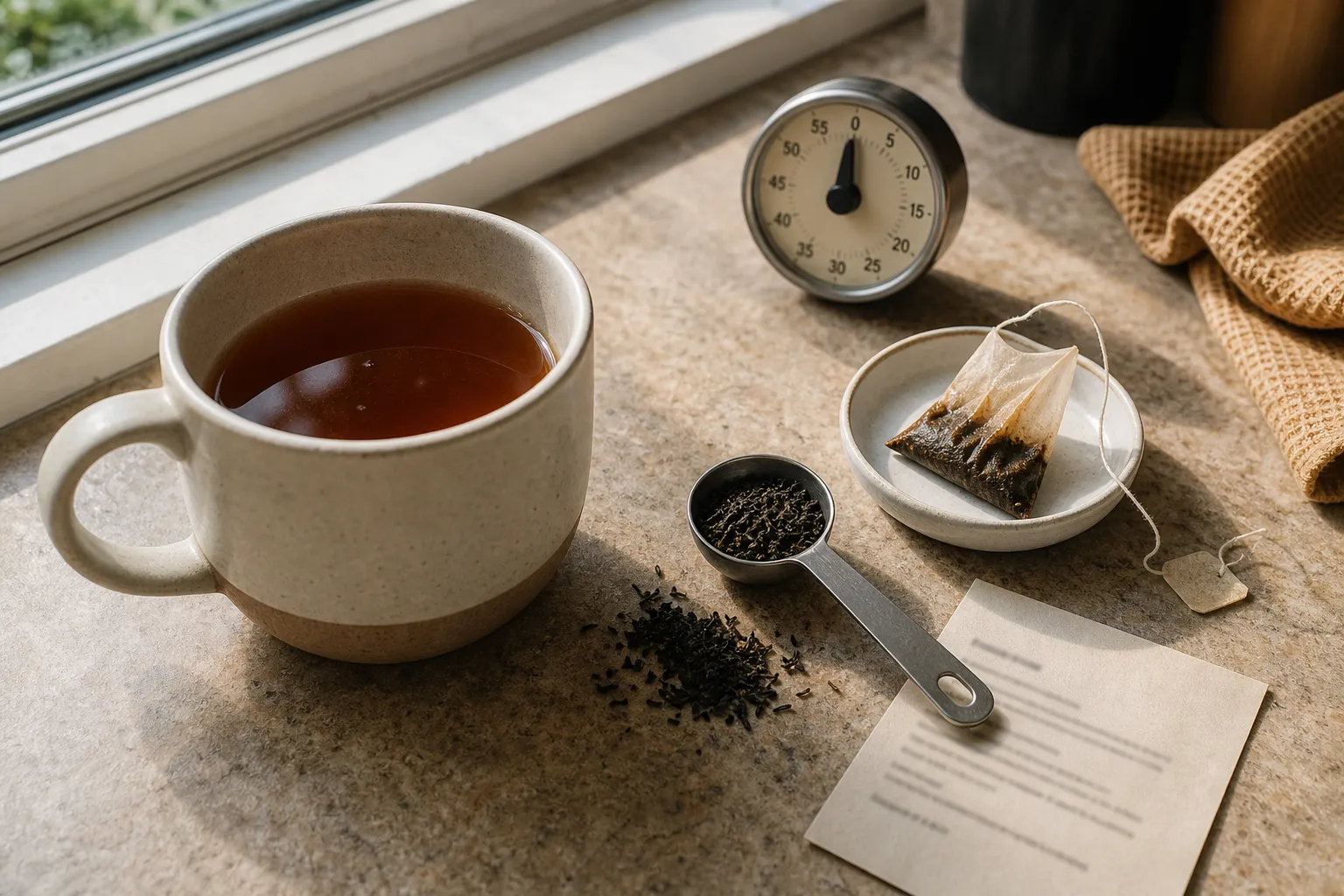
Cup size is an easy one to miss. One tea bag or one spoon of loose leaf in a small mug will taste stronger than the same amount in a larger mug. If the package assumes a different cup size than yours, the leaf to water ratio changes even though you followed the instruction.
Steeping time is another common cause of bitter tea after brewing. A range such as “3–5 minutes” is not one flavor. The lower end may taste lighter and smoother. The higher end may bring more body, more briskness, and more bite. For some black teas, that bite is part of the style. For others, or for your palate, it may read as harsh.
Water temperature also affects how forceful the brew feels. Many black teas are made with very hot water, and many handle it well. Still, if one tea keeps tasting sharp, thinly bitter, or scorched, slightly cooler water is a reasonable troubleshooting step. Treat temperature as a practical adjustment, not a universal rule.
Directions are written for broad convenience. They cannot fully account for broken versus whole leaf, bag versus loose leaf, freshness, water, mug size, and personal preference.
Leaf Form Changes How Fast Strength Builds
You do not need a technical grading chart to see that dust-like particles, small broken pieces, rolled leaves, and larger whole leaves behave differently in the cup.
Tea bags often contain smaller pieces than loose whole-leaf tea. That does not make them bad, but it can make the brew turn dark and strong quickly. If a bagged black tea tastes harsh at the printed steeping time, shorten the infusion before changing everything else. Remove the bag earlier and taste the tea plain.
Broken loose leaf can act the same way. Smaller fragments may give a brisk cup fast, then move into roughness if they sit too long. A tea described as bold, breakfast-style, or strong may also be intended to stand up to milk, which can make it feel severe when drunk plain.
Whole-leaf black tea is not automatically smooth. It can still taste bitter if you use too much, steep it too long, or store it poorly. The practical difference is the window for adjustment: smaller pieces often need a lighter hand, while larger leaves may give you more room to taste as the cup develops.
If the same directions make one tea pleasant and another abrasive, leaf form is one of the first clues to check.
Adjust One Variable at a Time
When black tea tastes harsh, changing everything at once makes it harder to learn what helped. Keep the tea, mug, and water steady, then adjust one thing per brew.
Start with steeping time. If the packet says 4 minutes and the cup is rough, try less time on the next cup. You do not need to make the tea pale and weak; stop early enough to see whether the sharpness softens.
Then check the amount of tea. With loose leaf, a heaped spoon and a level spoon can make noticeably different cups. With tea bags, the hidden variable is often mug size. One bag in a small cup may taste forceful; the same bag in a larger mug may feel balanced. If two bags in a pot taste blunt and heavy, try one bag with a controlled infusion instead of simply doubling.
Next, adjust the water. If the cup has a hard edge, let the kettle settle briefly before pouring, or compare with slightly cooler water. If the tea becomes thin but still unpleasant, temperature is probably not the only issue.
Taste before adding anything. Milk, sugar, honey, or lemon can make a rough cup more pleasant, but they can also hide the clue. A plain sip tells you whether the base infusion is bitter, drying, stale, or simply stronger than you wanted.
A quick troubleshooting path
- If the tea turns dark very quickly, shorten the steep.
- If it tastes heavy and blunt, use less leaf or more water.
- If it feels sharp and drying, reduce steeping time first, then try slightly cooler water.
- If it smells stale or cupboard-like, check storage and freshness.
- If only one style tastes harsh, it may be bolder than your preference.
Freshness and Storage Can Make a Good Method Disappointing
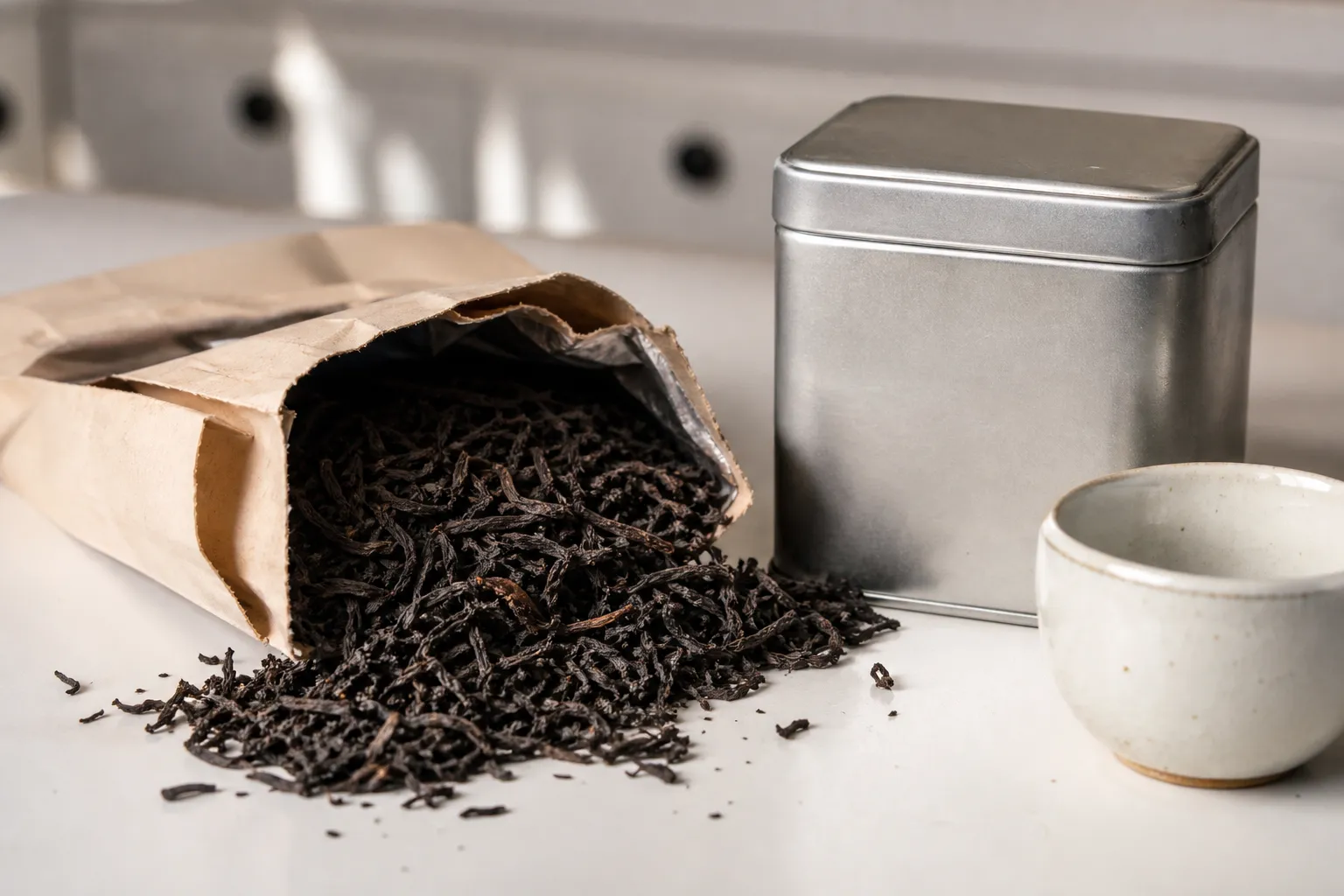
Sometimes the method is not the main problem. Black tea that has been sitting open, loosely closed, or near strong kitchen smells may brew into a cup that tastes flat, dusty, or unpleasantly sharp. Rather than relying on exact age rules, use sensory checks.
Smell the dry leaf or bag before brewing. It should smell recognizably like tea: malty, fruity, woody, floral, brisk, earthy, or simply clean and tea-like, depending on the style. If it smells faint, papery, musty, smoky in a way the tea was not meant to be, or like spices and coffee from the cabinet, the finished cup may taste off even with careful brewing.
Look at the container. A thin paper box left open will not protect tea like a well-closed tin, pouch, or jar kept away from heat, light, moisture, and strong odors. This does not mean every older tea is unusable. It means that when bitterness appears alongside dull aroma and a tired finish, storage belongs on the suspect list.
Freshness also changes expectations. A tea that once tasted round may now taste hollow and rough. If you have brewed it the same way before and only recently started disliking it, compare it with a newly opened tea using the same mug and water. That comparison tells you more than the instruction line can.
Bitter, Brisk, Strong, and Astringent Are Not the Same
Black tea has a wide flavor range. Some cups are soft and sweet-smelling. Others are brisk, dark, and assertive. A strong cup is not automatically a badly brewed cup.
Bitterness or astringency becomes a problem when the tea loses balance for the way you want to drink it. A breakfast blend may be intentionally bold. A tea meant for milk may feel too forceful when served plain. A delicate loose-leaf tea may seem thin if you expect the weight of a tea bag. These are use-case and preference differences, not always brewing failures.
Astringency deserves special attention because many drinkers call it bitterness. It is the dry, gripping mouthfeel rather than just a bitter flavor. If your tongue says “bitter” but your cheeks and gums feel dry, you are likely dealing with an overly astringent black tea. The practical fixes are similar: shorten the steep, reduce the leaf amount, or adjust the water. Naming it accurately helps you stop chasing the wrong problem.
Expectation matters too. If you usually drink flavored black tea, sweet tea, chai, or milk tea, a plain strong black tea may taste severe at first. If you usually drink green or herbal infusions, black tea’s body and briskness may feel more intense. The cup may not be wrong; it may need a lighter brew or a different style.
A Simple Reset Brew
If a black tea keeps tasting bitter even when you follow the directions, run one clean reset.
Use the same tea, a clean mug, and fresh water. Use a modest amount of loose leaf, or one bag in a normal mug rather than a very small cup. Steep at the low end of the package range. Remove the leaves or bag fully; do not leave them sitting in the cup while you drink. Taste the tea plain while it is hot but not scalding.
If the reset cup is smoother, the earlier cup was probably too concentrated for your taste. Add time back gradually if you want more body. If the reset cup is still harsh, check the dry aroma, the tea’s storage, the water, and whether the style is simply more robust than you prefer. If the cup is weak but still bitter, the issue may be the tea itself or a flavor expectation mismatch rather than steeping time alone.
This is not a laboratory test. It is a practical way to separate a brewing problem from a tea preference problem.
When the Directions May Still Be Right
The label may be right for the producer’s intended cup and still wrong for yours. A printed method might aim for a strong black tea taste that works with milk. It might assume a particular cup size. It might be written for speed and consistency rather than careful tasting. It might also suit many drinkers while your palate prefers a shorter, lighter infusion.
So the next step is small adjustment, not self-blame. Start with the observable clues: dark liquor appearing fast, dry mouthfeel, sharp aftertaste, stale dry-leaf smell, a small mug, a long steep, or very broken leaf.
The short answer is that black tea bitterness usually comes from a mismatch between the directions and the real brewing situation: tea form, water, time, amount, freshness, cup size, and taste preference. Follow the directions once, then let the cup tell you what to change.
Clues to Check First
- Very dark liquor appearing quickly can point to concentration.
- A dry, gripping mouthfeel is often astringency rather than pure bitterness.
- Papery, musty, or cupboard-like aroma can point to storage.
- A small mug changes the strength of the same bag or spoonful.
- A printed range such as 3–5 minutes can produce noticeably different cups.