Troubleshooting the cup
Why Black Tea Gets Dry and Puckery Instead of Flavorful
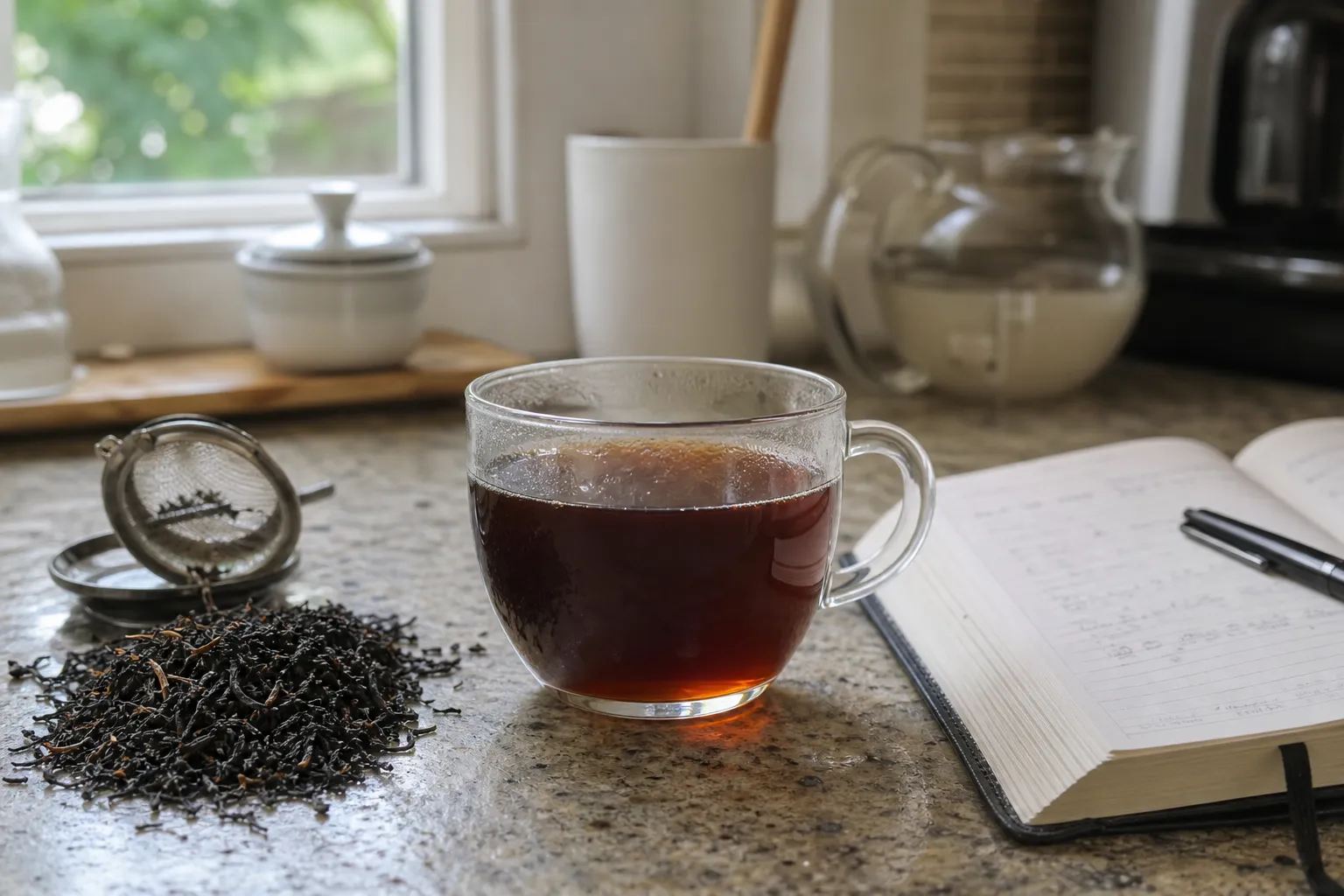
A cup that clamps down on your tongue, dries the sides of your mouth, and leaves little aroma behind is usually not “strong” in the pleasant sense. When black tea tastes dry and puckery, the first thing to check is astringency: a mouthfeel that can make the tea seem rough, tight, or chalky even when the flavor is not deeply bitter.
In many brews, that puckering edge becomes more obvious when the tea steeps too long, uses too much leaf, meets very hot water, or comes from small broken particles that infuse quickly. The fastest next move is simple: brew the same leaf again with a shorter steep, slightly less tea, or water that has cooled briefly after boiling. Compare the mouthfeel before you judge the tea itself.
upward
Start with the broader guide
Use the broader guide first if you need the full scope before this page.
Dryness Is a Mouthfeel, Not Just a Flavor
A puckery black tea often feels as if it pulls moisture from the mouth. The tongue may feel coated or scraped; the gums and cheeks may feel tight. That is different from a tea that simply tastes bitter, smoky, malty, thin, or flat.
The distinction matters because the fix changes with the cue. Bitterness usually shows up as a sharp taste on the tongue. Dryness is more of a tactile finish. A strong black tea taste can be enjoyable when it has body, aroma, and balance; a dry black tea can feel harsh even when the liquor looks rich and dark.
Check the cup in three parts
- Liquor color: Is it deep amber, reddish brown, or nearly opaque?
- Aroma: Do you smell malt, fruit, honey, spice, smoke, or mostly hot leaf?
- Finish: Does the tea fade cleanly, or does it leave a tight grip?
If the liquor is dark but the aroma is weak, the brew may be extracting force without much fragrance. If the aroma is present but the finish is rough, the tea may need less time, less leaf, or a different serving style. If the cup is pale and still puckery, the issue may be leaf condition, particle size, or a naturally brisk style rather than simple over-steeping.
Taste the texture separately from the flavor. Astringency is a black tea mouthfeel cue, not proof that the tea is bad.
Brewing Variables That Often Make Black Tea Pucker
The most common practical cause is extraction getting ahead of balance. You can see it at the kettle through time, temperature, leaf amount, and how tightly the tea sits in the infuser.
Steeping time
Steeping time is the first place to check. Over steeped black tea can move from brisk to rough, especially when the leaf is fine, broken, or packed tightly. If your usual steep is five minutes and the cup feels dry, try three minutes with the same amount of tea. If it still grips hard, try two and a half. Keep the rest of the method steady so the comparison means something.
Leaf-to-water ratio
Leaf-to-water ratio comes next. Too much leaf can make black tea taste heavy, bitter, and puckering before its aroma has room to open. A spoonful that works in a large mug may be too much for a small cup. Tea bags also vary in how much cut leaf they contain, so “one bag” is not the same strength across every brand or style.
Water temperature
Water temperature can matter too. Many black teas are commonly brewed near boiling, but that does not mean every leaf responds gently to the hottest possible pour. If hot water black tea keeps turning harsh in your cup, let the kettle sit briefly after boiling, then brew again. The goal is not to follow a certified rule; it is to see whether the same tea becomes more aromatic and less gripping.
Agitation and confinement
Agitation and confinement can sharpen the effect. Squeezing a tea bag, stirring constantly, or packing leaves into a tiny infuser may make the cup seem more forceful. If the brewed tea tastes dry, give the leaves more space and remove them cleanly instead of pressing every last drop through the leaf mass.
A simple reset works well
- Shorten the steep before changing anything else.
- Use a little less leaf if the cup is still rough.
- Let the water cool briefly if the tea remains sharp.
- Avoid squeezing tea bags or cramming loose leaf into a small infuser.
- Compare the second cup while it is warm, not after it has gone cold and concentrated.
Adjust one brewing variable at a time. Otherwise, you will not know what actually softened the cup.
Leaf Form Can Change How Fast the Cup Turns Rough
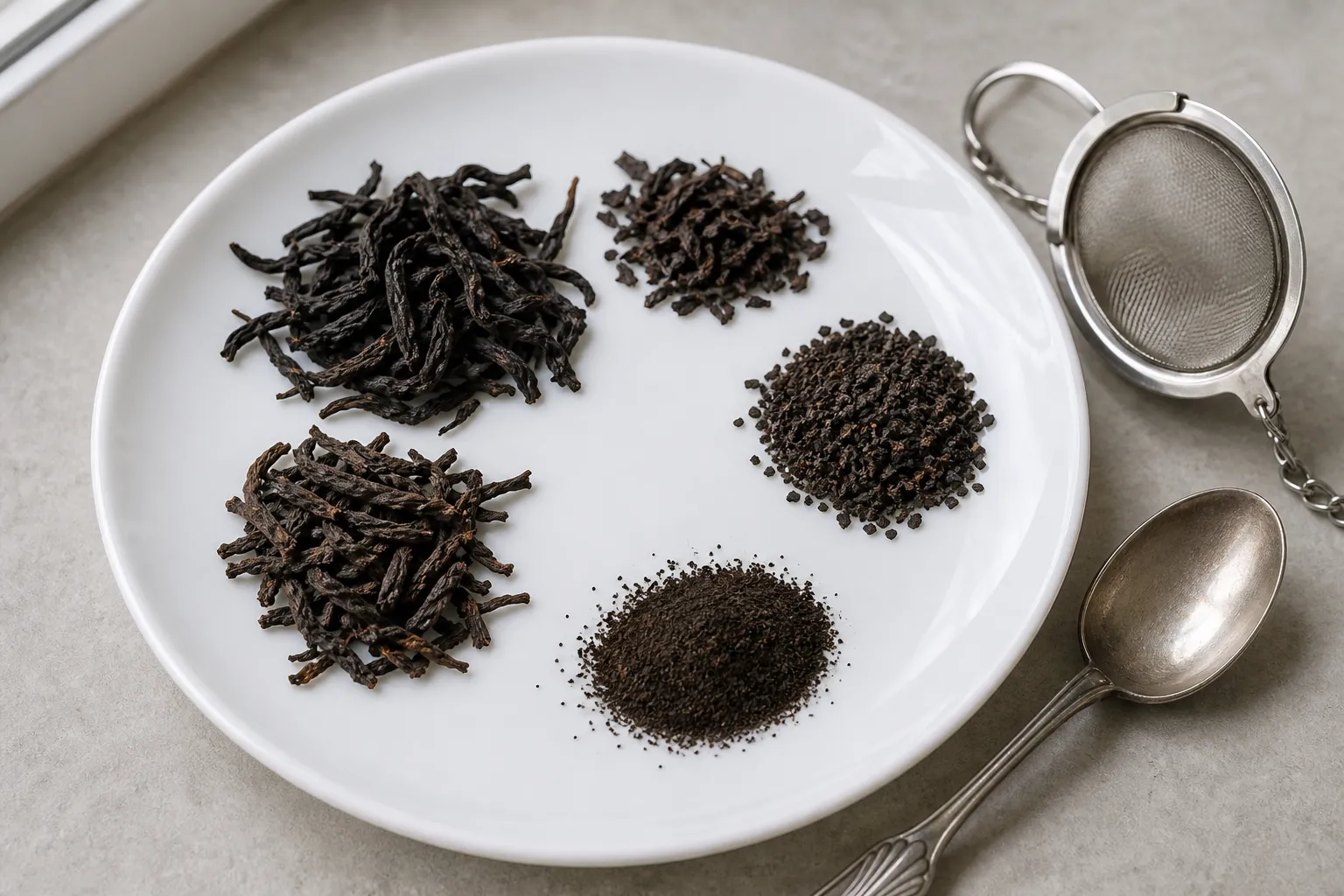
The dry leaf gives useful clues. Whole or larger leaf pieces often infuse differently from small broken leaf, fannings, or dust-like particles. This does not make one form automatically better; it changes the brewing expectation.
Broken leaf black tea can be useful when you want a quick, bold cup, especially for milk tea or a brisk breakfast-style brew. The tradeoff is speed. Small pieces may release color and strength quickly, so brewing them as if they were large, twisted leaves can make the cup lean dry before the flavor feels rounded.
Tea bags often contain smaller particles than loose whole-leaf teas, though the exact contents vary by product. If a tea bag turns harsh at four minutes, try two to three minutes before assuming the brand or style is not for you.
Loose leaf can also become rough. A dense scoop of small, dark pieces may brew faster than a light scoop of larger leaves. A rolled or twisted leaf may need room to unfold. A tea with many tips, stems, or uneven fragments may behave differently from a more uniform grade. The package may not explain all of this, so the dry leaf itself becomes part of the brewing evidence.
Leaf check
Spread a small amount of dry tea on a plain saucer. Are the pieces mostly even? Are they large and twisted, short and broken, powdery, or mixed? The smaller and more fragmented the leaf looks, the more cautious you may want to be with time and leaf quantity.
Match the method to the leaf form. Fine or broken tea often asks for a quicker hand.
Freshness and Storage Can Leave Dryness Without Much Flavor
Sometimes the problem is not only the brew. A stale black tea taste can show up as flat aroma, papery dryness, dull color, or a cup that feels strong without giving much pleasure. The tea may still darken the water, while livelier notes such as malt, dried fruit, citrus peel, cocoa, spice, or floral lift stay faint.
Keep the claim practical and observable: black tea that has lost freshness may smell muted in the tin and brew into a less expressive cup. Poor storage can make that harder to separate from brewing error.
Check the storage condition before blaming the style. Tea kept near heat, light, moisture, or strong kitchen odors may lose its clean aroma. A loose bag folded over in a cupboard exposes the leaf more than a tight tin or well-sealed pouch. If the dry leaves smell dusty, cardboard-like, or barely aromatic, the cup may not become flavorful no matter how carefully it is brewed.
Freshness loss can also change how you interpret strength. A stale tea may push you to add more leaf or steep longer to chase flavor. That can increase dryness while still failing to bring back aroma. The cup becomes darker and more puckering, not more interesting.
If you can, brew the questionable tea gently, then brew a newer black tea with the same water, cup size, and steep time. If the newer tea gives more aroma and a rounder finish, storage or age may be part of the problem. If both cups feel rough, your brewing method or water may be the stronger clue.
Store the leaf before judging the brew. A flat-smelling tea often cannot be rescued by extra steeping.
Some Black Teas Are Meant to Be Brisk
Not every dry edge is a mistake. Black tea style differences matter. Some teas are valued for briskness, grip, and a clean finish, especially when they are commonly served with milk, sugar, lemon, or food. Others are expected to taste softer, sweeter, maltier, fruitier, or more aromatic when served plain.
A breakfast blend may be built for strength and structure. A CTC-style tea or a small-particle tea may deliver a bold liquor quickly. A delicate whole-leaf black tea may show more aroma when brewed with restraint. A smoked, spiced, or highly oxidized style may have its own intensity, which can read as harsh if the method is too aggressive.
This is where preference enters. If you like a brisk cup with milk, a little puckering grip may be part of the appeal. Milk can soften the sensation for some drinkers and shift attention toward body. If you drink black tea plain, the same tea may feel too dry unless brewed shorter or lighter.
Food changes perception too. A dry, brisk tea can seem balanced with buttered toast, rich pastry, or a savory breakfast because the cup cuts through fat and sweetness. Alone, that same brew may seem stern. That does not make the tea wrong; it means the serving context matters.
Decide whether you want briskness or smoothness. Then choose the style and method that support that preference.
Common Confusions When Tea Tastes Dry
A dry cup often gets described with several words at once: bitter, strong, stale, burnt, thin, harsh, mouth-drying, or flavorless. Those words overlap in ordinary tasting language, but they point to different next steps.
Another common confusion is treating dryness as a body signal. For this page, the useful frame is sensory: what the tea feels like, what it tastes like, and how brewing or storage might change the next cup. Questions about caffeine, sensitivity, or personal tolerance sit outside what one dry cup can tell you.
There is also a limit to what can be concluded from one brew. One dry cup may come from a distracted steep, an overfilled infuser, a fast-brewing tea bag, older leaf, or simply a style that is not to your taste. Repeat the brew once with a deliberate adjustment before deciding.
Name the problem precisely. “Dry and puckery” asks for a different fix than “not strong enough.”
A Short Reset Method for the Next Cup
If your black tea tastes dry and puckery today, make the next brew a controlled reset rather than a rescue mission.
Use the same tea, but reduce one source of force. Choose a shorter steep, a smaller amount of leaf, or water that is just off the boil. Do not change all three at once unless the first cup was nearly undrinkable. Give the leaves room, remove them fully, and taste the tea while it is still warm enough to show aroma.
Then ask four questions
- Does the mouthfeel still tighten the cheeks and tongue?
- Is the aroma clearer than before?
- Is the bitterness lower, or only the strength?
- Does the finish feel cleaner, or still rough and dusty?
If the reset cup improves, the issue was probably method more than tea quality. If it remains flat and drying, check the leaf form, freshness, and storage. If the tea is brisk but pleasant with milk or food, it may simply be a style that performs better in that setting.
The next useful choice is small: shorten the steep, lighten the leaf, or compare a fresher tea. Taste first, then decide whether the problem is the brew, the leaf, or the style you actually prefer.