Ceylon tasting guide
Why Ceylon Black Tea Can Taste Brisk, Citrusy, or Malty
Two teas can both say “Ceylon black tea” and still taste noticeably different. Ceylon is an origin umbrella for tea grown in Sri Lanka, not a single flavor setting. The short answer to why Ceylon black tea tastes different is that elevation, region, climate, processing, leaf grade, blending, freshness, storage, and brewing method all shape the cup.
A brisk, citrusy Ceylon often points toward the brighter side of Sri Lankan black tea, especially when the label mentions high-grown tea or a high-elevation region. A fuller, darker, maltier cup often points toward lower-grown or stronger blended styles. Treat those as clues, not promises. The same tea can taste lively at a shorter steep, rough at a longer steep, clear when fresh, or flat after poor storage.
upward
Read the full overview first
Use the broader guide first if you need the full scope before this page.
The usable first read
- Brisk or citrusy: often associated with high-grown or high-elevation clues, but still affected by steeping and freshness.
- Full or malty: often associated with lower-grown or stronger blended styles, especially when leaf form extracts quickly.
- Best test: compare labels while keeping water, leaf amount, cup size, and steep time steady.
Ceylon Is an Origin Clue, Not One Fixed Taste
Ceylon tea means tea grown in Sri Lanka. On a black tea package, the word tells you the origin, but it does not tell you exactly how bright, strong, floral, malty, or astringent the cup will be.
Sri Lankan tea is commonly described through elevation bands: low-grown, mid-grown, and high-grown. Industry regional guides often place low-grown tea from sea level to about 600 meters, mid-grown tea from about 600 to 1,200 meters, and high-grown tea above 1,200 meters. Elevation matters because climate, terrain, and growing conditions can influence aroma, liquor color, body, and flavor.
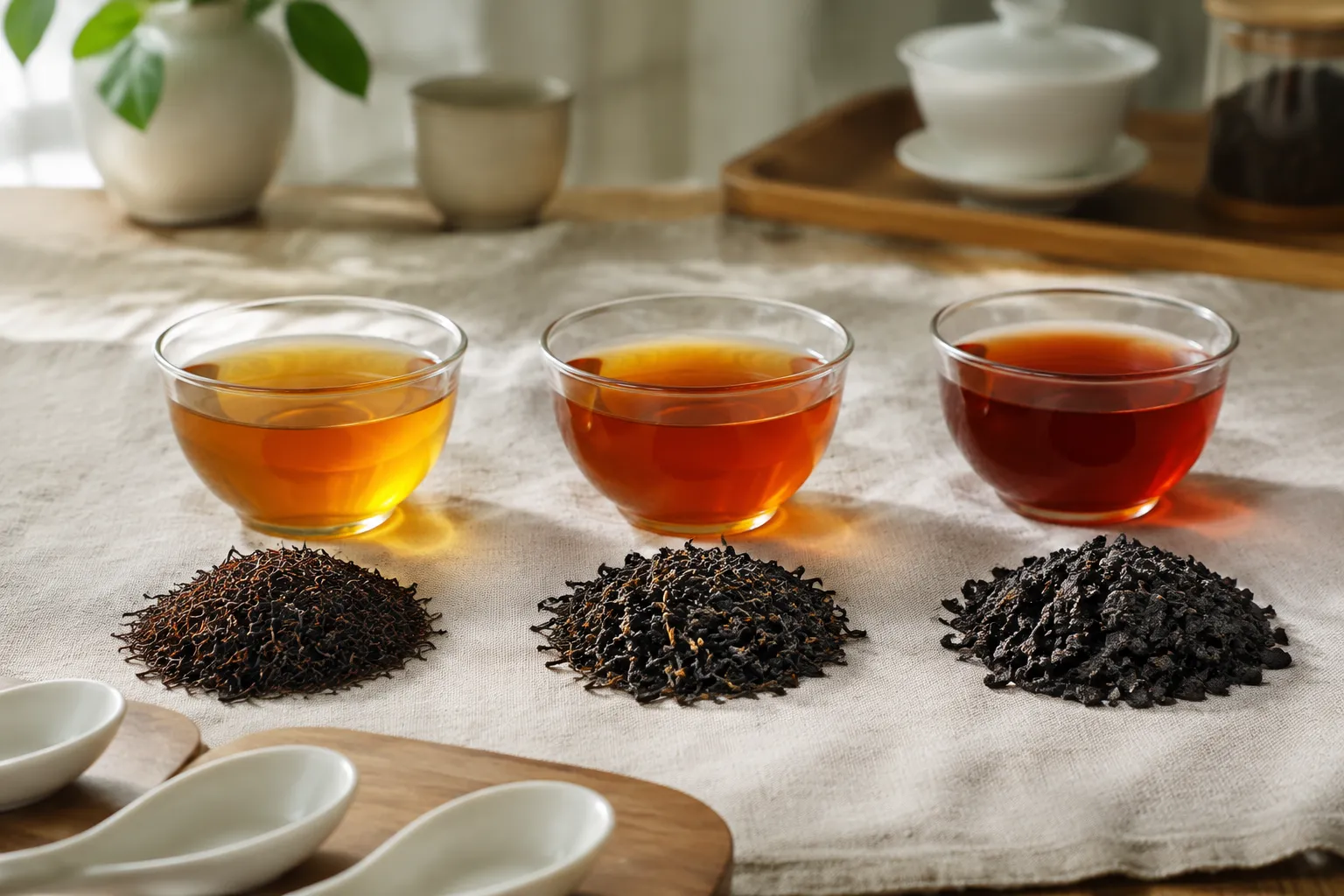
That is where many Ceylon tea flavor differences begin. A high-grown Ceylon may taste bright, aromatic, light, brisk, or citrusy. A low-grown Ceylon may taste fuller, darker, stronger, rounder, or malty. Mid-grown teas often sit between those poles, though the actual cup depends on more than altitude.
The important word is “may.” Harvest timing, cultivar, weather, manufacture, leaf size, blending, and storage can all push the tea away from the shorthand on the label.
Why High-Grown Ceylon Often Tastes Brisk or Citrusy
When drinkers call a Ceylon black tea brisk, they usually mean it has a lively edge: a clean snap on the tongue, noticeable astringency, and a finish that feels lifted rather than heavy. Briskness is not the same as bitterness. It can be pleasant when the tea also has citrus, floral, or honeyed aroma.
High-grown Ceylon tea taste is often described in this brighter register. In cup language, that may mean a clear amber or orange-red liquor, a lighter body, a sharper aroma, and notes that suggest lemon peel, orange zest, flowers, or clean tannic structure. The tea can feel refreshing because it does not coat the mouth as heavily as a dense, malty black tea.
On a package, words such as “high-grown,” “Nuwara Eliya,” “Uva,” “bright,” “brisk,” “aromatic,” or “citrusy” are worth noticing. They do not prove the tea will taste one way, but they give you a better first guess than the word Ceylon alone.
Brewing can preserve that brightness or turn it hard. If a brisk citrusy Ceylon tea tastes thin, try a little more leaf before making the steep much longer. If it tastes sharp, drying, or bitter, shorten the steep first. With brighter teas, a small change in time can matter more than a dramatic change in temperature.
Why Some Ceylon Black Teas Taste Full, Dark, or Malty
A malty Ceylon black tea usually feels deeper and rounder than a brisk citrusy one. The liquor may look darker amber or reddish-brown, the body may feel fuller, and the aroma may lean toward toasted grain, honey, cocoa, dried fruit, or warm sweetness rather than lemony lift.
Low-grown Ceylon tea taste is often described in market language as bold, strong, full-bodied, dark, or malty. That fits the common expectation that lower-elevation teas can produce a heavier cup, but it is still not a guarantee. A low-grown tea can be blended for brightness; a high-grown tea can be processed or brewed in a way that tastes strong and tannic.
Leaf form also matters. Broken-leaf grades and smaller particles expose more surface area to water, so they often brew quickly and can produce a stronger, darker cup. That can work well for milk tea or a breakfast-style brew, but it can also become harsh if steeped like a larger whole-leaf tea.
If your Ceylon black tea tastes pleasantly full but slightly drying, that may simply be part of its structure. If it tastes aggressively bitter, check the method before blaming the origin. Too much leaf, too long a steep, very hot water, heavy stirring, or a fine broken grade can all increase intensity.
How to Read Region and Label Clues
Ceylon tea regional flavors are often discussed through names such as Nuwara Eliya, Uva, Kandy, Dimbula, Ruhuna, and other Sri Lankan growing areas. These names can be useful because they point to place, elevation, and regional conditions. They are more informative than a package that only says “Ceylon black tea.”
The catch is that retail language often simplifies a complex agricultural and manufacturing chain into one neat phrase: bright high-grown, strong low-grown, delicate mountain tea, bold southern tea. Those phrases can help a buyer choose, but they are not controlled tasting notes.
| Package clue | What it may suggest | What can still change it |
|---|---|---|
| High-grown | Brighter aroma, lighter body, brisk or citrusy edge | Steep time, leaf grade, blend, freshness |
| Low-grown | Fuller body, darker liquor, stronger or maltier cup | Processing, blend style, water, storage |
| Regional name | More specific origin expectation than “Ceylon” alone | Harvest, manufacture, buyer blend |
| Broken leaf or fannings | Fast extraction, strong color, more tannic grip | A shorter steep can make it cleaner |
| Whole leaf | Slower extraction, more room for aroma | Needs enough leaf and time to show body |
Use these clues comparatively. If you like brisk, citrusy Ceylon tea, compare another high-grown or region-labeled tea with the same brewing method. If you like full-bodied Ceylon tea, compare low-grown, broken-leaf, or breakfast-style blends while keeping steep time steady.
Briskness, Astringency, and Bitterness Are Not the Same
Ceylon tea briskness is one reason many drinkers enjoy Sri Lankan black tea, but the word can cause confusion. Briskness is the lively, drying snap that gives black tea shape. Astringency is the mouth-drying sensation behind that snap. Bitterness is the more pointed taste that can cover the tea’s aroma when extraction goes too far.
A tea can be brisk without being badly bitter. A balanced brisk cup may feel clean and lifted, with citrus or floral notes. A harsh cup may feel rough, hollow, or over-extracted.
When Ceylon tea bitterness shows up, check the variables you can control:
- Use slightly less leaf if the cup is dense and bitter from the first sip.
- Shorten the steep if the aroma starts well but the finish turns harsh.
- Avoid squeezing the bag or stirring hard if the tea is already strong.
- Try fresh water if the liquor tastes flat and sharp at the same time.
- Compare a larger-leaf tea with a broken-leaf tea before judging all Ceylon black tea by one box.
- Store the leaf in a sealed, dry container away from heat, light, and strong odors.
These adjustments will not turn every tea into the same profile. The point is to separate the tea’s natural briskness from avoidable harshness.
Freshness and Storage Can Blur the Flavor
Ceylon tea freshness storage matters because aroma is often the first part of the tea to fade. A bright, citrusy tea can lose its lift and taste mostly tannic. A fuller, maltier tea can become dull, woody, or flat. In both cases, the origin clue remains on the label, but the cup no longer shows the same range.
Dry leaf is vulnerable to air, moisture, heat, light, and nearby odors. A package left open for months beside spices, coffee, or a warm stove may not taste like the same tea kept sealed in a cool, dark cabinet. This is especially noticeable when you are trying to compare subtle Sri Lankan black tea tasting notes.
Before deciding that a Ceylon is supposed to taste plain or bitter, check the storage path. Was the package newly opened? Does the dry leaf still smell clear? Is the container airtight? Has the tea picked up pantry aromas? Freshness will not explain every difference, but it can easily mute brightness, malt, and aroma.
A Simple Way to Taste the Difference
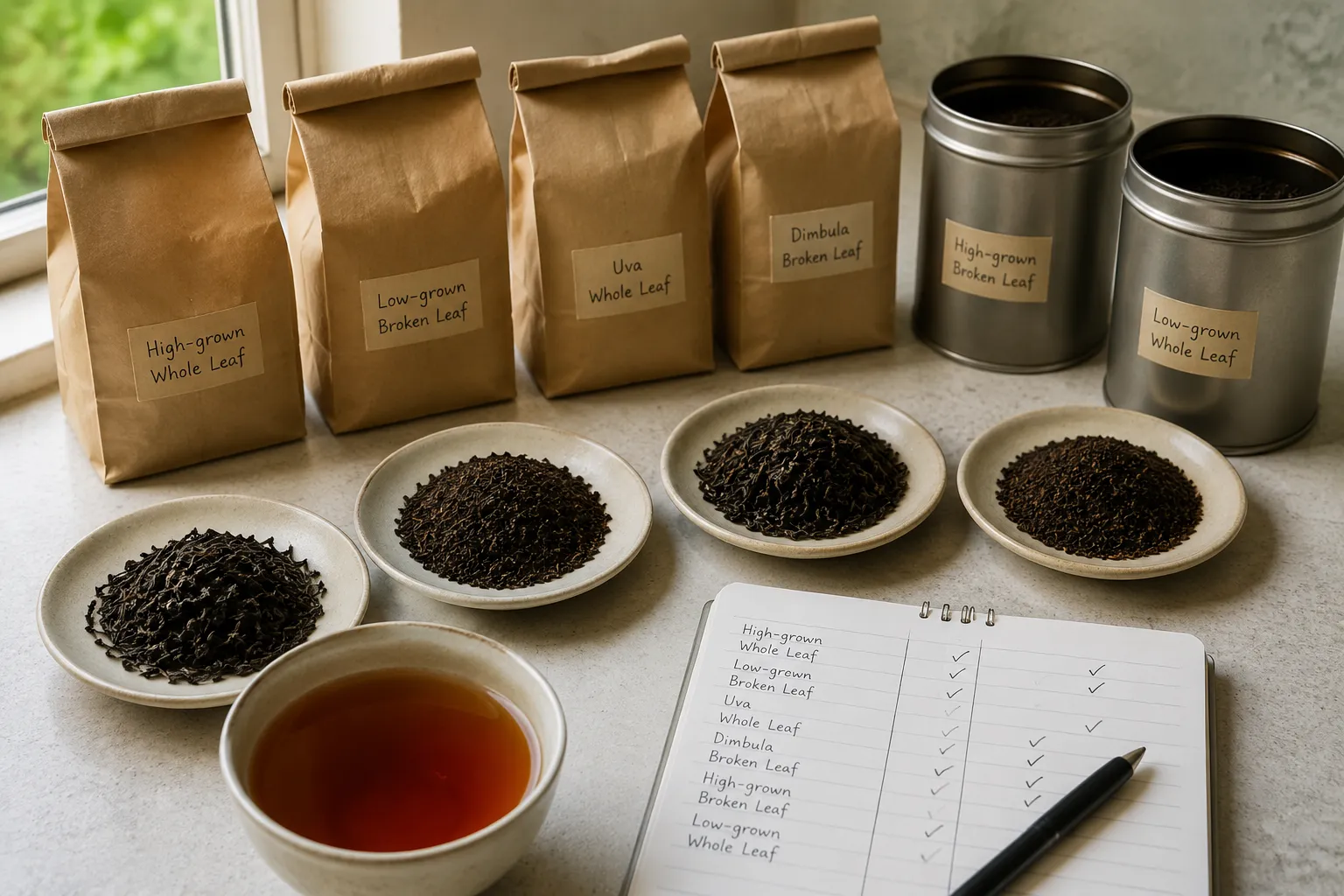
To compare two Ceylon black teas, keep the brewing method steady before drawing conclusions. Use the same cup size, similar water, similar leaf amount, and the same steep time. Then adjust one variable at a time.
Start with the label. Note whether it says high-grown, low-grown, a named Sri Lankan region, whole leaf, broken leaf, or blend. Then taste for four cup-level cues: aroma, body, briskness, and finish.
A brighter tea may show more citrus lift, floral aroma, lighter body, and a cleaner finish. A fuller tea may show deeper color, more weight on the tongue, malt or honeyed notes, and a stronger tannic frame. If both taste mostly bitter, the steep is probably too aggressive for at least one of them.
For brewing adjustments, move in small steps. Shorten by 30 seconds before changing everything else. Use a little less leaf before deciding the tea is poor. If the cup tastes weak but aromatic, add leaf rather than pushing time too far. If the cup tastes strong but flat, check freshness and storage before buying the same style again.
What the Evidence Can and Cannot Tell You
The strongest public support for this topic is regional and agricultural: Sri Lankan tea is commonly classified by elevation, and growing conditions are used to explain differences in taste, aroma, liquor color, and body. General food and drink references also describe Ceylon tea as variable by place, tea type, and brewing strength.
That support is useful, but it is not a controlled sensory map of every Ceylon black tea. Much of the everyday vocabulary around brisk, citrusy, full, and malty cups comes from industry descriptions, retail language, and drinker shorthand. Those words are helpful because they match what buyers see and taste, but they should not be treated as universal proof.
The most reliable reading is modest: high-grown Ceylon often leans brighter, brisker, more aromatic, or citrusy; lower-grown Ceylon often leans fuller, darker, stronger, or maltier. Processing, grade, blend, freshness, storage, water, ratio, and steeping can change the result. Taste the cup first, then use the label to understand why it may have gone that way.
Sources
Sources and further reading
Reference links are limited to sources considered suitable for public citation in this page.