Buying decision
Should You Buy Black Tea Samples Before a Full Tin
A full tin of black tea is a real commitment: money, cupboard space, and many cups of the same leaf. If the tea is unfamiliar, strongly described, expensive for your budget, or outside your usual breakfast blend, black tea samples are usually worth buying first. They let you test aroma, strength, body, bitterness, astringency, finish, and milk compatibility before you store a larger amount.
Skip the sample when the tea is already familiar, the seller’s style has worked for you before, and you know you will finish the tin while the aroma still feels lively. Sampling is most useful when uncertainty is high; a tin makes more sense when your routine is already clear.
upward
Start with the broader guide
Use the broader guide first if you need the full scope before this page.
The short answer
Buy samples when curiosity is high and confidence is low. Buy the tin when the tea is familiar, useful, and likely to be finished while it still smells and tastes clear.
When Black Tea Samples Are Worth Buying
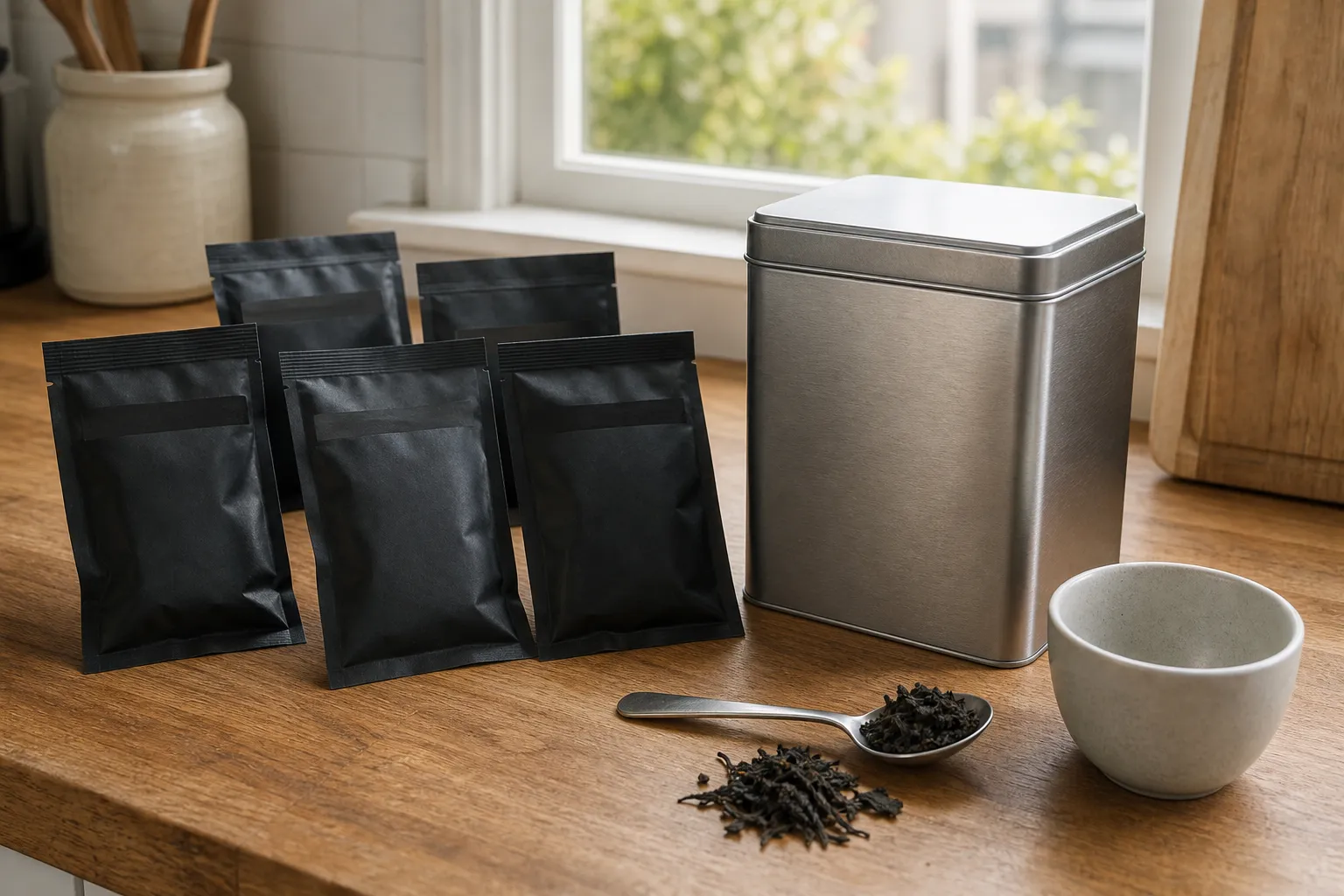
Black tea is not one fixed taste. Depending on origin, blend, leaf form, freshness, and brewing, the cup may lean malty, brisk, fruity, smoky, spicy, floral, drying, or rounded. That variety is the main reason to try black tea before buying a full tin. Product names and tasting notes can point you in a direction, but the cup is where the decision becomes practical.
Samples are especially helpful when the label points toward a strong character. Smoky black tea samples can show whether the smoke feels pleasant, leathery, campfire-like, or too dominant for your morning cup. Brisk black tea samples can reveal whether the tea feels refreshing and structured, or sharp with your usual steep time. Flavored black tea samples can test whether bergamot, vanilla, spice, fruit, or other additions sit naturally with the base tea.
Sampling also helps with unfamiliar black tea styles. A tea described as malty may feel round and comforting to one drinker, but heavy to another. A fruit-noted black tea may taste bright when brewed plain and flatter when taken with milk. A blend that sounds ideal on a product page may not match your water, steep length, or usual cup size.
The best reason to sample is not that small bags are always better value. It is that they lower the chance of buying loose black tea you will not want to drink often.
What to Check Before You Add a Sample Pack
A sample is only useful if it gives you enough information to compare. Before buying loose leaf sample packs, look at the product page with the same attention you would give a full tin of black tea.
Sample amount
Check the sample weight or serving language first. There is no universal ideal sample size, and black tea leaf shapes vary. Still, a useful sample should usually give you enough leaf to compare more than one brew. One cup can be misleading if the water was off, the steep ran long, or the tea needed milk to show its balance.
Brewing format
Then look at the format. Is it sample loose black tea, sachets, or a mix? Loose leaf gives you more control over ratio and steeping time, but it also asks for a strainer, basket, pot, or another simple brewing method. Sachets are easier for a work bag or office drawer, but they may not show leaf appearance or expansion as clearly. Neither format is automatically superior; the useful format is the one you will actually brew with care.
Tasting notes
Read tasting notes as prompts, not promises. “Malt,” “honey,” “cocoa,” “raisin,” “smoke,” “citrus,” and “brisk” can help you decide what to notice, but they do not guarantee that your cup will taste exactly like the label. Water, leaf amount, steep time, freshness, and personal perception all matter.
Real habits
Also check whether the included teas match your real habits. If you drink black tea with milk, do not buy a sampler made mostly of delicate teas just because the box looks varied. If you prefer plain tea, a pack heavy on flavored blends may not answer your everyday question. If caffeine timing matters to you, black tea contains caffeine and personal tolerance varies; sampling can help with taste and routine, not with a promised body response.
A good sample pack answers your drinking question, not just the seller’s variety claim.
How to Taste a Sample Before Judging the Tin
Make the first brew ordinary on purpose. Use the cup size, water, steep time, and additions you would use on a normal day. If you usually add milk, taste a sip plain first, then add milk and notice whether the tea keeps enough body. Black tea milk compatibility is not only about strength; it is about whether the flavor remains clear after the cup softens.
Notice the dry leaf aroma before brewing. It can hint at smoke, fruit, malt, spice, added flavoring, or flatness, but it should not decide the purchase by itself. Then watch the liquor color and body. An amber or deep reddish cup may look promising, but mouthfeel matters more than color alone. A tea can look dark and still taste thin; another can look lighter and carry a clean, brisk finish.
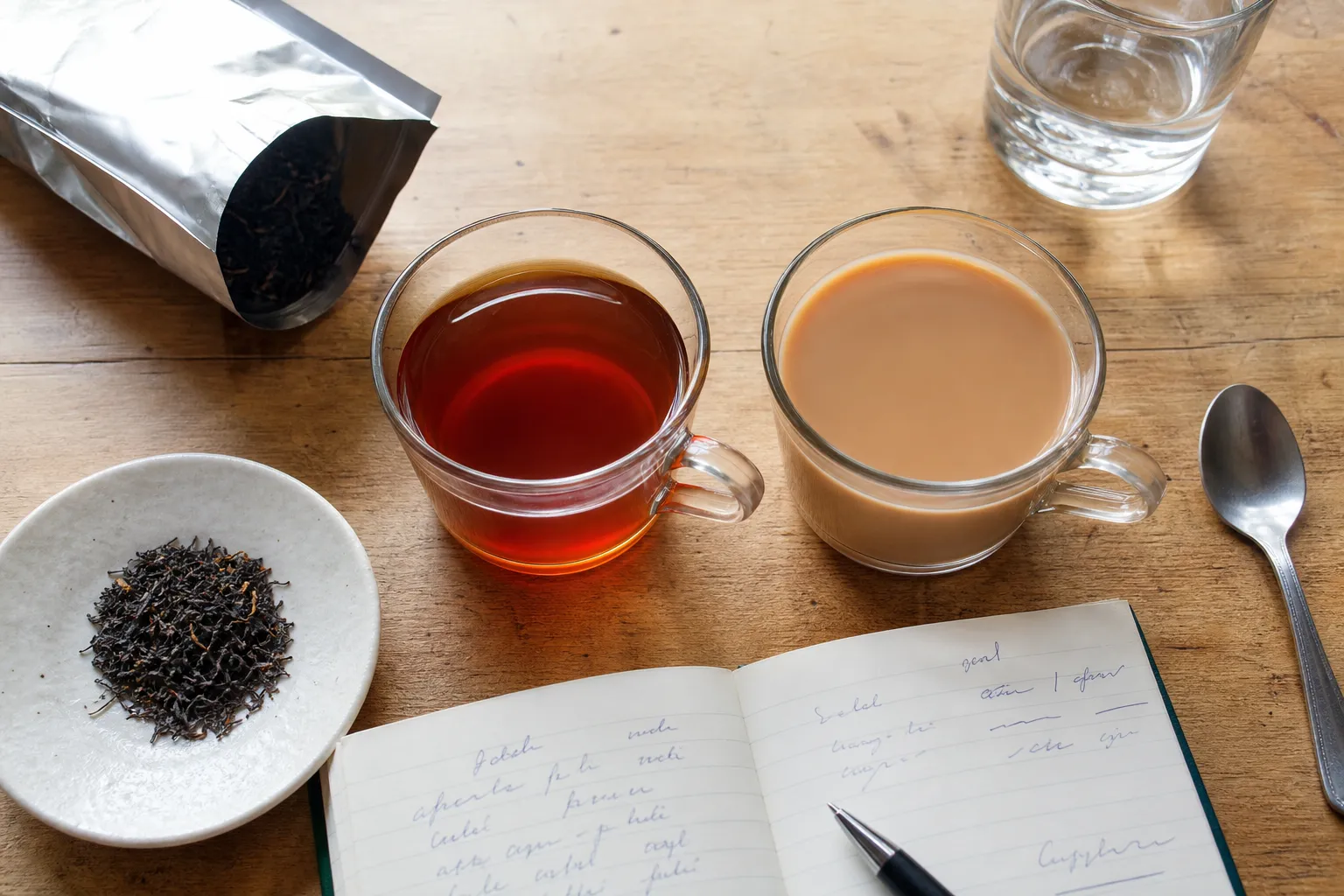
On the first tasting, separate preference from brewing error. If the tea tastes bitter, ask whether the steep was too long or the leaf amount too high. If it tastes weak, try a little more leaf or a slightly longer infusion before rejecting it. If it feels drying at the sides of the mouth, that astringency may be part of the style, but brewing can intensify it.
A second brew is useful when the sample allows it. Try one small adjustment: shorter time for a brisk tea, slightly more leaf for a thin cup, milk for a strong breakfast-style blend, or plain tasting for a flavored tea you first brewed with additions. This does not need to become a formal tasting session. The point is to avoid letting one imperfect cup decide whether a whole tin belongs in your kitchen.
If a sample tastes good only when you fuss with it, think carefully before buying the tin. Everyday tea should fit your actual routine.
When a Full Tin Makes More Sense
A full tin is reasonable when the tea is already familiar and useful. If you drink the same breakfast blend every morning, know the seller’s style, and finish tea steadily, sampling may not add much. The lower commitment of a sample matters less when your preference is already established.
A tin also makes sense when the purchase is for a known use: a dependable black tea for milk, a familiar blend for guests, or a workday cup that does not need much attention. If the tea has performed well before, buying the full container can be simpler than collecting small packets that never become part of your routine.
Storage is part of this decision. A larger container means more leaf exposed over time as you open and close it. Rather than relying on exact shelf-life promises, keep the test observable: does the tea still smell clear, brew with recognizable flavor, and sit in a cool, dry, sealed place away from light, moisture, heat, and strong odors? If your storage is crowded, humid, bright, or slow-moving, samples may protect flavor better than a tin you will open for months.
Price can push either way. A full tin may look better per gram, but that value disappears if you do not enjoy the tea or if the flavor fades before you finish it. A sample may cost more per cup, but it can prevent a larger purchase that sits unused. The better choice depends on the gap between curiosity and confidence.
Buy the tin when you already know you will drink it; buy the sample when you mostly know you are curious.
Common Confusion Around Black Tea Samples
Loose leaf is not automatically better
One common mistake is treating loose leaf as automatically better than tea bags or sachets. Loose leaf can give you more control and may show more leaf structure, but quality still depends on grade, blend, freshness, storage, and producer choices. A poor loose tea is not improved by being loose, and a convenient sachet may be useful if it helps you brew consistently.
Variety is not the same as fit
Another confusion is assuming variety equals fit. A sampler with many teas may feel generous, but it is only helpful if the range matches your palate. If you dislike smoke, a smoky sampler will teach you something, but it may not lead to a tin. If you drink tea with milk, a collection of lighter, aromatic teas may be interesting without becoming practical.
Tasting notes are comparison language
Tasting notes can also mislead when they are read too literally. Black tea tasting notes are best used as comparison language. If a label says cocoa, you might look for roundness, depth, or a dry chocolate-like edge. If it says citrus, you might watch for brightness or lift. The note is not a contract.
One cup is only a signal
Finally, a single sample cup is not the same as a full purchase test. It is a signal. If the sample is unpleasant across two reasonable brews, the tin is probably not a good bet. If it is promising but uncertain, try it with your usual food, milk, or time of day before committing.
Samples work best when they slow down a purchase just enough to make the tin more deliberate.
A Short Decision Checklist
Buy black tea samples first if:
- The style, origin, blend, seller, or flavoring is unfamiliar.
- The tea is described as smoky, very brisk, strongly flavored, unusually delicate, or outside your normal range.
- The full tin would be expensive enough to regret.
- You are still learning whether you prefer malt, fruit, spice, smoke, body, or astringency.
- You are unsure whether the tea will work with milk, sugar, lemon, or plain drinking.
- You may not finish a full tin while the aroma and flavor still seem lively.
Skip the sample and buy the tin if:
- You already drink this tea or a very similar one often.
- You trust the seller’s style from past purchases.
- The tea is a known daily blend, not an experiment.
- You have a good sealed container and will finish it steadily.
- The sample cost feels like friction rather than useful information.
The practical middle path is to sample only where the risk is real. Use black tea samples for unfamiliar choices, not as a rule that delays every tea you already know you enjoy. Brew the sample normally, taste it twice if there is enough leaf, check how it fits your milk or plain routine, and buy the full tin only when you can imagine reaching for it repeatedly.
Sources
Sources and further reading
Reference links are limited to sources considered suitable for public citation in this page.