
Can You Gongfu Brew Assam, Ceylon, or Breakfast Tea
A dark Assam or breakfast blend can color a gaiwan almost as soon as the water lands, but yes: you can gongfu brew Assam, Ceylon, or breakfast tea. The better question is whether that particular leaf gives you enough aroma, body, and change to make short repeated infusions worthwhile.
For can you gongfu brew Assam Ceylon breakfast tea, the practical answer is: try it with adjusted expectations. Use a little less leaf than you might for many Chinese black teas, keep the first pours very short, and decant fully each time.
Best starting point
Whole-leaf Assam, larger broken-leaf Assam, and larger-leaf Ceylon teas are the most promising. Fine broken leaf, CTC, fannings, dust, tea bags, and many breakfast blends extract so quickly that the cup can become brisk, drying, or flat before it becomes interesting.
upward
Read the full overview first
Use the broader guide first if you need the full scope before this page.
What changes in the cup
Gongfu brewing usually means a small vessel, a higher leaf-to-water ratio, short infusions, repeated steeping, and full decanting between rounds. Compared with a mug or teapot steeped for several minutes, it lets you taste how aroma, body, briskness, sweetness, and astringency shift from one pour to the next.
That method can work with non-Chinese black tea. Gongfu brewing is culturally associated with Chinese tea practice, and many drinkers first meet it through oolong, puer, or Chinese hong cha. The mechanics, though, are not limited to those teas. A small vessel, short contact time, and careful pouring can show how Assam, Ceylon, or an Assam-Ceylon breakfast blend extracts, as long as you do not expect every tea to behave like a soft, aromatic Chinese black tea.
Assam
Assam often brings a malty, full-bodied, brisk cup in common buyer language. Gongfu brewing can make that body feel immediate. A larger leaf may move from malt and aroma into deeper color and more drying strength over several infusions. A very small broken Assam may give almost everything at once.
Ceylon
Ceylon tea varies widely, so there is no single gongfu profile that fits every tin. Watch for brightness, briskness, aroma, and the speed of color. Larger pieces may give you a few useful short infusions. Fine grades may rush into a sharp or drying cup.
Breakfast tea
Breakfast tea is the least predictable because it is a blend category, not a fixed recipe. One blend may lean on Assam, another on Ceylon, Kenyan black tea, Keemun, Darjeeling, or other components. Some are designed for a strong mug with milk rather than repeated small pours. Gongfu brewing a breakfast blend can still be useful, but treat it as a quick tasting exercise, not a promise of many layered steeps.
Start smaller and shorter
A common gongfu starting point is about 1-1.5 grams of tea per 30 ml of water, with early infusions around 10-20 seconds. For Assam gongfu brewing, Ceylon gongfu brewing, or a breakfast tea gongfu method, that can be too intense if the leaf is small or broken. Use it as an upper reference, not a rule.
First attempt
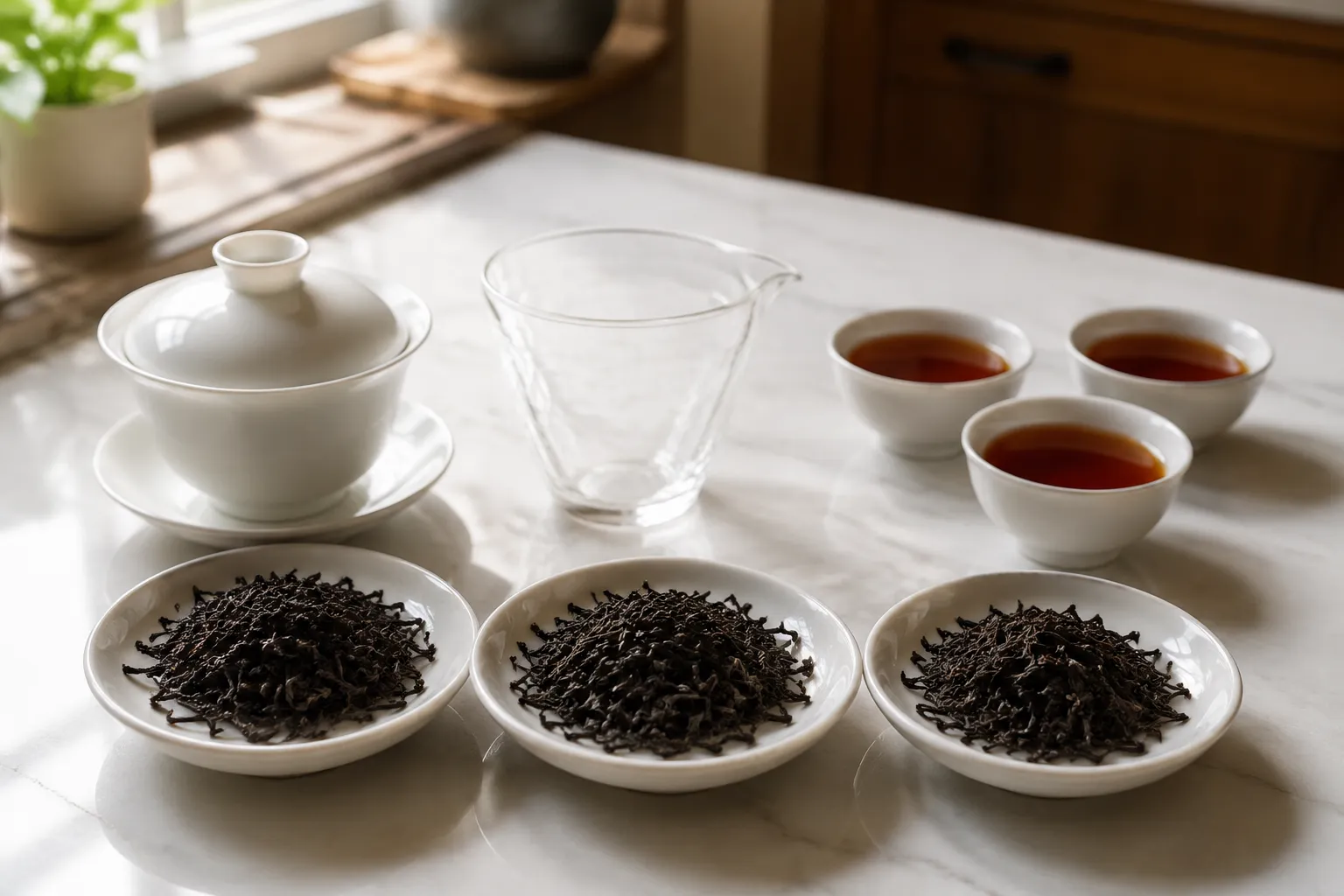
- Use a small vessel. A 90-120 ml gaiwan, small teapot, or heat-safe cup with a strainer is enough.
- Weigh the leaf if possible. Small black tea pieces pack densely. A spoonful of fine broken leaf can contain much more tea than the same spoonful of large twisted leaf.
- Go lighter with broken grades. Whole leaf Assam gongfu can start near a normal gongfu ratio. Broken leaf black tea gongfu should start lower.
- Keep the first infusion very short. Five to ten seconds may be plenty for fine broken leaf. If the liquor turns dark almost instantly, pour sooner.
- Decant completely. If water sits on the leaf between infusions, the next cup may become rough before you can judge it.
- Adjust by taste, not the clock alone. Watch liquor color, aroma, mouthfeel, dryness, and the edge of astringency.
Near-boiling water is common for many black teas, but small vessels can become hot to handle, especially a thin gaiwan. If handling feels awkward, use a small teapot, a fairness pitcher, or a cup-and-strainer setup. If the tea tastes sharp too quickly, slightly cooler water, less leaf, or shorter contact time is more useful than forcing a standard recipe.
For a simple trial, skip the rinse unless you already like that habit. Brew the first infusion for 5-10 seconds if the leaf is fine, or 10-15 seconds if the leaf is larger. Taste. If the cup is thin, add a few seconds next time. If it is already dark, woody, or mouth-drying, reduce time or leaf for the next session.
Leaf size matters more than the name on the tin
The label “Assam,” “Ceylon,” or “breakfast tea” tells you less about gongfu performance than the dry leaf in front of you. Look at the tea before choosing your ratio.
Whole leaves and larger twisted pieces release flavor more gradually. They leave room for a first cup that is aromatic, a second that is fuller, and a third that may show more briskness or dryness. That is why whole leaf Assam gongfu brewing is usually a better bet than fine broken leaf gongfu brewing if your goal is several changing infusions.
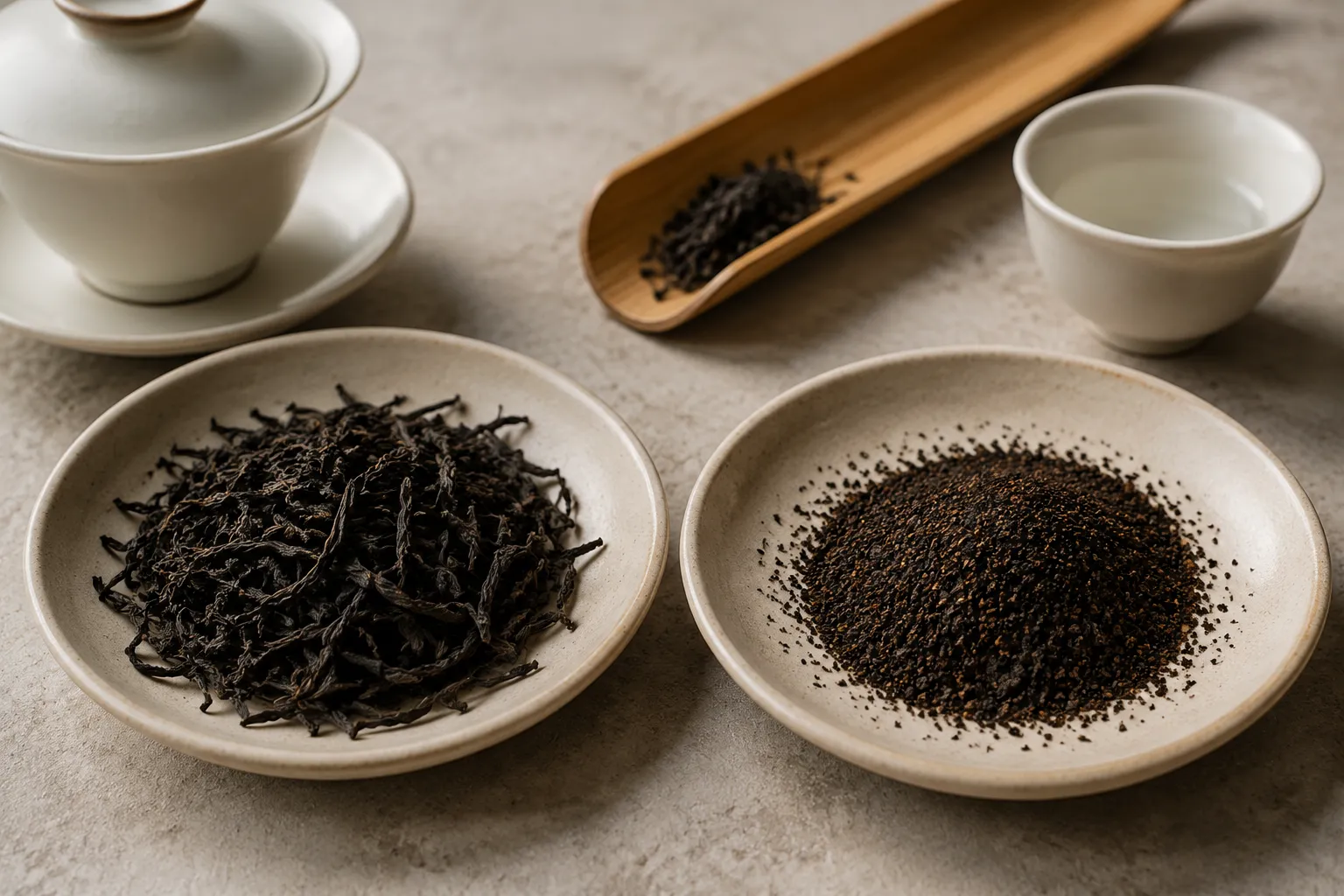
Broken leaf is not automatically poor tea. In Assam and Ceylon markets, broken-leaf terminology is common and can be intentional. Tea grading references list terms such as BP, BOP, FP, FBOP, BPS, and related abbreviations, many of which point to leaf size or appearance rather than a simple quality ranking. For gongfu brewing, the main point is extraction speed: smaller particles expose more surface area and tend to brew faster.
CTC, fannings, dust, and many tea bags are harder to control. They are made for quick, strong extraction. Tea bags gongfu brewing is possible in the literal sense, but it usually gives fewer distinct infusions. If you try it, use very short contact and expect a concentrated small cup rather than a long session.
Breakfast blends add another variable. A blend may include several origins and grades, and the package may not disclose exact proportions. If the dry leaf looks mixed, with small dark particles, lighter tips, and uneven sizes, the fastest-extracting pieces will shape the early cup. That does not make the tea unusable; it means your method should be gentle and brief.
How to judge whether it is working
The first sign is not darkness. Assam, Ceylon, and breakfast blends can color water quickly. A better test is balance: aroma before harshness, body without immediate roughness, briskness that feels lively rather than raspy, and enough change to make a second or third infusion worthwhile.
A gongfu brew Assam tea session is working if the early cups show malt, rounded body, sweetness, or a clean brisk edge before dryness takes over. It is not working if the first pour is already heavy, bitter-edged, and tiring to drink.
A gongfu brew Ceylon tea trial is working if the liquor has brightness, aroma, and a clear finish. It may not become thick or malty in the same way as Assam, and that is not a flaw by itself. Judge the tea by what it offers in the cup, not by whether it imitates another black tea style.
A gongfu brew breakfast tea experiment is working if the blend gives a compact, flavorful first cup and at least one pleasant follow-up infusion. Many breakfast teas are built for strength and reliability in a larger cup. If the second infusion feels hollow or woody, the gongfu method has simply shown you the blend’s design.
Cup-level cues
- Liquor color: If it turns very dark within seconds, shorten the next infusion.
- Aroma: If aroma fades before the taste rounds out, the tea may not have much range for repeated steeps.
- Body: If the cup feels full but not rough, you have room to continue.
- Briskness: A lively snap can be pleasant; a rasping edge means the brew is pushing too hard.
- Astringency: Some dryness is common in many black teas, but strong mouth-puckering early in the session usually means less leaf or less time.
- Aftertaste: If the finish is clean, continue. If it is stale, flat, or harsh, stop rather than stretching the leaf.
Common confusions before you pour
One confusion is the phrase “gongfu black tea.” On some labels, gongfu or gong-fu may refer to production skill, leaf style, or a named tea category rather than a brewing instruction. A tea labeled this way is not automatically the same thing as preparing Assam, Ceylon, or breakfast tea with a gongfu method.
Another confusion is the idea that gongfu brewing non-Chinese black tea is somehow improper. The cultural roots of gongfu tea practice deserve respect, and the method should not be stripped of context. At the same time, a home brewer can use a small vessel, short infusions, and careful decanting to learn how a non-Chinese tea extracts. Culture explains the expectation; the cup still tells you what this particular leaf can do.
A third confusion is thinking that stronger always means better. Gongfu brewing often uses more leaf and less water, but with fine black tea particles, strength can arrive before complexity. If your Assam or breakfast blend tastes severe in the first pour, do not push for later infusions. Reduce the ratio and restart.
A narrow way to decide
Choose by leaf appearance first. If the Assam or Ceylon is whole leaf or larger broken leaf, gongfu is worth trying for several short infusions. If it is BOP, CTC, fannings, dust, or a very fine breakfast blend, use a lighter ratio and expect fewer rounds. If it is in a tea bag, treat it as a quick small-cup experiment rather than a classic gongfu session.
The public evidence for this exact question is practical and limited, not built on controlled testing of gongfu-brewed Assam, Ceylon, and breakfast blends. That is why the answer should stay close to what you can observe: leaf size, water temperature, infusion length, liquor color, aroma, body, briskness, dryness, and how fast the cup becomes astringent. Repeated small infusions may feel stronger or easier to drink quickly depending on leaf amount and session length, but this page does not quantify caffeine extraction; let personal tolerance guide how much of the session you drink.
For the most useful first trial, pick a larger-leaf Assam or Ceylon, use a small vessel, weigh the leaf, start short, and pour every infusion completely. If the tea becomes rough, make the next session lighter. If it opens with aroma, body, and a clean brisk finish, keep steeping until the cup stops giving you something worth tasting.
Sources
Sources and further reading
Reference links are limited to sources considered suitable for public citation in this page.