Gongfu brewing note
What Water Temperature Works for Gongfu Black Tea
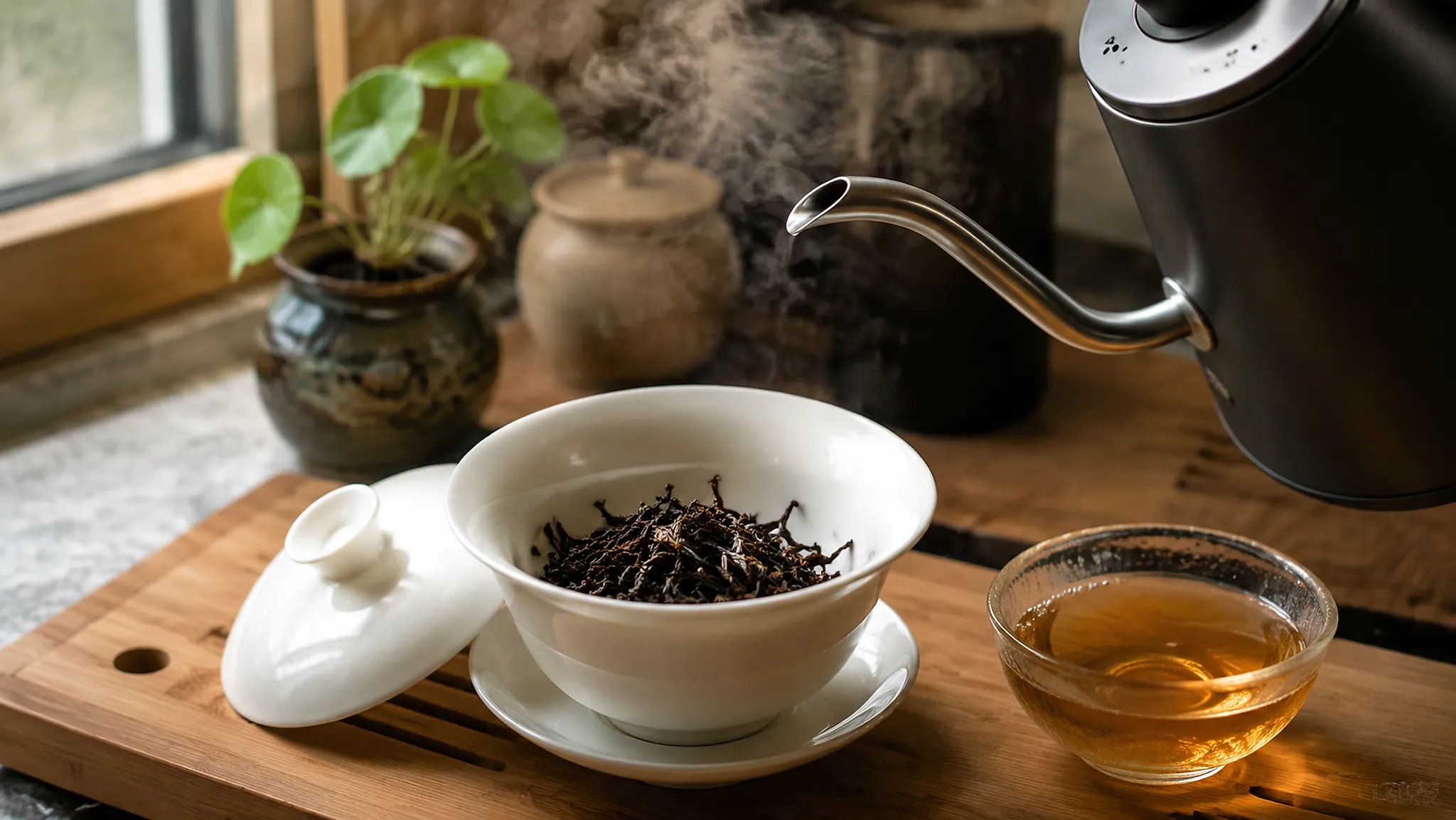
For most gongfu black tea, start close to boiling: about 200-212°F / 93-100°C. That range suits many Chinese black teas brewed in a small gaiwan or pot, with a higher leaf ratio and short infusions.
It is a starting point, not a fixed rule. If the liquor turns sharp, drying, or bitter before the aroma and body open, move down toward 190-200°F / 88-93°C. If the cup tastes thin, muted, or slightly sour, try hotter water, a slightly longer pour, or a little more leaf in the next session.
Temperature sets the pace. The cup tells you whether that pace is working.
upward
Read the full overview first
Use the broader guide first if you need the full scope before this page.
A Practical Starting Range
Strong aroma, full body, darker liquor
200-212°F / 93-100°C
Good for many robust black teas; reduce heat if the finish dries out quickly.
Softer sweetness, less edge
190-200°F / 88-93°C
Useful when bitterness or astringency arrives too early.
Very gentle trial brew
185-195°F / 85-90°C
Best treated as an adjustment, not the default for every black tea.
Many black tea brewing charts cluster around 195-212°F / 90-100°C, often leaning toward near-boiling water. That matches a common brewing habit: black tea is usually handled hotter than green tea. For gongfu black tea, especially twisted-leaf Chinese black teas, a near-boiling start is usually a reasonable first move.
The exception is important. Fine, broken, very aromatic, or naturally brisk leaves may taste better with slightly cooler water. Lower temperature does not make the tea better by itself; it slows extraction and can soften a cup when hot water is pulling too much edge too quickly.
A steady first session might begin around 200-205°F / 93-96°C for 10-20 seconds, depending on leaf amount and vessel size. Taste before changing anything. If the cup is fragrant, rounded, and sweet enough, stay close. If it grips hard while still lacking body, lower the water slightly before blaming the tea.
Why Gongfu Changes the Temperature Question
Western black tea advice often assumes a larger mug or pot, less leaf, more water, and a steep of several minutes. Gongfu brewing changes the equation. It uses more leaf for the amount of water, a smaller vessel, short infusions, and repeated rounds.
That is why black tea gongfu temperature cannot be separated from steep time. A 205°F / 96°C pour for 15 seconds in a small gaiwan is not the same as 205°F / 96°C for three minutes in a mug. The same kettle setting can produce a lively, aromatic cup in one method and a rough, overdrawn cup in another.
Leaf ratio matters too. A heavily filled vessel can open fast with hot water, but it may also bring bitterness and astringency early. A lighter fill may need more heat or time; otherwise the cup can feel hollow.
Vessel heat changes the result in a quieter way. A thin porcelain gaiwan loses heat quickly, especially if it is not preheated. A clay pot or thicker cup may hold heat longer. If you pour 200°F / 93°C water into a cool vessel, the leaf may experience less heat than the kettle display suggests.
The simplest rule is still useful: use hotter water when the tea needs help opening; use cooler water when it opens too sharply.
Variables that change the same kettle setting
- Method: small gongfu vessel and short infusions behave differently from a large mug steep.
- Leaf ratio: more leaf can open quickly and also bring edge early.
- Vessel heat: cool porcelain may lower the effective heat at the leaf.
- Timing: a few seconds can matter when the pour is already concentrated.
Adjust by Taste, Not by Number Alone
The first one or two short infusions give better feedback than the kettle display.
If the cup is thin, pale, or muted
The tea may need more extraction. Raise the water temperature, lengthen the next infusion by a few seconds, or use a bit more leaf next time. Change one variable at a time. Thinness can also come from older leaf, very soft water, too much water for the leaf, or a vessel that cools quickly.
If the cup is sharp, drying, or bitter
Reduce the pressure on the leaf. Lower the temperature toward 190-200°F / 88-93°C, shorten the next infusion, use slightly less leaf in a later session, or pour more gently. Rough handling, swirling, or squeezing can make an already strong brew feel more severe.
If the aroma is good but the finish is too dry
Shorten the infusion before dropping the temperature far. Drying texture often comes from heat, time, and ratio working together. A big temperature drop may save the finish but mute the fragrance.
If the sweetness is present but the body is weak
Try slightly hotter water before adding much more time. Gongfu black tea often shows its structure when heat opens the leaf quickly and the pour stays short.
If later infusions fade
Raise the temperature or extend time. Many gongfu sessions naturally move hotter or longer as the leaves release flavor more slowly. Starting around 200°F / 93°C and moving closer to boiling later can make sense when the early cups were balanced.
The Boiling Water Question
“Black tea needs boiling water” is common advice, and it has a practical reason behind it. Many black teas respond well to very hot water, especially when the drinker wants strong aroma, full body, and a brisk finish. Boiling water for gongfu black tea can work when the leaf is whole enough, the infusion is short, and the pour is controlled.
The problem is the word “needs.” Some Chinese black teas taste better below a full boil, and some drinkers prefer a softer cup. Commercial temperature charts can make exact ranges look more universal than they are. Read 195-212°F black tea advice as a working zone, not a law.
Near-boiling water is most useful when the tea tastes flat, woody, or slow to release aroma. It is less useful when the first infusion already gives dark liquor, strong aroma, and a gripping finish within 10-15 seconds.
The opposite mistake is treating cooler water as a guarantee against bitterness. Lower temperature can help, but bitterness may also come from too much leaf, too long an infusion, broken leaf, aggressive pouring, or a brisk tea style. If lower water makes the cup dull while the finish still dries, adjust time and ratio instead.
A Small Gongfu Temperature Path
Use this as a narrow method card, not a universal recipe.
- Start: Use 200-205°F / 93-96°C for many Chinese black teas. Use a small vessel, enough leaf for short infusions, and a first pour around 10-20 seconds. Taste for aroma, body, sweetness, bitterness, and astringency.
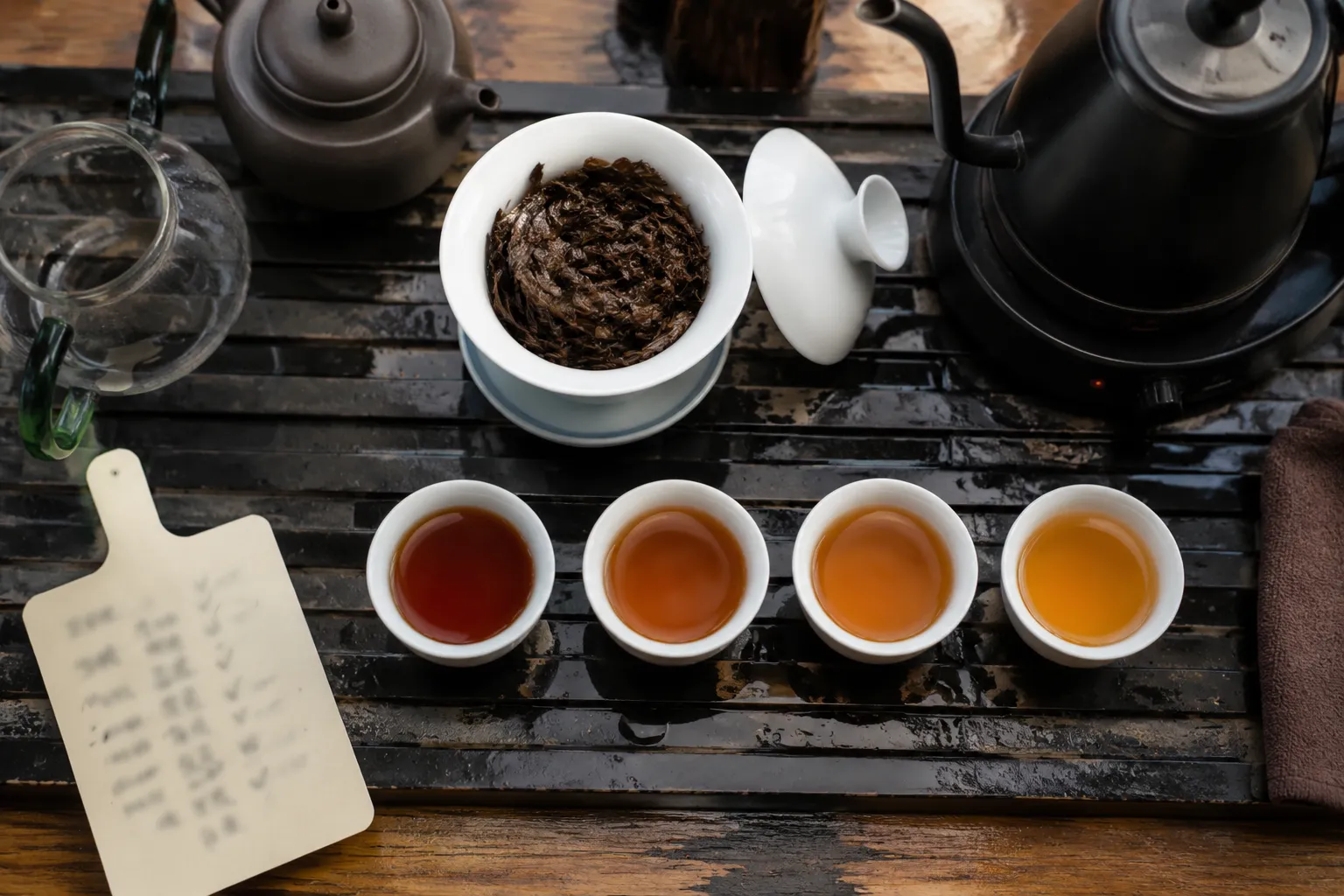
- Second infusion: Keep the temperature if the first cup was balanced. If it was thin, go hotter or add a few seconds. If it was sharp and drying, step down 5-10°F / 3-6°C or shorten the next pour.
- Middle infusions: Let the leaves guide the heat. If the fragrance has opened and the body is steady, keep the kettle near the same range. If the tea begins to fade, use hotter water or longer time rather than adding both at once.
- Late infusions: Boiling or near-boiling water often becomes more useful. The leaf has already released its easiest aroma and sweetness, so stronger extraction may bring out remaining body. Stop when the cup becomes woody, flat, or mostly astringent.
Gongfu brewing is iterative. You do not need to solve the whole session with the first pour.
What This Answer Can and Cannot Cover
The available material supports a cautious practical range, not one exact temperature for every gongfu black tea. General black tea and gongfu brewing sources commonly connect water temperature with extraction speed, aroma, strength, body, bitterness, and astringency. They also treat temperature, steep time, and leaf-to-water ratio as linked variables.
The support is weaker for exact claims such as every gongfu black tea belonging at one specific kettle setting, or every delicate Chinese black tea needing to start below boiling. Much of the public material comes from vendor education pages, brewing charts, forum questions, and short reader comments. Those can show common brewing language and recurring problems, but they are not enough to turn preference into a universal rule.
So the most useful answer stays practical: begin near boiling for many gongfu black teas, then adjust by taste. Hotter water can help a muted cup open. Cooler water can soften a cup that becomes sharp, drying, or bitter too soon. Time, leaf amount, vessel heat, water, freshness, and preference all change the result.
For your next session, choose one starting point and make only one adjustment at a time. If the cup smells open, feels rounded, and leaves a finish you want to keep drinking, the kettle number is already doing its job.