Gongfu black tea decision
Gaiwan vs Small Teapot for Gongfu Black Tea
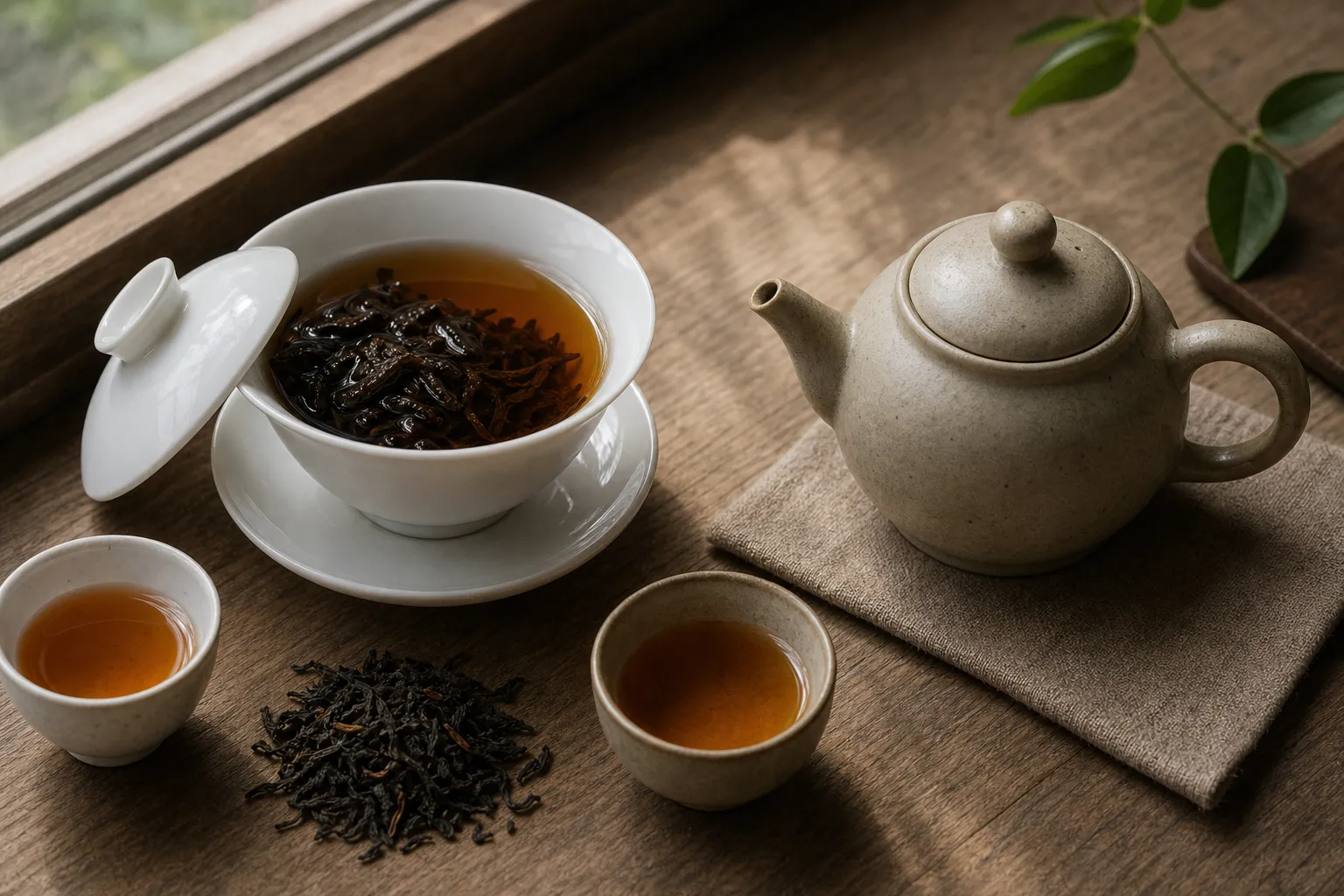
If your black tea turns brisk, dark, or drying within a few short infusions, the vessel may be changing how quickly you catch the right moment. For gaiwan vs teapot for gongfu black tea, choose a gaiwan when you want close control: visible leaves, visible liquor color, fast adjustment, and easy access to lid aroma. Choose a small gongfu teapot when you want a handle, a spout, steadier-feeling heat, and a calmer rhythm with very hot water.
Neither vessel is automatically better. The better choice depends on the leaf, your pour speed, your grip, and how much sensory feedback you want while the tea is steeping.
upward
Start with the broader guide
Use the broader guide first if you need the full scope before this page.
The Short Choice: What Each Vessel Makes Easier
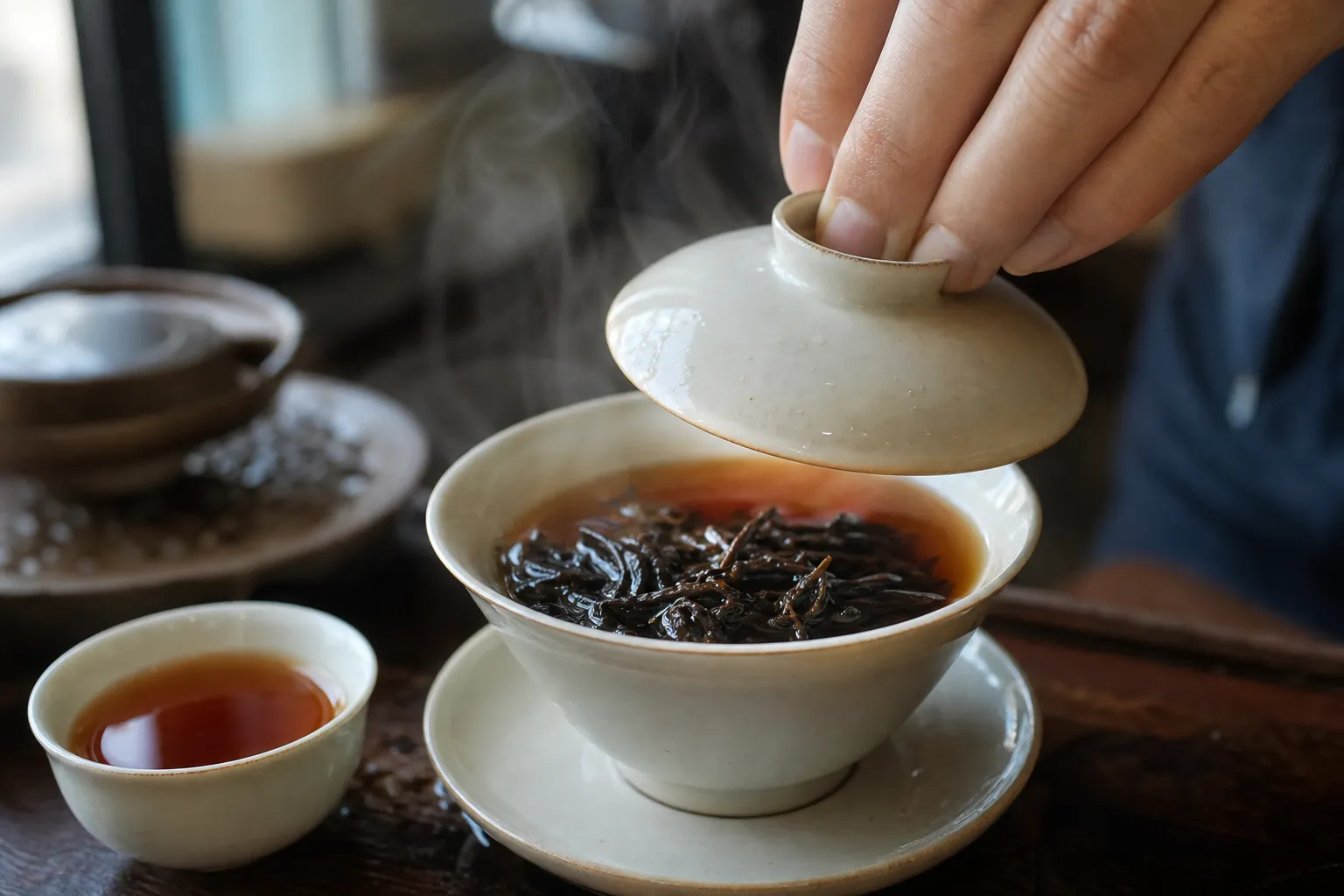
A gaiwan makes black tea more inspectable. You can lift the lid, smell the trapped aroma, see how quickly the leaves open, and watch the liquor move from amber to red-brown or deeper copper. In short infusion black tea brewing, a few extra seconds can move the cup from sweet and aromatic to brisk or drying, especially with small broken leaves or a tea that extracts quickly.
A small teapot makes the motion more contained. The handle keeps fingers farther from the hot wall, the spout gives a familiar pouring path, and the lid usually stays in place without the same hand position a gaiwan requires. For some drinkers, that makes very hot water easier to manage. It can also make serving two or three small cups feel smoother.
| If you care most about... | A gaiwan often helps because... | A small gongfu teapot often helps because... |
|---|---|---|
| Seeing the leaf | The open bowl shows expansion and leaf size clearly | You usually see less during the infusion |
| Smelling aroma | The lid gives you a direct place to smell between pours | Aroma is more enclosed until the tea is poured |
| Stopping fast | A practiced pour can drain quickly | Pour speed depends on the spout and filter |
| Handling heat | The rim can feel hot if overfilled or awkward | A handle and spout may feel more comfortable |
| Holding warmth | Thin porcelain may cool faster | Thicker walls or some materials may hold heat longer |
| Serving rhythm | Best for close, attentive brewing | Often easier for steady repeated service |
Use a gaiwan when you want to learn the tea in front of you. Use a small teapot when you want the brewing to feel steadier in the hand.
How Control Changes the Cup
Gongfu brewing usually means a small vessel, more leaf relative to water, and repeated short infusions. With black tea, that method can show aroma, body, sweetness, malt, fruit, cocoa, spice, smoke, or briskness in quick layers. It can also make timing mistakes obvious.
The gaiwan’s main advantage is not special flavor. It is feedback. You can see whether the leaf is whole, twisted, wiry, golden-tipped, chopped, or dusty. You can watch the liquor deepen during the pour. You can smell the underside of the lid after an early infusion. Those checks help you decide whether the next steep should be shorter, cooler, or less full.
That is useful with an unfamiliar gongfu black tea gaiwan session. If the first cup is pale but aromatic, you may extend the next infusion slightly. If it is deep red-brown and drying at the sides of the tongue, you may shorten the next pour or lower the fill line so the vessel drains faster.
A small teapot gives a different kind of control. The hand movement can be steadier, and the vessel may feel less exposed. If the spout pours cleanly and quickly, a small teapot can still handle precise short infusions. If it pours slowly, contact time stretches. That may not matter for a mellow, large-leaf black tea, but it can matter for a brisk tea that becomes astringent quickly.
A “30-second infusion” is not only the time before you start pouring. It also includes the seconds while water remains in contact with the leaf as the vessel drains. A slow-pouring pot can turn a short steep into a longer extraction. With black tea, that may increase strength and body, but it can also raise the chance of a drying finish.
For control, compare your actual vessels rather than the category name. A thin, well-balanced gaiwan may drain fast. A small teapot with a wide, clear spout may also drain fast. A deep gaiwan with an awkward lid or a pot with a restricted filter may slow you down. The cup will notice the drain more than the label.
Heat, Material, and Handling Comfort
Heat behavior is one of the strongest reasons people choose a small teapot for gongfu tea. A handle and spout can make hot water easier to manage, especially when brewing black teas you prefer at higher temperatures. Wall thickness, fill level, rim shape, handle design, and grip all affect how the tool feels in use.
A gaiwan puts your fingers close to the bowl, lid, and rim. Some drinkers like that directness because it keeps them close to the tea. Others find it distracting, especially with a full vessel, a thin rim that transfers heat quickly, or a grip that still feels unfamiliar. A gaiwan may be easier if you leave a lower fill line, choose a rim with enough space for your fingers, and test the grip with warm water before using hotter water.
A small teapot separates the hand from the liquor more clearly. The handle does not prove anything about material performance; it simply changes the handling geometry. For many people, that is enough to make repeated infusions more relaxed.
Heat retention is more complicated. A thicker teapot may hold warmth more steadily than a thin gaiwan, but this varies by material, wall thickness, size, preheating, room temperature, and pour speed. A small porcelain teapot, a glass pot, and a clay pot will not behave the same way. A thin porcelain gaiwan and a heavier gaiwan will not behave the same way either.
For black tea, steadier heat can support a fuller-feeling cup when the leaf responds well to warmth across several rounds. Faster cooling can make a gaiwan feel more responsive when you want to avoid pushing briskness too far. Treat these as practical observations, not fixed rules.
If the vessel feels too hot to control, stop using it for that session. Lower the fill level, switch to a more comfortable grip or vessel, or brew with slightly less water per round. Gongfu black tea handling should feel attentive, not tense.
Aroma, Leaf Observation, and Liquor Color
The gaiwan’s strongest sensory advantage is access. After a short infusion, the lid gives you a concentrated place to smell aroma. With black tea, that aroma may suggest malt, dried fruit, honey, sweet potato, cocoa, rose, spice, smoke, or warm grain, depending on the tea. The lid does not tell you everything, but it gives another way to compare infusions beyond taste alone.
Gaiwan leaf observation also helps with timing. Whole leaves may open gradually over several rounds. Smaller pieces may release color and strength quickly. Bud-heavy black teas may look pale in the liquor yet carry a high, sweet aroma. Darker, more broken leaf may make a strong cup quickly. Seeing this unfold can help you adjust before the tea becomes too sharp.
A small teapot is less open during brewing. You usually judge more by the poured liquor and the taste in the cup. That is not a weakness if you prefer a quieter process. It can even help if you tend to overread every visual cue. The teapot asks you to rely on rhythm: leaf amount, water temperature, steep time, pour speed, and taste.
Black tea liquor color is useful, but it is not a perfect strength meter. A tea can be light in color and aromatic, or dark and still smooth. Storage condition, leaf size, oxidation style, roast, age, water, and brewing ratio all affect the cup. Use color as one signal, then confirm by aroma, body, and astringency.
If you are learning a new tea, a gaiwan gives more immediate sensory information. If you already know the tea and want a settled service pattern, a small teapot may be more pleasant.
Where People Get the Comparison Wrong
Mixed terms
One common confusion is the phrase “gaiwan teapot.” Retail pages sometimes group a gaiwan with teapots, which blurs the terms. Here, a gaiwan means a lidded bowl or cup used as the brewing vessel. A small gongfu teapot means a compact pot with a body, lid, handle, and spout. A large Western teapot is a different tool and usually points toward larger-volume brewing rather than repeated short infusions.
Beginner comfort
Another misunderstanding is that the gaiwan is always the beginner-friendly choice. It can be clear, simple, and inexpensive, and it teaches a lot about the leaf. But it can also feel hot, slippery, or awkward at first. If the handling makes you rush the pour or spill water, it is not giving you better control in practice.
Teapot precision
The reverse mistake is treating a small teapot as less precise. A well-matched small teapot can be very controlled, especially if it pours quickly and fully. The issue is not “teapot equals slow.” The issue is that some teapots pour slowly, hold more water than expected, or trap liquid around the leaf. Those details can change a black tea infusion.
Clay pot claims
A third confusion comes from clay teapot claims. Some product language presents certain clay pots as especially suited to particular teas. That may reflect how some drinkers discuss their own practice, but it should not become a universal rule for gongfu black tea. For this decision, focus first on size, pour, heat, comfort, and the cup you are actually getting.
The most useful comparison is not gaiwan versus all teapots. It is your gaiwan versus your small teapot, with the same leaf, same water, same fill level, and the same target steep time.
A Practical Way to Decide With One Tea
Use one black tea you know reasonably well. Choose a leaf that is not too precious and not so broken that it becomes harsh immediately. Brew it once in a gaiwan and once in a small teapot on different rounds or different days, keeping leaf amount and water volume as close as possible.
Watch five things.
1. Note the pour
Does one vessel empty faster and more completely? If the teapot takes several extra seconds, count that as part of the steep. If the gaiwan makes you hesitate because the rim is hot, count that too.
2. Smell the early aroma
The gaiwan lid may show more immediate fragrance. The teapot may show aroma more clearly in the fairness cup or drinking cup after pouring. Neither is wrong; they simply place the aroma differently.
3. Compare body and briskness
A warmer or slower-draining vessel may produce a rounder or stronger cup, but it may also push black tea astringency higher. A faster-draining vessel may keep aroma clearer, but it may feel lighter if the tea needed more heat or time.
4. Check comfort
If one vessel makes your grip tense, your timing becomes less reliable. Comfort is not a side detail in gongfu brewing; it affects how confidently you stop each infusion.
5. Notice later rounds
Some teas fade gracefully in a gaiwan because you keep adjusting. Some feel more satisfying in a small teapot because the heat and service rhythm remain steady. The later cups often reveal which vessel fits your habit.
After this comparison, choose the vessel that gives you the cup you can repeat. For many black teas, that may mean a gaiwan when tasting and a small teapot when serving.
Evidence Limits and a Sensible Rule
The available material for this specific question is limited. Much public discussion around gaiwan versus teapot comes from retailer education pages, product descriptions, forums, and social comments. Those sources can show common concerns — hot fingers, heat retention, pour speed, lid aroma, leaf visibility — but they do not establish that one vessel is universally superior for gongfu black tea.
So the sensible rule is modest: choose by observable brewing behavior.
Pick a gaiwan if you want to see the leaf, smell the lid, read the liquor color, and make quick changes across short infusions. Pick a small gongfu teapot if you want a handle, spout, steadier-feeling heat, and a more relaxed service rhythm. If your black tea tastes too drying, check pour speed and steep time before blaming the vessel. If your hands feel uncomfortable, choose the tool you can control calmly.
The next cup can decide more than the product category: brew the same black tea in both vessels, taste for aroma clarity, body, briskness, and astringency, then keep the one that makes your best infusion easier to repeat.