Estate Name vs Regional Black Tea: What Changes for Buyers
A black tea label with an estate name is usually giving you a narrower source: a named garden, farm, or producer. A regional label gives you a wider origin category, such as Assam, Ceylon, Darjeeling, or another producing area. For a buyer, estate tea vs regional tea mainly changes how specific the origin claim is, how you set cup expectations, and what you can compare next.
It does not automatically tell you which tea is better. A named estate tea can be old, poorly stored, or simply not your style. A regional black tea can be fresh, skillfully blended, consistent, and exactly right for breakfast or milk. The label is a clue, not a verdict.
Quick decision
Choose estate detail when you want close comparison across gardens, harvests, and lots. Choose regional clarity when you want a recognizable style, a reliable blend, or an easier daily replacement.
upward
Read the full overview first
Use the broader guide first if you need the full scope before this page.
What an estate name changes on a black tea label
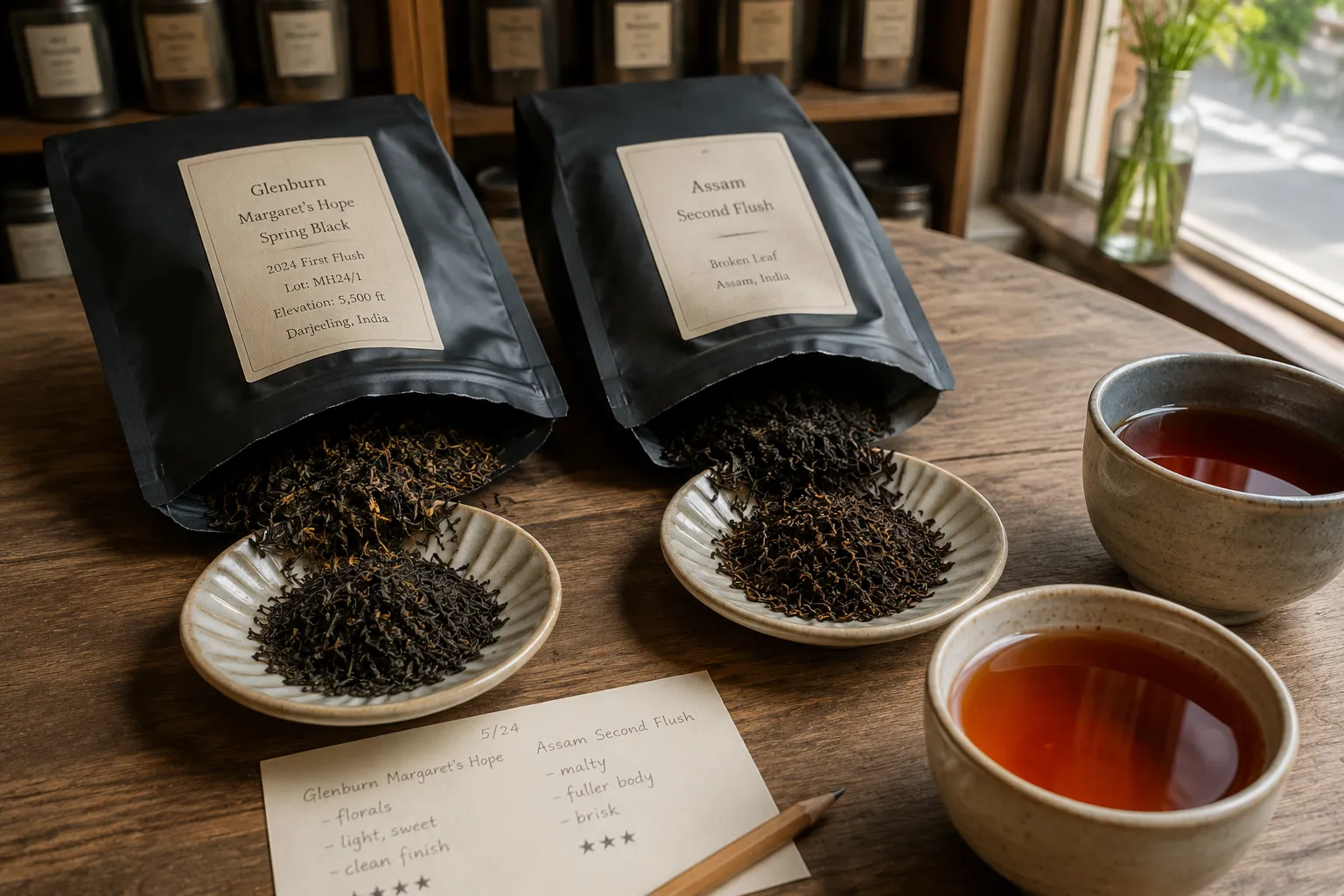
An estate name on a tea label gives you a more specific starting point. Instead of only seeing “Assam black tea,” you may see a garden or estate name, sometimes with a harvest season, grade, invoice number, or lot detail. That extra wording helps if you want to follow a producer’s style over time or compare one season with another.
For practical buying, estate black tea is most useful when the package gives more than a decorative name. Look for:
Place
The estate, garden, or farm name, plus the broader region and country.
Season
Harvest, flush, season, harvest year, packing date, or another freshness clue if supplied.
Leaf and process
Grade or leaf style, and orthodox or CTC processing where relevant.
Trail
Lot, batch, or invoice number if present, plus importer, packer, or seller identity.
Those details do not decide quality by themselves, but they make the tea easier to place. If you liked a spring Darjeeling from one named garden, the name gives you a thread to follow next year. If a later lot from the same estate tasted fuller or more astringent, you have something concrete to compare.
The useful point is simple: an estate name narrows the origin story. You still need to judge leaf condition, aroma, brewing behavior, and freshness in the cup.
What a regional black tea label changes
A regional black tea label gives you a broader expectation rather than a single-garden identity. “Assam,” “Ceylon,” “Darjeeling,” and similar names often work as shopping shorthand. They help a buyer imagine a family of cups before opening the package.
That shorthand can be useful. Assam regional black tea is often presented around strength, depth, darker liquor, and full body. Ceylon regional black tea is often described as brisk, firm, bright, bold, or sometimes fruity. Darjeeling is often presented as lighter, more aromatic, or more delicate than many breakfast-style teas.
Those are buyer-facing expectations, not fixed rules. Region is only one part of the cup. Estate, harvest, grade, leaf form, oxidation style, storage, water, brewing ratio, and steeping time all change what you taste. A broken-leaf or CTC tea may brew quickly and strongly; a larger orthodox leaf may open more slowly. A fresh regional blend may show more aroma than an old estate tea kept in poor storage.
Regional tea label meaning is broad but still useful: it tells you the neighborhood of expectation, not the exact address.
Single estate, single origin, garden, and region do not always mean the same thing
One common buyer trap is assuming every origin phrase has a single market meaning. Tea sellers often use terms such as single estate, single origin, estate, garden, region, and blend in overlapping ways.
A careful reading looks like this:
Single estate black tea
Usually suggests tea from one named estate or garden.
Estate and garden
Often wording differences rather than quality rankings.
Single origin black tea
May mean one country, one region, or one estate, depending on the seller’s usage.
Regional black tea
Usually names a broader producing area, not necessarily one estate, one lot, or one harvest.
A blend
May combine teas from different gardens, regions, or lots to create a consistent cup.
Read the exact package wording. “Single origin Assam” may not mean the same thing as “single estate Assam from a named garden.” “Darjeeling” can name a protected regional origin in specific contexts, while a named Darjeeling estate narrows the label further. “Ceylon” may signal Sri Lankan origin and a broad style expectation, but it does not by itself identify the garden or harvest.
Treat each phrase as a clue, then look for the supporting details around it.
Does an estate name make traceability stronger?
Usually, an estate name gives a buyer a clearer trail than a broad regional label, especially when it appears with harvest, grade, lot, or invoice details. It can make the tea easier to discuss with a seller and easier to compare across purchases.
That is useful, but it is not the same as full origin verification. Research into tea origin traceability describes technical methods beyond ordinary tasting and package reading. For a home buyer, taste alone cannot establish where a tea came from.
Origin language can sound more certain than it is. A label can help you ask better questions, but it is not a lab result. If provenance matters to you, look for a chain of information: producer name, region, harvest detail, lot detail if present, packer or importer identity, and any relevant protected-origin mark for names where such systems apply.
Darjeeling is the clearest example to handle carefully. Tea Board of India material and WTO case-study material support Darjeeling as a protected regional-origin name tied to a defined production area. That does not mean every regional black tea name works the same way, and it does not mean every estate name has the same legal status.
For everyday buying, think of traceability as a scale: broad region, named estate, named estate plus harvest, named estate plus harvest and lot. Each step can add useful specificity, but none of it decides flavor, freshness, or value on its own.
Traceability scale
How the cup expectation changes
Estate labeling invites narrower comparison. You may start noticing how one garden’s spring flush differs from its later harvest, or how one estate’s orthodox leaf behaves compared with another estate in the same region. The cup question becomes: what does this producer, harvest, and leaf style do?
Regional labeling invites broader expectation. You may buy Assam for a strong morning cup, Ceylon for briskness, or Darjeeling for a lighter aromatic style. The cup question becomes: does this tea fit the regional profile I wanted?
Both buying paths are reasonable. Estate tea suits buyers who enjoy comparison, seasonal difference, and detail. Regional tea suits buyers who want a known style, a reliable blend, or a general flavor direction without tracking individual gardens.
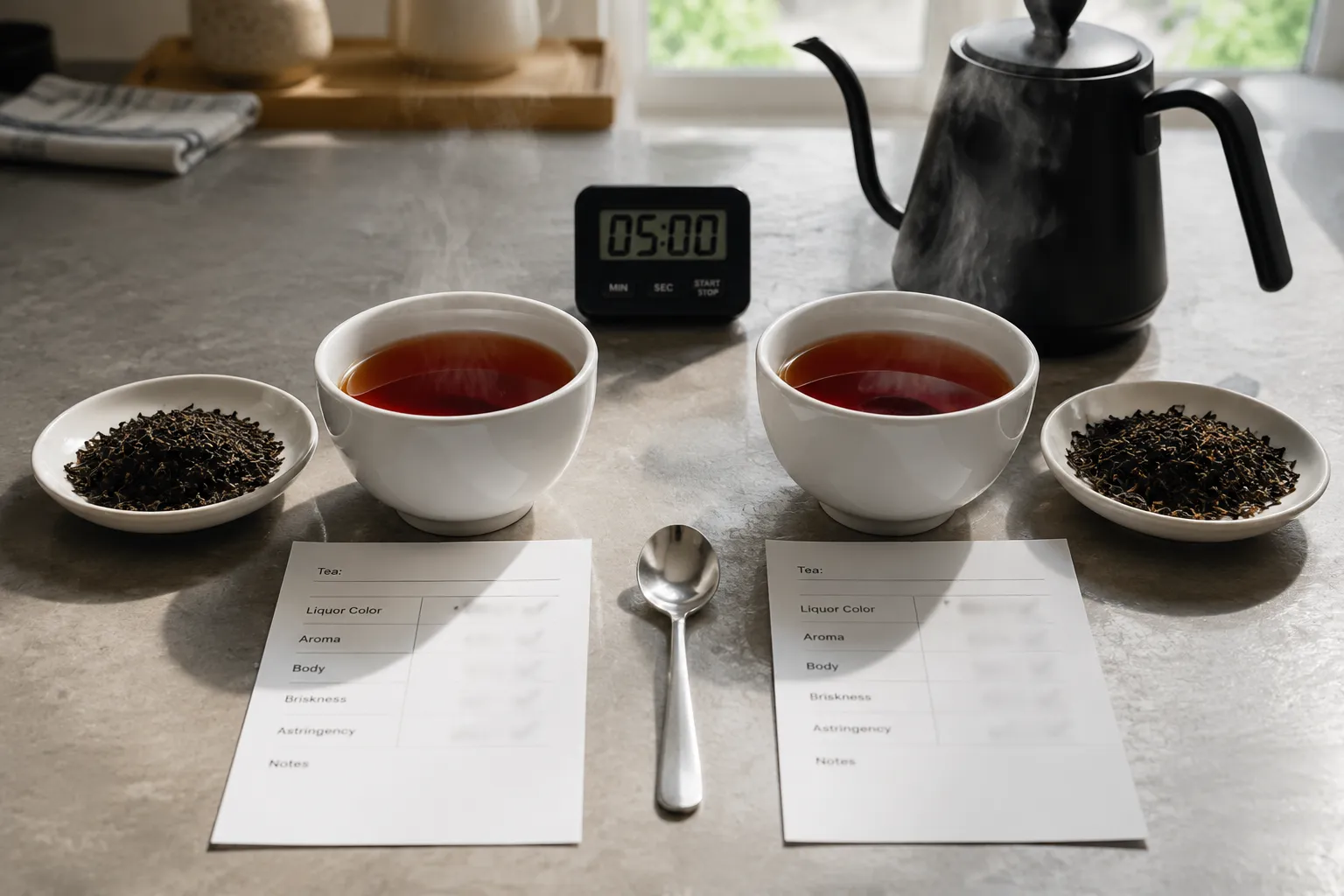
To compare black tea origins fairly, brew them under the same conditions. Use the same leaf weight, water volume, water temperature, and infusion time. Then compare:
This keeps the label from doing all the work. A strong cup may come from leaf size and brewing ratio rather than region alone. A thin cup may come from underleafing, old tea, soft water, or too short a steep, not necessarily from the estate or regional category.
When regional tea may be the better buy
A broader regional label can be the better choice when you want consistency. Many breakfast-style black teas depend on blending skill rather than single-estate identity. If the seller is aiming for a familiar daily cup, the regional label may matter less than freshness, leaf grade, blend style, and how the tea behaves with your brewing method.
Regional black tea can also be easier to replace. If you like a brisk Ceylon-style cup, you may not need the same garden every time. If you drink Assam with milk, a consistent regional blend may serve you better than a limited estate lot that changes from season to season.
Regional is not a lesser word. It is broader. A buyer who values predictability, easy restocking, and a familiar cup may prefer a regional tea over a more specific estate black tea.
When an estate name is worth paying attention to
An estate name becomes more useful when you want to learn your preferences with precision. If two teas are both Darjeeling, the estate, flush, and grade may help explain why one is floral and light while another feels fuller or more brisk. If two teas are both Assam, the garden name and leaf form may help you understand why one cup is malty and rounded while another is sharper or darker.
Pay closest attention to estate details when the package also gives harvest information. A tea harvest flush label can matter, especially in regions where seasonal picking is part of how teas are described. First flush, second flush, monsoon, autumnal, spring, summer, or harvest year can all change expectations, though the exact meanings vary by origin and seller.
An estate name is less useful when it appears alone with no region, country, date, grade, or seller transparency. In that case, it may still be a real name, but it gives you less to work with as a buyer.
The more specific the label, the more specific your next question can be.
Questions to ask before purchase
Before choosing between estate black tea and regional black tea, use the label as a checklist rather than a slogan.
1. What place is actually named?
Is it a country, a region, an estate, a garden, or only a style name?
2. Is there a harvest or season?
Freshness and seasonal picking can affect aroma, body, and brightness.
3. What is the leaf form?
Whole leaf, broken leaf, fannings, and CTC styles brew differently.
4. Is it a blend or a single lot?
Blends may be designed for consistency. Single lots may show more variation.
5. Who packed or imported it?
Seller and packer identity can help you ask follow-up questions.
6. Does the label mention a protected-origin mark where relevant?
This matters most for names with known origin-protection systems, such as Darjeeling.
7. How will you drink it?
Plain, with milk, strong, light, morning, afternoon: your use case changes what “better” means.
The best label is not always the longest one. It is the one that gives enough information for the way you actually choose and brew tea.
The buyer’s takeaway
Estate tea vs regional tea mainly changes specificity. An estate name usually narrows the source to a named garden or producer and can help you compare harvests, lots, and producer style. A regional black tea label gives a broader origin category and a broader cup expectation, often useful for familiar styles, blends, and daily drinking.
Neither label automatically means better flavor. Judge the package wording, leaf condition, aroma, freshness, storage, and brewing response. If you are choosing between the two, match the label to your purpose: estate detail when you want close comparison, regional clarity when you want a recognizable style in the cup.
Sources
Sources and further reading
Reference links are limited to sources considered suitable for public citation in this page.