Gongfu brewing ratio
How Much Black Tea to Use for Gongfu Brewing
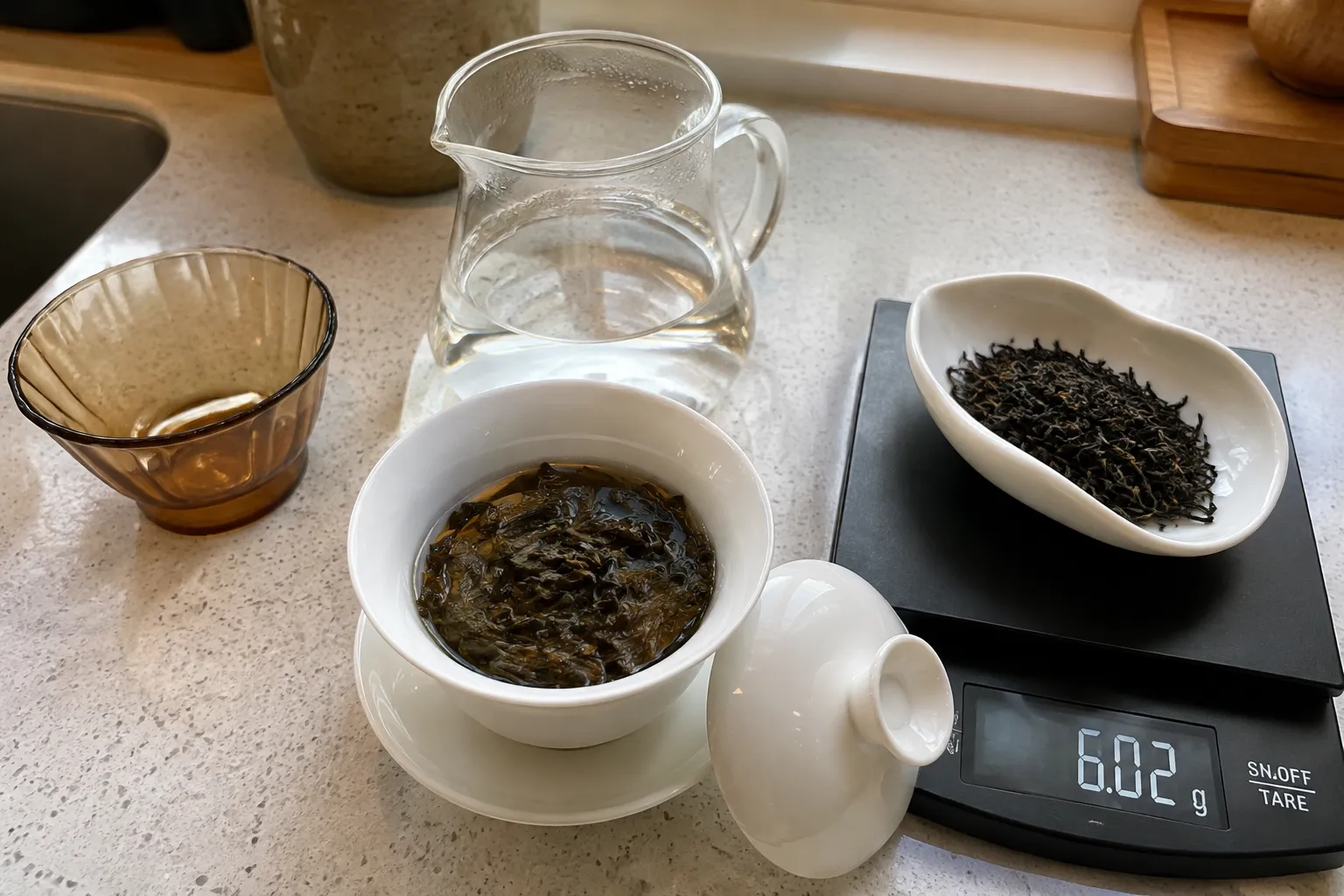
For gongfu brewing, start black tea at about 1 gram of leaf per 15-20 ml of water. In a 100 ml gaiwan or small teapot, that means 5-7 g of black tea.
That range is a practical starting point, not a fixed rule. Use the stronger end, about 1 g per 15 ml, when you want a brisker, fuller session. Use the lighter end, about 1 g per 20 ml, when the tea is broken, sharp, unfamiliar, or already drying in the finish. Keep the early infusions short, often around 10-30 seconds, then lengthen gradually as the leaves open.
upward
Start with the broader guide
Use the broader guide first if you need the full scope before this page.
A Practical Black Tea Gongfu Ratio by Vessel Size
The most useful black tea gongfu ratio starts with the water your vessel actually holds. A gaiwan sold as 100 ml may hold less at your normal fill line, and a small teapot may leave more room for leaf expansion. For brewing math, usable capacity matters more than the listed size.
A 100 ml gaiwan black tea session is the cleanest reference point because the math is easy and each pour stays manageable. For one person, 100-150 ml is usually practical. Larger 250-300 ml vessels can work for a group, but the leaf amount rises quickly and each round produces a lot of tea.
If you do not know your gaiwan vessel capacity, weigh it empty, fill it with water to your usual brewing level, and weigh it again. The difference in grams is close enough to milliliters for this purpose. If the filled vessel gains 95 g, treat it as roughly 95 ml; at 1 g per 15-20 ml, that puts you near 5-6 g of leaf.
That small check prevents a common mismatch: using a ratio meant for a 100 ml gaiwan in a much larger vessel, then getting a session that feels thin, costly, or too forceful.
Why Gongfu Uses More Leaf Than a Mug
The leaf amount looks high only if you compare it with mug brewing. Gongfu uses more leaf, less water, and repeated short infusions. The aim is not to leave 6 g of black tea sitting in a large cup for several minutes; it is to pour off a small, concentrated infusion before the cup turns rough.
For many black teas, the first few steeps can be brief. Around 10-30 seconds is a reasonable early range, with later rounds extended as aroma and body fade. This is where black tea flash steeps and a high leaf ratio belong together. A high gongfu tea leaf amount with a long first infusion can become harsh quickly, especially with broken leaves or a brisk blend.
Treat the first infusion as a calibration cup. If the liquor is fragrant but light, add a few seconds next time. If it is dense, bitter, and drying from the start, the leaf amount or infusion time is too assertive for that tea. The ratio only works when it is tied to black tea infusion time.
A simple starting sequence for a 100 ml gaiwan
- Use 5-7 g of black tea.
- Warm the vessel, add the dry leaf, and smell the warmed leaf.
- Start with a short first infusion, roughly 10-20 seconds for a stronger setup or 20-30 seconds for a gentler one.
- Pour completely.
- Add time in later rounds as the cup softens and thins.
Some gongfu sessions include a rinse, especially with compressed teas or certain aged styles. For loose black tea, the more important question is whether the first drinkable infusion tastes balanced or pushed too hard.
How to Adjust Gongfu Tea Strength by the Cup
The scale gets you close. The cup tells you what to change.
If the liquor is thin, hollow, or watery, the tea may need more leaf, a slightly longer infusion, or both. This often happens when someone uses 2-3 g in a 100 ml gaiwan and expects gongfu concentration. It can also happen with large, wiry leaves that fill the gaiwan visually but weigh less than they appear.
If the tea smells good but the body drops after one infusion, add leaf before you add a lot of time. Long early steeps can pull the cup toward roughness without giving the layered body that makes gongfu brewing useful.
If the cup is sharp, bitter, or drying early, move in the other direction. Use less leaf, shorten the first infusions, or start closer to 1 g per 20 ml. A naturally brisk black tea can still be brewed for aroma; it does not have to grip the mouth to feel concentrated.
Pale, thin liquor
Add leaf or extend slightly.
Aroma is good but body is weak
Add a little leaf.
Strong body with bitter edge
Shorten early steeps.
Drying finish from the first cup
Reduce leaf or move toward 1 g per 20 ml.
Good first cup, fast fading
Add leaf next session or extend later rounds.
Heavy, flat liquor
Reduce leaf and pour faster.
Black tea is not one uniform leaf style. A whole-leaf Dianhong may tolerate more intensity than a broken breakfast-style tea. A long wiry hong cha, a tightly rolled leaf, and a smaller broken grade will sit very differently in the gaiwan. The best black tea gongfu leaf amount is the one that keeps the liquor concentrated without flattening aroma into bitterness.
Grams Work Better Than Teaspoons
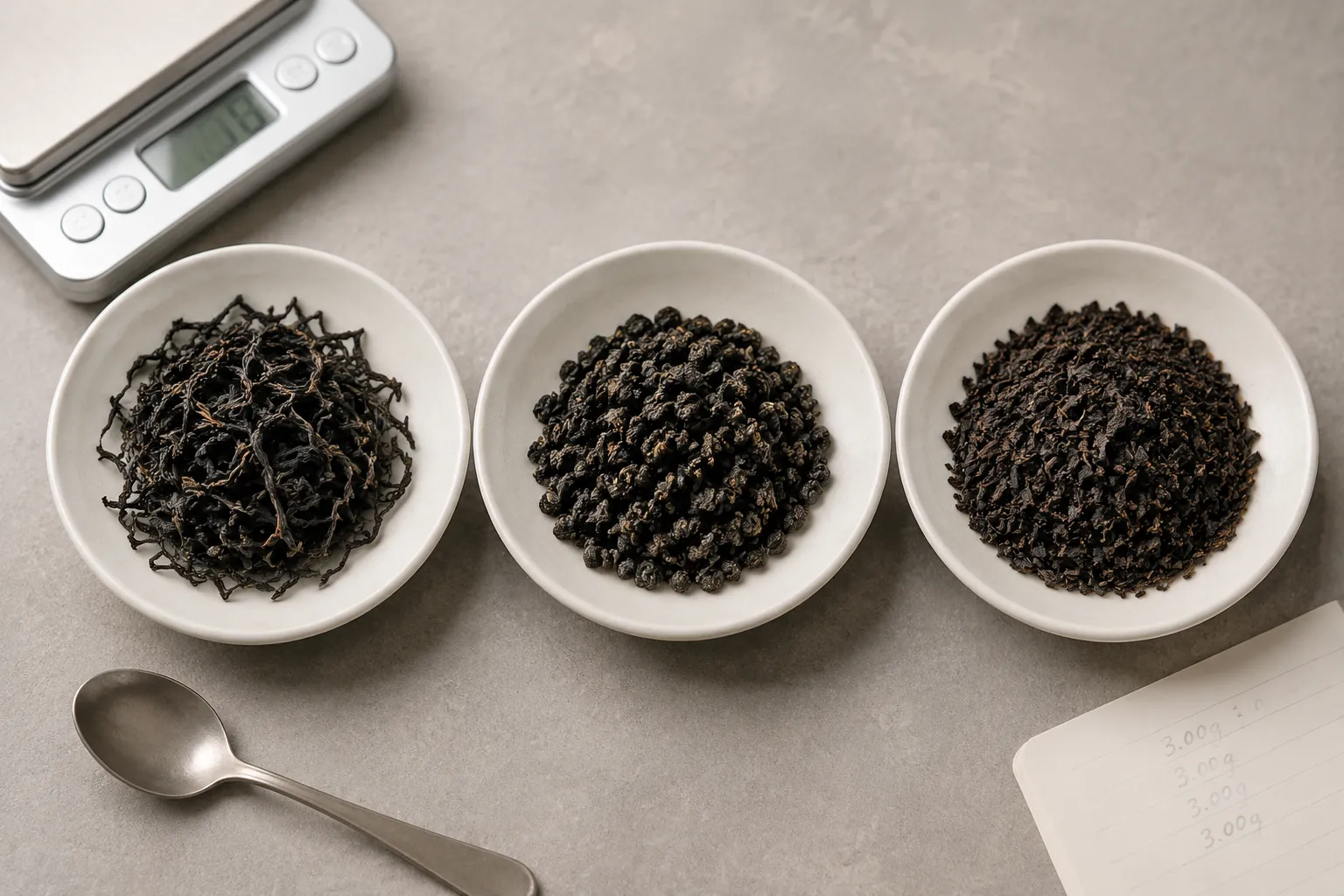
For gongfu brewing, grams are more reliable than teaspoons, scoops, pinches, or visual fill level. This matters more with black tea than many beginners expect.
A teaspoon of long, wiry black tea can weigh much less than a teaspoon of small broken leaf. Rolled leaves create a different problem: they may look compact at first, then expand after water hits them. At the same gram weight, these leaf forms can look like completely different amounts.
That is why teaspoons versus grams is not just a gear preference. It changes repeatability. If one session tastes right at 6 g in a 100 ml gaiwan, you can repeat it next week. If the note says "two big pinches," it may mean something different with the next tea, the next scoop, or even the same bag after the leaf settles.
A small digital scale is the simplest tool for gongfu black tea grams. Once you know the tea, you can brew by feel, but the first few sessions are easier when the amount is measured. This is especially useful when comparing a smoother Chinese black tea with a brisker broken-leaf tea, because the cup differences should come from the tea and the method, not accidental under-measuring.
Where the Ratio Has Limits
The available public support for an exact gongfu black tea leaf ratio is limited. The stronger visible sources around this topic are more useful for vessel measurement and for the broader point that brewing conditions affect what ends up in the infusion. Many black tea-specific ratio examples come from sellers, hobbyist discussion, and brewing practice. They can be useful context, but they do not make one binding rule.
So the honest answer stays narrow: 1 g per 15-20 ml, or 5-7 g per 100 ml, then adjust by tea, vessel, timing, and taste.
Caffeine does not need to lead the decision, but there is a practical serving-size point: a high leaf amount and many repeated infusions can mean more total tea than expected, especially in a larger vessel. Personal tolerance varies, so adjust the vessel size, number of rounds, or session timing if that matters to you.
The better everyday boundary is sensory. If the tea tastes concentrated, aromatic, and structured, the ratio is doing its job. If it feels hollow, add leaf or time. If it turns bitter and drying too early, lighten the ratio or pour faster.
A Starting Method for a 100 ml Gaiwan
For a first session, use the 100 ml gaiwan as the reference point.
Measure 5-7 g of black tea. If the tea is whole-leaf, sweet, and aromatic, start around 6 g. If it is broken, very brisk, or unknown, start around 5 g. If you already like a stronger gongfu black tea session, move toward 7 g.
Warm the gaiwan, add the leaf, and notice the dry aroma in the warmed vessel. A sweet, malty, cocoa-like, floral, or dried-fruit aroma may suggest the tea can be brewed for fragrance and body rather than sheer strength. A sharper, more tannic smell is a reason to start carefully.
Add water, steep briefly, and pour fully. For many black teas, 10-30 seconds is enough for the first infusion at this ratio. Taste before changing several variables at once.
For the second and third infusions, add time gradually. If the first cup was mild and clean, extend slightly. If it was already brisk, keep the next pour quick. If the finish dried the mouth more than you like, do not answer that with a longer steep; reduce intensity next round.
This keeps the method narrow: choose a leaf amount, check the first cup, then adjust one variable at a time.
Common Questions
Is 5 g enough for a 100 ml gaiwan?
Yes, 5 g is enough for many black teas, especially broken, brisk, or unfamiliar ones. It sits on the lighter side of the gongfu range and gives you room to lengthen the first infusion if the cup is too soft.
Is 7 g too much for black tea gongfu brewing?
Not always. In a 100 ml gaiwan, 7 g can work well for whole-leaf black teas that stay aromatic under pressure. It can be too much for small broken leaves, sharp blends, or any tea that becomes bitter in the first short infusion.
Should I measure black tea by volume?
Use grams when you can. Volume is inconsistent because long wiry leaves, rolled leaves, and broken grades take up space differently. A teaspoon can be a very different amount from one black tea to the next.
What should I change first if the tea tastes too strong?
Shorten the next infusion first. If the tea is still bitter or drying even with quick pours, reduce the leaf amount next session or move closer to 1 g per 20 ml.
The Short Answer to Keep by the Kettle
Use 5-7 g of black tea per 100 ml for gongfu brewing, or calculate it as 1 g per 15-20 ml. Start nearer 1:15 for a brisk, full-bodied session and nearer 1:20 for a smoother, more aromatic cup. Keep the first infusions short, then lengthen as the leaves open.
If you only remember one correction, make it this: do not judge the ratio by how full the gaiwan looks. Weigh the leaf, know the vessel capacity, and let the first two cups tell you whether to add leaf, shorten time, or soften the brew.
Sources
Sources and further reading
Reference links are limited to sources considered suitable for public citation in this page.