
Brewing adjustment
Gongfu Brewing Black Tea Without Harsh Astringency
If your gongfu black tea turns harshly astringent, adjust the next infusion before you write off the tea. Use a little less leaf, shorten the steep, lower the water temperature slightly, or pour faster if the liquor darkens almost as soon as water hits the leaves. Gongfu black tea astringency is usually easiest to manage by watching the cup: pleasant briskness gives structure and a clean finish; harshness dries the mouth, flattens aroma, and can make the tea taste bitter before its sweet, malty, fruity, floral, or woody notes have room to show.
There is no single setting that fits every black tea. Whole leaf and broken leaf, fresh and tired tea, small and wide vessels, hotter and cooler water, and personal tolerance all change the result. Use the first one or two infusions as a read on the leaf, then make one adjustment at a time.
upward
Read the full overview first
Use the broader guide first if you need the full scope before this page.
Read the cup before changing everything
A bitter gongfu black tea usually gives several clues at once. The liquor may turn dark very quickly, the aroma may seem strong at first and then collapse, and the mouthfeel may move from brisk to scratchy. That is different from a firm black tea with body, aroma, and a drying edge that clears cleanly.
Use the cup as a small decision map:
- Dark liquor within a very short steep: the leaf amount, leaf breakage, or vessel size may be making the brew too forceful for your taste.
- Strong aroma but rough finish: the steep may be pulling more structure than the fragrance can balance.
- Bitterness before aroma opens: change steep length or water temperature before assuming the tea is poor.
- Thin body but sharp dryness: reducing time alone may not help; the leaf may need a gentler ratio or a roomier vessel.
- Later infusions become smoother: the first steep was likely too aggressive, or the leaf needed a brief rinse or shorter opening pour.
- Every infusion keeps scraping: the issue may be leaf style, breakage, storage condition, water, or simply a poor match for your preferred gongfu profile.
The useful distinction is pleasant briskness versus harshness. Briskness gives black tea lift. Harshness takes over the cup after the aroma has gone.
The first adjustments to try
When gongfu black tea is too bitter, do not change five variables at once. Change one clear thing, taste, then decide what the leaf is telling you.
Shorten the steep first
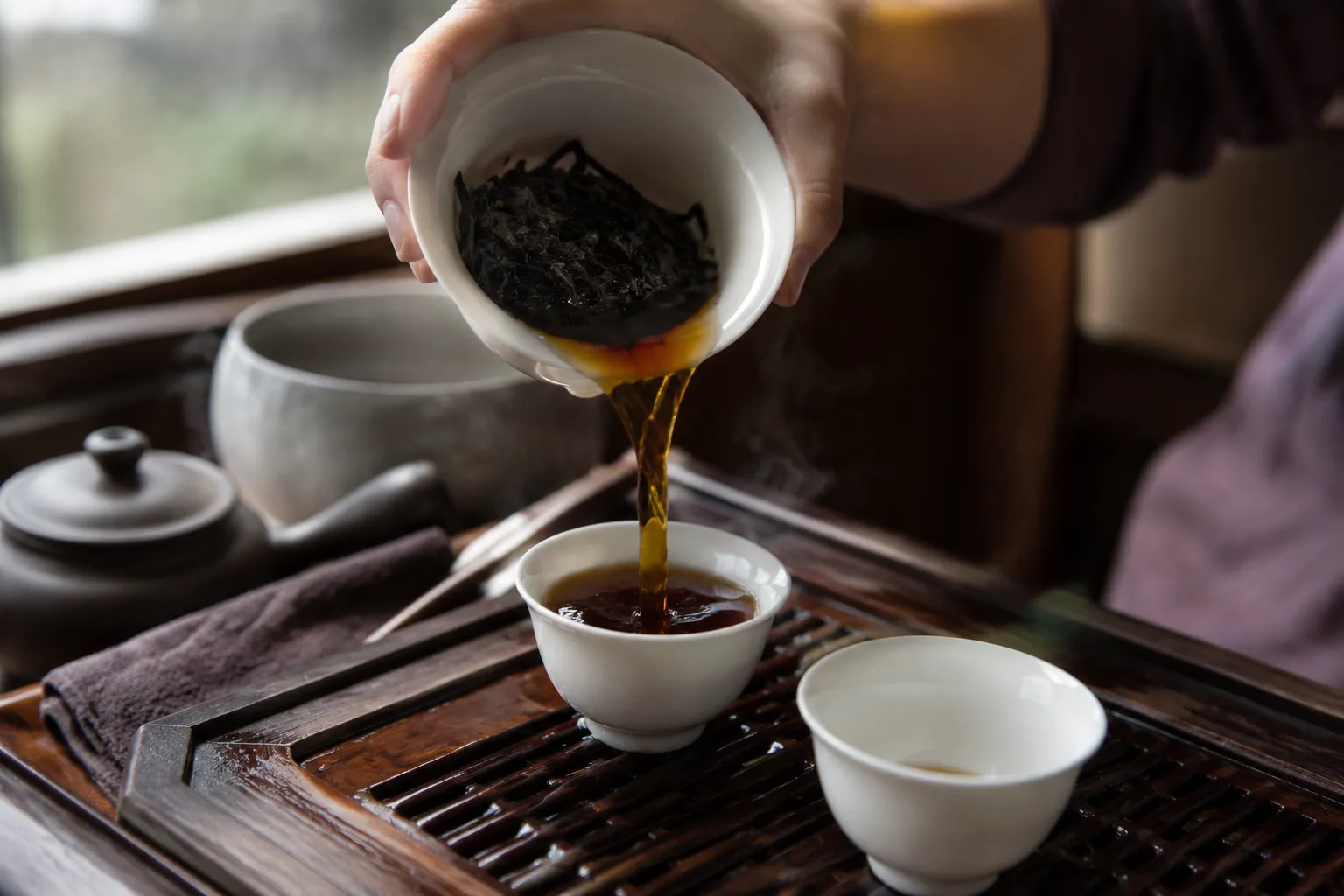
Black tea short steeps can still become astringent when the leaf amount is high, the vessel is small, or the leaf is broken. If the first infusion is already mouth drying, make the next pour shorter and more decisive. Fill, cover if you use a lid, and pour without letting the liquor sit while you think.
A shorter steep is especially useful when the aroma is good but the finish is too rough. You are trying to keep the aromatic opening while trimming the drying tail.
Use less leaf if every cup is forceful
Gongfu brewing uses more leaf relative to water than many mug or pot methods, but more leaf is not automatically better. If the liquor turns dark fast, the body feels heavy, and the cup becomes harsh even with quick pours, reduce the gongfu black tea leaf amount in the next session.
That is calibration, not failure. Some black teas feel broad and aromatic with a generous ratio; others become compressed, bitter, and drying before they show their best flavor.
Ease the water temperature down slightly
Water temperature can change how forceful the cup feels. Keep this as a practical adjustment, not a fixed rule. If hotter water gives you a dark, bitter, mouth drying black tea, try slightly cooler water in the next infusion or next session.
This is most useful when the leaf smells promising but the flavor arrives too sharply. If cooler water makes the tea dull, go back warmer and shorten the steep instead.
Try a brief rinse only when it helps the first pour
A rinse can help tightly packed or slow-opening leaves begin more evenly, but it is not the main answer for harshness. If your first drinkable infusion is muddy, dusty, or overly intense, a quick rinse may give you a cleaner starting cup. If the tea is already delicate or fragrant, a rinse may throw away aroma you wanted to drink.
For harshly astringent black tea, ratio, steep length, and pour speed usually deserve attention first.
Leaf style changes how aggressive gongfu feels
The same gongfu method can feel gentle with one black tea and severe with another. Look at the dry leaf before you assume your timing is wrong.
Whole leaf versus broken leaf matters in practical brewing terms. Larger, more intact leaves often give you more room to adjust across several infusions. Smaller, chopped, or dusty leaf may give color and bite very quickly in a small gaiwan or pot. That does not make broken leaf bad; it may be useful for strong breakfast cups, milk tea, or quick Western-style brewing. It is simply less forgiving when packed into a small vessel for repeated short steeps.
For gongfu black tea, inspect these features:
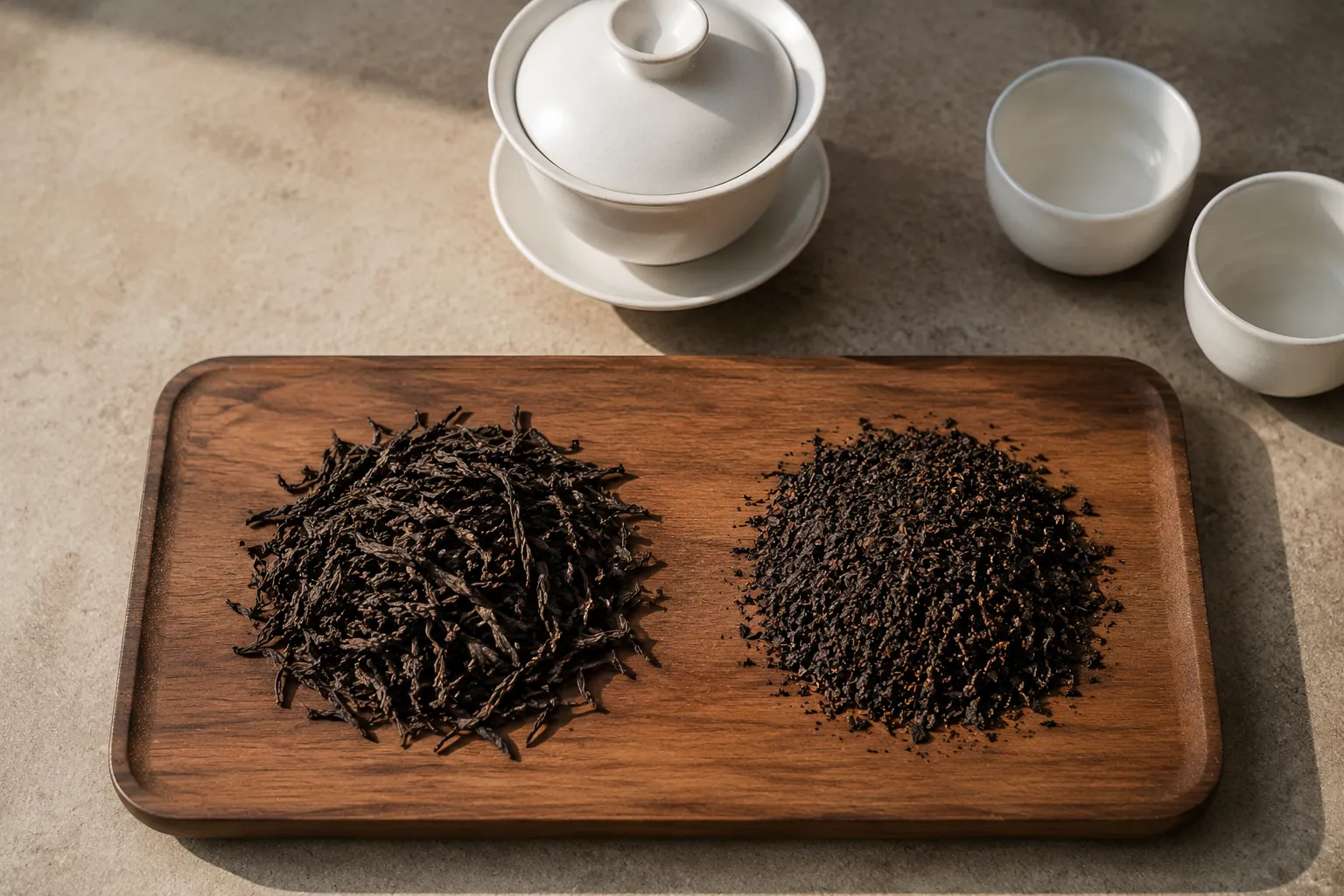
- Large, twisted, or intact leaves: often allow more adjustment between infusions.
- Small, chopped, or dusty leaf: may produce color and bite quickly.
- Very dark dry leaf with a flat smell: may be stale, overexposed, or a style that leans heavy rather than aromatic.
- Fragrant dry leaf that turns harsh in the cup: method is still worth adjusting before judging the tea.
If you keep trying to fix harsh gongfu black tea and the leaf is visibly broken, use less leaf, pour faster, or brew it in a more spacious way. The better method is the one that keeps aroma and body in balance.
When steep length is not the only problem
Black tea steep length is the most obvious lever, but harshness can come from several overlapping conditions. If a shorter steep helps only a little, look at the setup around the leaf.
A very small vessel with a heavy leaf load leaves little margin. The liquor can become strong while you are still settling the lid or reaching for the sharing pitcher. If your pour is slow, the leaves keep brewing during the pour, so the cup tastes longer-steeped than you intended. In that case, a slightly larger vessel, less leaf, or a cleaner pouring motion may matter more than counting seconds.
Water can also change your perception of the cup. Some water makes black tea feel rounder; some makes the same tea feel sharper or flatter. Keep the test simple: if every black tea tastes unusually rough in your kitchen, compare one session with water you already know tastes pleasant on its own. Do not build a water theory before you have tasted the difference.
Storage condition is another quiet factor. Tea that has absorbed kitchen odors, humidity, or stale air may brew with muted aroma and a rougher finish. If the dry leaf smells faint, cardboard-like, smoky in an unintended way, or unlike the package description, method changes may not fully restore the cup. Close the package well, keep it away from heat and strong smells, and compare again with a small session.
A simple troubleshooting path for a rough gongfu session
Use this sequence when the cup is already in front of you and the next infusion is minutes away.
- Taste the finish first.
If the dryness is clean and brief, you may be tasting briskness rather than a flaw. If it scrapes or lingers unpleasantly, adjust. - Watch how fast the liquor darkens.
Dark liquor is not automatically overbrewed, but very fast color can warn you that the ratio, leaf breakage, or steep is aggressive. - Shorten the next steep.
Make the next pour quicker and more controlled. If aroma stays high and harshness drops, you have found the main lever. - If it is still too bitter, reduce intensity next session.
Use less leaf or a slightly larger vessel. This gives the tea more room to show aroma before structure dominates. - If aroma becomes weak, restore warmth or time carefully.
A cup with no fragrance is not the goal. Add back a little steep length or warmer water, one change at a time. - If all infusions stay rough, question the leaf fit.
Broken leaf, stale storage, a naturally brisk style, or water that sharpens the cup may be the limiting factor.
The aim is not to remove all astringency. It is to keep structure from becoming unpleasant.
Strong, bitter, brisk, and harsh are not the same
A strong gongfu black tea can be enjoyable. It may have dense aroma, firm body, and a finish that makes the mouth feel clean. A bitter gongfu black tea is different when bitterness dominates before the tea’s aroma and sweetness have room to appear. A harshly astringent black tea is different again: it dries the mouth in a rough, gripping way and can make later sips feel flatter.
This matters because the adjustment depends on what you dislike. If the tea is flavorful but too drying, shorten the steep or reduce leaf. If it is bitter but aromatic, try a gentler temperature shift or quicker pour. If it is strong but pleasant, you may not need to fix anything.
Gongfu brewing also makes changes more visible because each infusion is small. One rough pour does not have to define the whole session. The next steep can be lighter, faster, or more spacious.
What this answer can and cannot claim
This page keeps to practical cup cues rather than universal brewing numbers. It can help you compare aroma, body, bitterness, liquor color, leaf style, storage condition, and drying finish. It should not be read as a fixed formula for every black tea, vessel, water source, or drinker.
Black tea varies by style, leaf size, processing, freshness, storage, and brewing context. Personal preference matters too. Some drinkers enjoy a brisk edge; others prefer a rounder cup with very little drying sensation.
The best next step is narrow: brew the same tea again, change only one variable, and watch whether the aroma, body, bitterness, and drying finish move in the direction you want. That one-cup comparison will tell you more than forcing every black tea into the same gongfu routine.