Milk-friendly Ceylon tea
Which Ceylon Black Tea Is With Milk
For Ceylon tea with milk, start with a Ceylon black tea that already looks and tastes strong before milk is added: deep reddish-brown liquor, clear aroma, medium to full body, and a brisk finish that stays lively after dilution. A finer broken leaf, or a package that points toward a bold breakfast-style cup, is usually a better first candidate than a very delicate whole-leaf tea.
The practical answer is this: the best Ceylon tea for milk is the one that still tastes like black tea after milk softens its edge. Because the current source set does not support firm regional or grade rules, treat “best” as a cup test, not a label promise.

upward
Start with the broader guide
Use the broader guide first if you need the full scope before this page.
What Makes A Ceylon Black Tea Work With Milk
Milk changes the cup quickly. It lightens the liquor, rounds astringency, softens aroma, and can make a thin brew taste flat. A balanced Ceylon black tea with milk needs enough strength before dilution.
If the plain infusion is pale, weak, or mostly fragrant without much body, milk will usually make that weakness easier to notice.
Look first at the brewed cup. A useful candidate should show visible color, a firm middle on the tongue, and a brisk finish that does not turn sharply bitter. Briskness matters because milk quiets some of black tea's sharper edges. Body matters because milk adds texture, but it cannot create tea flavor that was not extracted.
Package words such as bold, strong, breakfast, broken leaf, or robust can help you choose what to try. They are not proof on their own. Use them as buyer clues, then check the leaf size, infusion color, aroma, mouthfeel, and how much tea character remains after milk.
If you are comparing two teas, brew both plain first. The one that tastes slightly too assertive without milk may become the better milk cup. The one that tastes elegant and light on its own may lose definition once milk is added.
Leaf Form And Grade Wording To Check
Broken or smaller leaf
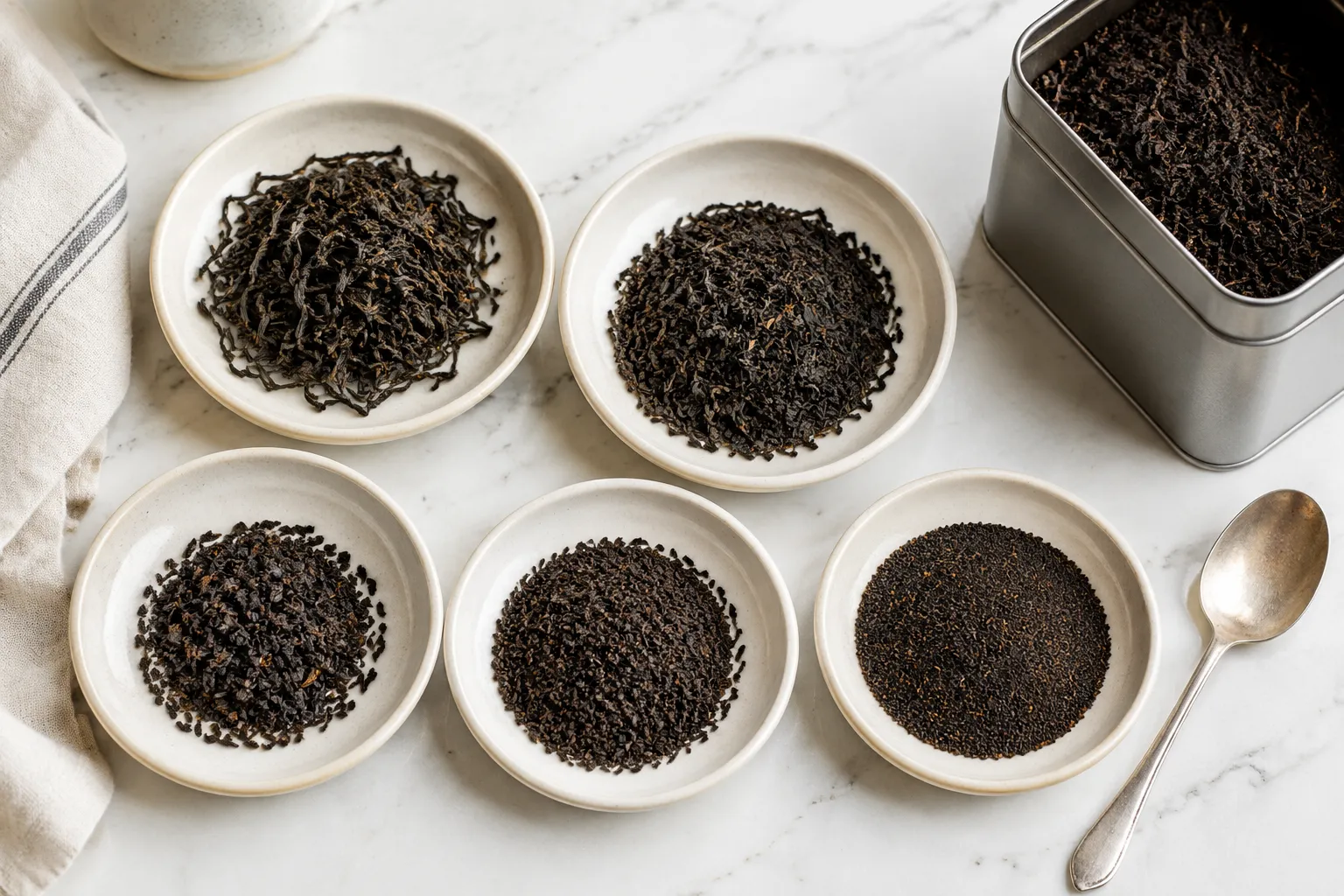
Ceylon tea leaf form is one of the most useful package cues because it affects how quickly flavor extracts. Smaller or broken leaf pieces generally infuse faster than large intact leaves, so they can be easier to brew into a strong cup for milk.
Whole leaf
Whole-leaf Ceylon black tea can still work with milk if it has enough body and briskness. It may need a slightly higher leaf amount, a longer steep, or less milk.
Very fine leaf
If the dry leaf is very dusty or powdery, expect quick extraction and a higher chance of roughness if you steep too long.
That does not automatically make smaller or broken leaf higher quality, and it does not mean every broken-leaf tea will taste good. It only gives you a practical starting point when milk is part of the cup.
If the dry leaf is large and wiry, expect extraction to be slower than with a fine cut. Grade wording can look more precise than it is for a buyer. For this question, read grade terms modestly. Ask what the wording suggests about leaf form: whole, broken, fannings-like, or very fine. A milk-friendly tea usually benefits from a form that can give enough color and flavor in a controlled infusion.
Searches for “low grown Ceylon milk tea” point to a common buying idea: some drinkers associate lower-grown styles with fuller cups. The supplied material does not give a public source strong enough to state that as a rule here. If a package says low grown, treat it as a clue to test. Brew it, add milk, and judge whether the cup keeps aroma, body, and briskness.
How To Brew Ceylon Tea With Milk
Brew Ceylon tea with milk by making the tea a little stronger than your plain cup, then adding milk gradually. Adjust one variable at a time: leaf amount, infusion time, or milk amount. If you change all three, it becomes hard to know why the cup improved or failed.
First
Use a generous measure of leaf for one mug, freshly boiled water allowed to settle briefly if your kettle runs very hot, and an infusion long enough to produce deep color and firm aroma.
Then
Add milk after brewing unless you already know your preferred household method. Pouring milk into finished tea lets you see the liquor color first and stop before the cup turns too pale.
Adjust
If the tea disappears under a small splash of milk, increase leaf next time before stretching the steep too far. More leaf often builds body with less roughness than a much longer infusion.
The current materials do not support a fixed Ceylon tea brew ratio or exact infusion time, so treat numbers as personal calibration. For many black teas, a short strong infusion works better with milk than a long weak one.
If the cup tastes flat, the tea was probably too light for the amount of milk. Use more leaf, steep slightly longer, or pour less milk. If it tastes dry and scratchy even after milk, the infusion may be over-extracted, the leaf may be very fine, or the tea may not suit your palate. Shorten the time first, then adjust the milk.
A good milk cup should still smell like black tea. The aroma may be softer, but it should not vanish into warm dairy. The finish should feel rounded rather than stripped; brisk, not abrasive.
Strong, Harsh, And Fresh Are Not The Same
Strength with milk is not the same as bitterness. A tea can be strong because it has color, body, and clear black tea flavor. It can also be harsh because it was brewed too long, cut very fine, stored poorly, or simply has an astringency level you do not enjoy. Milk can soften astringency, but it should not be the main fix for a badly brewed cup.
Freshness changes the answer. Black tea kept in a loose paper pouch, near heat, or beside strong kitchen smells may brew dull even if it once had enough body for milk. Before deciding that a Ceylon tea is wrong for milk, check the storage condition. A clean, dry, airtight container away from light and odor gives the leaf a better chance to show its flavor.
Aroma is another useful warning sign. If the dry leaf smells flat, dusty, smoky in an unintended way, or mostly like the cupboard, a stronger ratio may only make stale flavor louder. If the dry leaf smells clean and the brewed tea has a lively edge, the milk test is more meaningful.
There is also a difference between a tea that suits milk and a tea that only works as heavily sweetened milk tea. This page is about keeping recognizable Ceylon black tea character after milk. Sugar, spices, and condensed milk change the balance enough to answer a different question.
A Simple Milk Test Before You Buy More
When deciding whether to buy the same Ceylon tea again, run a small repeatable test with the tea you already have. Brew one cup plain at normal strength, then brew a second cup a little stronger for milk. Add milk slowly to the second cup and watch where color, aroma, and flavor begin to fade.
Use these checkpoints:
- The plain tea has enough color and aroma before milk is added.
- The milk cup still tastes clearly of black tea, not just warm milk.
- The body feels rounded, not watery.
- The briskness stays lively without becoming sharp.
- The finish is clean enough that you do not need sugar to cover it.
If the tea passes those checks, it is a reasonable Ceylon tea with milk for your palate. If it fails because it turns pale, try more leaf. If it becomes rough, shorten the infusion. If the aroma is dull from the start, choose a fresher tea or a different leaf form next time.
This test is more useful than relying on one label term. Milk amount, mug size, water, freshness, and your tolerance for astringency all change the result.
What The Current Evidence Can Support
The current source set does not include public, citable references for Ceylon regions, grade terminology, low-grown tea claims, cultural milk-tea practice, or measured brewing comparisons. For that reason, the guidance here stays at the cup level: dry leaf, brew color, body, briskness, aroma, astringency, freshness, ratio, and milk amount.
It would be too strong to say that one Ceylon region, one grade, or one package phrase is always the best Ceylon tea for milk. A narrower and more useful answer is that a milk-friendly Ceylon black tea should brew with enough strength and structure before milk is added, and that smaller or broken leaf forms may be practical candidates when you want faster extraction.
For your next purchase, choose the tea with the most checkable signals: fresh-smelling leaf, clear package information about leaf form, and a cup that stays flavorful after a controlled splash of milk. Brew first, taste second, then decide whether the label deserves a repeat buy.